
Here’s a look at KY’s deadliest aviation disasters in wake of Louisville UPS plane crash
AI-generated summary reviewed by our newsroom.
- Governor Beshear declared a state of emergency and launched an emergency relief fund.
- Responders shifted from rescue to recovery while crews seek casualties and closure.
- Historic crashes show pilot error and infrastructure fixes shaped Kentucky aviation.
The death toll from a fiery plane crash in Louisville late Tuesday afternoon has reached 13.
“There may be more loss of life that we’re going to learn about today,” said Beshear, who added he will be in Louisville Wednesday afternoon to survey the damage.
City residents are advised to avoid using or consuming water immediately near the crash site of Louisville’s Muhammad Ali International Airport, but Beshear stressed the city’s water supply and air are safe.
The second-day response to the crash has moved into the recovery phase, Beshear said. Responders are working to locate any remaining casualties and give families closure.
Beshear is declaring a state of emergency and said officials are creating an emergency relief fund where “every dollar donated will go directly to those affected.” Proceeds will cover funeral expenses for families, along with recovery and rebuilding efforts.
“Please pray for these families,” the governor said.
Kentucky has seen several deadly plane crashes over the course of its aviation history. We’ve rounded up details here.
2006: Crash of Comair Flight 5191
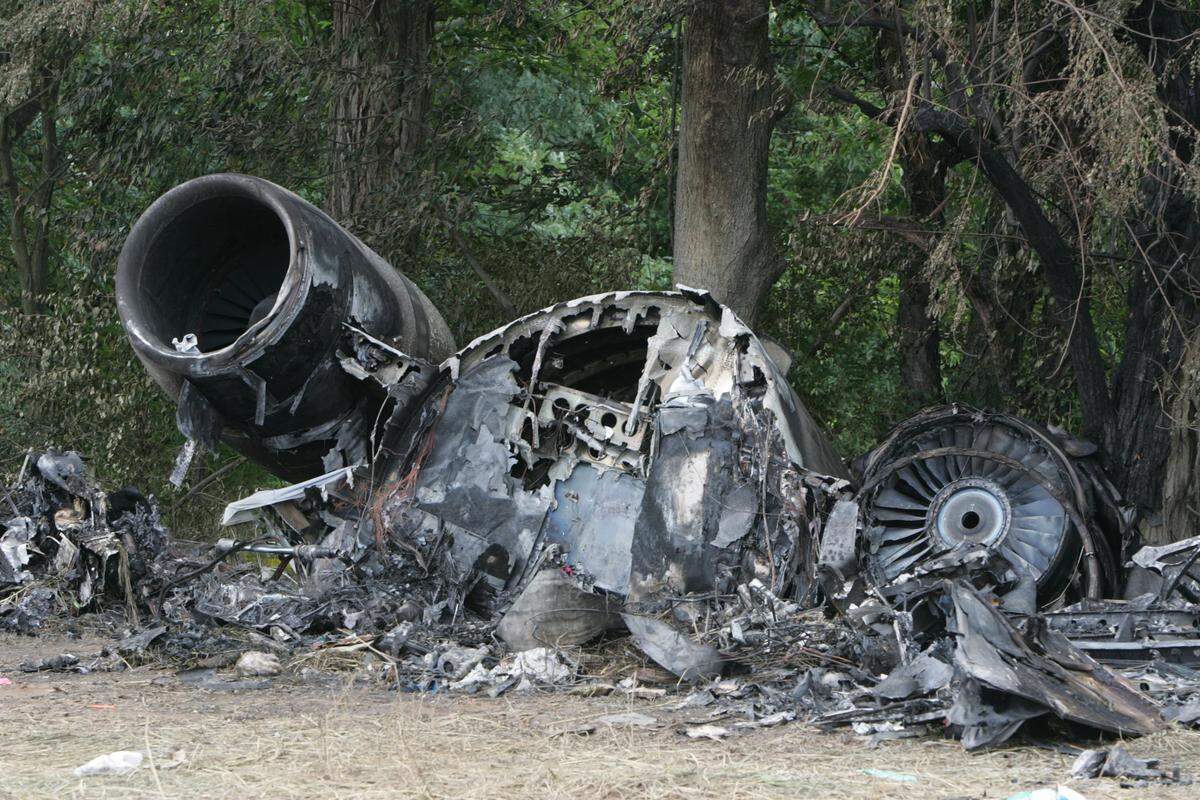
At about 6 a.m. the morning of Aug. 27, 2006, Comair Flight 5191 was scheduled to fly from Lexington’s Blue Grass Airport to Atlanta.
The plane started down the runway with 47 passengers and three crew members on board. Cleared to take off on a 7,000-foot-long runway, main pilot Jeffrey Clay instead took a runway half that length. It was unlit and unauthorized for use.
While voice recorder data indicates first officer James Polehinke noticed the runway had no lights, neither pilot tried to abort the takeoff as the plane sped up. It ran off the shorter runway, ploughed into a berm, clipped some trees and crashed into a field, bursting into flames.
All 47 passengers and two of the three crew members died. Polehinke, the only survivor, was severely injured. He underwent multiple surgeries, including the amputation of his left leg. Doctors later determined the incident left him with severe brain damage and no memory of the crash or its preceding events.
Ultimately, the National Transportation Safety Board found the pilots were in error, as the crew failed to use available cues indicating they were on the wrong runway or confirm their position with the tower.
Today, the crash is marked with a memorial of 49 stainless steel birds taking flight at the University of Kentucky Arboretum. Almost 20 years later, the tragedy still sparks memories for locals, including Lexington attorney David Royse, who represented families in litigation after the crash.
1967 : Crash of TWA Flight 128
On Nov. 20, 1967, Trans World Airlines Flight 128 was traveling from Los Angeles to Boston with stops in Cincinnati and Pittsburgh. As it approached what was then called the Greater Cincinnati Airport in Covington, now Cincinnati & Northern Kentucky International Airport, at 8:57 p.m., it crashed, killing 70 people on board, five of whom were Kentuckians. Two crew members and 10 passengers survived.
Today, the crash is commemorated with a state historical marker in Hebron, which notes the cause of the crash pilot error. It is the worst accident in Kentucky aviation history. The tragedy led to the construction of an Approach Lighting System, or ALS, for the runway, which was completed in 1969, according to the marker.
1965: American Airlines Flight 383
At about 7 p.m. Nov. 8, 1965, American Airlines Flight 383 was traveling nonstop from New York City to Cincinnati when it crashed and burned near the Greater Cincinnati Airport. Fifty-eight of 62 people on board were killed.
As the plane approached the airport, rain and thunderstorms moved into the area, and rain was reported at the field shortly before the crash, according to the official accident report. Authorities found the crew failed to properly monitor the plane’s altitude as it approached in conditions with deteriorating visibility.
A Kentucky historical marker commemorates the crash, and it notes airlines updated their training manuals and retrained pilots to handle Boeing 727 aircraft. A new and safer 7,800-foot runway was also completed at the airport in April 1967.
Do you have a question about Kentucky history for the Herald-Leader? We’d like to hear from you. Fill out our Know Your Kentucky form or email ask@herald-leader.com.
This story was originally published November 5, 2025 at 2:02 PM.