Trump’s new coal agenda will fund KY power plants already eyeing natural gas
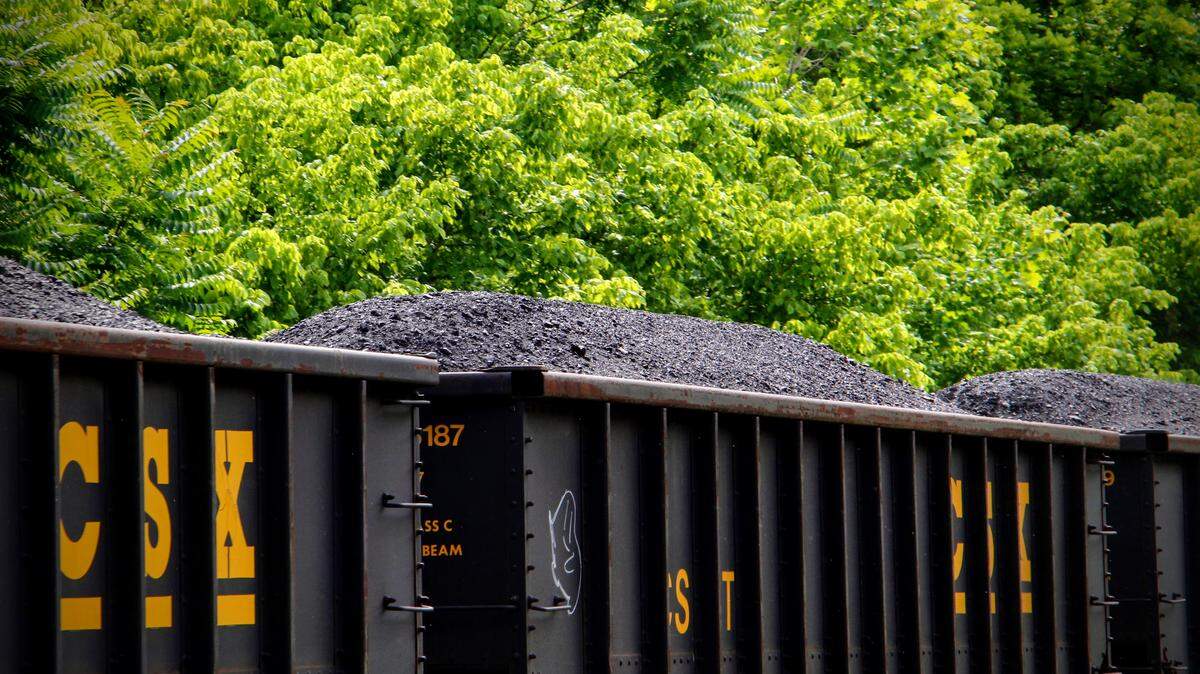
At least three Kentucky coal-fired power plants actively pursuing natural gas improvements will receive a total $124 million in federal funds under a White House war mobilization tool President Donald Trump is wielding to bolster what he calls “clean, beautiful coal.”
During an Oval Office announcement Thursday, Trump invoked the Defense Production Act, a Cold War-era law giving him wide latitude to direct and oversee private-sector production. Title III of the law authorizes the executive branch to direct federal funding to incentivize expansion efforts that protect domestic infrastructure.
The administration committed $700 million Thursday to what it is calling coal-dominance projects nationwide. East Kentucky Power Cooperative, Duke Energy Kentucky and Kentucky Power will all receive at least some grant funding under the plan.
Yet, two of those Kentucky utilities are actively pursuing multimillion-dollar natural gas conversions at the plants that will receive coal-dedicated funds, citing strict environmental regulations on greenhouse gases and efforts to tap cheaper fuel alternatives without abandoning their legacy coal investments entirely.
They’re not alone. American power utilities are increasingly converting coal-fired power plants for multi-fuel purposes, partly in order to stay nimble amid fluctuating costs and because converting individual units to burn both fuels can be cheaper than building an entirely new natural gas-powered plant from scratch.
Coal remains essential to maintaining a reliable and affordable electric grid.
Sam McKown
President, Kentucky Coal Association“Most new facilities are either natural gas-fired or increasingly powered by renewables with storage as a backup across the country as a trend,” said Byron Gary, a program attorney with the Kentucky Resources Council, a public interest environmental law and advocacy group. “Kentucky is sort of starting to catch up on that first part with the natural gas portion, because natural gas technologies have been shown to be more affordable right now.”
Natural gas has emerged a cost-effective alternative for utilities with older coal-fired plants because of breakthroughs in extraction technologies, like hydraulic fracking, that have led to surpluses in the domestic market. Natural gas has proven to have a higher thermal efficiency than coal and lower upfront operating costs.
East Kentucky Power Cooperative and Duke are in various stages of converting some or all of the coal-fired units at the plants slated for DPA funding to burn a combination of coal and natural gas.
Neither utility would confirm what specific projects were receiving federal DPA funding. Still, coal advocates insist that coal remains essential to the commonwealth’s energy future.
“Coal remains essential to maintaining a reliable and affordable electric grid, supporting high-paying jobs, and strengthening our nation’s energy security,” said Kentucky Coal Association President and Executive Director Sam McKown. “For Kentucky’s coal miners and coal-producing communities, the announcement is another positive step toward ensuring coal remains a vital part of our economy and our nation’s energy mix for years to come.”
EKPC and Duke are pursuing natural gas investments
East Kentucky Power Cooperative will receive $90.6 million for what the U.S. Department of Energy called modernization upgrades at its H.L. Spurlock Generating Station in Mason County and John Sherman Cooper Station in Pulaski County.
State regulators approved a plan in July to convert all four coal-burning Spurlock units to dual, coal-natural gas turbines by 2029. Unit 2 at Sherman Cooper will also be converted to a dual unit, while the only remaining coal-only unit is slated for closure by 2030. The member-owned cooperative has also announced plans to build an entirely new 745-megawatt natural gas plant at Spurlock, meaning the only coal-fired unit that will remain will be the dual Unit 2.
The cooperative “continues to work with DOE to finalize details of how the funding will be deployed,” said Nick Comer, EKPC external affairs manager. Specific projects at many of the other 13 plants that will receive DPA funding were announced Thursday by the DOE.
The DOE did not immediately respond to a Herald-Leader request for comment Friday.
In a recent Kentucky Public Service Commission filing on the Spurlock upgrades, EKPC said it was running into issues with funding for two of the units slated for conversion that could cause anticipated costs to rise.
EKPC did rely on coal for 90% of its total electricity generation last year, Comer told the Herald-Leader. The DOE funding will “defray the cost of projects to enhance resilience and flexibility at two of EKPC’s baseload coal plants and ensure the continued reliability of electric service for 1.2 million Kentucky residents and thousands of businesses,” he said.
Both coal and natural gas are widely considered “baseload” energy sources because they can operate reliably around the clock to meet minimum electricity grid demands.
“Coal continues to be a vital energy resource for our state,” Comer added. “Over the years, EKPC has continued to invest in state-of-the-art environmental controls to ensure its coal plants remain viable well into the future while proceeding toward our sustainability goal of reducing greenhouse gas emissions.”
Duke Energy has announced its intent to convert coal-fired units to fire coal and natural gas at its East Bend Station in Mason County to meet stricter U.S. Environmental Protection Agency updated Clean Air Act Section 111 rules. The company’s 2021 integrated resource plan had forecast a total conversion to natural gas, but the officials’ cost projections favored a partial conversion in its most recent PSC filings.
The plant is expected to receive $33.4 million in DPA funds to “bolster the plant’s operational flexibility, enhance overall efficiency and boost generation capacity,” the DOE said.
Duke has said upgrades at the station should sustain the plant through the next decade, at which time a complete natural gas replacement plant is expected. A spokesperson for the company confirmed that natural gas upgrades are not the subject of the funding.
“These investments at East Bend will strengthen reliability for the communities and businesses we serve while helping lower the cost of necessary upgrades over time,” Amy Spiller, president of Duke Energy’s utility operations in Ohio and Kentucky, said in a prepared statement.
Spiller said the company appreciates “the partnership of the Trump administration and DOE” in its effort to “reduce costs for our customers while continuing to deliver the reliable energy they depend on.”

Kentucky’s coal infrastructure is aging out
Most coal-fired power plants in Kentucky are old. The newest is well-over a decade into its life-expectancy, and utilities across the commonwealth are finding it increasingly difficult to justify the cost of reinvesting in legacy resources.
The industry broadly looks at coal-fired power plants on what’s called a “bathtub curve,” said Gary. Utilities have enormous construction and start-up costs to build and staff a coal-fired plant, and then the costs decrease through most of the operating timeline. At the end of a plant’s expected shelf life, components age out and regulations put tougher, more expensive limits on what older technologies can produce.
“Coal doesn’t make economic sense anymore,” said Lane Boldman, executive director and legislative agent for the Kentucky Conservation Committee. “You don’t have the workforce. It’s not the place where people want to make a living anymore.”
Some utilities are still holding on.
A fourth Kentucky-adjacent plant in Moundsville, West Virginia, is co-owned by Kentucky Power, the primary utility serving 20 Eastern Kentucky counties. The plant will receive $51 million in federal DPA stimulus funds to replace a 60-year-old natural draft cooling tower with severe structural deficiencies that risk concrete literally falling from the sky.
State regulators in December re-approved Kentucky Power’s 50% investment in the plant, meaning half of the federal DPA funds will reduce the company’s share in the $191 million project.
That means the total amount of federal funding for Kentucky power utilities is closer to $150 million.
Coal doesn’t make economic sense anymore.
Lane Boldman
Executive Director, Kentucky Conservation Committee“Finding opportunities to responsibly manage costs for our customers is always top of mind for us,” Kentucky Power President and CEO Cindy Wiseman said in a statement. “This grant will allow us to modernize critical infrastructure and improve efficiency while reducing the impact on customers.”
Fossil fuel facilities in West Virginia face stricter regulatory burdens when trying to prove that a plant has outlived its worth. Utilities have to secure permission both from the state’s public service board and Public Energy Authority before closing or selling a plant.
Kentucky took a page out of West Virginia’s book in 2024 when the Republican-controlled legislature established the Energy Planning and Inventory Commission, which gets a first look at coal and natural gas-powered retirement plans before utilities can approach the PSC.
Those recommendations aren’t binding, but they can delay the start of a formal regulatory review by up to 180 days.
On Thursday, Senate President Robert Stivers, R-Manchester, said those efforts have been aimed at protecting “critical baseload generation” that meets growing energy demands “without sacrificing reliability.”
“Coal remains a vital part of Kentucky’s energy portfolio and supports thousands of jobs across our commonwealth,” he said in a statement. “We welcome efforts to recognize and support coal’s continued role in maintaining energy reliability and meeting growing energy needs.”