
When will Central Kentucky see its first snow of the season? Past years offer a clue
If you’re enjoying the cooler weather and looking forward to watching those first few flurries of snow fall, this historical data from the National Weather Service in Louisville might lift your spirits.
When you look at the first snowfall dates in our area, you can get a sense of when the chance for snowfall peaks and diminishes during the winter months in Lexington.
There’s also some new maps from the NWS and the National Oceanic and Atmospheric Administration that could offer hints as to how El Niño may influence the chance for snow in Central Kentucky this winter.
When is Lexington most likely to see its first snow?
The NWS in Louisville maintains a record of the dates, on average, Lexington gets its first dusting of snow, first inch of snow and first 4 inches of snow, among other key dates.
Reached by email last week, the NWS told the Herald-Leader the dates and snowfall totals are “reasonably accurate” and up to date.
“They were last updated in 2021, but any changes between now and then should be small. We do hope to get them updated again this year,” the NWS told the Herald-Leader.
Average snow dates since 1893 include the following:
First trace amount of snow: Nov. 13
First measurable snowfall: Nov. 29
First inch of snow: Dec. 20
First 4 inches of snow: Jan. 19
Last trace: April 6
Last measurable: March 22
Last inch: Feb. 28
Last 4 inches: Feb. 9
What does a strong to moderate El Niño mean for snow in KY?
NOAA, via its Climate Prediction Center, has projected a moderate to strong El Niño by the late fall to early winter.
“By winter, there is an 84% chance of greater than a moderate strength El Niño, and a 56% chance of a strong El Niño developing,” NOAA announced in June.
The weather system El Niño is a phenomenon that begins in the central and eastern tropical portions of the Pacific Ocean when the surface warms. This process fuels more powerful hurricanes and typhoons, and it also weakens or sometimes reverses the trade winds that normally blow from east to west.
El Niño also influences the jet stream. Think of it as a river of air that flows from west to east, encircling the globe. Under El Niño, the jet stream dips south and spreads further east across the U.S. In the winter, this brings wetter conditions across the Sun Belt and warmer, drier conditions in the north.
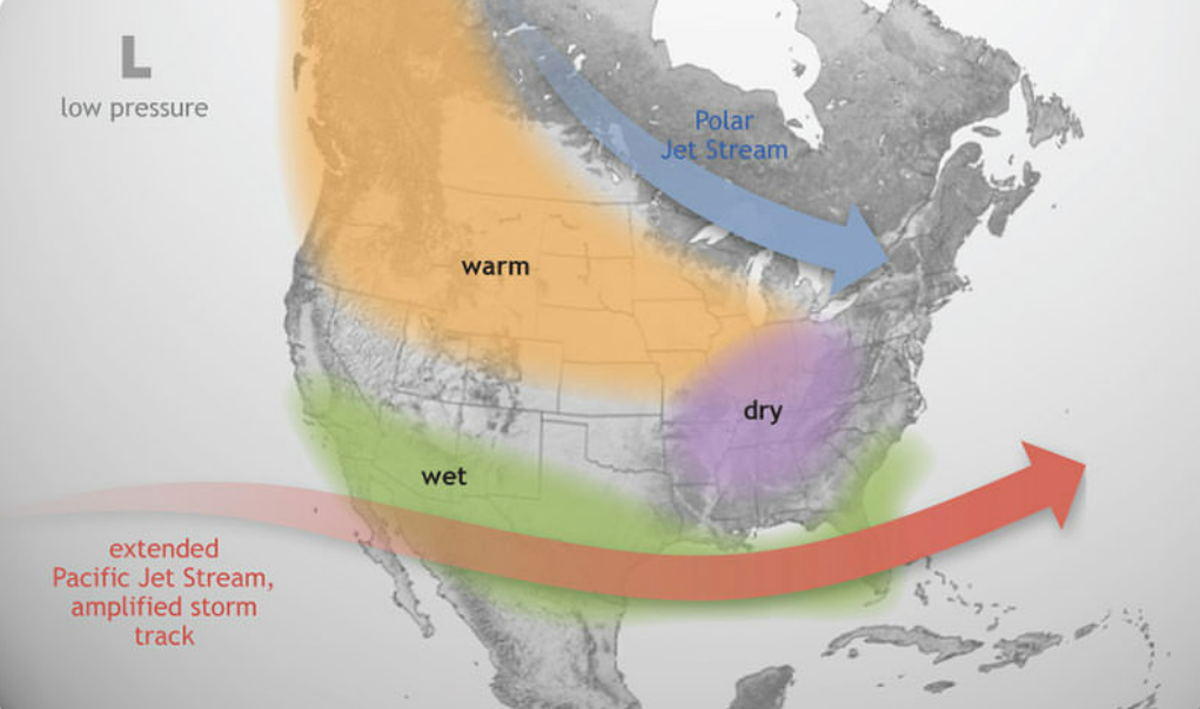
As a result, it’s not surprising to see elevated snowfall in the southern half of the country, though it has to be cold enough.
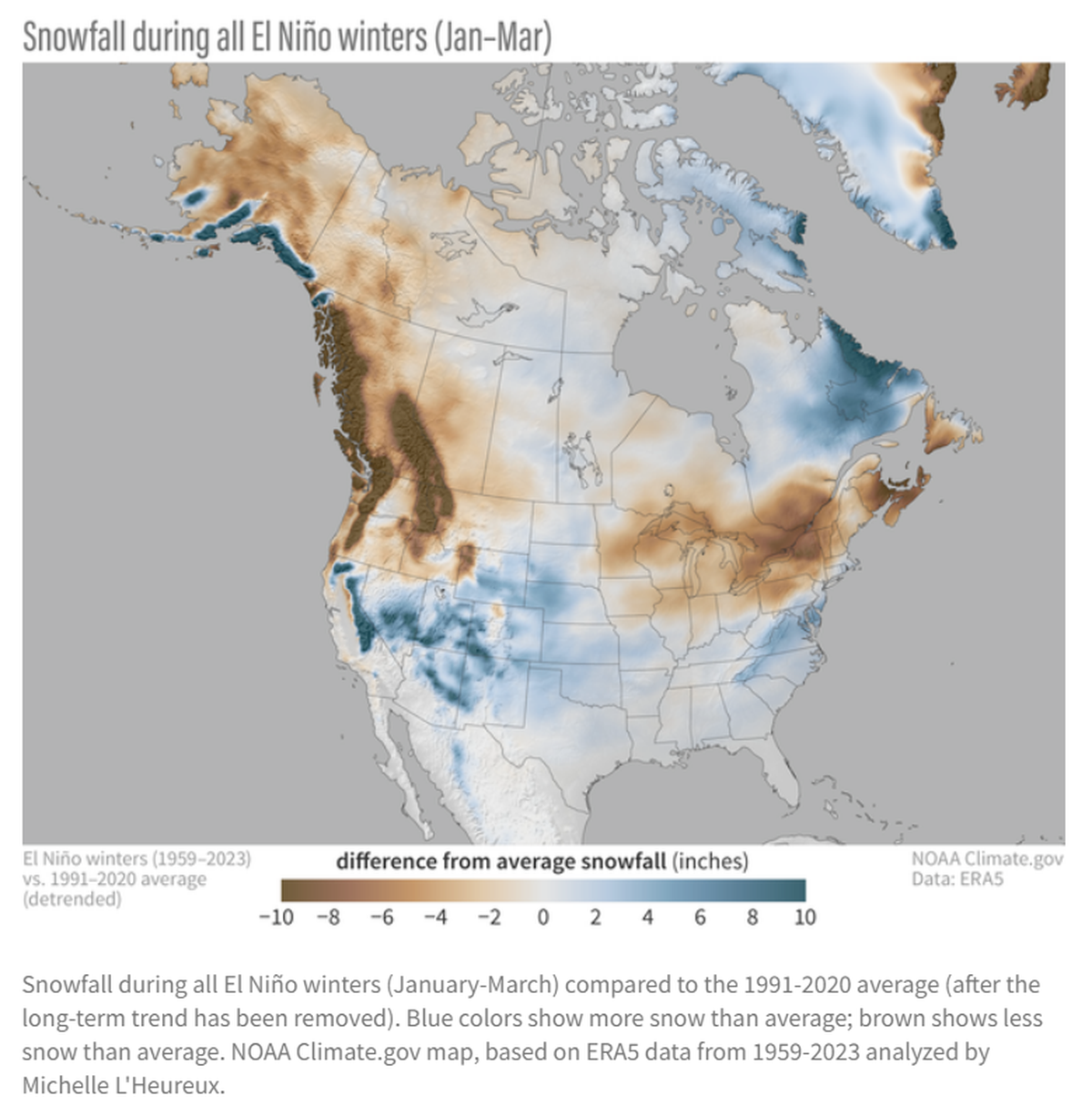
In Kentucky, when all El Niño winters between 1959 and 2023 are considered, that tends to translate to elevated snowfall across the state, according to recently released maps from NOAA.
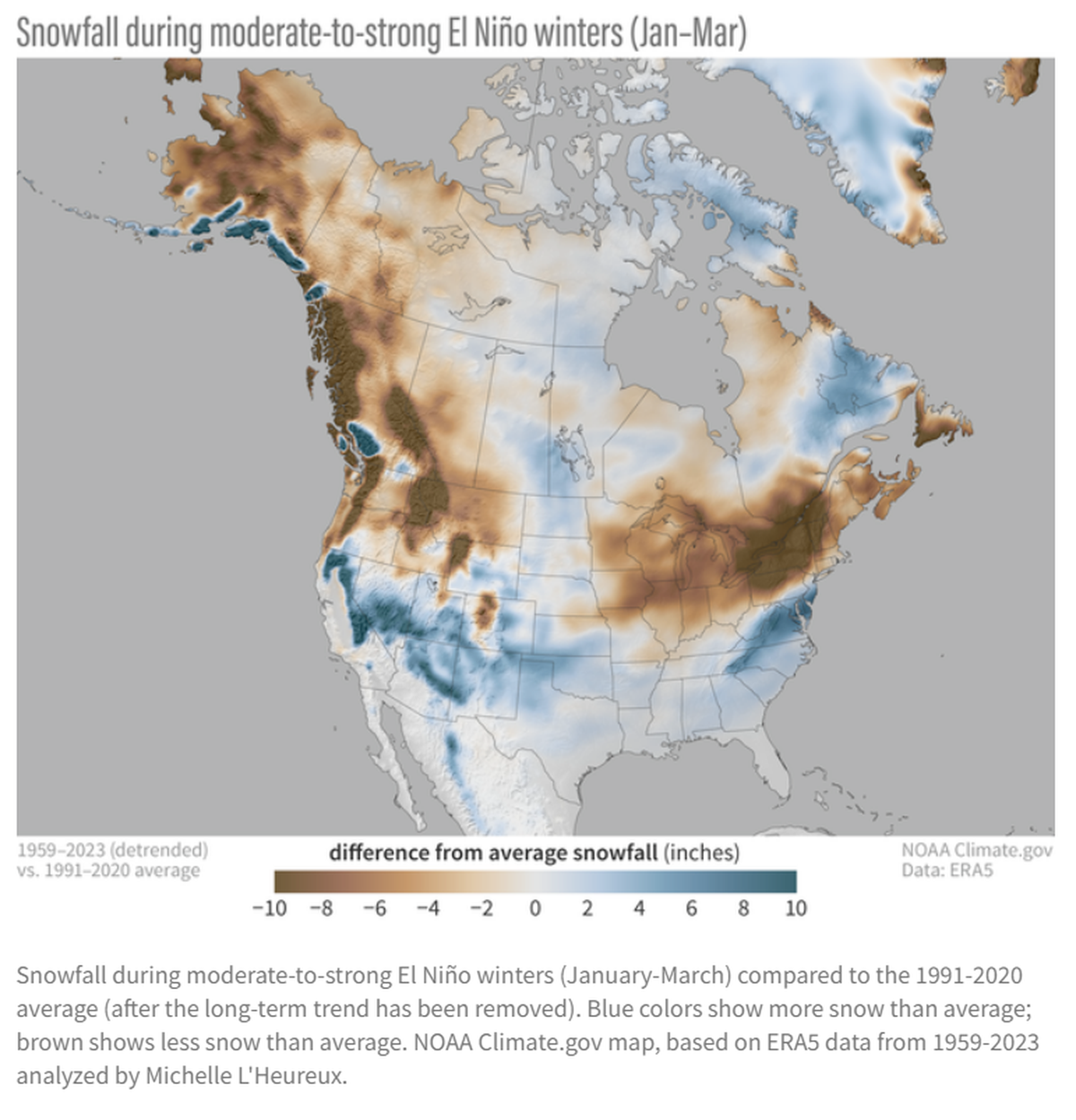
However, the picture gets murkier for Kentucky when you look at the typical moderate to strong El Niño winters, when the state appears to be roughly split in half along a north-south cleave.
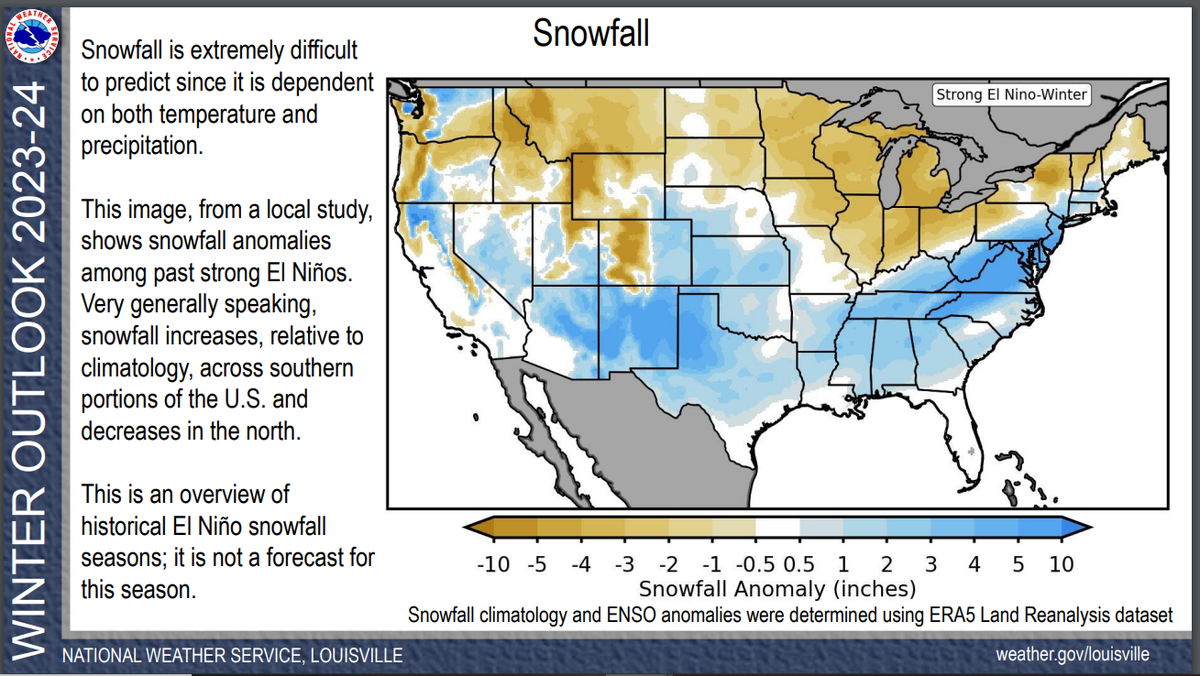
A local study from the NWS in Louisville looking at previous strong El Niño winters could bode well for snow-lovers. To be clear, this is not a forecast, but a retrospective study.
Looking at how previous strong El Niño winters behaved in the past, the NWS in Louisville observed, “on average, in previous strong El Niño events, the Ohio Valley has been sandwiched between less snowy than average conditions to the north and snowier than average conditions to the south. The second half of the winter has been slightly snowier than the first half of the winter, especially in Kentucky.”
While El Niño may increase the chances of snowfall in certain places and decrease the odds in others, it’s not the only factor. Several variables have to come together to create snow, let alone snowfall that’s measurable.
So while snowfall may seem more or less likely in certain areas during an El Niño winter, we’ll have to wait and see how conditions actually shake out.
Do you have a question about weather in Kentucky for our service journalism team? Connect with us through the Know Your Kentucky form below or email us at ask@herald-leader.com.