
It’s hot and muggy across Kentucky, and the ‘corn sweat’ is likely making it worse
Lexington and other parts of Kentucky are experiencing what’s likely to be the warmest weather of the summer this week, according to a special weather statement from the National Weather Service Wednesday.
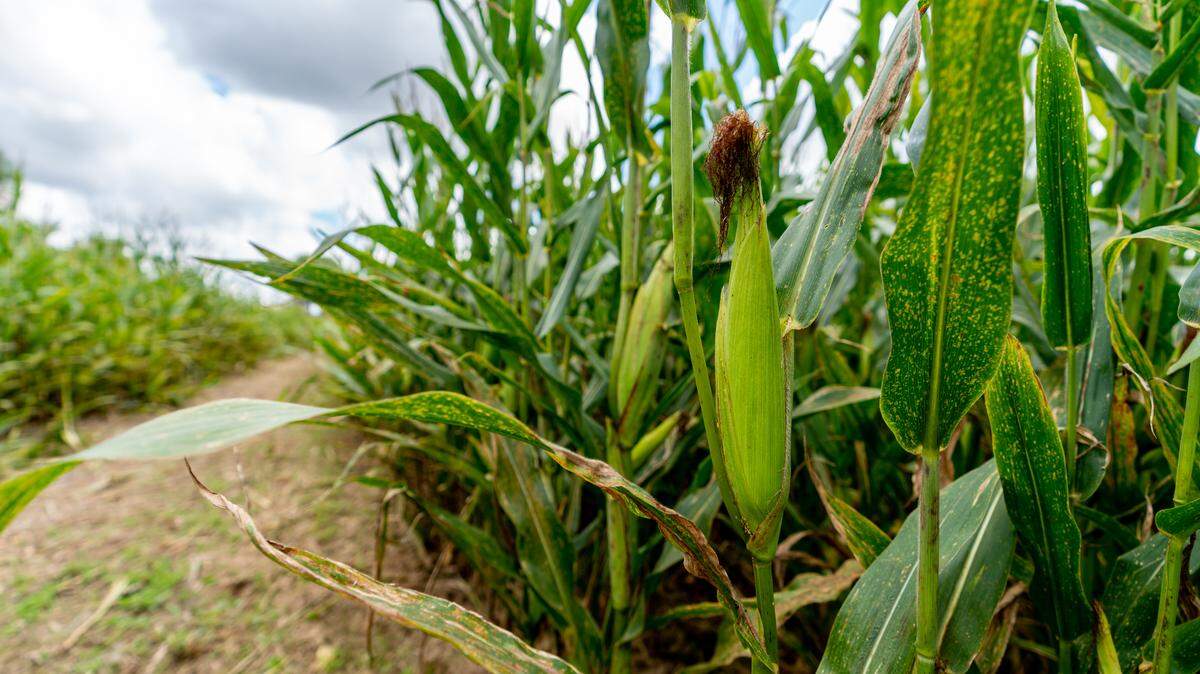
What you might not know is a strange sounding phenomenon, commonly called corn sweat, is likely contributing to the general mugginess and misery, particularly in areas where the crop fields are common.
“Corn sweat,” or the process by which corn plants release large amounts of moisture into the air, may sound similar to what humans do to cool themselves down. However, there’s a lot more to the phenomenon. Here’s how corn sweat creates a micro-climate that’s somewhat like wearing your winter coat in late summer.
How does corn sweat work?
First, it helps to understand “corn sweat” is sort of a misnomer as it implies the corn is sweating to cool itself down, just as humans do. Instead, think of what’s occurring as the plant’s unique way of breathing.
The true nature of the process is scientifically known as evapotranspiration, and it’s something all plants do.
Put simply, plants use their root systems to absorb water from the soil, which then circulates throughout the plant, nourishing and sustaining it. Water continues moving through the plant and is released as water vapor through stomata on the plant’s leaves. These stomata are essentially very tiny lips that the plant “exhales” through. If you’ve ever seen a patch of fog hovering over a forest landscape, that’s evapotranspiration.
The process does create evaporative cooling, when the evaporating water carries away heat, but this is a nice side benefit rather than the main function of evapotranspiration.
How much moisture does corn sweat release?
In the case of corn, a single acre can release between 3,000 to 4,000 gallons of water into the atmosphere per day, as explained by The Weather Channel.
Corn is a leading crop in Kentucky and across the Midwest. In 2023, according to the U.S. Department of Agriculture’s National Agricultural Statistics Service, Kentucky produced 275 million bushels of corn, up 30% from the previous year’s yield. All told, the Bluegrass State has an estimated 1.5 million acres of corn.
Different crops have varying evapotranspiration rates, but corn in particular is known for its high rate. Corn sweat is most noticeable during the peak of summer in July and August, which aligns with peak corn growing season.
How does corn sweat affect weather?
Corn sweat can affect the weather in the following ways:
It raises the dew point. According to the NWS, the dew point is the temperature the air needs to be cooled to at constant air pressure to get 100% relative humidity. At this point, the air has become fully saturated with moisture in the form of water vapor. If it’s cooled even more, the air must release the moisture in the form of precipitation or fog. The higher the dew point, the more moisture the air can hold. It also directly affects how comfortable it feels outside. The higher the dew point, the more muggy it will feel.
Corn sweat also raises the heat index, the measure of what the temperature feels like to the human body. Sweating becomes a less effective means of cooling because the air can’t absorb the excess moisture as water vapor.
These impacts are magnified in areas where corn is a major crop, such as the Midwest.
Conditions will likely remain hot and muggy through Friday in Lexington, with a week of high temperatures fueling weekend thunderstorms. That said, there’s hope of returning to a cooler equilibrium for Labor Day, with temperature highs in the low 80s early next week, according to the latest NWS forecast, as of Wednesday.
Do you have a question about the environment in Kentucky for our service journalism team? Send us an email at ask@herald-leader.com or submit your comment or question via the Know Your Kentucky form below.
This story was originally published August 28, 2024 at 2:01 PM.