
Lexington’s renovated courthouse is a success. Don’t stain it with secrecy.
On Wednesday, the Lexington Herald-Leader sued to obtain public records about a public building, renovated with public money and led by a board of public servants.
The building is Lexington’s former courthouse, which has been beautifully restored and sits again as the jewel of downtown, filled with businesses, an event space, and a restaurant and bar. It’s now run by a limited liability partnership called Historic Courthouse LLLP. The board of Historic Courthouse consists of city employees, including Chief Administrative Officer Sally Hamilton, deputy CAO Glenn Brown and former General Services Commissioner Geoff Reed. It rents the courthouse from the city for $1 a year.
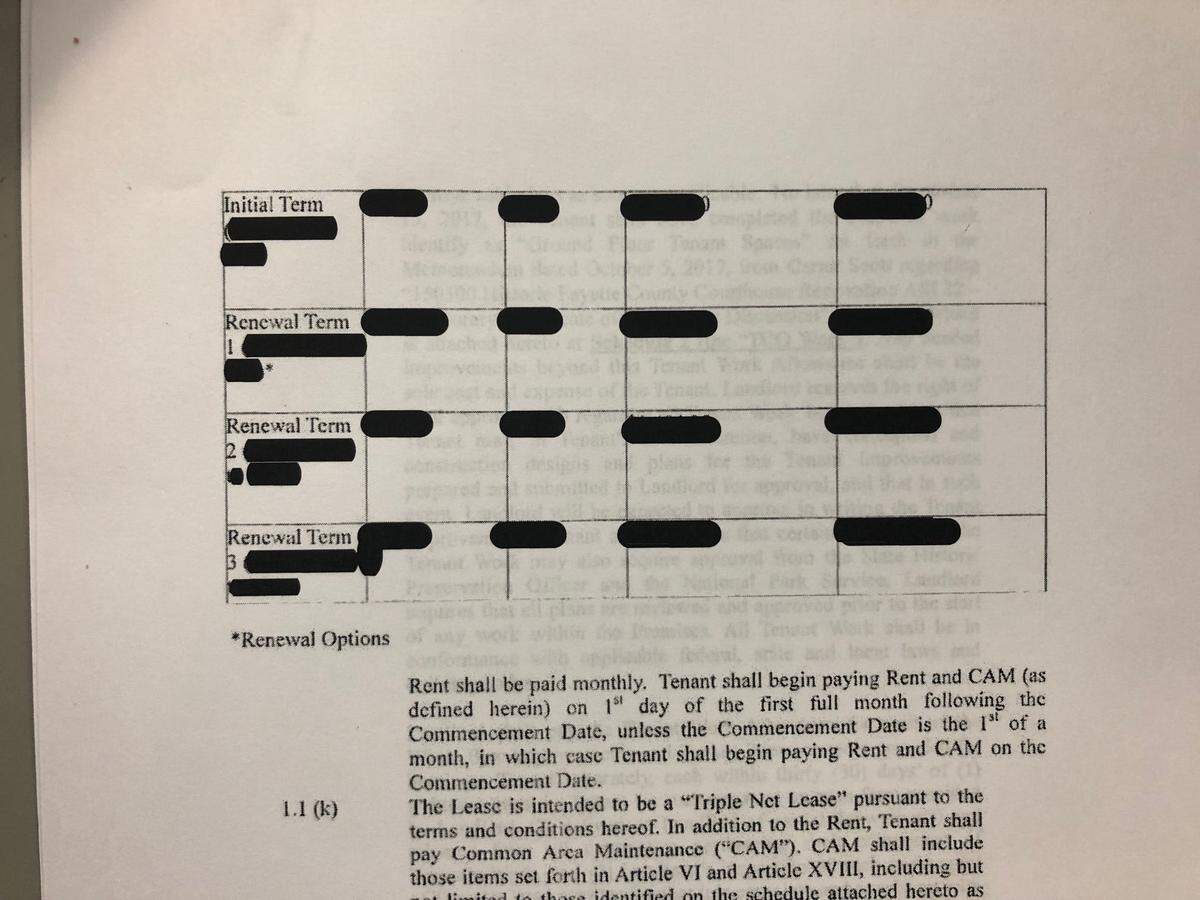
Through the Kentucky Open Record Act, reporter Beth Musgrave asked for the leases of the businesses now in the courthouse: Breeders’ Cup, Limestone Hall or LexEffect, VisitLex, The Thirsty Fox and Zim’s. Historic Courthouse gave her the leases, but redacted all the pertinent information. (As Musgrave reported on this issue, she found some other very interesting details about the city’s support of private developers, the kind of invaluable local reporting that Lexington should treasure.)
Historic Courthouse said it was exempt from open records altogether, but would give her the leases with redactions because “unfair commercial advantage to competitors of the entity that disclosed the records.” The for-profit group was set up in order for the renovation project to qualify for historic tax credits.
This argument fails on a lot of levels. First of all, the Kentucky open records law says that if an entity receives 25 percent in public money, it’s subject to open records. The city directly paid for $22 million of the project’s $32 million cost.
Also, Historic Courthouse LLLP was created and is run by public officials. In Fayette Circuit Court, where this case will be heading, Judge Kimberly Bunnell ruled in May that the Kentucky Medical Services Foundation, which runs the billing for University of Kentucky doctors, was subject to open records because it was created by and run by UK.
This case highlights a continuing, possibly worsening trend in government’s compliance with open records and open meetings laws, which are such a crucial bedrock to the idea that government is, in fact, “of the people, by the people, for the people,” as Abraham Lincoln said.
“I don’t believe there has ever been a period in my 28 years of dealing with this law, where I have seen the level of defiance, disrespect for the law, lack of appreciation for value and importance of the law,” said Amye Bensenhaver, a retired assistant attorney general and co-founder of the Kentucky Open Government Coalition. “A troubling trend that never really goes away is the tendency of public servants to hide what they do away from their bosses, who are in fact, ‘we the people.’”
This problem will only get worse as more public entities form partnerships with private companies, otherwise known as P3 deals. We’ve seen it on college campuses, as numerous public universities have used private equity from big developers to build residence halls and parking garages. The Frankfort State Journal got into a costly court fight with the Finance and Administration Cabinet over records regarding the bids for private businesses to rebuild the Capitol Plaza in downtown Frankfort.
Incidentally, that contract went to CRM Companies, which, as Musgrave reported, also has a contract to manage the courthouse for $30,000. She received that contract after CRM agreed to let Historic Courthouse release it. (CRM, as you recall, is also the employer of Timothy Wayne Wellman, who pleaded not guilty last month to federal charges of allegedly lying to investigators about making straw contributions to city council members as CRM pursued a plan to move City Hall into the Herald-Leader building on Midland Avenue.)
But getting documents at the whim of a private company who’s in partnership with a public entity is not the spirit of the open records law.
“If you’re doing business with a public agency you need to be on notice, your records may be subject to the open records law,” Bensenhaver said. “P3 partnerships will be a continuing problem.”
It’s not clear if the city or the LLLP is calling the shots, but their intransigence on this issue merely puts a cloud over this award-winning project, which should be an unmitigated positive for Lexington. Its taxpayers paid for this project, and they have the right to know all the details of its finances and operations, not just those the partnership deem to be safe for public consumption.
Linda Blackford writes columns and commentary for the Herald-Leader.
This story was originally published July 26, 2019 at 8:41 AM.