After years of complaints, UK acts on diversity. Then fires a guy who made it happen all along.
This week, President Eli Capilouto rearranged a lot of pieces on the University of Kentucky administrative chessboard, proclaiming the creation of a more diverse leadership team.
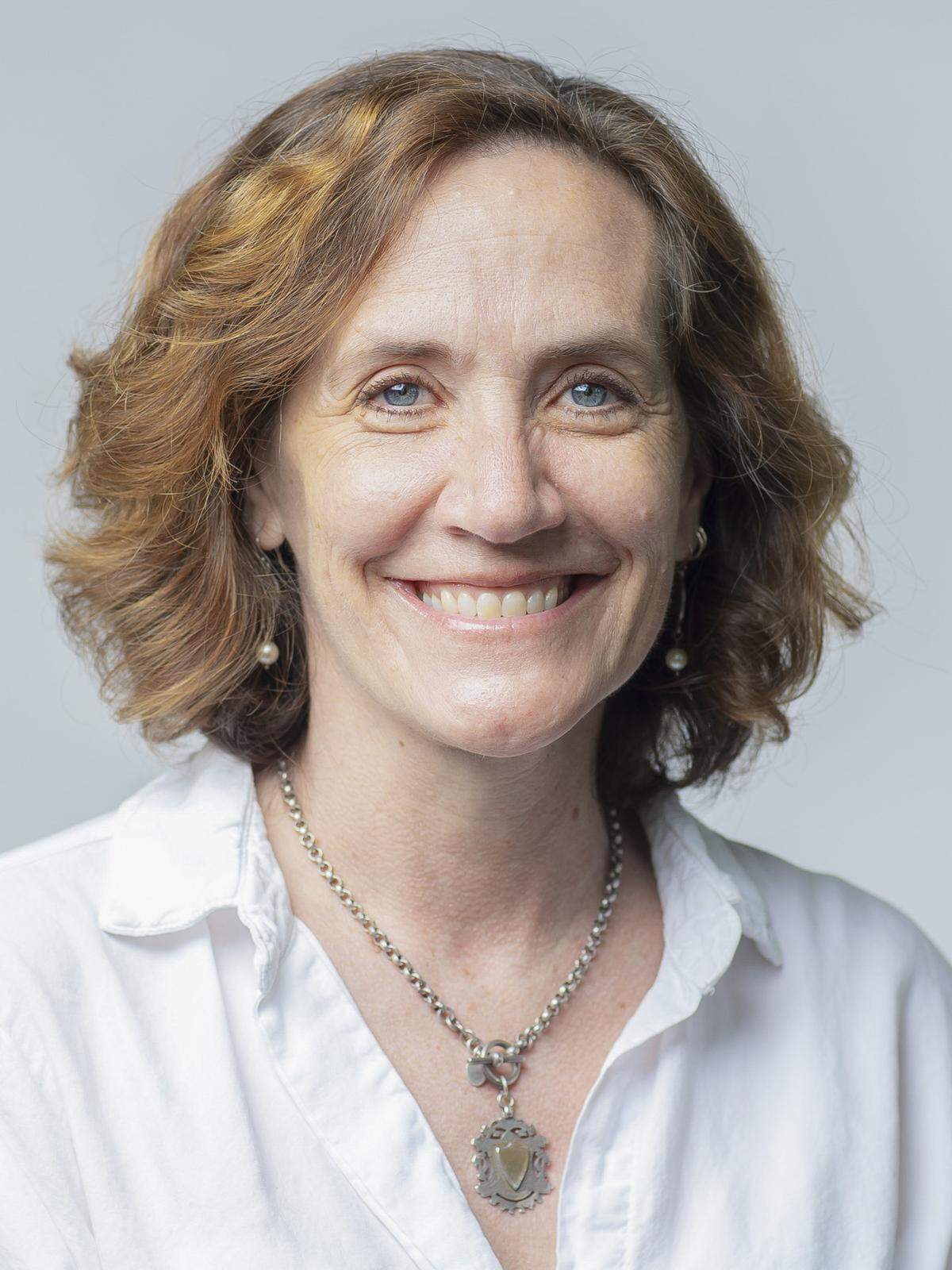
Also this week, Provost David Blackwell fired the man who’s done a great deal to actually diversify UK, College of Arts and Science Dean Mark Kornbluh. As one example, in just the past two years, he pushed an initiative to create a new major of African American and Africana Studies (AAAS), hired six new Black faculty and paved the way for four more next year.
Kornbluh also personally nurtured the careers of countless faculty, staff and students of all races, but particularly those traditionally underrepresented in academia.
“I am devastated,” said DaMaris Hill, an associate professor of creative writing and interim director of AAAS. “He has been so instrumental to my career at UK. Dean Kornbluh has been an outstanding leader with a vision, who followed through with that vision.”
Kornbluh’s first hire in 2010 was esteemed Kentucky poet Frank X Walker, who also used the word devastated to describe his feelings about Kornbluh’s ouster.
“Look at all the news they rolled out this week, the platitudes about the next steps around diversity,” said Walker, who is now the UK director of creative writing. “And in the middle of that to get rid of the shining light for diversity makes no sense, it’s counter-intuitive, illogical, egregious. I’ve run out of words.”
Capilouto has been criticized since at least 2013 that his leadership team looked mostly like him, white and male. After nine years at the helm, he decided to address it. His reorganization has elevated two women, Dean of Agriculture Nancy Cox and associate provost Kirsten Turner who is now the vice-president for student success, along with chief auditor Joe Reed, who is Black, to chief accountability officer. All three will report directly to the president, along with George Wright, who came out of retirement to become the interim vice president for institutional diversity and is also senior advisor to the president.
Shortly after the killing of George Floyd, Capilouto announced a long workflow of changes to improve campus life for Black students, but as Black faculty reported not long afterward, he failed to talk to any of them about the changes. So the faculty of AAS sent a series of demands, some of which Capilouto has now fulfilled, including $10 million in racial inequity research and $250,000 for the Commonwealth Institute for Black Studies.
This is all positive, and of course, it’s better to be late than never.
But there’s a difference between someone who acts well after the alarm bells are going off and the person who does it quietly all along.
“Part of creating a diverse environment is you have to listen and surrender some control,” Kornbluh told me. Although UK tried to buy him off if he accepted a resignation, he decided to take a pay cut, go back to being a history professor and have a chance to talk openly. “The real problem here is the total erosion of academic leadership.”
One of academia’s historic backbones has been the idea of “shared governance,” or co-equal branches where faculty had say over major changes at universities through faculty senates and tenured protection of speech, however unpopular. At state universities, constant funding cuts have put more pressure on administrators to graduate more students and leave less money for research, travel and other traditional byways of academia. It has also increased tensions between faculty and administration.
UK has kept mum about the actual reason they jettisoned Kornbluh, but Walker and others attended a Zoom meeting with Blackwell on Wednesday, where the provost said the trouble was financial, a problem that has dogged Kornbluh before. In 2016, 30 staff were laid off from A&S.
He, on the other hand, argues that more and more of the budget has been taken away from the colleges, given to more counseling, advising, administration, consultants and construction, including, he said, a recent $2 million for marketing.
“If you look at what other universities do, they set aside millions of permanent dollars for hiring a more diverse faculty, and we added $2 million to a marketing budget to create a cult of personality around our president,” Kornbluh said. “For the faculty that rings totally hollow.”
Kornbluh said Capilouto’s reorganization upsets him even more than being fired. “This is the most major change that anyone will experience, and it has nothing to do with diversifying. What we’ve done is eviscerated the faculty side of the university.” For example, Turner will oversee all student success, including admissions, retention and graduation, “so there will be no academic input into who is admitted,” Kornbluh said. “It’s mind-boggling.”
Kornbluh is a pioneer in digital humanities; one of his early research projects was the digitization of South Africa’s official reckoning of apartheid, the Truth and Reconciliation Commission. Part of what bothers Walker and many others is that Kornbluh’s dismissal seems like part of an inexorable and intangible erosion of arts and humanities at UK, while the administration is turned over to corporate types who favor more profitable fields of study like business and science.
“It feels as though the humanities are under siege,” Walker said. “Mark was not a hard core business man making tough decisions without the benefit of empathy.”
It’s not a question of whether UK had the right to fire Kornbluh, especially if his budgets didn’t add up, but it’s a mystery why they would choose to do it in the ignominious way they did, provoking an already stressed faculty and staff trying to navigate a deadly pandemic. Maybe they thought it would be ignored amidst news of reorganization. If so, they miscalculated.
But even UK’s COVID-19 response shows the school’s top heavy approach, Kornbluh said.
“We (deans) did not have a single meaningful discussion about the university’s COVID response,” he said. “Putting up a web form is not how serious academic consultation takes place. There are really smart people working in these colleges, and it works better if they would listen to them, but that is no longer allowed to happen.”
This story was originally published September 4, 2020 at 10:15 AM.