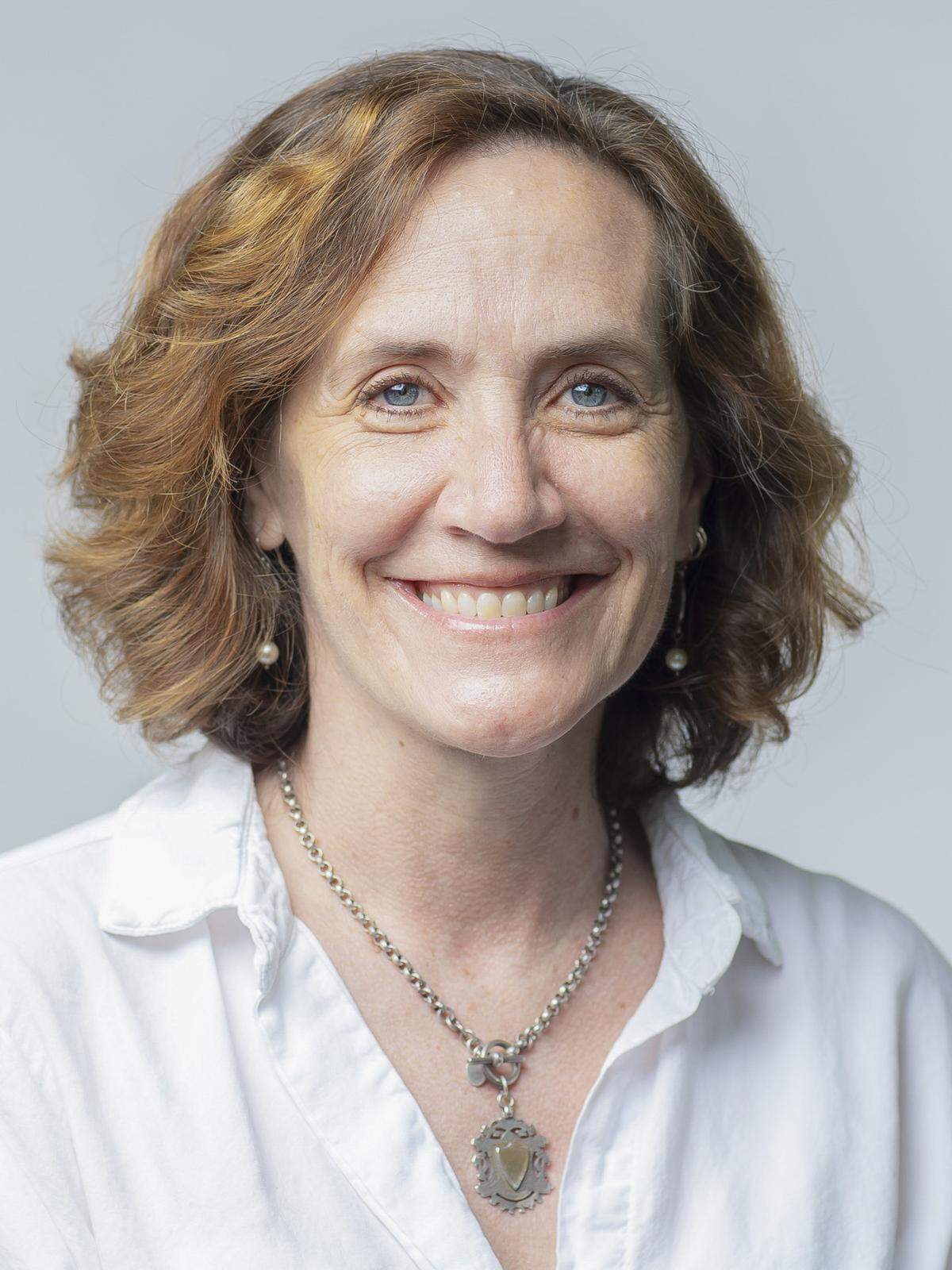
Seeking ‘safe passage:’ How one Lexington woman is helping save Afghan lives.
Deborah Alexander retired back to Lexington a few years ago, content to put the career of a globetrotting diplomat with the U.S. State Department behind her.
But ever since Aug. 14, she’s spent countless hours in front of her computer and phone, texting, emailing, calling, planning and looking at every possible scenario to get former friends and colleagues out of Afghanistan.
“One thing that’s helped me since Aug. 14 when we knew the Taliban had taken over the country is that I have become part of this sort of ad hoc, globally interconnected safe passage network,” Alexander said. “I have a little operations center here at my house, and I think that’s been replicated 100s of times around the globe with former diplomats, intelligence officers, military personnel ... we have been basically working since that Sunday morning on how do we get people out. I stop at 3 a.m. and start again around 6 a.m.”
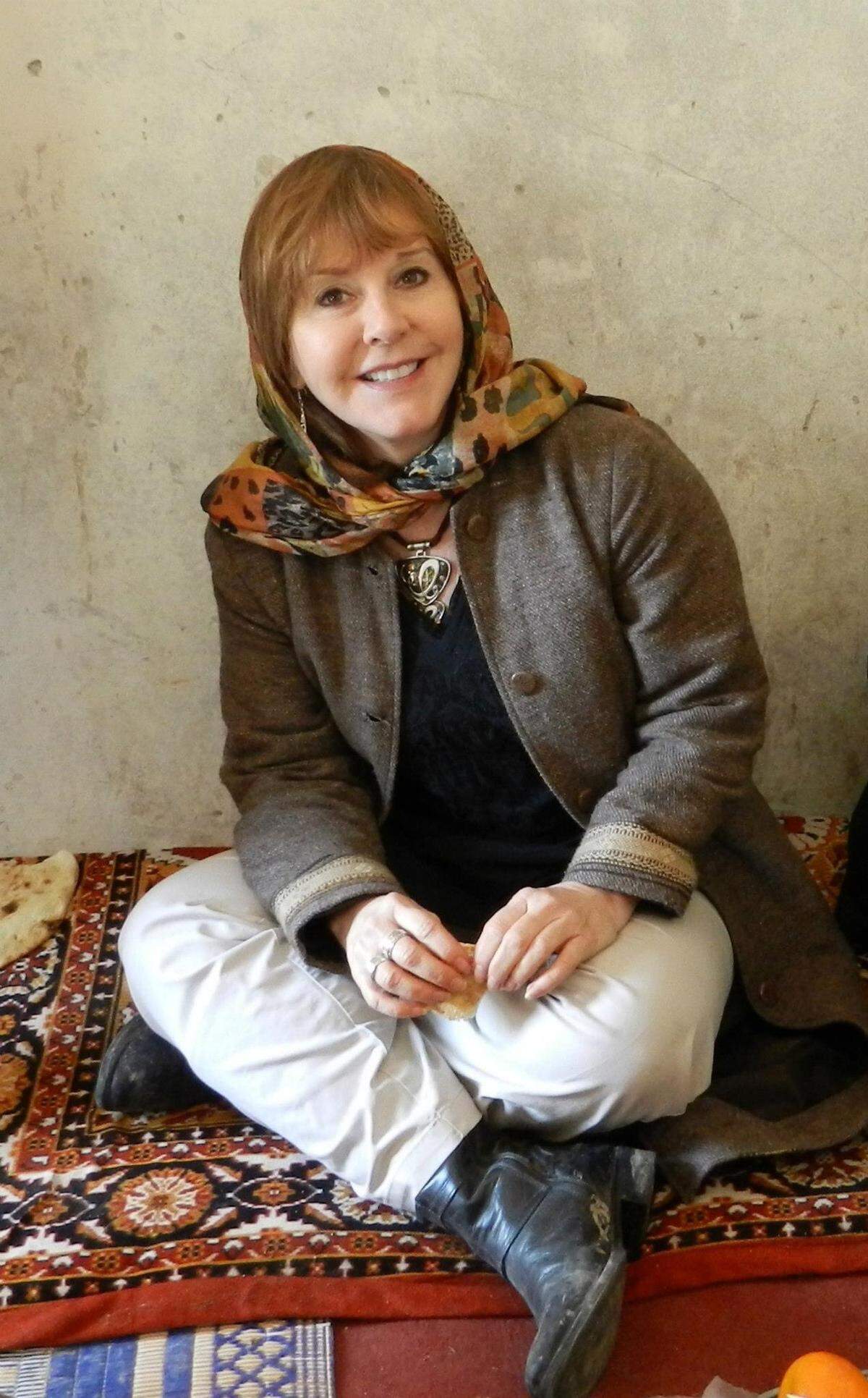
The New York Times dubbed this effort a “digital Dunkirk,” a massive evacuation for more than 100,000 people, with the Kabul airport standing in for the boats that got Allied troops out of France in 1940. In this case, WhatsApp, Signal, Facebook groups, email and iPhones send frantic messages around the globe securing flights and destinations for those who have spent the past 20 years in work that would put them squarely in the Taliban’s sights, like education for girls and women, human rights, and democratic elections.
In 10 years in Afghanistan, Alexander worked on all those issues, and became a mentor to numerous Afghan women who came to the United States for a college education. “Most of them chose to go back (to Afghanistan) so of course when the worst happened, my focus was on getting them out, along with husbands, children, parents,” Alexander said. “It’s a wild and unique experience but it also has been so therapeutic.”
When we talked on Friday, she was celebrating the arrival of one family in Germany, and estimated she’d aided at least 33 people onto planes. They needed help with flights and visas, and just basic information out of the chaos of Kabul as it fell to the Taliban. Some of that included information that Alexander was able to share with her contacts — Don’t use Abbey Gate to get to the airport because of rumors about something very bad happening there. And then on Thursday, it happened, an explosion that killed 13 U.S. soldiers and 169 civilians waiting there to get out.
“If someone has reached out and asked for help, I say to them, ‘I want you to understand what this might mean,’” Alexander said. “’You’re leaving everything behind, your family, your pets, your pictures, you’re going to another country where you might be living in a hotel room or a refugee settlement and there’s no guarantee where you will go next. You may get to Albania or Macedonia or Uganda but it is not guaranteed you will come to the U.S.
“This is what consumes me,” she said. “It’s a new mission and a totally unexpected one, that I would be pulled back into Afghanistan at this point.”
From Bosnia to Kabul
Alexander, 66, grew up dreaming of international adventures from that most Kentucky of places — the storied Dixiana Farm, where her stepfather was the manager. She attended Bryan Station High School, and then Eastern Kentucky University, where she majored in social sciences in hopes of becoming a social worker. But instead, she moved to New York, worked in city and state governments, got interested in how those worked and returned to school for a masters and Ph.D. in interdisciplinary social sciences. She became an expert in election law and national constitutions. Then in 1996, shortly after the Dayton Peace Accords ended the civil war in the former Yugoslavia, she got a call.
“It was Colonel So and So from the State Department, they were in need of people who understood election laws and constitutions and would I consider going to Bosnia, Croatia and Serbia?” Alexander said. She called her mother in Lexington to tell her about the offer. “There was this long pause and then she said, ‘it’s what you’ve always wanted to do.’ That was the permission I needed.”
So began her life overseas, specifically setting up the infrastructure for elections in war-torn Bosnia, everything from creating political parties and election law to making sure there were adequate polling places for elections.
On Sept. 11, 2001, she was home on a brief vacation to Lexington. As soon as she watched the news that morning, she knew immediately that her assignment would change, and on Christmas Eve, she got the call that she would be going to Afghanistan.
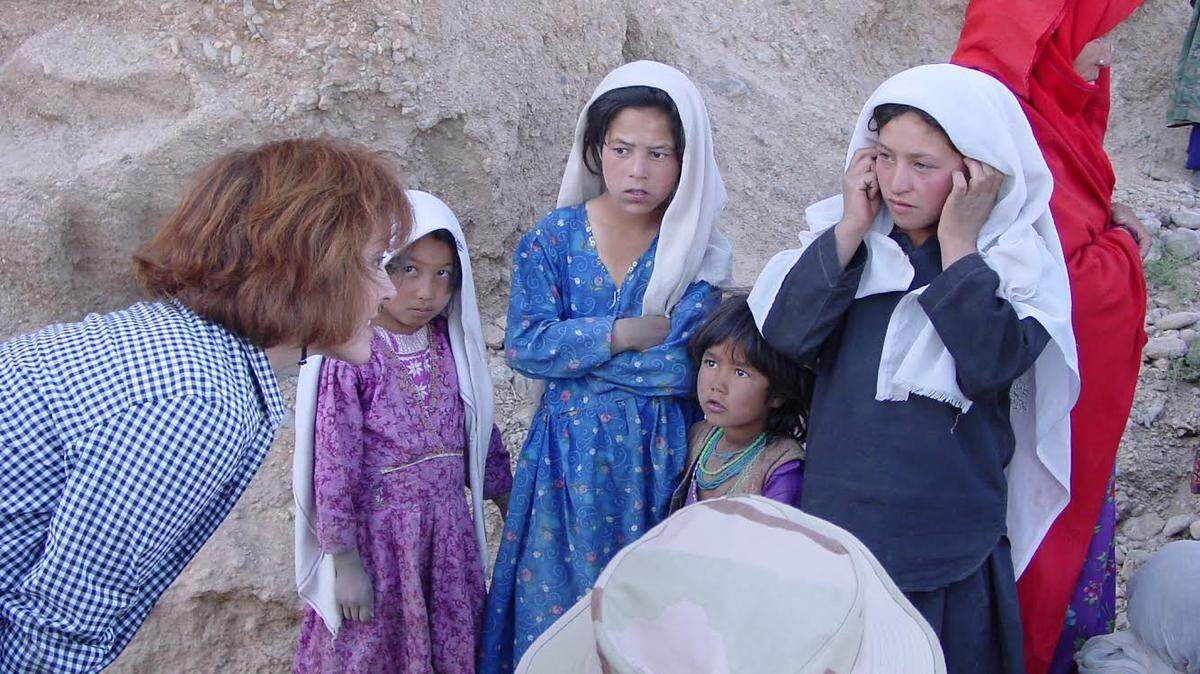
Her work there was varied, from supporting a new constitution to planning U.S. assistance for the first presidential election in 2004 to helping fund a network of domestic violence safe houses across the country. She lived on military bases in most of the major provinces and traveled the country. She grew to love Afghanistan, the arid deserts of Helmand province and the turquoise lakes of the Band-e Amir national park.
“There are so many things that are sad, but one of the US projects that we funded was the training of women as forest rangers in those lake regions to preserve snow leopards and wolves,” she said. “What will happen to those women who were a vanguard?”
But mainly, she said, her memories of Afghanistan are ”sitting in a tent surrounded by Afghan men, the elders of a village, discussing programs, or negotiating about building a girls school, or talking about elections and what it means for people to vote,” she said.
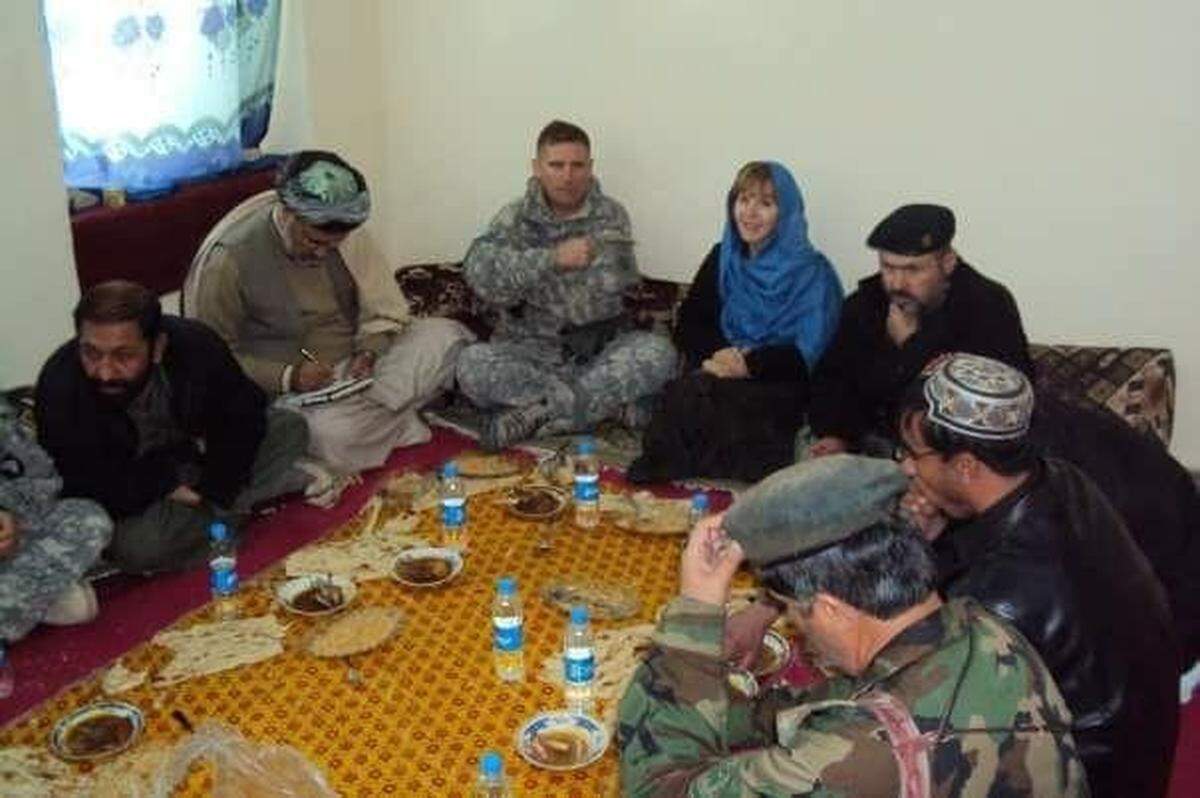
She helped get a woman’s right to vote in the new Constitution, secured funding for more than 200 new schools, cut the ribbon on 13 women’s radio stations. “It was project after project, and that’s why it’s been such a gut punch about what happened since Aug. 14,” she said. “It’s more about the fact that we believed in the work we were doing and we worked with people who believed in it too.”
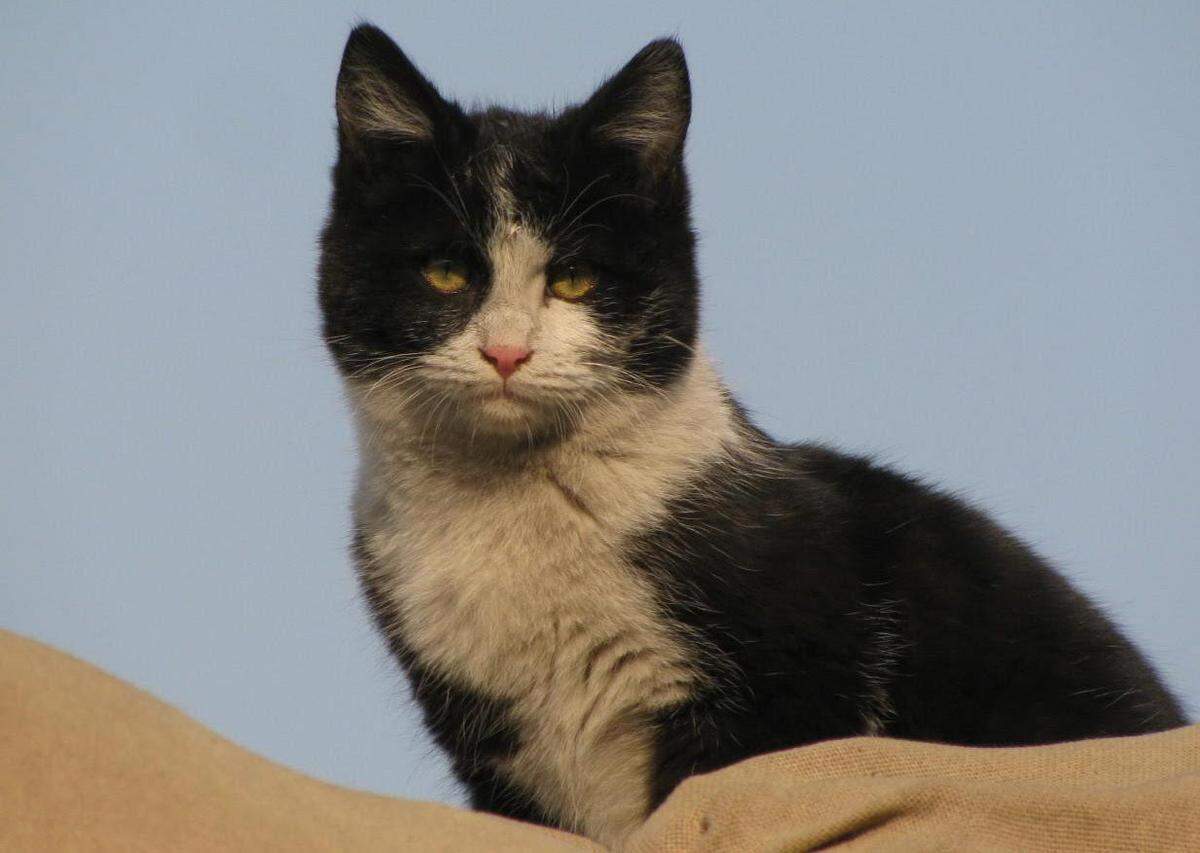
Alexander is also the survivor of three bomb attacks, one of them directed specifically at her as she moved from a meeting back to the her military base. She was airlifted to the Kandahar Hospital, not sure she would survive, and worked months to come back from a traumatic brain injury. By 2011, she was working on the plan to draw down both military and diplomatic personnel, a draw-down that she became part of. And by 2014, she and her adopted cat, Mooch the Hooch cat, returned to Washington and eventually to Lexington. (The saga of Mooch’s voyage from a kitten living in a sandbag on a military base to lounging here in Lexington is unfortunately too long to describe here, but let’s say it was epic and includes running down the tarmac with Mooch on Alexander’s back as she eluded Afghan police.)
Late Monday afternoon, the U.S. military pulled out of Kabul a day ahead of schedule. “Of the groups I’ve been working with, we’re all committed to continuing our work,” Alexander said. “It really depends on whether the Kabul airport remains open, who controls it, whether commercial flights will restart.”
She’ll keep working on getting visas to any countries that will grant them and start looking at whether there are overland routes that people could find in a porous border. She will also work here with Kentucky Refugee Ministries, which is planning to support Afghan families who come to Kentucky.
Alexander is also an amateur photographer and has been sifting through thousands of photos she took in Afghanistan, remembering the work that was done. “I don’t know what happens now, but I don’t believe it disappears,” she said. She’s thinking about thousands of women journalists, of human rights advocates, of domestic violence activists who set up safe houses all over the country. “I’m here remembering the good that was done and why I love that work. That doesn’t go away.”
This story was originally published August 30, 2021 at 10:46 AM.