Midway’s rejection of RV park foreshadows land use debates coming to Lexington-Fayette
Last summer, I wrote about a contentious debate in Midway over a proposed RV park that would have brought hundreds and thousands of visitors to Woodford County.
Last month, the Midway City Council turned it down in a unanimous vote, mostly because of overwhelming opposition from Midway residents.
“I think the bottom line is that not enough questions were answered, and the developers were not forthcoming about how big this park was going to be,” said Midway Mayor Grayson Vandegrift.
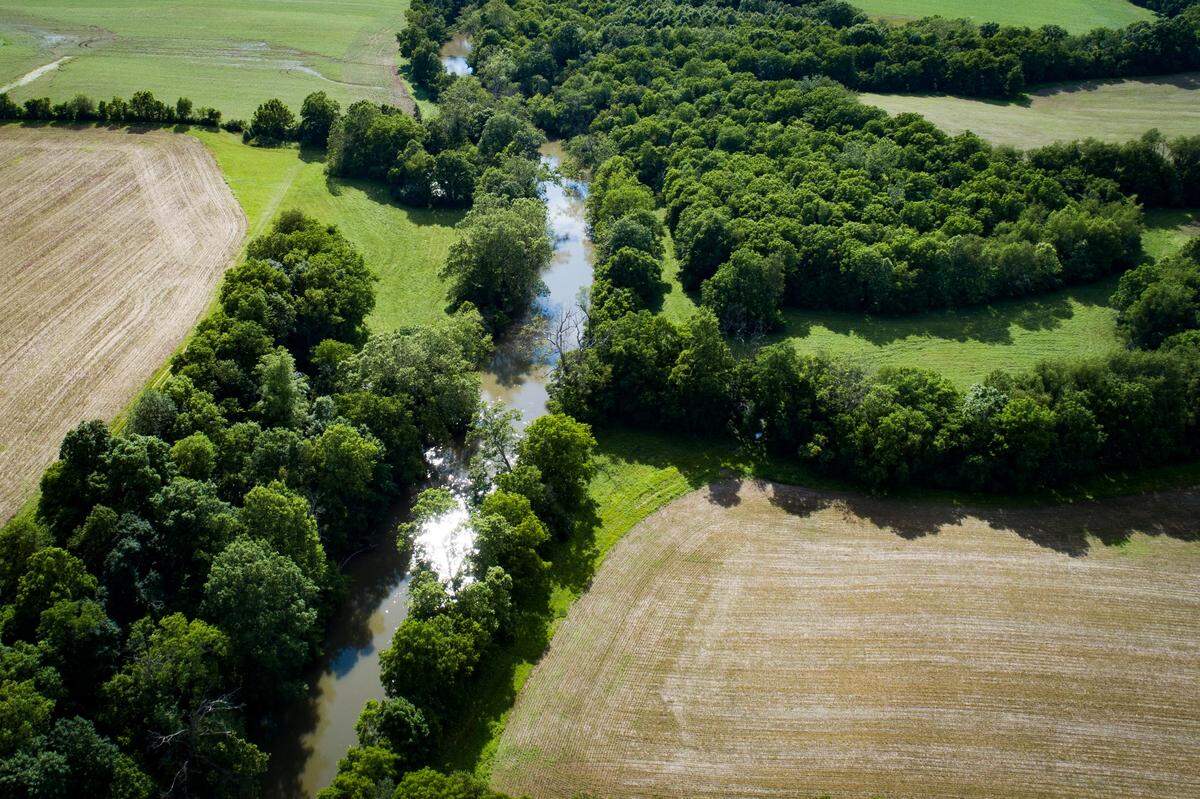
Originally, residents were told the site — across I-64 on the border with Scott County overlooking Elkhorn Creek — would be 472 guests, but it turned out they meant 472 sites for RVs. There were zoning issues, debates over how much money the project would actually bring in, but in the end, the vote came down to identity.
“We are very proud of our quaint, vibrant downtown, we also understand is what makes us great is we don’t have sprawl, anything that looks like sprawl is a red alert,” Vandegrift said. “Land use versus growth is going to continue to be an issue.”
An evergreen statement if there ever was one. Midway’s battle of identity versus growth is going to continue to spread throughout the region, and by next year it will center here in Lexington as the mayor’s race and council races — along with public comment on the five-year Comprehensive Plan in the spring — bring up the perennial topic of Lexington’s growth. How can we provide enough affordable housing for people who want to live here without carving into the agricultural spaces that make up so much of our identity?
You can tell by the new groups popping up, Lexington for Everyone, Lexingtonians United for Livability, that are starting to spout off on social media, along with the perennials like the Fayette Alliance. The issues are real and pressing: Lexington was one of the country’s pioneers in land conservation when it created an urban service boundary in 1958 to limit suburban sprawl, but clearly city leaders did not anticipate quickly enough how much pressure those limits would put on housing affordability and accessibility. The Affordable Housing Fund was set up only in 2014. Four years ago, city planners recommended not opening the service boundary up to more development for another five years, but the city must update the comprehensive plan again next year.
Lexington for Everyone was set up with funding from Commerce Lexington, but they’re taking a more sophisticated approach to growth than a bunch of home builders telling us we need more suburban neighborhoods. Instead, they’ve gathered some unusual players for the board, like Rev. Clark Williams of the Black Faith Leaders group and Rachel Smith Childress, the CEO of Lexington Habitat for Humanity. The pitch is the same as the home builders — we need more land for development — but it’s spun through important issues like affordable housing and gentrification.
A recent Twitter post for the group, for example, focused on the difficulty that Habitat for Humanity has had finding affordable plots of land for houses in Lexington.
Lexington for Everyone’s spokesman is Ray Daniels, a Black businessman who served on the Fayette County school board and is also an owner in several horse racing syndicates. “This is the only way to move forward and not have builders in the forefront,” he said.
Daniels said his group will not advocate opening the urban service boundary. “We want to create a more common sense approach to how we grow, we have to have smart growth initiatives,” he said. “Opening up the boundary does not make sense because we lose what makes us Lexington.”
However, the group’s main talking points certainly make the case for more development, including vague mentions of local companies moving because of lack of land, and plans to “triple the density in established neighborhoods.”
‘Growing from within’
The whole conversation has gotten more complicated in part because more people have realized that if you want to save green space and create more housing, you have to make more accommodations within the developed areas. That’s the idea behind Lexingtonians for Livability, which is part of a broader umbrella organization called Coalition for a Livable Lex, which includes the Fayette Alliance, Reach, and the Lexington Community Land Trust. They’ve supported the recent approval of Accessory Dwelling Units, which provide both density and more affordable housing into the mix but were strongly opposed by some neighborhood associations.
Blake Hall, a member of Lexington United, said it’s too easy to blame all of Lexington’s housing issues on conservation.
“Building another Masterson Station is not going to make the urban walkable neighborhoods any less desirable, and those people who are being displaced won’t be buying a suburban tract home,” he said. “While they (Lexington for Everyone) are pointing out valid problems, they’re taking a simplistic approach. Expansion, particularly without more zoning reforms, will just result in more suburban sprawl which is the real culprit for most of our problems.”
The Fayette Alliance’s board is mostly peppered with horse farm owners, but in 15 years, that group has realized that to save Fayette’s horse farms, you have to convince Lexington to grow from within.
“It’s really critical to look to our history and data and the research that’s been done about housing,” said executive director Brittany Roethemeier. “We know from our history that more land being available for development doesn’t solve the problems.”
These groups may not be as far apart as they think; turns out both Roethemeier and Daniels were in California this weekend for the Breeders Cup Championship. But in the end, everyone’s ox may have to get gored a little bit. Neighborhoods will have to accept ADUs, and plans for more infill and density with affordable housing, there may have to be more targeted development the rural lobby will have to accept, and home builders may not be able to turn all of Lexington’s outskirts into McMansion heaven. Expect to hear much, much more about it.