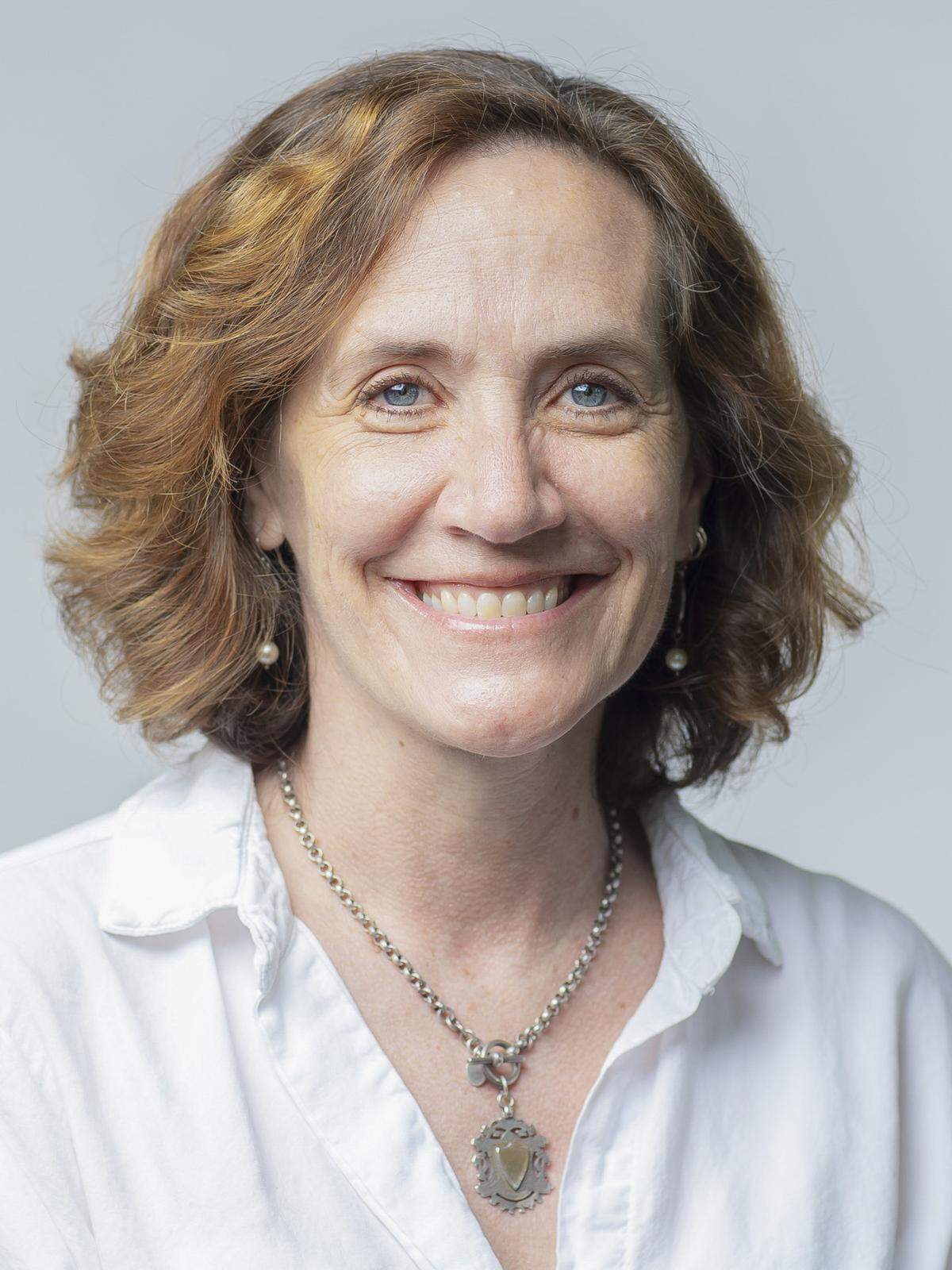
A Transy professor’s op-ed went viral. Now it’s a book called ‘The Next Apocalypse.’
It all started here on the Herald-Leader editorial page in September 2019, when Professor Chris Begley turned in some 650 words about about survival skills we might need when the climate apocalypse finally hits. Interesting, as the guy known as Transylvania University’s Indiana Jones always is, but hardly earth-shattering.
Well. We got a hint this one was different, when soon after it posted, it skyrocketed to the top of the readership charts. For several days. And stayed there. It went viral, not just in Kentucky, but all over the world. Begley started getting emails from as far away as Iceland and throughout the United States. Someone sent it to a literary agent in New York who specializes in scientific non-fiction.
And now, just a little over two years later, those 650 words have been turned into 280 pages of a book called “The Next Apocalypse: The Art and Science of Survival.” In it, Begley, an archaeologist, anthropologist and wilderness survival guide who has studied collapsed civilizations all over the world, fleshes out his many thoughts about apocalypse, our preoccupations with it, what we can learn from past collapses and what we will really need to do to survive the next one. He will discuss the book and hold a signing on Thursday, Nov. 18 at 7 p.m. at Joseph Beth Booksellers.
The spur was a trip by Swedish climate change activist Greta Thunberg to the U.S.
“That’s what prompted me,” he said. “I was just thinking about how all of these skills I teach that might be useful in the wilderness are not in fact what will get us through a collapse. I don’t know who I thought would read or care.”
A lot of people cared, perhaps, because Begley turns most people’s ideas about apocalypse upside down. While popular culture, along with the prepper world, glorify the rugged individual who, armed with guns, a basement full of canned food and a homemade water system, will survive climate collapse or zombies, it’s really the politicians and cooperators who will work in groups to ensure communities can produce food to survive.
“Preparing for the collapse of society by hoarding food and weapons isn’t really going to address the problem,” Begley said. “I think the Op-Ed really resonated because it was interpreted as a hopeful message — we’re going to have to be kind to each other and have a viable community in order to get through it.”
That’s what caught the eye of agent Leslie Meredith, who said in an email she was “electrified by his ideas and emailed him to ask if he’d thought of writing a book ... I appreciated his contrarian vision, which is based on the scientific record, and I appreciated his willingness to depart from other scientists’ and writers’ more speculative ideas about societal declines.”
By November 2019, Meredith was auctioning off the proposal to different publishing houses. The auction was a very Begleyian scenario — he was exploring a ship wreck off the coast of El Salvador and each time he came up from a dive, he checked his email to see how the auction was going. It was bought by Basic Books, an imprint of Hachette.
So he started working on the book, putting together his whole professional life of experience and knowledge, and then a few months later, the closest thing we’ve had to an apocalypse in our lifetime hit our shores. Strangely enough, in March of 2020, Begley was at the Louisville Gun and Survival Expo because he was going to meet an author writing about prepper culture. They listened to a speaker talk about COVID, about how schools were going to close and supply chains break down. “I thought it was ridiculous,” Begley said. “The schools closed the next week.”
The author, Adam Nemett, wrote an entertaining story for Rolling Stone about the expo, and said Begley’s vision had convinced him “it’s not the lone wolf Rambo operator that’s going to survive, it’s the politician who can cooperate, and trade and coexist. The lone rugged individualism will probably just get you killed.”
COVID has gone on to show us that rugged individualism still holds sway in the American psyche, but those who participated in complex cooperative systems like government-funded vaccinations will still live longer.
Begley divided the book into three sections, Past, Present and Future. In the past, he looks at collapsed civilizations, and in the present, he dissects these kinds of narratives that we’ve created for ourselves.
“It has to do with these myths we create for ourselves about where we come from and what is desirable behavior,” he said. “Movies and books that show problematic things like heroes and heroic action, traditional masculinity — these anti-community things, or clannishness doesn’t offer a lot of hope. That’s part of the point: it’s not that it will all work out, you have to make some decisions and you have to create things in a certain way, and in order to do that you have to understand what’s happening and what we have to do to secure the future we want.”
We have a lot of stressors before we even start talking about COVID: massive inequalities in terms of power and resources as we approach a climate collapse, late stage capitalism, rising authoritarianism around the world. It’s pretty bleak, but in Begley’s view, we have the tools we need if we’re willing to use them.
“This isn’t a doomsday book,” he said. “But it’s about how our ideas about doomsday scenarios are wrong.”
This story was originally published November 17, 2021 at 12:44 PM.