Domestic violence is a complicated killer in Ky. Here’s a start to solving it.
On Feb. 6, on North Upper Street, Tyrus Lathem, 22, shot 10-year-old Landon Hayes before killing himself.
The same day in Bowling Green, police found the bodies of Norman D. Johnson Sr., 60 and Kimberly A. Johnson, 43. Norman Johnson had killed his wife and then himself, police said.
Then on Feb. 7, Nicholasville police were called to the home of Angela Owens Wooldridge and Antoine Wooldridge. Wooldridge allegedly shot his wife, then himself. Angela Wooldridge had three children aged 15, 8, and 7. Monday was the 7-year-old’s birthday, police said.
It was a bad week for domestic violence in a state where these kinds of incidents happen all the time, leaving behind untold tragedy to families and communities, especially children. Anecdotally, we know a bad problem was made worse by COVID shutdowns, quarantines and isolation. From stories here and there, we know Kentucky has made some progress in, for example, including dating partners in domestic violence emergency orders.
But we don’t know for sure about any of it because Kentucky has never before collected statistics about domestic violence deaths or incidents in any kind of central database. Kentucky has frequently lagged behind other states in domestic violence policies and laws, and as I wrote about here, here and here since 2009, the legislature has seemed reluctant to make any kind of central reporting system.
But now, finally, we could be on the road to getting more factual information about domestic violence that could in turn lead to better policies to prevent it. Sen. Whitney Westerfield, R-Crofton has filed Senate Bill 271, which would require various state agencies to report annual domestic violence statistics to the Criminal Justice Statistical Analysis Center in Frankfort.
“This is crucial for documenting, understanding, and following trends in intimate partner deaths and mass shootings (given the overlap of partner abuse/domestic violence and mass shootings),” said TK Logan, a University of Kentucky researcher who studies stalking and domestic violence. “I am elated.”
Data makes policy
The Criminal Justice Statistical Analysis Center was created by statute in 1984 as part of the state Justice and Public Safety Cabinet. Under Westerfield’s bill, the center would be required to collect statistics on domestic violence fatalities along with abuse and dating violence. That information will include demographics of victims and perpetrators as well as court-ordered protective orders.
The information will be sent by a variety of state agencies. Kentucky State Police will now be required to send the Center domestic and dating violence calls that were responded to by law enforcement, arrests made from those calls and the resulting charges. KSP publishes a yearly report on crime that pulls from local law enforcement agencies, so presumably they will start sending domestic violence information as well.
The Administrative Office of the Courts will have to report on all forms of emergency and domestic violence protective orders issued, while the Law Information Network of Kentucky (LINK) will provide the number of those orders served and how long it took to serve them. The Cabinet for Health and Family Services will give the number of reports of alleged child abuse made to the cabinet through an adult or child abuse hotline where there were also allegations of domestic violence. In addition, the Kentucky State Medical Examiner’s Office and county coroners will provide the number of deaths that are or are suspected to be due to domestic violence.
Finally, the Kentucky Coalition Against Domestic Violence and Kentucky Association of Sexual Assault Programs will review the final report and provide the Governor, the Cabinet for Health and Family Services, and various legislative committees with policy recommendations by Nov. 1 each year, in time for new legislation to be crafted for the next session.
“We’re very grateful that Sen. Westerfield has really taken this issue to heart and made a commitment to this issue,” said Meg Savage, lead counsel for the KCADV. “We’re so happy this is happening because for so long there hasn’t been a central data collection effort surrounding domestic violence in Ky, as the state coalition we frequently get requests on rates of domestic violence ... often there isn’t a tracking mechanism.”
Darlene Thomas, director of Greenhouse17, a shelter in Lexington, and a longtime statewide advocate said you simply cannot craft new policies without the right data.
“Correctly identifying and tracking homicides specific to domestic violence potentially could have a critical impact in practice, policy interventions, and legislation,” she said. “It is critically important to begin to understand numbers, relationship status, weapons utilized or not, along with known history of contacts with potential services so that the knowledge gained can improve victim services and response. Without such information innovative strategies will and are being missed. We are grateful for Senator Westerfield and his leadership on this issue.”
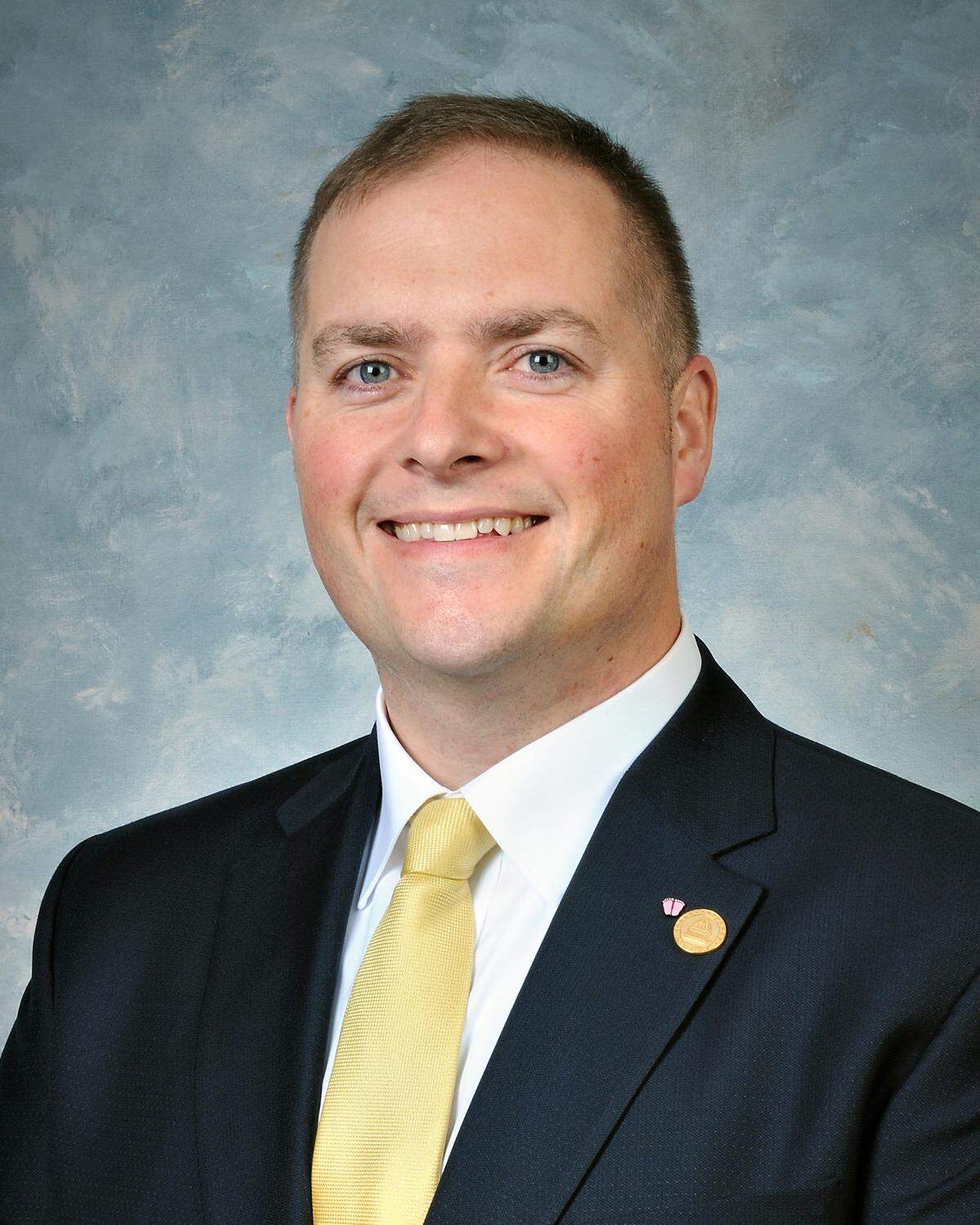
Westerfield, the chairman of the Senate Judiciary Committee, deserves enormous credit for seeing the extent of the problem and acting on it — when I interviewed him last December he said he didn’t know about the lack of centralized reporting and was duly appalled. He quickly set up meetings with advocacy groups to craft this bill. As he says, making policy from Google searches is no way to work.
“It’s unacceptable,” he said Thursday. “It’s just unacceptable. We can’t make informed public policy decisions without good information.”
Let’s hope that this kind of serious legislation to help a serious problem — as opposed to a lot of inconsequential and politically motivated nonsense we’ve seen in Frankfort lately — will make it through quickly and without opposition.
This isn’t going to solve domestic violence. As the experts point out, we may never know the full extent of domestic violence because it’s still kept as such a dark, unreported secret. But this legislation is a good start to improving one of our most intractable and confounding societal ills.
This story was originally published March 4, 2022 at 10:39 AM.