A tale of two legislatures: Why are our leaders kinder to Ukrainians than Kentuckians?
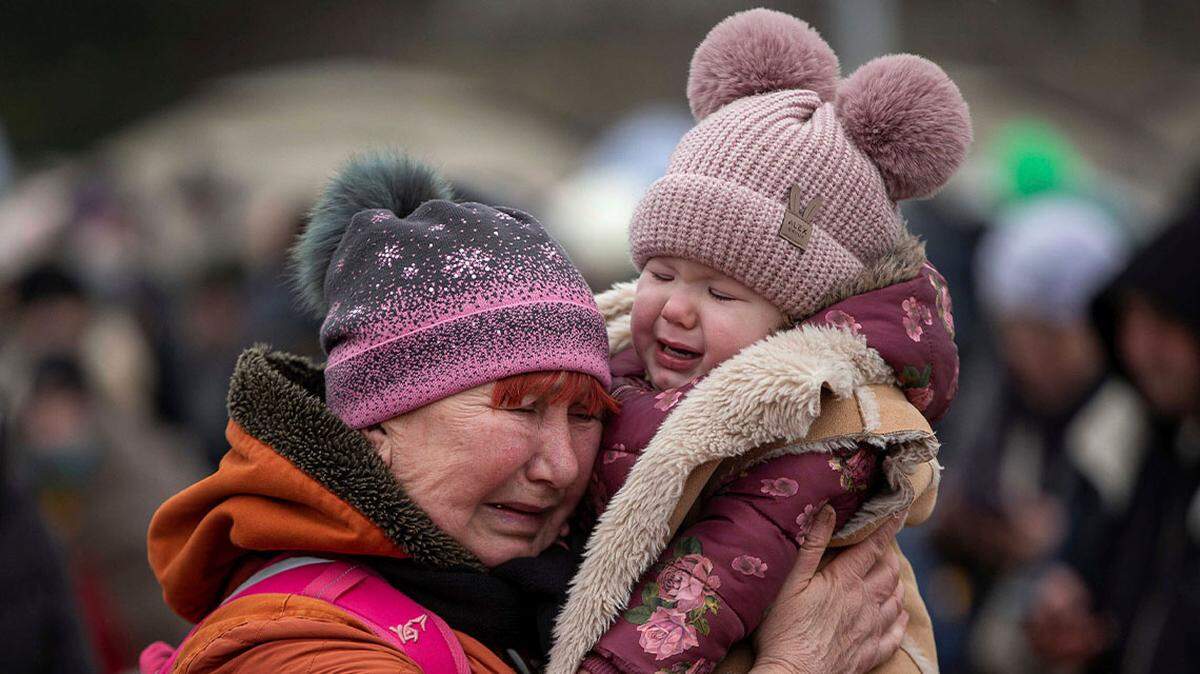
It’s wonderful that Kentucky is opening its arms to Ukrainian refugees as they make their slow and tortured progress under Russian bombing into new futures. Kudos to State Sen. Chris McDaniel, R-Ryland Heights, who put together a bill to offer $50 million to help refugees fleeing from armed conflict.
The bill is startling in its generosity: The fund would pay up to $10,000 for the relocation to Kentucky of every family running from an armed international conflict, for up to 5,000 families. Another $10 million would go to the Kentucky Office of Refugees to help administer the fund. The bill also authorizes Kentucky public universities to waive tuition and fees for students who families are in the program.
It’s the first time the Kentucky Office for Refugees, which is run by Catholic Charities of Louisville, has gotten state budget funding, officials said. McDaniel noted this is the right thing to do for humanitarian reasons and incidentally, it could help with Kentucky’s workforce problems.
It’s worth noting that there have been plenty of people fleeing their homes because of armed conflicts in the past few decades for whom Kentucky’s leaders have not started new resettlement funds— people with darker skins or non-Christian religions from Syria or Africa. According to the Kentucky Office for Refugees, for example, there are currently 6.7 million Syrians living outside of that country after its civil war. In 2019, the U.S. settled only 631 of them, with 15 coming to Kentucky.
Sen. Danny Carroll, R-Benton, made that point on Wednesday. According to reporter John Cheves, Carroll “said he supports assisting Ukrainian refugees, but he’s uncomfortable because other asylum seekers at the U.S.-Mexican border have been ‘demonized’ despite the fact that they, too, are fleeing armed conflicts in their Central American countries. The immigration process moves too slowly for them, Carroll said. ‘They live in danger every day,’ Carroll said. ‘It’s very difficult situations that they come from.’”
So true, and let’s hope the Legislature’s altruism infects all our hearts to welcome refugees from every country.
It’s interesting, too, that Carroll was the one to make that point because he did something else on Wednesday that was very different.
Senate Bill 163 is legislation that’s been in the works for the past three years. It would open up our high school KEES program — which awards scholarship money to Kentucky high school students according to their grades — to people who have made mistakes along the way and found themselves in prison. As part of larger criminal justice reform efforts, the idea behind Sen. Brandon Storm’s bill was to make KEES money available to those who had earned it with high school grades. So if you graduated from high school, got a felony conviction and served your time within the five year limit for using KEES money, you could do so. This is not a huge number of people, obviously.
Carroll, however, decided to add what many consider an unfriendly floor amendment. It defined certain felonies — violent offender, aggravated trafficking in a controlled substance, a second or subsequent offense of trafficking in a controlled substance and convicted of a criminal offense against a victim who is a minor — and cut them out of ALL state scholarship programs. That includes KEES, CAP, KTG, Work Ready and Dual Credit. No matter what.
This seems antithetical to both recent attempts by the state legislature to reform Kentucky’s criminal justice system, which most people agree has put too many people in prison for too long.
It also goes against recent work by Congress, which includes lifting the ban on Pell Grant eligibility for people in prison, as well as taking the felony drug conviction question off of federal student aid forms known as FAFSA.
It hurts the people trying to turn their lives around in prison. Prisoners who enroll in education programs are 48 percent less likely to return to prison than those who don’t. Money spent on education saves taxpayer money in incarceration.
Ask Amanda Hall. She has a felony conviction for drug trafficking, but turned her life around with recovery from substance use disorder. She got a college degree and a masters in social work. She couldn’t have completed her degrees after going to prison without some of these state financial aid programs.
“These folks will be excluded from state grants and scholarships for a lifetime,” she said. “There are so many barriers already. I can’t imagine the trajectory of my life with that help, it would have been completely overwhelming.”
Carroll’s amendment is just one more little roadblock during a session where lawmakers are trying to make it harder to access food stamps and medical benefits in House Bill 7 or cutting unemployment benefits in House Bill 7.
“We are number seven in the country for people incarcerated and so many children are impacted,” Hall said. “We are making it harder for these folks to be able to get on their feet or taking social programs away from people who need them. Kentucky is on a really bad trajectory that will hurt future generations. I wish these lawmakers would talk to the people impacted by these laws and hear about how many barriers there already are ... to have some compassion and belief in second chances.”
Kentucky lawmakers are willing to extend that compassion to Ukrainian refugees, after all. Why not a little more for folks here at home?
This story was originally published March 18, 2022 at 6:00 AM.