If we love Kentucky, we need to stop singing ‘My Old Kentucky Home,’ historian says.
Emily Bingham grew up in Louisville, a daughter of one of that city’s most storied families, from a young age drilled in the tenets of good journalism, progressive causes and of course, the Kentucky Derby.
Every year, when the first notes of “My Old Kentucky Home” wafted across the infield at Churchill Downs, she, like thousands of others, felt her heart swell and tears prick her eyes.
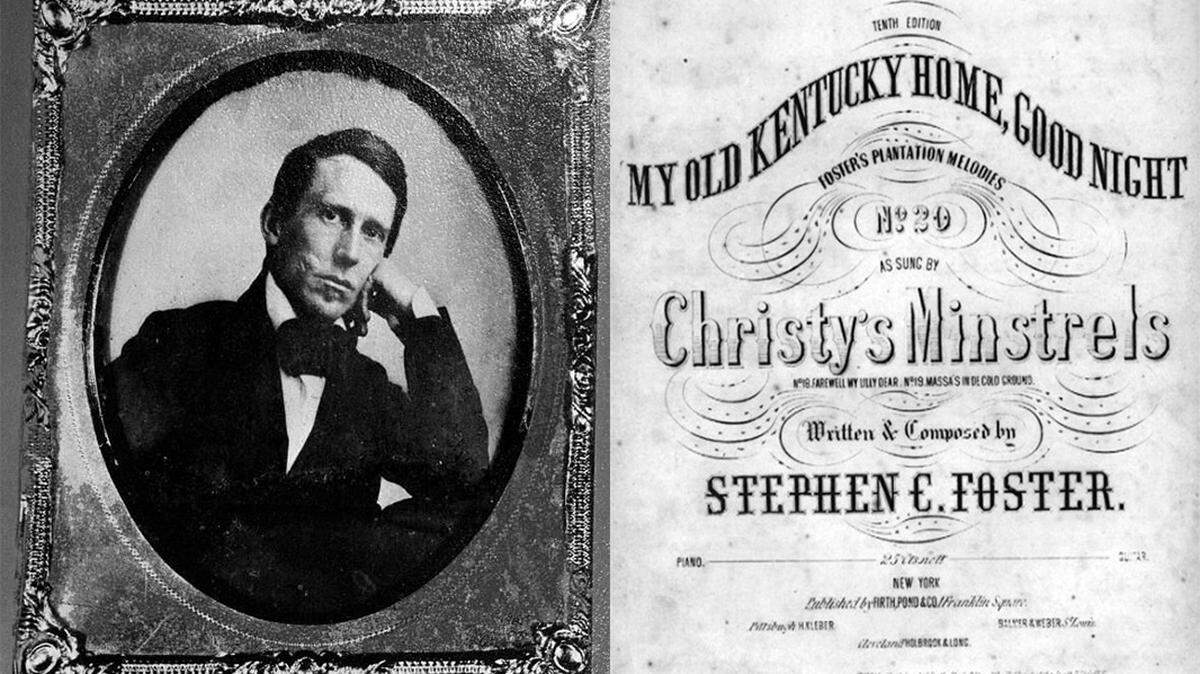
But as she got older, the historian trained at Harvard and Chapel Hill finally saw the lyrics to the original 1853 version of composer Stephen Foster’s beloved song. She was mortified. Foster’s song was heavily influenced by Harriet Beecher Stowe’s “Uncle Tom’s Cabin,” and clearly told the story of an enslaved man ripped away from his family and sold downriver to almost certain death in the sugar cane fields of Louisiana. There is frequent use of the word “darky.” Today’s version, at least the part we hear at the Derby, was largely sanitized. )To listen to the original version, click here.)

In 2016, Bingham started researching and digging into music archives, newspapers, and history books. The result will be ready just in time for the 148th running of the Kentucky Derby, the 92nd time the song has been sung as the horses walk down the backstretch to the starting gate: In “My Old Kentucky Home: The Astonishing Life and Reckoning of an Iconic American Song,” Bingham uncovered some fascinating stories and came to some unequivocal conclusions.
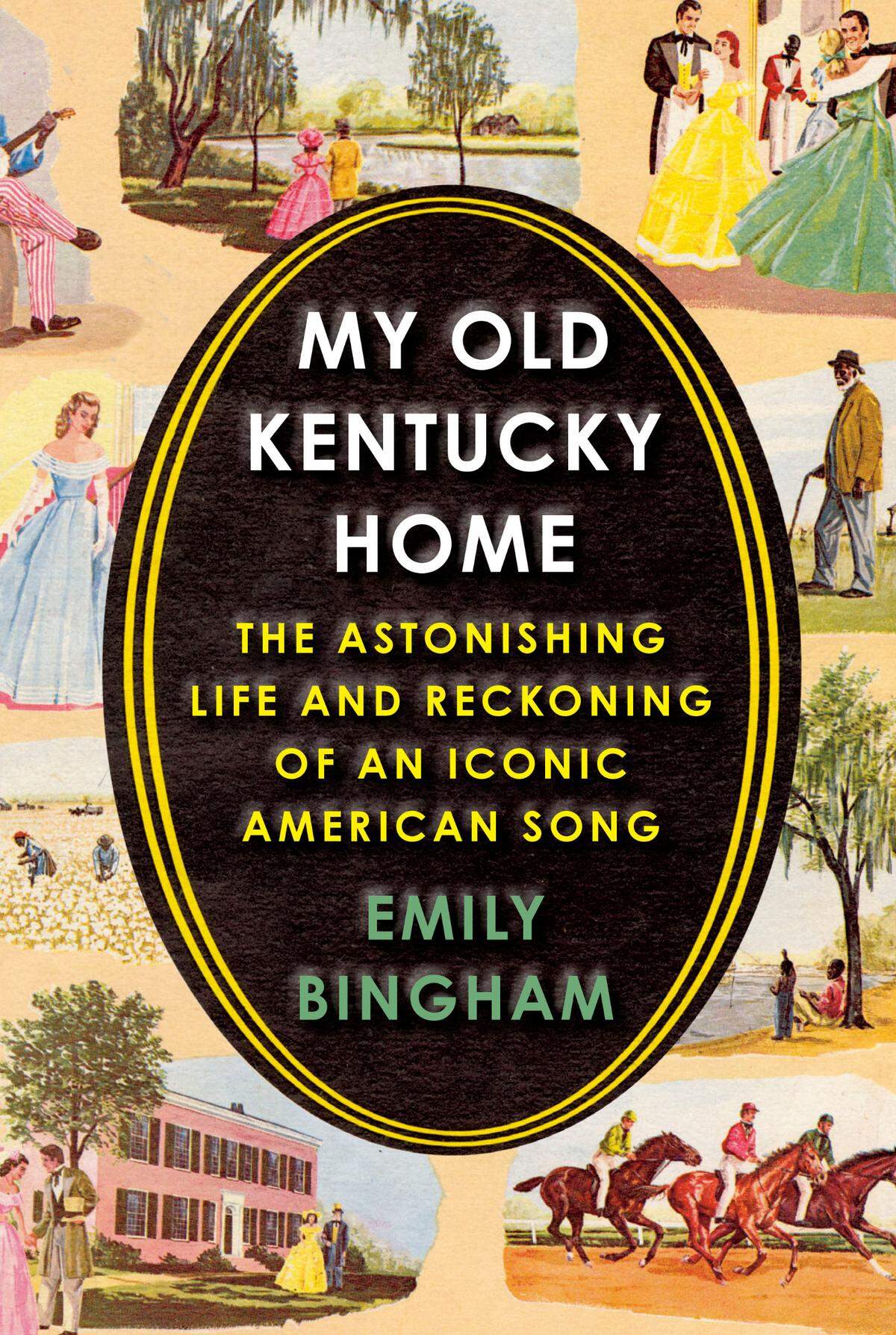
“Before Foster even penned the lyrics and set down the tune, the song was a misrepresentation,” Bingham writes. “This is how it worked: composed by a white man from Pittsburgh in the voice of an enslaved Black man from Kentucky, “My Old Kentucky Home” was sung for white audiences by white men, their faces smeared in burnt cork, pretending to be Black. It resounded in blackface minstrel performances on Broadway in New York and circled the globe, entertaining everyone from Australian out-backers to European royals.
“My Old Kentucky Home” is a spy hole into one of America’s deftest and most destructive creations: the “singing slave” whose song assured hearers that the plantation was happy and a place where Black people belonged. Its beginning lines establish a toxic illusion of contented bondage.”
The song is deeply entwined with the history of this state and nation. Without giving too much away because you should read the book yourself, she details Foster’s short, unhappy life despite his later prominence, the Black artists who tried to co-opt the song, its place in minstrelsy, and boosters like J.K. Lilly of pharmaceutical fame who kept Foster’s work alive around the world.
But on a larger scale, “My Old Kentucky Home” shows the extraordinary ways we deceive ourselves about history and identity. The song is integral to Kentucky’s long, slow descent into a “Southern” state of moonlight and magnolia that happened AFTER the Civil War. White people used “My Old Kentucky Home” to fool themselves into a state of nostalgia for something that never was: a place where slavery was somehow a benign force, not the horrifying crucible of racism that haunts us to this day.
“Sentimentality and nostalgia are some of the most powerful tools we have that stop us from questioning,” Bingham, now a professor at Bellarmine University, said in an interview. “The institutionalization of this story is meant for us never to question it.”
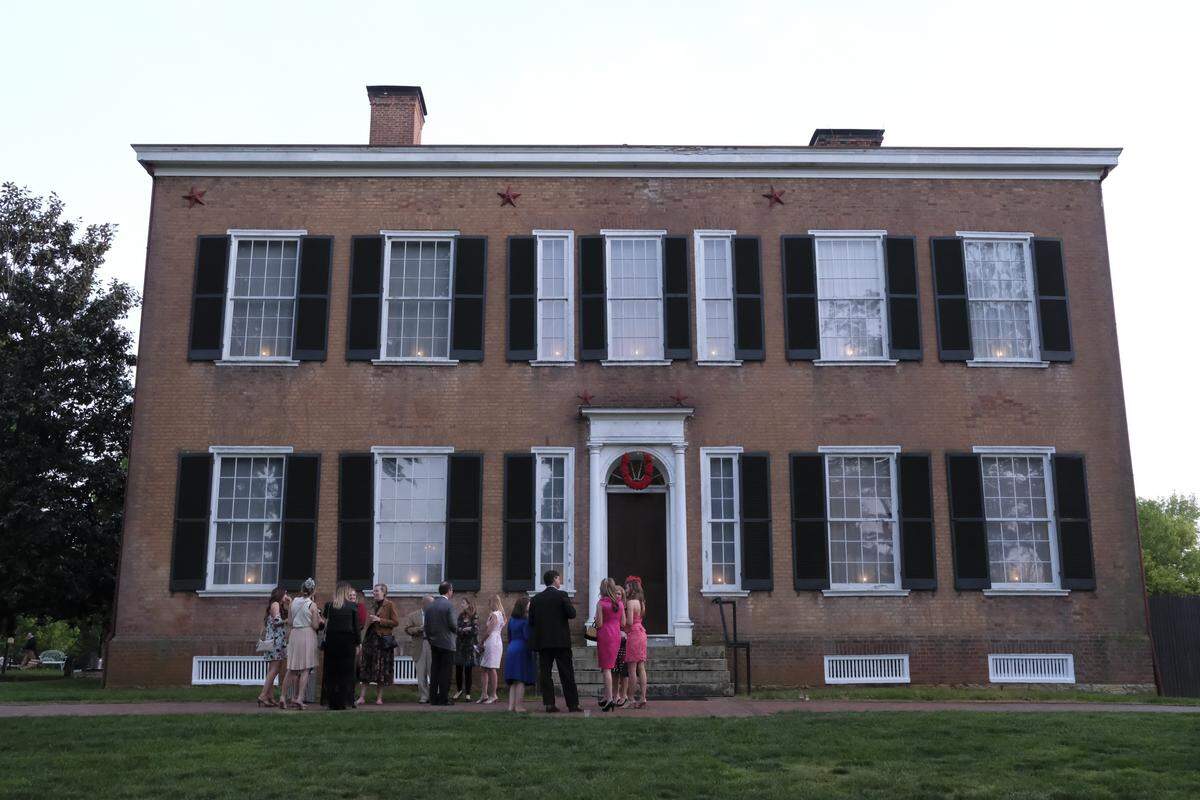
What truly cemented “My Old Kentucky Home” into Kentucky’s soul, was, as Bingham found out, even more prosaic than nostalgia and sentiment. It was really about economic development. An entire myth was created in the 1920s, brilliantly in many ways, to center Foster’s composition at an old mansion outside Bardstown known as Federal Hill. Despite the fact that only Foster’s sister ever visited the place, Kentucky legislators funded a state attraction to lure new car-driving tourists to Bardstown to visit a slice of the old South where they claimed Foster wrote what became Kentucky’s state song. By 1930, Churchill Downs’ Col. Matt Winn recognized the branding potential of the song and adopted it as the Kentucky Derby opener.
The song came in handy sometimes. Bingham recounts how her father, Courier Journal publisher Barry Bingham Jr., served in Okinawa, Japan in 1957 and on a random street heard children singing My Old Kentucky Home because Foster’s work had been spread so far and wide. Former Gov. Martha Layne Collins believes that Foster’s popularity in Japan helped cement the deal with Toyota. By 1986, though, when a visiting delegation of Japanese school children sang the song to the General Assembly with the 1853 lyrics, a few embarrassed lawmakers realized the time had come for a change.
Reckoning is an act of love
To be very clear, Bingham thinks Kentucky should drop “My Old Kentucky Home” as its official anything. But she would like her book to encourage thought and discussion rather than a rush to cancel culture. She injects herself into the book because her own history with the song is so important. She grew up here, moved away, then came back to raise her children. She loves Kentucky but believes we should recognize how much a song rooted in slavery could hurt its Black residents.
“I wanted to reveal and share my own going along with something that I should have known better about,” she said. “If I can’t come clean as the descendant of self-proclaimed liberal leaders and be open about how this runs through so much, then who can?
“Some people will be very upset because they think I am shaming them, but I am challenging them to think about what they feel. It’s not ok to wallow in feeling that hurts other people — that’s literally sentimental satisfaction on the bedrock of Black pain.”
As we’ve done with Confederate monuments, we must reckon with “My Old Kentucky Home” because we owe it to those who’ve been marginalized and we owe it to ourselves to see past propaganda to the real story. It’s instructive that in 2017 Pittsburgh removed a statue of Foster that depicts him with a Black man plucking a banjo at his feet. We must have the conversation even if people don’t want to listen. In 2019, Courier-Journal columnist Joe Gerth wrote a column headlined “Kentucky’s state song ‘My Old Kentucky Home’ celebrates slavery. And it needs to go.” He told me the responses ranged from profanity to total inertia from anyone in charge.
Now is the time to revisit the issue.
As Bingham wrote: “Whatever Black people choose to do with ‘My Old Kentucky Home’ does not change what I know now: its public performance in spaces led and controlled by white Americans is by definition an act of white supremacy, whether done consciously or unthinkingly. For me, singing and celebrating Stephen Foster’s song is no longer possible. For me, ‘My Old Kentucky Home’ is unredeemable.
“One little song reproduced slavery’s brutality for the sentimental and material benefit of white people. Listening in to that history through a single melody is a small but possibly potent act. Foster’s song may or may not be celebrated much further into this century, but comprehending how it has lived in and with us for so long is a step in a new direction.
“Reckoning is an act of love.”
Emily Bingham will be reading from and signing her book “My Old Kentucky Home: The Astonishing Life and Reckoning of An Inconic American Song” on May 5 at Joseph Beth Book-Sellers at 7 p.m. She will also be appearing at Institute 193 from 6-8 p.m. on May 13.
This story was originally published April 15, 2022 at 10:18 AM.