‘A great price?’ More to the story on Fayette schools’ purchase from wealthy developer.
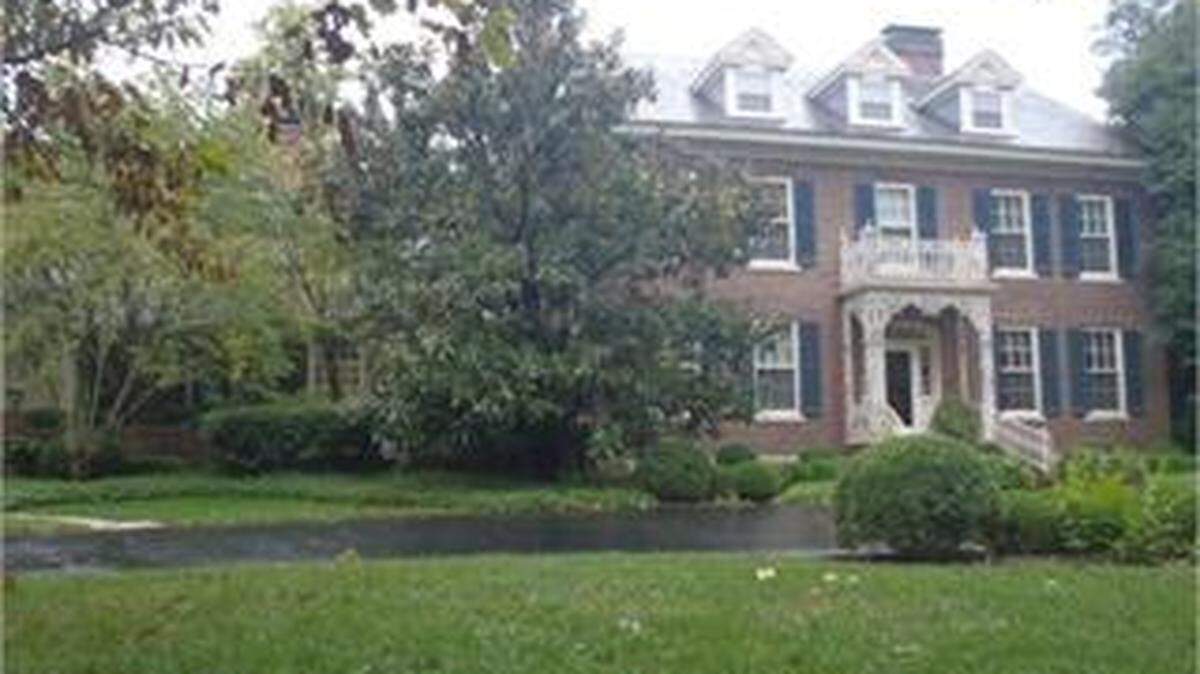
Last week, the Fayette County school board announced it was buying an estate off Versailles Road from a family of wealthy developers for $10.1 million.
“It allows us some flexibility in planning innovative programs that we hope to offer and expand in the district,” Fayette school board chairman Tyler Murphy told reporter Valarie Honeycutt Spears. “It’s a great location. It was a great price we felt.”
School officials like the price because the property was appraised for $12,560,700, said spokeswoman Lisa Deffendall. The district and owner Dudley Webb agreed to the $10.1 million purchase price for a 9,000 square foot mansion with a pool, a tennis court, and 35 acres inside New Circle Road. That’s about $284,3222 per acre.
In addition, Deffendall said, Webb is making a charitable donation to the school district of $2,338,149. It’s not yet decided what the property will be used for.
But questions started immediately about why the property was assessed for just $2.8 million by the Fayette PVA office when appraisers think it’s worth $12.5 million.
Turns out, it’s all about the soil and the zoning of properties grandfathered in as farms.
Even though 35 acres of land inside of New Circle Road is a rare and valuable commodity, especially in this overheated real estate market, it’s zoned agricultural/urban at a very low rate — about $600-$1,000 an acre, according to Fayette’s Property Valuation Administrator David O’Neill. The value of that soil quality, which varies across the state, is set by the state Department of Revenue.
The Versailles property’s assessed agricultural land value is therefore worth about $24,000. Total.
According to O’Neill’s office, the value of the buildings plus the land comes to about $1.389 million. The total assessment, $2.8 million, is based on the sale price from $2.025 million in 1996 and the true cash value of the entire property.
“The school district thinks it’s worth $10 million and I don’t have any comps to suggest that until they did,” O’Neill said.
It would be hard to have comparative sales for a mansion set among the numerous single family houses and apartment buildings in Cardinal Valley. The property was last reassessed in 2014, when its value went from $2.7 million to $2.8 million.
The school district also paid $10 million for a building and 22 acres it bought from Imani Baptist on Georgetown Road. It paid $7.5 million for the former Herald-Leader building and 7.2 acres on Midland Avenue in 2020.
“There are rare opportunities to come up with 15, 20, 30 acres in one chunk,” O’Neill said.
James Frazier, a Lexington real estate attorney, said the final price made sense to him because it would be based on the intended use by the school district, which wouldn’t have to go through any costly zone changes because it’s not subject to local zoning. He is not involved in this sale.
“They bought it based on an intended use, and from a commercial standpoint, it’s worth $10 million,” Frazier said.
Now there’s another issue to the valuation of the Versailles property, and that has to do with agricultural value. Way back in 2016, John Cheves and I wrote a series of stories about a strange exemption that allowed Fayette County residents on 10 acres to claim an agricultural exemption, whether the land was farmed or not. The state tax break had been written to protect family farms from onerous property taxes, but in Fayette County, at least, it backfired to protect suburban land owners from paying taxes on 10 acres of lawn.
We found that in 2015 Fayette County waived $1.6 billion in taxable value for 2,459 properties covering 116,753 acres. That equaled $11.8 million in forfeited taxes to Fayette County schools, and several million more to the health department, Lextran and other public services.
In 2017, O’Neill made a series of reforms in response, and they included removing the agricultural exemption from anyone who had owned it for less than five years. Everyone else, including Dudley Webb, got the tax break grandfathered in until the property changed hands again.
So far, O’Neill said, the change has resulted in an additional $1 million in property tax revenues from removing the ag exemption from 17 percent of the parcels that were getting it. That number will go up as more properties continue to change hands or large lots gets developed.
One thing we exposed has not changed. Properties under development, being changed from farmland to commercial use are still getting taxed at their ag value until their use actually changes. That would require state lawmakers to change statute that says filing a development plan does not constitute a land use change, therefore neither zoning nor tax exemptions change.
“You can disagree where the line in the sand should be, but we can all agree there has to be a line somewhere,” O’Neill said.
So right now, there is former farmland being developed into commercial real estate that is being taxed as a farm.
This whole situation brings up some interesting questions. Should Lexington’s zoning and assessments somehow reflect more of the potential worth of properties so more taxes are paid? Should a property’s tax status change as soon as a development plan is filed? And last but not least, is our school district paying too much for new property, or like Goldilocks, is it just right?
This story was originally published April 21, 2022 at 11:41 AM.