Long before Pride, Lexington icon Sweet Evening Breeze ‘beat the system.’
Like her name, Sweet Evening Breeze, floats through Lexington history .... drag queen, churchgoer, hospital orderly, sex worker, icon, pioneer. Before we even knew the words or worried about pronouns, she defied all labels, refused to be pinned down.
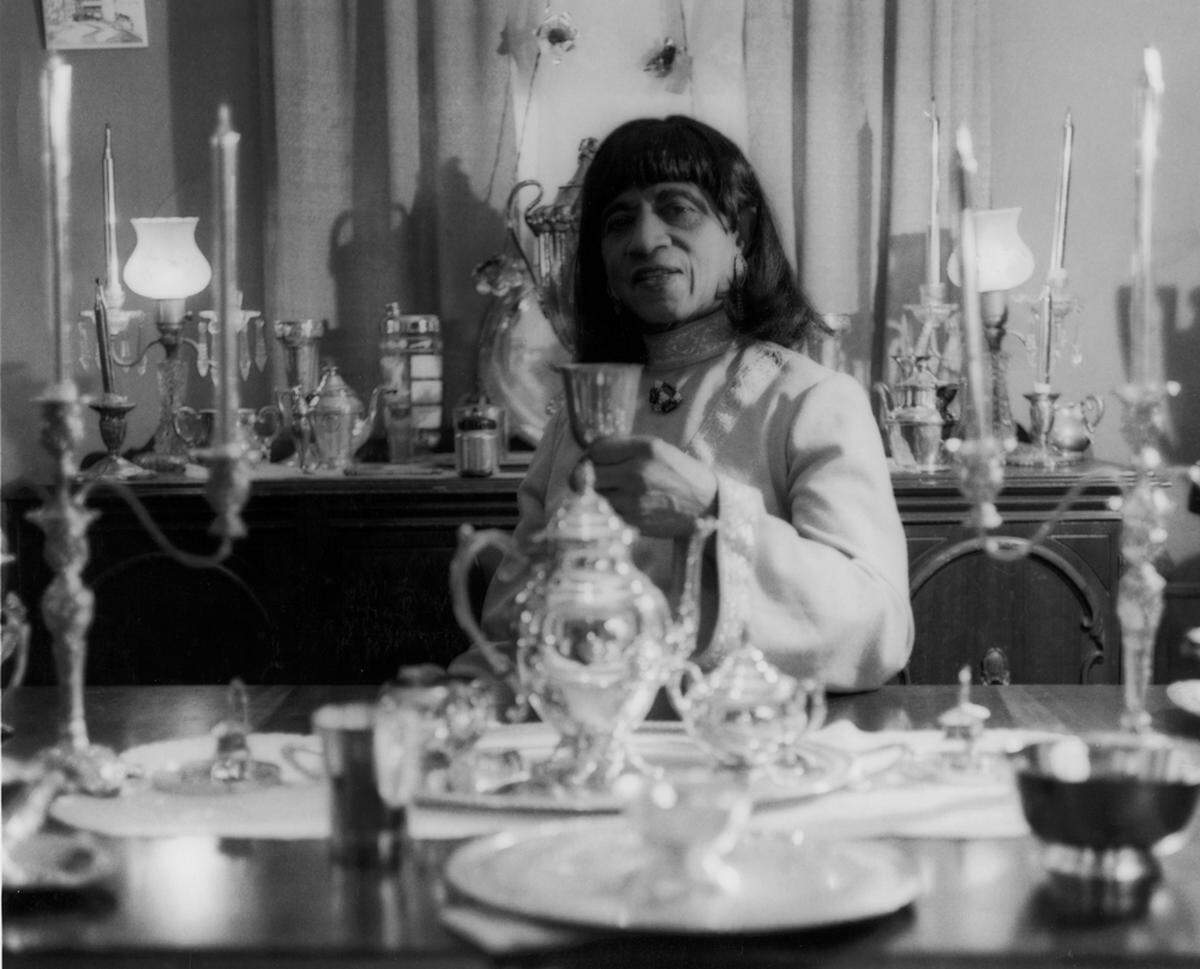
She is only captured in photos, a few memories and stories, and most recently on the side of a building near where Lexington will hold its Pride Festival on June 25. Sweets, as James Herndon came to be known, is portrayed in shades of lilac and purple by the mural artist Gaia in full bejeweled regalia, an enigmatic smile beneath her Prince Valiant wig.
Author, journalist and historian Maryjean Wall is also trying to get hold of Sweets in a new book from the University Press of Kentucky that attempts to explain how a poor Black man who wanted to live as a woman survived every ism and phobia there was from the 1920s onward in a small, backwards horse town like Lexington.
On her own terms, more or less, Wall has discovered as she sorts out the myths and stories, some put about by Sweets herself. No, she was not a hermaphrodite. No, she was not abandoned as a baby at Good Samaritan Hospital and raised there. She first shows up in the Georgetown census in 1910 at age 16, where she lived with her parents. Between 1910 and 1920, she moved to live with an uncle on Prall Street and yes, worked at Good Samaritan for decades, where she came to work as a man in pants and a long Nehru tunic. Sometimes with a brooch.
“It’s been exciting to try to corral this in,” Wall said. “I can’t imagine what she went through because of when she lived.”
Horses and gay bars
Wall spent many years as a racing journalist before getting a Ph.D. in history. She’s already written a history about famous Lexington madam Belle Brezing and “How Kentucky Became Southern: A Tale of Outlaws, Horse Thieves, Gamblers and Breeders,” which shows exactly how the horse industry took myths and legends in post civil war Kentucky to recreate the Thoroughbred industry. Not surprisingly, she thinks horse people should be looped in to Sweets’ history, because they brought money, sophistication and decadence to Lexington’s sleepy borders. That in turn brings in 224 East Main Street, a historic building that hosted numerous bars and restaurants that became havens to LGBTQ people who found a place they were safe. Including Rock Hudson, but that’s another story.
Of course, many also found that at Sweets’ Pralltown house. The Faulkner Morgan Archive, which collects the state’s LGBTQ history, recounts a story about a drag queen named Leigh Angelique who was busted by police with three other dancers one night in 1970 for wearing women’s clothes. She sought refuge with Sweets who made some calls. No one knows who, but the charges were dropped, and it was allegedly the last time a bar was raided for being a “gay bar.”
The source of Sweets’ power, such as it was, is complex and confusing, said Jon Coleman, co-founder the Faulkner Morgan Archive who is writing a history of gay Kentucky. Henry Faulkner, for whom the archive is named, was another boundary-breaker in Lexington.
“Part of this story is how Sweets was able to be relatively safe,” said Jon Coleman. “First of all, she wasn’t, there are plenty of stories about her being assaulted or her home being vandalized that show up in the paper. So that’s a myth but she did seem to be less bothered.”
Another myth is that Sweets was beat up one night, and a group of off-duty police drove to another town to roust the bad guys. But Wall says, after one assault, word came down that she should not walk at night and to call the police whenever she needed a ride. Which she did.
“Sweets’ story is so inherently tied to Lexington’s racism,” Coleman said. “In many cases it’s rooted in racism and white fears about black masculinity and sexuality — Sweets is able to use that in order to play the game and beat the system.”
Church benefits
Wall is also trying to discern James Herndon’s role in the Black community. As a man, he went to church at Pleasant Green Baptist Church, and the Colored Notes section of the Herald and Leader is full of fundraisers he held for the church, sometimes dressed as a man, sometimes as a woman. He supposedly raised enough money to make sure every child in the congregation had shoes. Wall said if he would appear in a drag show with his drag family, the Creole Follies, it would be held in the former Woodland Auditorium as a benefit.
“They all knew who he was, but he was bringing in a lot of money for the church, so they accepted him,” Wall said.
Sweets died in a nursing home in 1983 in her 90s. We think. Wall said census records show Sweets somehow got younger, not older in census records. The church inherited James Herndon’s estate. He was buried as a man in the Lexington Cemetery.
Coleman said he hopes Pride attendees think of Sweet Evening Breeze, who left anyone who is different an important message; “You’re not the first and you’re not alone,— you’re part of a grand, grand story,” Coleman said. “I think Sweet Evening Breeze represents the persistent fluidity of human sexuality and gender, which we now we think of as contemporary talking points or political posturing. But in actuality it’s a deeply human story that Sweets represents so well.”
Wall still has to finish the last part of the book, and then hope for publication some time next year. Wall said she has learned even more about Lexington history, much about LGBTQ life here, and a great deal about individualism and courage.
“Sweets just existed as herself, doing what she wanted to do in life,” Wall said. “That’s really an inspiration.”
This story was originally published June 17, 2022 at 10:42 AM.