Eight weeks into his new job, Vice Mayor Wu on fun, frustration and yes, that red suit
One of the most interesting elections to come out of Kentucky’s midterms was right here in Lexington when a former ramen chef with no governmental experience whatsoever became vice-mayor of Lexington. Dan Wu impressed a lot of people to become the top vote-getter of the at large candidates and first Asian-American member of Lexington’s most diverse council ever. He even faced down a scurrilous whisper campaign late in the season that asked if he was a Communist, and then wore a bright red suit to his inauguration. Like many, I was curious about how someone with no experience was dealing with a sudden immersion in governance. So less than three months into his first term, we sat down for a conversation in council chambers, where Wu now spends all of his days. (The interview has been edited for length and clarity.)
What has been the most fun thing so far?
It’s learning so much about how the city works and how things run. I’ve been really surprised by the things that have been interesting ... I did not think parliamentary procedure would be interesting, I was dreading the budget because in my personal life that’s not a strong suit of mine, but almost every single thing, even the budget has been fascinating.
What has surprised you the most?
How much of this job is relational and how much of this job is kind of all the informal little conversations ...like James (Brown) walking by and giving me a note on something we talked about two days ago, us constantly popping by each other’s offices, running things by each other, that’s been really interesting. For me in terms of managing my capacity in my schedule, building in enough gaps in my schedule to allow for all of that kind of informal, constant conversations. In the beginning I had these back to back to back meetings with no gaps, then I realized suddenly things would come up suddenly out of the blue that we didn’t expect or things that were urgent like the mayor is calling me right now, and I have to talk to her right now. For my own sanity, I had to build some space.
Give me an example of an emergency.
I wouldn’t call it an emergency but the whole LexPark thing came out of nowhere and suddenly we needed to deal with it. The way it rolled out and all the public outcry all of it. Here’s all the stuff we know we’re tackling in the next few months and then something like this pops up and takes priority.
Or the windstorm this weekend. I stayed in touch with the mayor, kept checking with KU, talk to folks, I spent whole weekend disseminating information on social media about where you can take your debris, how to report downed trees. On our street, a tree fell at 5 p.m. By 9 a.m. Streets and Roads was in our street. By noon it was clear, I’ve been very impressed by just the people who work in the city, the rank and file employees, how hard they work, how much they do that we do not realize whatsoever.
There have been some criticisms of the city’s response to the storm, with no state of emergency, or one filed Monday, no shelters. What do you think?
No matter what happens, people think we’re responsible for it. Whether it’s Lexpark or KU, or I get emails complaining that their mail doesn’t get delivered on time. Part of my job is that education piece: here’s who you talk to. I think there’s always going to be criticism no matter what happens, where I think to some degree whatever we do won’t be enough. We have limited numbers of people, we have limited resources. I don’t know how state of emergencies work in terms of what the criteria is. With shelters, they didn’t have warming stations because it didn’t drop below 32. A lot of times I’m learning about the administration’s purview versus the council’s’s purview.
What’s been the hardest or most unpleasant part of the job?
I think people not understanding our process, particularly our legislative process, and people who think, want and hope for things to move a lot faster and a lot more forcefully than they do. That’s definitely a frustration, and I as a civilian had those frustrations. Why does government move so slowly, why can’t they do bigger things? Now I’m in here and I realize the first thing we do is go upstairs and talk to legal, and say are we allowed to do this, is it in our jurisdiction, is there a state statute that prohibits blank, is there a federal statute? Is this the courts? Is this FCPS? I’m enjoying it but I’m also having to convey to people, particularly advocates and activists, saying we’re working through the process, and trying to explain here’s how the process works. It’s not magic, we’re not hiding things from you, it’s not a smoke-filled room with people plotting. It’s literally underpaid bureaucrats who are trying to find the best path through this. It’s been a learning curve and it’s been having those conversations with people to sort of continue to grow and have that trust. People have a lot of distrust of government because there isn’t transparency and that’s one of the things I’m trying to bring.
Do you think you’ll become co-opted by the system and the power?
I’m going to say no, of course, and no one will say yes. I’m going to say no just because I’ve never been that person, I’ve always been a bit of a rabble-rouser, whether on boards or other organizations that I’ve been asked to be on. My only bosses are the people who voted me in. I have to stay cognizant of that. I’ve not had a lifelong dream of being a politician, so four years in if I have not been as impactful as I wanted to be, I’ll go do something else.
I’m interested in your perspective as the rabble rouser because as vice mayor you’re supposed to be the consensus building, right?
This role is interesting, it’s not super well defined. Vice mayor is a misnomer, I don’t work in the administration and I don’t work for the mayor. It should be called council president, but even in that role, different vice-mayors have taken the role differently, hands on or hands off. I am a more hands on model, from what everyone has told me, and I think more than just consensus building, I like to see what everyone is working on, where they need help, and where people need help serving their constituents better, whatever form that takes.
How are you dealing with issues like the tenants Bill of Rights?
The only difference there is as a legislator, I want to make sure whatever we do is impactful, enforceable, fundable and not end up being challenged and defeated in the courts or in the states or somewhere else. I want it to be solid. That’s the difference and civilian Dan doesn’t know what all those parameters are. The activist can make whatever demands they want — coming here is where it collides with whatever the realities are and that’s what I have to deal with now and have to communicate to the folks doing the advocacy.
It’s challenging.
Have you been called a sell-out yet?
Yes, and “wishy-washy.” I don’t know they expected we were going to do in eight weeks. We have literally just learned what our meeting schedule is, how to filter hundreds of emails a day. It’s been a whirlwind of learning on our feet. I haven’t felt comfortable really focusing on policy until a few weeks ago, honestly. How do you focus on what to do when you don’t even know how the system works? We’re still learning.
So it’s Mr. Wu Goes to Lexington. Have you been disappointed by anything? Or seen a quid pro quo you weren’t expecting?
Not really. I’ve been very impressed by a lot of our commissioners and directors and chiefs of police and fire, these career service folks. Honestly one of the things I’m very, very grateful for, especially watching what’s happening in Frankfort, I’m so grateful we have a nonpartisan council. I always knew there was a disconnect between Louisville-Lexington versus Frankfort, but I didn’t realize what level of legislation really comes at us. That’s actually been one of the more frustrating things about this job is knowing what we can’t do. If the state passes a law, we are very limited in how we can react to it. That’s really really frustrating.
Have you talked to legal about things like, how do we make Lexington a safe place for transgender kids?
I’ve had a couple of conversations with the mayor about that. I want to be impactful instead of performative whenever possible, but a performative gesture from city government actually can be impactful. A statement from the mayor and council is a real thing, it’s a statement of what the city believes in and the kind of city we want to be. Lexington is highly rated for LGBTQ equality on a bunch of different metrics and we have to live up to that in moments like this even if it’s not a legal remedy. Because there’s a political reality and price to be paid for tangling with Frankfort, and that’s the really interesting thing in my role is now is figuring out what the balance is.
What about the comprehensive plan?
In Lexington, I feel like our big partisan divide is infill versus expansion. We’ve got a whole ton of council meetings planned to go through it, going to have a specific public meeting just for public comment. That goes back to my point before, about wanting to improve the public input and engagement piece. If we learned anything from Flock and LexPark is that you have to let people have their say.
Where do you see the conversation on comp plan and affordable housing going?
I think we have to get out of binary thinking of expand anywhere we want versus expand never. Neither of those options is realistic. If we expand, we need to do it in a really smart way and not what we did in 1996 and if we are going to do infill, we have to do it in such a way that it actually works, that people want to actually do infill and redevelopment.
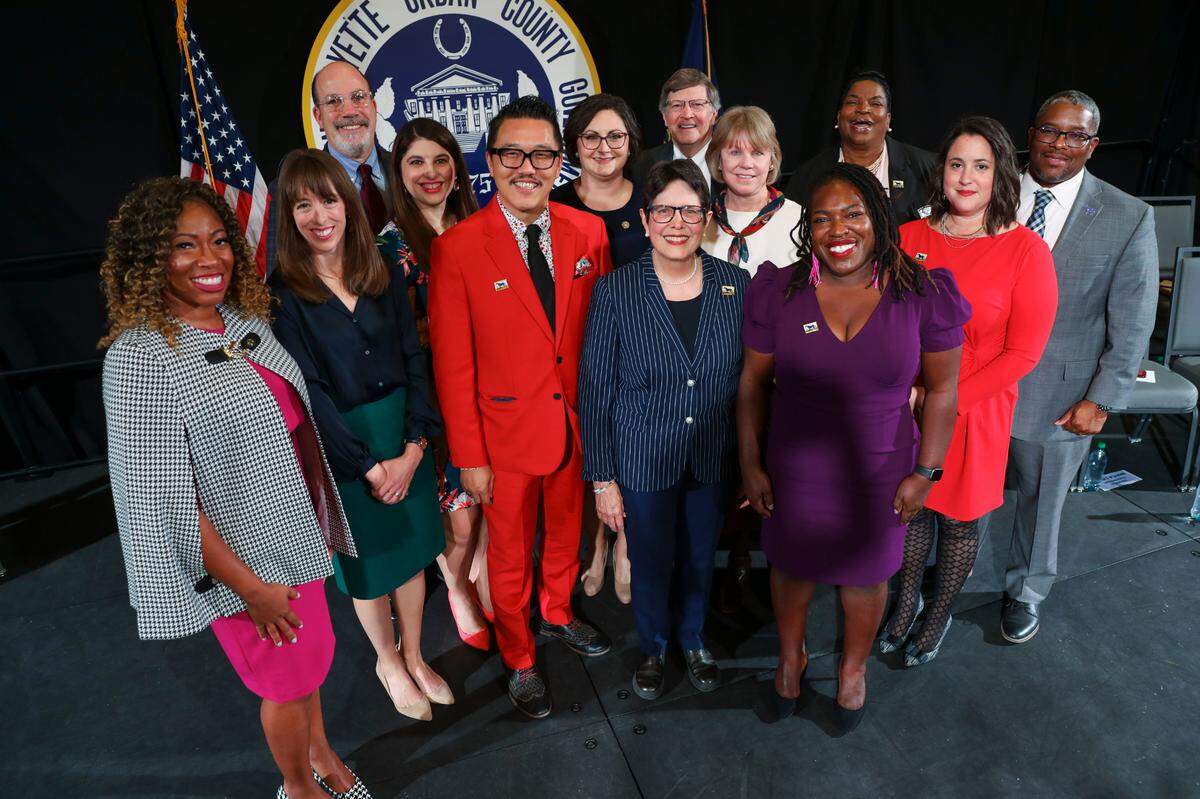
Did you wear the red suit to your inauguration because of communism?
(Laugh). Red is my favorite color and red is lucky in Chinese culture so at weddings and big celebrations, it’s always red.
The media made a big deal that you were first Asian American council member. Has anything been attached to that?
There’s a level of excitement in some of the immigrant communities, that someone with this background who came to this country from somewhere else to have that perspective and someone who has tried to advocate for immigrants and refugees, people are really excited. That’s very humbling for me to see.
Last word?
I just want people to get more engaged to us and that to know we are accessible, that you can show up to council meetings and speak, that we’re the closest to the ground of all the levels of government and we’re really really striving to be accessible. We don’t know what we don’t know. So much has to be driven by the voters and the residents.
This story was originally published March 8, 2023 at 11:04 AM.