A new public university in Eastern KY? The state’s most influential legislator says yes. | Opinion
The idea of putting a four-year college or university somewhere in Eastern Kentucky, preferably the southeast, might be the most stubborn public policy notion that has ever been unrealized in the state.
It’s come up again, thanks to Senate President Robert Stivers, R-Manchester, and frankly, it’s a welcome idea if for no other reason than it could force legislators to grapple with serious and important issues that they’ve abandoned in favor of picking on trans kids and drag queens.
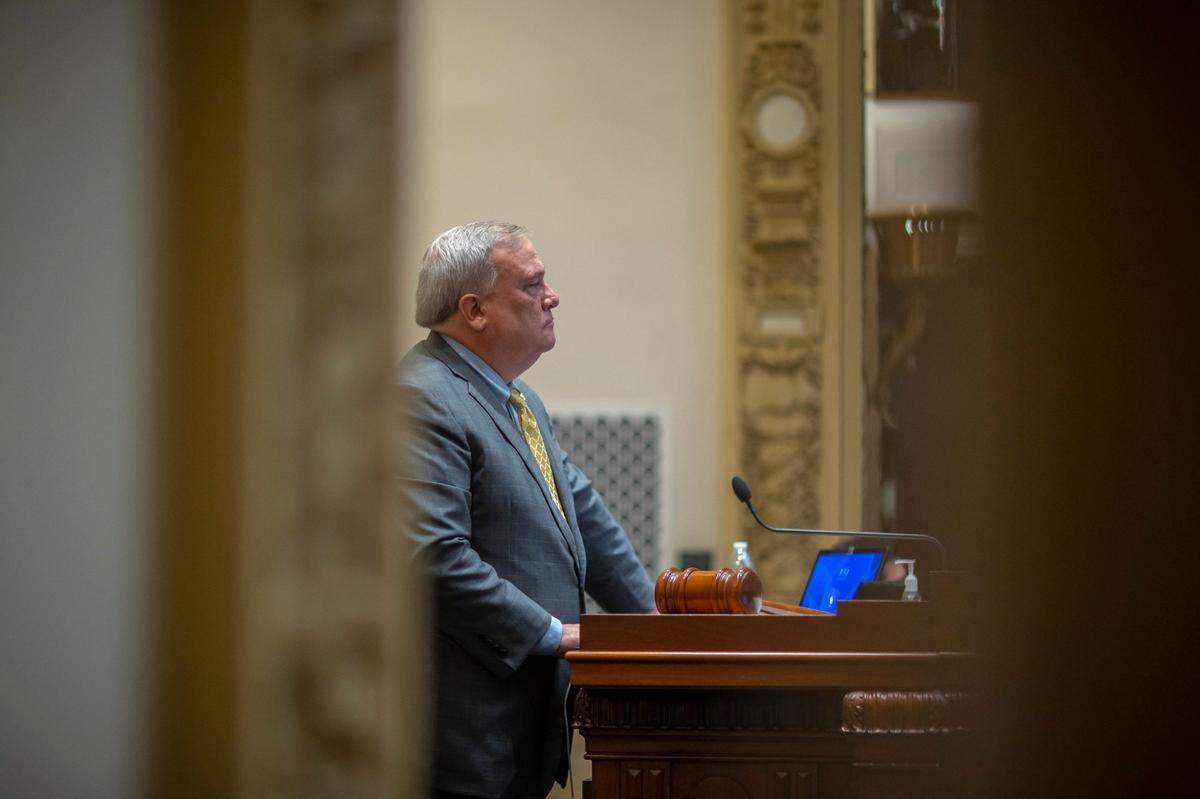
Senate Resolution 98 passed the Senate unanimously and now heads to the House. It’s a big ask for the Council on Postsecondary Education: They have to study the entire structure of higher education into the future, study the feasibility of a four-year, residential college in the southeast region of the state, and the feasibility of transferring all academic programs out of the community college system to regional universities, thereby creating the Kentucky Technical College System.
Stivers is quite clear why this is needed: the bill says that because the coal industry is in decline, the region needs new economic development, and higher education can provide it. No one who has visited the bustling town of Pikeville that surrounds its private university can deny that universities can be enormous economic drivers.
But. So many buts.
The Higher Education Reform Act of 1997 tried to create a workable uniform system by making the University of Kentucky and the University of Louisville the state’s two research universities while regional universities produced needed bachelor degrees. The biggest fight was over taking the state’s community colleges away from UK, merging them with technical schools to create the Kentucky Community and Technical College System.
The ideas were solid in avoiding duplication and mission creep, but went against the power bases that exist at all of these schools. I’m so old I remember the post-1997 drama of the fiery higher education wizard Gordon Davies, who as CPE President tried to uphold the act’s tenets until he came up against former Rep. Harry Moberly, budget chair and godfather/employee of Eastern Kentucky University, and other grandees in the General Assembly who did not think this upstart should dictate to regional university power centers. Davies left, and no one else tried to rein in the inevitable mission creep of regional universities who wanted whatever they wanted, particularly graduate programs.
Now Kentucky’s schools are just barely funded by the state and are facing a demographic cliff of high school students, as they fight with each other to keep filling the luxurious student centers and dorm rooms they built to attract all those bodies to begin with. They’re competing with each other for dollars and funding and would not welcome more competition. It’s a mess.
So what would a new school look like? A while back, folks talked about making UPike public, but that’s relatively close to Morehead. Could a community college in a place like Hazard be turned into a four-year campus? Or would the “small government” GOP really countenance funding a brand-new bricks and mortar school in, say, Manchester or Corbin or Williamsburg?
The council is on a tight deadline. They have to get the report to the legislature by Dec. 1.
“There’s a lot to look at and we will do the best job possible,” CPE President Aaron Thompson told me Thursday. “Of course, there is a direct correlation between higher education and economic prosperity.”
Sen. David Givens, who has long worked on higher education policy, said he supports the resolution because there’s no doubt that higher education provides opportunity, and that opportunity is related to geographical access. “At the same time, we have to be cautious about funding for new projects,” he said.
As two scholars noted in this paper earlier this week, higher education is at a serious crossroads, even as it retains its standing as one of our most crucial public goods. So no matter what happens, this is a good exercise for state policy makers at every level. At the very least, we would stop nattering on about drag queens and talk about issues that really matter.