‘A sacred space.’ Who really ‘owns’ Pine Mountain and who ‘belongs’ there? | Opinion
On Aug. 19 at Pine Mountain Settlement School, a group of local residents zoomed up the drive in trucks and on ATVs to oust an artists collective from the chapel over perceived desecration. In another building, a group of Native American activists were holding a workshop on indigenous issues, including the historical erasure of Native Americans from areas of Kentucky like Pine Mountain.
This is a small detail in the overall events of the day, which have rippled through Appalachia and well beyond in writing and social media. Many have decried the group’s actions, others have defended them. There’s a petition to get rid of the school’s interim director, set up by Tate Napier, the leader of the local group and a descendant of William Creech, who in 1913 gifted the land on Pine Mountain to form the settlement school. There was even a mention of buying back the land once owned by the Creeches or somehow dissolving the non-profit that controls the property. For me, one of the most fascinating aspects of the whole episode has been a discussion of who “owns” Pine Mountain Settlement School, or who “belongs” there through family heritage or religion or the right kind of politics.
The fact is, of course, there were many people there before the Creeches, bands of Cherokee or Shawnee or other tribes who for hundreds of years had not “owned” the land, but had hunted, grown crops and lived there. Their artifacts still sit on shelves at the school, but they, the first inhabitants, have been conveniently forgotten.
“Pine Mountain was the ancestral home of Native Americans for hundreds, perhaps thousands of years, and the irony is that the Native Americans who inhabited it believed the earth was here for everyone,” said Landra Lewis, an activist of Cherokee and Sac descent,who grew up near Pine Mountain. “To have people now decide that they have some kind of ownership on it and certain people should not be allowed to be there is so wrong and so contrary to indigenous philosophy.”
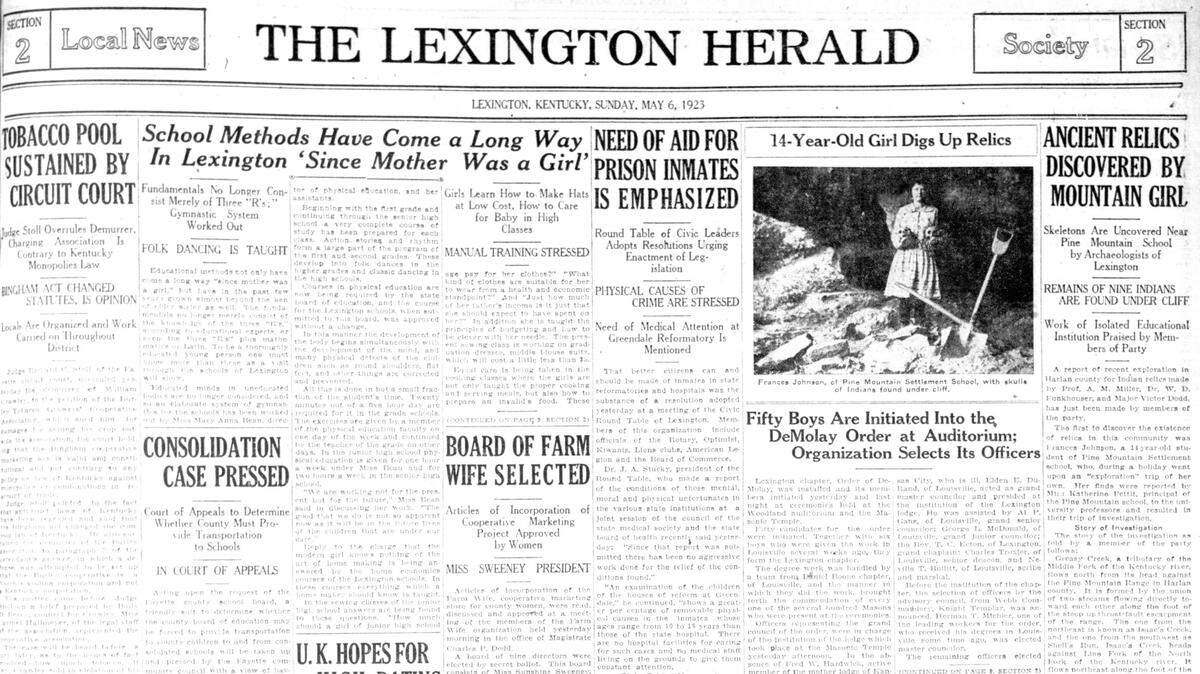
As America grapples with its culture wars over belonging and values, over what should be remembered and who has been forgotten, Pine Mountain stands as a fascinating microcosm of a place with overlapping histories that ebb and flow. There are the people who built a school at Pine Mountain, and the people who inhabited the land long before that. That history is clear, and one of the reasons we know about it is because of a 14-year-old girl named Frances Johnson.
Burial ground
In 1923, Johnson was with a group of Pine Mountain students exploring a cliff overhang behind some of the settlement school buildings.
According to the Pine Mountain Settlement School archive, and a story in the Lexington Herald, she’d been told by a John Metcalf that Native Americans were once in the area and wanted to find evidence; “I’ve brung a mattock; I aim to dig me up an Indian!” she allegedly said.
And so she did, finding ample evidence, including several skulls, until the school’s director, Katherine Pettit, stepped in to stop the very unscientific operation. Pettit called in Dr. William D. Funkhouser at the University of Kentucky (for whom many things at UK are named). He soon arrived at Pine Mountain with a work crew.
Nine bodies or “ancestors,” as they are now called, were found at the site. They were all buried in a “sitting posture, some with the bones of the turkey wings that had been placed beside them for their last journey …” according to the school. They may have died all at once from one of the European diseases that decimated native populations. One ancestor was wired together and taken to the University of Kentucky under the aegis of Funkhouser, although UK did not yet have an anthropology department.
Frances, according to the Herald story, helped with the archaeology, and worked so hard she was declared “an ideal scientific worker.” Funkhouser wrote of the work, Ancient Life in Kentucky: A Brief Presentation of the Paleontological Succession in Kentucky Coupled with a Systematic Outline of the Archaeology of the Commonwealth, co-edited with William S. Webb in 1928 and considered a seminal work on Kentucky archaeology. The archaeological museum at UK was later named in Webb’s honor.
The other ancestors were reburied at the site. It’s not clear if it’s accessible to the public today; officials at Pine Mountain did not return calls for comment.
According to the archive, some people in the community were upset at the gravesite being disturbed in this way, and some locals sang an old funeral song at the burial:
“Been a long time travelin’ here below, Been a long time travelin’ away from my home, Been a long time travelin’ here below, To lay this body down.”
‘Dark and Bloody Ground’
If UK’s Webb Museum sounds familiar, it’s because it recently made national news over the school’s slow pace at complying with the 1990 federal law called the Native American Graves Protection and Repatriation Act. The law required Native American artifacts and remains to be returned to tribal nations. The Webb Museum, which had the sixth largest collection of Native American remains in the country with 4,500, had only returned about 3 percent of them, according to ProPublica.
Following the story, UK announced it would devote nearly $1 million to repatriation efforts.
So would Pine Mountain’s ancestor be returned to the tribal nations of either the Cherokee or Shawnee? Not exactly.
Celise Chilcote-Fricker is an assistant professor of anthropology and UK’s NAGPRA coordinator. “We don’t have anything from Pine Mountain,” she said.
NAGPRA requires a careful database; the museum does have some artifacts from the area but no ancestors. Chilcote-Fricker says the museum communicates with tribal nations known to have been in Kentucky before they were pushed further westward — including Cherokee, Shawnee, Osage, Peoria, Seneca and Chickasaw — to see if they want to put forward repatriation claims, or the nations might contact her directly with geographical or oral history claims.
But Kentucky is complicated by the myth of the “Dark and Bloody Ground,” Chilcote-Fricker said, which held that tribal nations only used Kentucky to fight and hunt, but not as a place to live. The term is believed to have come out of negotiations between the Cherokee Nation and the Transylvania Company in 1775.
“It was a very very obvious ploy” she said, for white colonists to perpetuate so they could freely take land and not give any up. It means that repatriation is more difficult and must be done through multiple nations working together.
Attitudes are changing for a variety of reasons, Chilcote-Fricker said. “NAGPRA legislation hit its 30 year mark and there was reflection on the lack of progress that many institutions had made,” she said. Then there have been huge general shifts in anthropology and archaeology with more sensitivity about white colonization of North America and more interest in returning the often plundered Native American sites back to tribal nations.
“We see a lot more community engagement in general across the board,” she said.
As for the Pine Mountain ancestor, it could be anywhere.
“There was a lot of sharing between universities, or objects were loaned out for display at state fairs and historical societies,” Chilcote-Fricker said.
UK’s archival researcher will now open a file for the Pine Mountain ancestor to see if any neighboring institutions might know where it is or if it could be repatriated.
It’s not clear if Pine Mountain Settlement School is subject to NAGPRA; it would depend on how much if any federal funds they receive.
A sacred space
The idea that one family’s ownership of land gives that family a perpetual claim over it is as silly as pretending the land was not first occupied by many other people before. But as a country, we’ve long been unwilling to deal with our less savory histories of enslavement, colonization and persecution.
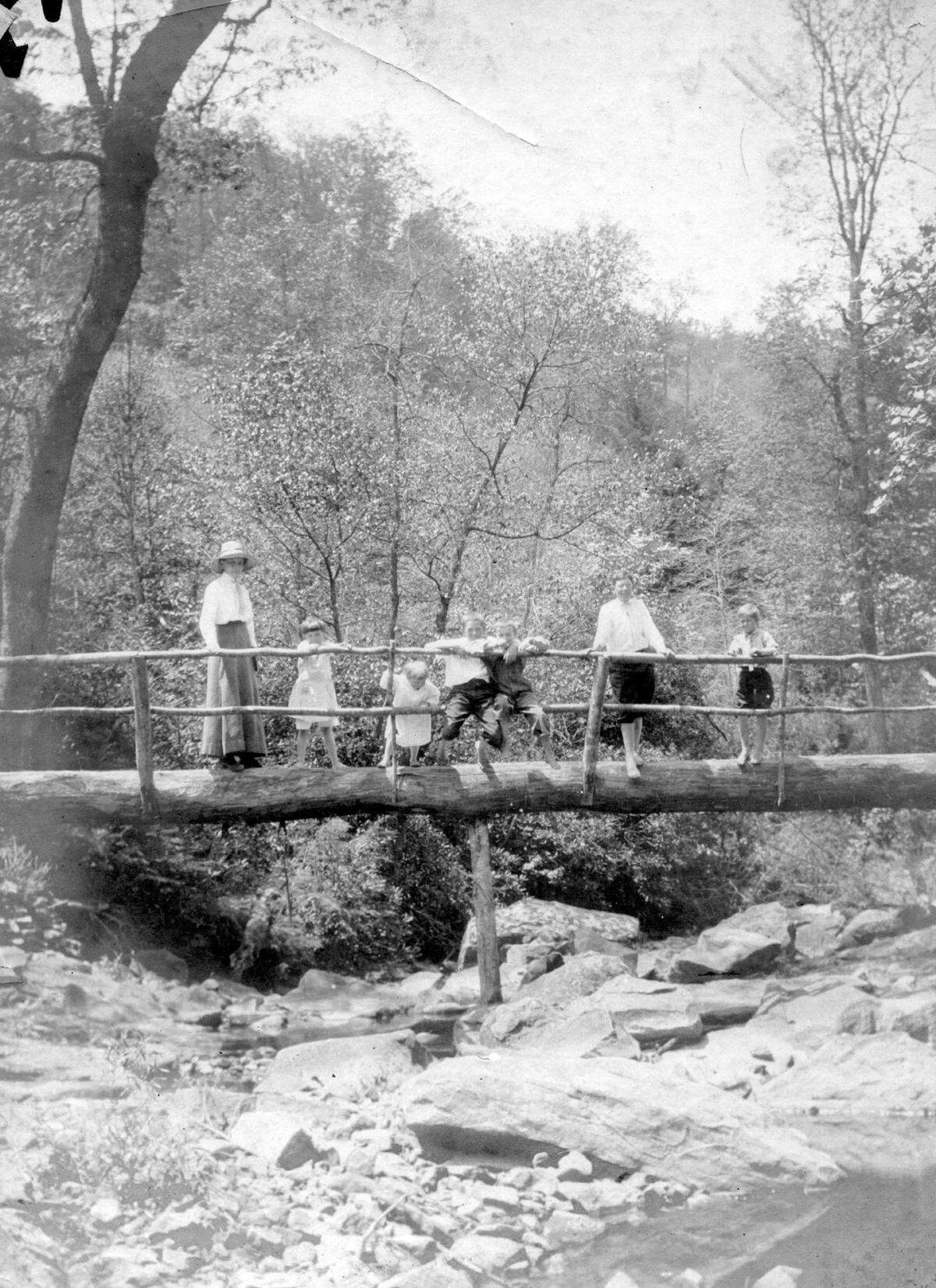
Over the years, Pine Mountain has had many constituencies — its indigenous inhabitants, the many people of European and also native descent who were born in the infirmary, went to school there or got married in the chapel. Most of all it’s a place of learning, about art, about nature, about history and, if we chose to have the conversation, about the conflicts that divide us and the love of place that could bring us back together.
“Every time we walk in this region, we walk on the bones of the ancestors,” said Landra Lewis, citing part of the land acknowledgment she makes before public events.
“Pine Mountain is a very special place for so many of us,” she said. “It always felt like a sacred space.”
This story was originally published September 15, 2023 at 7:00 AM.