Rep. Grossberg’s lawyer needs to stop talking and making excuses for her client | Opinion
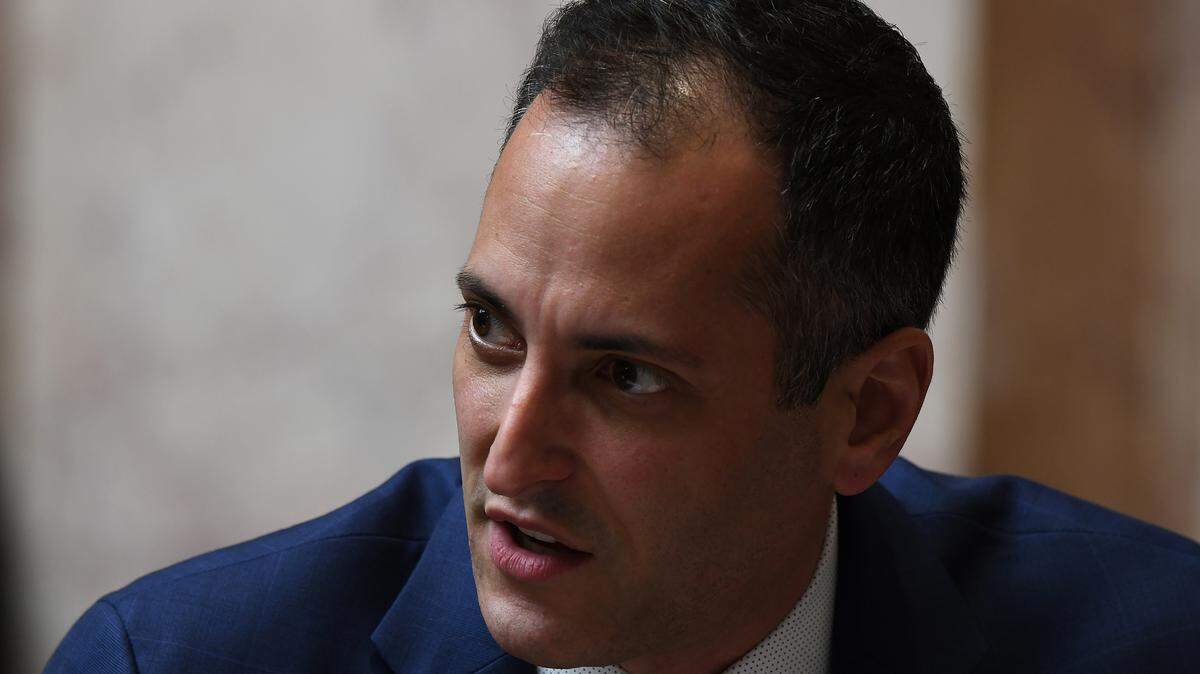
The unending saga of Rep. Daniel Grossberg, D-Louisville, could have been a short story.
He could have resigned as soon as the first Herald-Leader stories appeared about his alleged harassment of young women in Frankfort.
Instead, he’s held on long enough for my colleagues to find even more sordid tales of groping in strip clubs.
But to be fair at this point, it’s hard to tell what’s making this story worse: the man or his lawyer.
Attorney Anna Whites wrote a truly jaw-dropping response to one of the women harassed by Grossberg in which Whites blamed House Democratic and Republican leaders who haven’t posted enough training manuals on sexual harassment or neurodivergent diagnoses. She’s already blamed all these things for the allegations against Grossberg, instead of the obvious.
She should stop writing essays and focus instead on upcoming hearings in Frankfort.
It hardly needs saying that no training or manuals or rules would have deterred Grossberg from the antics that got him banned for life from at least one strip club.
Whites said she helped craft policies on sexual harassment in the Capitol in 2016 that have apparently been ignored since then. That means she — a lawyer who has always seemed well-respected in Frankfort — should understand that the only person ultimately responsible for sexual harassment is the perpetrator.
Also: Kentucky law requires legislators to undergo training for sexual and workplace harassment, which is against federal law already. In addition, the Legislative Research Commission does have policies related to harassment, along with guidelines on reporting allegations of misconduct. Grossberg got that training, along with all his colleagues.
Democratic House Leaders responded in kind: “This latest attack by Anna Whites is another desperate ploy to place the blame on anyone but her client,” according to a statement from Reps. Derrick Graham, Cherlynn Stevenson and Rachel Roberts.
“The Legislative Research Commission’s policies, which we follow and which legislators and staff are mandated to receive training on annually, are not to blame, nor are the decisions of when and where the victims chose to report what happened to them.”
In 2019, in the wake of the Jeff Hoover scandal, Rep. Kim Moser, R-Taylor Mill, tried to beef up current requirements by sponsoring a big bipartisan bill to put into statute rules about “ethical misconduct for a legislator, legislative agent, or director of the Legislative Research Commission to engage in discrimination, harassment, or sexual harassment.”
It passed the House 99-0 but did not even get called for a committee hearing in the Senate State and Local Government Committee. So technically, you could scold the Senate GOP caucus.
But it’s also funny because while no one doubts that sexual harassment was a tough problem to deal with in the General Assembly, a place where men held all the power for so very long (and still hold most of it), a lot has changed for the better.
Between the federal Violence Against Women act, the Me Too movement, which exposed the seedy underbelly of the arts and entertainment world, and free market forces, such as the Equal Employment Opportunity Commission recovering nearly $300 million for sexual harassment claims from companies between 2018 and 2021 — harassment has become less systemic and more due to individuals.
The bad old days
Darlene Thomas leads Greenhouse17 in Fayette County and has been an advocate for survivors of domestic violence in Frankfort since the 1980s.
She remembers the bad old days — she was once strip-searched while trying to attend a parole hearing at a county jail — when legislators hardly bothered to take domestic violence seriously, much less the cadre of young women leading the charge.
“I came into this work in the late 1980s, where sexual harassment was a new concept and no one had policies for any of it,” she said. “We were often treated poorly because we were advocates ... there was lots of joking and put downs.”
Thomas was working on the issue of domestic violence, which is further down the spectrum of the kind of societal misogyny that often starts with harassment. She said that for legislators the argument came down to who was worthy of protection and who wasn’t.
“Women weren’t worthy because ‘they blow things out of proportion,’ they’re ‘hysterical,’ ‘women were just trying to get away with something,.’ It was a lot of gender-blaming and victim-blaming.”
Workplaces are healthier for women than they used to be, Thomas said.
“But that doesn’t mean we don’t have bad actors who act in ways that do not respect the opposite gender. Usually that’s out of power and privilege, a sense of omnipotence that makes them believe they have a right to do those things.”
Hilary Sykes was appointed to then Attorney General Andy Beshear’s first Survivor’s Council, which brought survivors of sexual assault, domestic violence and gun violence together to help Frankfort and others learn to talk and deal with these tough issues.
She has since become an advocate in Frankfort, and says that while she and legislators don’t always agree, they take her ideas seriously.
The Grossberg saga “is not a party issue or a Frankfort issue,” Sykes said.
“It’s a moral one. Constituents deserve to have someone who has the values that match the office they’re elected to.”
That’s right. And so I have three suggestions for everyone involved.
1. Anna Whites should stop blaming everyone but the perpetrator.
2. Rep. Moser and other legislators should reinvigorate her idea from 2019 and get some laws — not just policies — made around the General Assembly. It’s not political, it just makes sense.
3. Rep. Daniel Grossberg should listen to the governor, the lieutenant governor, his victims, legislative leaders and common sense.
And then he should resign.
This story was originally published September 26, 2024 at 6:00 AM.