Plant an oak tree, dig up some lawn, save the planet. | Opinion
Ten years ago, Dr. Doug Tallamy came to Lexington to speak to the first seminar of the newly created Urban Forest Initiative at the University of Kentucky.
In that decade, the Initiative has helped change Lexington’s perspective on its tree canopy and its importance to every aspect of our natural world and our health. In that same time, Tallamy, an entomologist and wildlife ecologist, has helped change America’s perspective on creating spaces — from our national parks to our backyards — that can sustain wildlife, diversity, and ultimately, ourselves.
Tallamy is returning to Lexington on Dec. 5 for the Institute’s 10th anniversary seminar. An opening reception at 6 p.m. and the talk at 7 p.m. are free and open to the public in the Worsham Theater on the 3rd floor of the UK Student Center.
Tallamy is best known for a string of best-selling books, including “The Nature of Oaks,” “Bringing Nature Home,” and “Nature’s Best Hope.”
But he started as an entomologist when, with many other scientists, he started to sound the alarm about the decrease in insects. Insects, after all, are critical to the food webs of birds and other animals; they pollinate our crops, and are basically essential to human life on earth.
But we’re killing them off with pesticides and herbicides, and a lack of native trees and plants to support them. Lexington, for example, is filled with gingko trees, which are strong, beautiful and make a fabulous yellow display in the fall. But they are native to China, and don’t support our native wildlife.
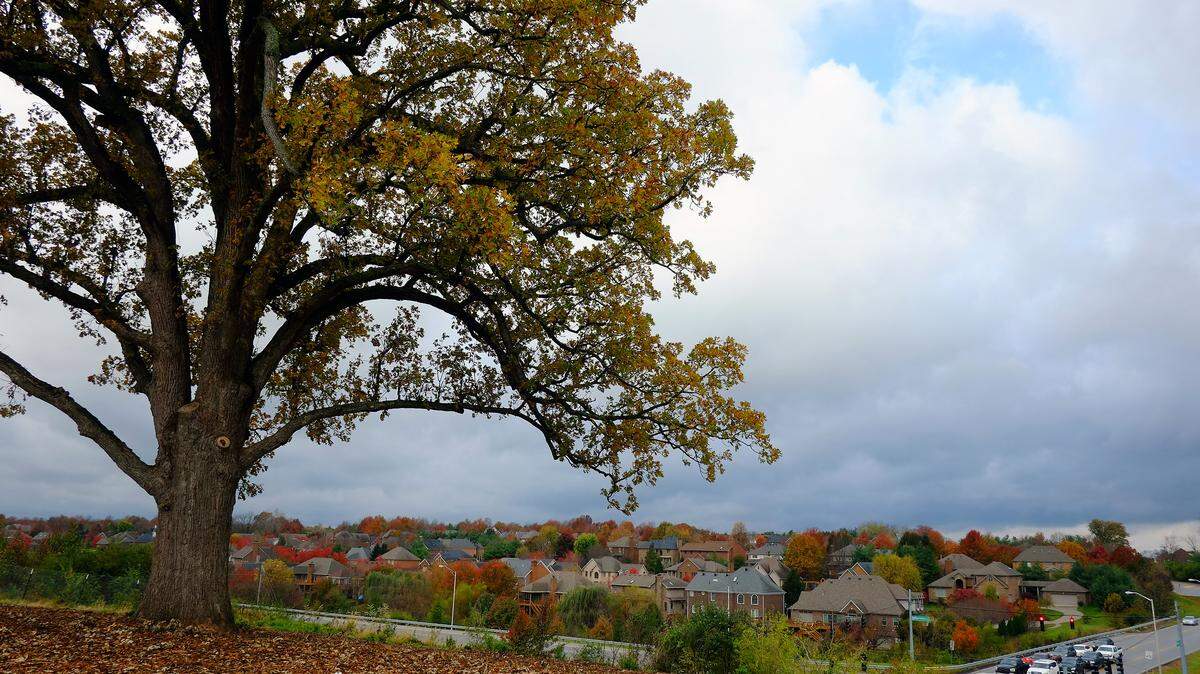
An oak tree, on the other hand, is said to support up to 2,300 different species, including the animals that eat its acorns or live in its branches, plus thousands of caterpillars and other insects that are food to birds.
“We’ve had this idea that humans and nature are separate, that’s not working because we’re in sixth grade extinction with birds and insects, things are looking bad,” Tallamy said in a phone interview from his farm in Pennsylvania, where he started the Homegrown National Park project.
“We have to practice conservation outside parks and preserves, and we have to plant these spaces in ways that will support biodiversity,” he said. “We’ve tended to choose plants based on aesthetic values only, which are very poor at supporting local food webs.”
The answer is for people to turn their backyards into wildlife ecosystems with more native plants and less lawn.
That’s a tough conversation in a town like Lexington, where people love their verdant lawns, and don’t seem to care about the herbicides or pesticides used to get them.
But many folks are told those products are all natural, not toxic, and they may not know about the benefits of native plants and trees.
“Let’s reduce lawns — think of it as an area rug rather than wall to wall carpeting,” Tallamy said. “Then people don’t object so much. Then let’s design a landscape for native plants without them looking wild and messy. That’s a horticultural challenge and it’s exciting.”
Another challenge is mixing enough native plants with our favorites, like my peonies, which come from China but would have to be pried out of my cold, dead hands. Tallamy advocates a 70-30 mix of natives to non-natives, as long as the non-natives aren’t invasives, like bush honeysuckle or winter creeper.
At his farm, Tallamy replaced the invasives with natives, and now reports counting the number of moth species at 1,336 different kinds.
“Nature is resilient,” he said. “If you put in plants that support it, it bounces back faster. I know it works, it’s not just theoretical.”
Lynne Rieske-Kinney is the co-founder of the Institute, and is hoping lots of folks turn up to hear Tallamy’s talk.
“Dr. Tallamy actively promotes the use of native plants to enhance wildlife population abundance and diversity, and for many years he has advocated for individuals to take an active role in improving their surroundings,” she said. “The Urban Forest Initiative embraces this philosophy and we’ve spawned numerous synergies throughout Lexington and Kentucky to enhance urban and community tree canopies.
“Dr. Tallamy was (our group’s) first seminar speaker years ago, and we’re thrilled that he’s returning to help us celebrate our 10th anniversary.”
For more information on the talk, go to https://ufi.ca.uky.edu/events/ufi-fall-2024-seminar-doug-tallamy.
This story was originally published December 3, 2024 at 8:20 AM.