‘So familiar.’ Poet unearths personal Kentucky history that feels eerily similar to today. | Opinion
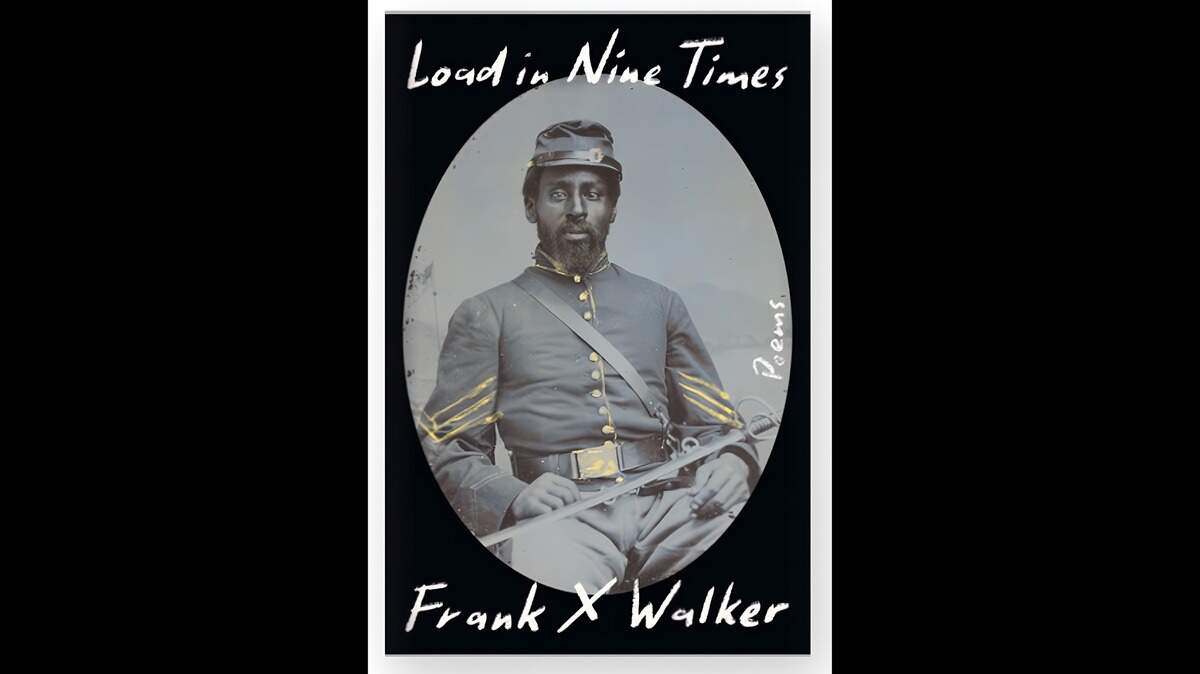
Former Kentucky Poet Laureate Frank X Walker can’t count the number of times he’s passed the green fields and white fences of Camp Nelson. As a Danville native, he drove by the Jessamine County site every time he went to Lexington and back during high school, and then his time at the University of Kentucky.
Like many of us, he knew it had something to do with the Civil War, or was at least a place where a lot of veterans were buried. But until a couple of years ago, he had no idea of its really enormous significance to Kentucky history or that of his own family.
“I didn’t understand what it all meant, and now I’ve been there six times this year alone,” Walker, 63, told me.
“And I’m trying to redirect everyone I can talk to, and every classroom I visit, to get them to add it to the curriculum. We’ve really under-told the story of African-American troops in Kentucky.”
More people are trying to do that. Camp Nelson is now a national monument, and historians like UK’s Amy Murrell Taylor have uncovered much of the site’s history as a refugee camp for enslaved Kentuckians who made their dangerous way there for freedom, many with their families. They went on to form the backbone of many of the U.S. Colored Troops, who helped Lincoln win the war.
As a poet, Walker’s own exploration of the history inspired him to start writing it, too, and the result is his 17th book “Load in Nine Times,” a collection of poems that details his own ancestors who fought from Camp Nelson, along with a host of characters who are integral to the hard-fought battle for freedom in Kentucky.
We hear the voices of people like Elijiah Marrs, an enslaved man from Shelby County who trained at Camp Nelson. After the war, he co-founded Simmons College in Louisville. In the poem “Grapevine,” Marrs talks about secretly reading his owner’s newspapers and says:
“White folks think we don’t know
what Lincoln say and do,
that the war being fought most everywhere else
‘bout to find its way here too.
Just cause colored folks don’t get the paper
don’t mean they won’t get the news.”
“I would have laughed if you told me when I was young that I’d write about the Civil War,” Walker said. “I’d rather say this is a book about Black families in Kentucky and it’s just set then.”
‘Enlisted without consent’
.jpg "Mark Cornelison X photo (1).jpg")
This book really started with a Louisville group called Reckoning, Inc., a nonprofit trying to digitize numerous old records, including wills, deeds and military papers, to help Black Kentuckians better trace their roots. They asked Walker to write small profiles of some of the Civil War soldiers they had found.
“The quality and the depth of the records really drew me in and made me think about my own family research,” Walker said.
He gave Reckoning Inc. the names of some of his ancestors, and it turned out there were copious records, many of them due to a woman named Mary Edelen, who spent almost 10 years trying to collect the pension of her Civil War veteran husband Randall Edelen.
Every request required a written affadavit, which created a paper trail for Walker’s imagination to follow.
In “Mother May I?” Randall Edelen of Company G, 125th U.S. Colored Infantry, says:
“Come April, I found my way to Lebanon
an signed my mark in ink for my Mary
and our John, Susan, William, Sallie,
Daniel, Scott, and Silas.
I’m sure Miss Jane felt like
she been robbed
losing nine slaves all at once
with the power of my X.
I know she had some unkind words for good ol Lincoln and the Gov’nor
who only offered her $300
for what them called compensated
‘mancipation.
Knew she’d be fit to be tied so,
I didn’t ask.
I enlisted without consent.”
Neither Union nor Confederate
Kentucky, birthplace of both Abraham Lincoln and Jefferson Davis, has such a complicated history around the Civil War it’s not wonder so few of us really understand it.
In what I’ve called previously “one of those impossible ironies in history,” Kentucky never joined the Confederacy so was not subject to the Emancipation Proclamation. It could still keep people in slavery and enthusiastically did so. That’s why a place like Camp Nelson was so crucial, why so many were willing to risk a technical escape to its borders.
Walker takes a direct swipe at Kentucky’s confounding attempts to both embrace and deny its history at the same time. One poem is titled “Ain’t No Plantations in Kentucky,” and simply lists in alphabetical order the many, many places where enslaved people worked the land, including Walnut Hill, Ward Hall, Waveland, Whitehall, Wickland and Woodstock.
What makes “Load in Nine Times” even more interesting is that Walker is an artist and an academic at UK, which earlier this year complied in advance of the General Assembly’s displeasure with diversity initiatives by getting rid of DEI offices.
GOP senators have already announced they will continue to attack diversity in state universities in similar ways that they attacked “critical race theory,” which holds that racism is systemic in our society.
The problem is the inconvenient fact that no system is more racist than slavery and its aftermath. Walker also addresses how the promise of freedom made to the formerly enslaved after the Civil War through Reconstruction was quickly destroyed by the white supremacist forces of Jim Crow laws.
“It’s hard not to think about living in such a red state and given the political winds, I’ve had to consider what if this book was banned in Kentucky?” Walker said. “Given the kinds of things the people who ban books protest, I think this certainly qualifies. On one hand, I’m emboldened by that and as a Kentuckian, I’m embarrassed by that.”
The book is just one piece of an unveiled tapestry of history that’s been covered up for many years. Unfortunately, as Walker notes, “so much that’s happening at the intersection of race and politics feels so familiar to what was happening post-Reconstruction in Kentucky.”
It’s no wonder politicians are uncomfortable with the comparisons, and would rather them just not be made.
Like many artists, Walker writes to make sense of this confusion, whether politicians like it or not. As he writes in the voice of minister Gabriel Burdett says “The good Lord knows, the only thing stronger than our desire for freedom was white folk’s desire to deny it.”
“I have witnessed ex-slaves, dressed in God’s glow,
become our deliverers robed in blue.
Even with guns and victory in hand
not reaching the promised land shook my Faith.
But Lord knows, it also made me stronger.”
This story was originally published December 18, 2024 at 4:45 AM.