Kentucky GOP takes a step back from abortion madness to save women’s lives | Opinion
Better late than never.
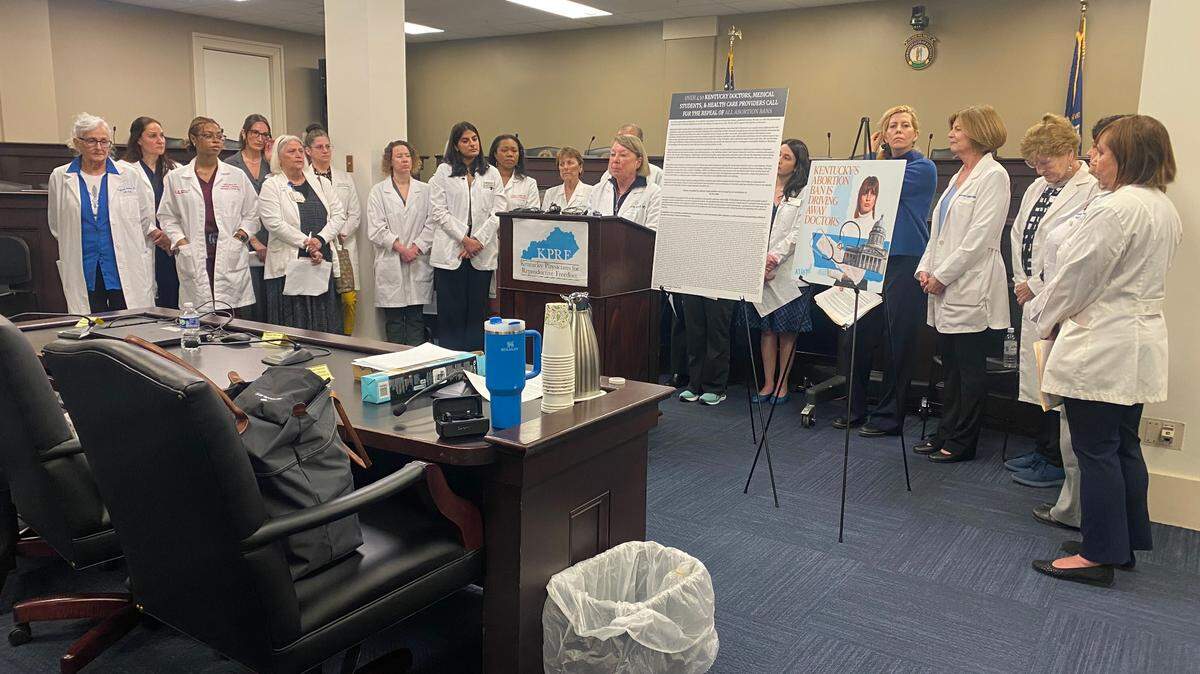
It took three years for Republican legislators to recognize their total abortion ban would have terrible consequences downstream, endangering the lives of women.
But they did it. House Bill 90 will allow medical exemptions for women who are not seeking abortions, but need medical help when a pregnancy goes wrong.
They obviously read the dogged reporting of my colleague, Alex Acquisto, who documented numerous stories of women who could not get the health care they needed from hospitals and doctors who were scared of Kentucky’s law.
They consulted with real experts, like Dr. Jeffrey Goldberg, a gynecologic oncologist in Louisville and legislative advocacy chair for the Kentucky Chapter of the American College of Obstetricians and Gynecologists, who told them the lack of clarity of the law was hurting women and driving OB-GYNs out of Kentucky.
They listened to women like Katie Vandegrift, who has written and testified about her experience with pregnancy complications and loss that put her life in danger under Kentucky’s abortion ban.
“It is definitely a step in the right direction,” Vandegrift said Thursday. “They are at least acknowledging there are complexities that are beyond what a lot of people can understand.”
So thank you to the group of mostly women legislators who listened and recognized what a terrible positions these bans put so many people in. This includes anti-abortion true believers like sponsor Nancy Tate, R- Brandenburg, and Addia Wuchner, the executive director of Kentucky Right to Life.
Credit also must go to Rep. Jason Nemes, R-Louisville, and a host of Republican women legislators who understood the complexities of the situation and pushed for improvement: Rep. Kim Moser, Sen. Julie Raque Adams, Rep. Amanda Mays Bledoe and others.
In addition, one of the two bills moving forward includes language on freestanding birthing centers, an idea first championed by Sen. Shelly Funke Frommeyer, R-Alexandria, which is an excellent step forward in improving Kentucky’s terrible maternal mortality rates.
When we listen to women, good things happen.
The language on exceptions includes:
▪ Lifesaving miscarriage management,
▪ Emergency intervention for sepsis and hemorrhage,
▪ Medical procedures necessary to prevent the death or substantial risk of death of the pregnant woman,
▪ Removal of an ectopic pregnancy or administration of medication to treat an ectopic pregnancy,
▪ Treatment of a molar pregnancy. It’s a rare abnormal pregnancy that occurs when fertilization goes wrong.
This doesn’t go far enough, of course. We also need exceptions for rape and incest, and even more detailed medical exemptions like fetal fatal anomalies that allow someone to terminate a pregnancy before they are in dire medical crisis.
Better yet, let’s restore a ban that starts at 20 or 24 weeks.
Rep. Lindsay Burke, D-Lexington, is right that the process was flawed in that the language was added at the last minute to the birthing center bill, and neither hospital lawyers nor Democrats were in the room when it was crafted.
But one of my guiding principles in life is to never let perfect be the enemy of good.
As Goldberg told Acquisto, the language of the bill “wasn’t perfect.” But, “We’re simply trying to make sure that on a day to day basis, doctors feel comfortable providing evidence-based care for women with complications in pregnancy that have nothing to do with elective abortions, but without the fear of severe penalties attached to providing those elective abortions.”
Nemes said Kentucky will remain a pro-life state. “I’m proud of this because this will save lives,” he said Thursday morning.
Unfortunately, many House Democrats were holding out for perfection when they voted against House Bill on 90. The bill passed 74-17. I think it’s a miscalculation that focuses too much on the purity of the language and not enough on the crux of the bill, a common complaint about Democrats that hurts them in the political sphere.
One Democrat, Rep. Adam Moore, R-Nicholasville, said he recognized the bill was far from perfect, but he voted yes because “it opens the door and creates a dialogue with the majority on necessary reproductive care,” he said. “I’ve also spoken to members of the majority about willingness to work with them to make it better for pregnant Kentuckians and medical providers.”
This legislation is a helluva lot better than nothing at all. Our political system, now on life support at the federal and state levels with GOP majorities and supermajorities, actually worked this time around.
Take the partial win and keep working for even more change down the road.
This story was originally published March 13, 2025 at 11:46 AM.