A small KY legal aid group gets a big black lung case in front of US Supreme Court | Opinion

David Howard was an underground coal miner who worked for two decades in the mines around Lynch., Kentucky.
After he retired in 1997, he was diagnosed with black lung, a common respiratory illness caused by breathing coal and other kinds of dust. He filed for benefits with the federal government, which oversees black lung cases. But Arch Coal, the parent company of Apogee Coal when Howard worked there, denied responsibility, saying those liabilities belonged to Patriot Coal, which had purchased Apogee before going bankrupt.
The case has outlived Howard— who died of respiratory failure in 2023— going to the Sixth Circuit Court of Appeals, which sided with Howard’s family. Arch then appealed it to the U.S. Supreme Court.
That’s when the Howard family’s legal aid lawyer — Evan Smith, the advocacy director of AppalReD Legal Aid’s small office in Prestonsburg — wrote up a brief arguing that justice had been done, and the Supreme Court should leave the Sixth District’s decision in place.
Writing a brief to the Supreme Court is a big deal for anyone, even when you’re arguing against them taking a case. But this decisions has big ramifications, which made it more consequential.
“This could affect hundreds of other cases that involve this pattern — where Arch transfers benefits to one of its subsidiaries, which goes bankrupt, then Arch says it doesn’t have to pay,” Smith said in his small office this week. “Basically, the coal industry has perfected ways to kind of get out of these liabilities over the years.”
That included not just medical liabilities but mine cleanup, as well. A bankrupt coal company, after all, can’t afford to do reclamation.
It’s also a big deal because black lung is on the rise again and with even younger people. The federal programs set up to help these miners must be allowed to work.
“The main takeaway from epidemiologists is that the blend of coal mine dust now is pound for pound more toxic than what my grandfather breathed, and that basically has to do with silica,” Smith explained. As most of the big seams in Appalachia have already been mined, they’re now mining smaller seams, which requires mining through more rock, which creates silica.
“Silica is worse for you than coal dust.”
Arch Coal officials did not respond to a request for comment.
Widow about Arch Coal: ‘It’s not right’
Cynthia Howard was a full-time caregiver for her husband at their Harlan home, but after he died in 2023, she had to go back to work. She now works the late shift at the Dollar General in Coldiron.
.jpg "image000000 (1).jpg")
“I’m very aggravated and frustrated, there’s no reason for this, in my opinion,” she said in a phone interview. “I think once he got awarded, they should have paid and that would have been that,
The final award will probably be around $60,000, which would allow her to pay off their home.
She called the whole process a “betrayal” by Arch Coal, which recently merged with Consol to become Core Natural Resources.
“They knew when they went into these smaller companies that they were going to fail,” she said. “That was their goal all along — to get out of paying anything.
“It’s not right.”
Her husband loved singing in the choir at Binghamtown Baptist Church in Middlesboro, until it became too hard. He had two children and helped raise her daughter from the age of 12.
For all her anger, Cynthia Howard said she’s grateful to AppalReD and Evan Smith for their work.
“I appreciate him very much,” she said.
Legacy of EKY legend John Rosenberg
I first met Evan Smith in 2006 when he was a VISTA volunteer in his native Letcher County, measuring mine run-off in local streams. He went on to law school at the University of Pennsylvania, then came back to Eastern Kentucky to practice.
On the wall of his office hangs the certificate of admission that allows him to practice at the U.S. Supreme Court, nominated by his mentor, John M. Rosenberg, who founded AppalReD back in 1970 when it was known as the Appalachian Research and Defense Fund of Kentucky, Inc.
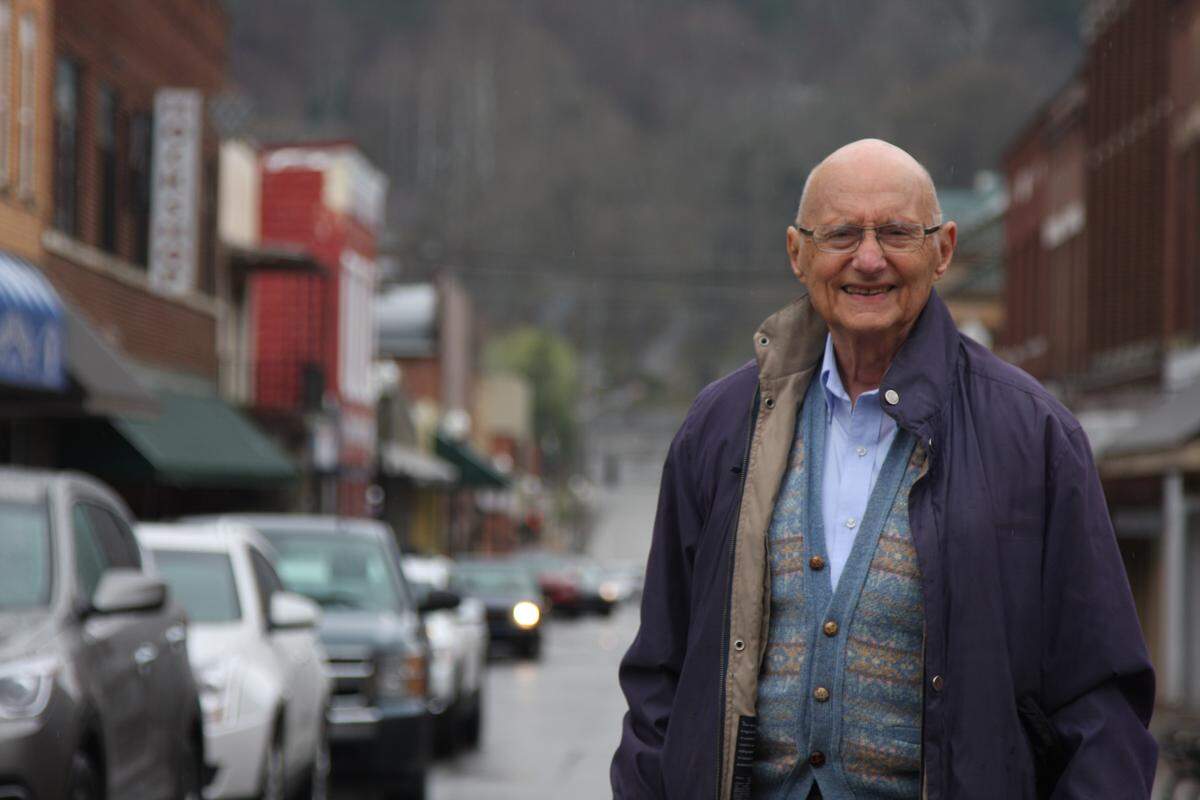
At 93, Rosenberg, a Holocaust survivor, still has an office down the street, and is a legend in the region for everything from helping end broad form deeds to helping victims of Social Security fraudster Eric Conn.
Today, AppalReD helps low-income people in 37 counties of Appalachia and south-central Kentucky. They help in civil matters that affect basic needs, such as food, shelter, safety, income, children and the elderly.
Since 2022, they’ve created a disaster response team to help the many victims of flooding in Eastern Kentucky.
AppalReD receives a big portion of funding through the Legal Services Corporation, a group set up and funded by Congress to help legal aid groups. So far, it has not been touched by Elon Musk or President Trump, but AppalReD continues to raise money.
One good pitch? Smith’s brief. As AppalReD’s executive director, Angeleigh Dorsey said: “Evan’s work shows the promise of what legal aid can do: fight for hardworking families who would otherwise be left out of the justice system.
“Justice for Mr. Howard has taken far too long, but his case reminds us of why legal aid matters. When a coal miner can have a fair day in court, in the highest court of the land, that’s America living out its values on its best day.”