Was the vote to increase the payroll tax for Fayette County schools even legal? | Opinion
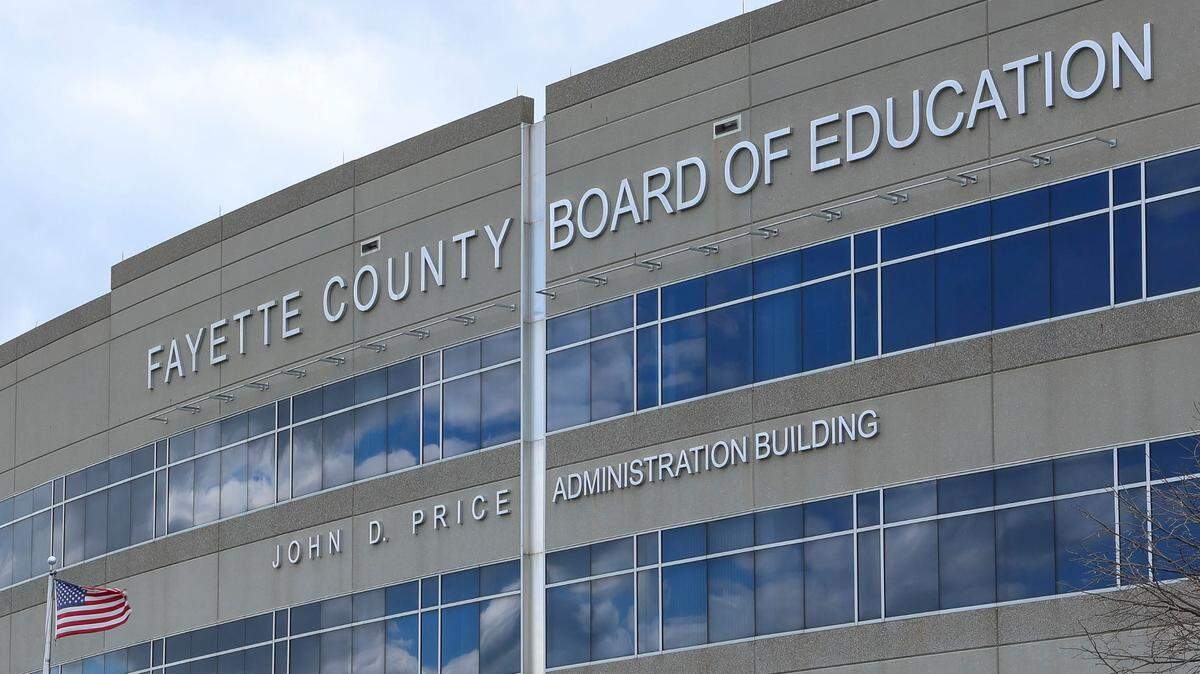
Fayette County school board member Penny Christian was right when she argued Tuesday night that an increased payroll tax for the district would continue its upward momentum in providing a better education for our students.
“We have to do right by these kids,” she said during an acrimonious exchange between board members. “This is not theater, this matters.”
Her seatmate, Monica Mundy, was also right when she voted against the tax because it was slipped onto the agenda over Memorial Day without ever having been discussed with board members, much less the general public.
“It just looks so bad,” she said. “It’s is very frustrating. I don’t feel like I can make a decision when I don’t have all the pieces and I don’t have all the information.
Who did have all the information? Top district officials and Commerce Lex, because apparently it was more important to run this decision by the local Chamber of Commerce than school board members.
Deputy Superintendent Houston Barber admitted Tuesday night they had consulted the chamber “two or three weeks ago.”
And here we are yet again. They kept it a secret, then stuck it on the agenda over a long weekend so that it could make it onto the June 5 agenda of the next Fayette Fiscal Court meeting.
The district faces a crisis of confidence because of a lack of basic honesty about what it was doing when. Even in service of a good cause such as investing in our kids.
The board passed the resolution 3-2 to approve the .25 percent increase in the payroll tax to the Fayette Fiscal Court, but big questions remains about whether this move was even legal.
KRS 160.603 states very clearly that “No school district board of education shall levy any of the school taxes ... until after compliance with the following: notice shall be given by causing to be published, at least one (1) time in a newspaper of general circulation published in the county or by posting at the courthouse door if there be no such newspaper, the fact that such levy is being proposed.”
The law also says: “The advertisement shall state that the district board of education will meet at a place and on a day fixed in the advertisement, not earlier than one (1) week and not later than two (2) weeks from the date of the advertisement, for the purpose of hearing comments and complaints regarding the proposed increase and explaining the reasons for such proposal.”
Given that at least two board members said they were unaware of the proposed tax until Saturday, and we did not publish any notices in Sunday’s paper, I would say the district has some ‘splaining to do.
But spokeswoman Dia Davidson said early Wednesday afternoon this law “only applies when a school board itself imposes certain taxes, like the property tax or utility tax. That’s not what’s happening here.
“Instead, the Board of Education has adopted a resolution informing the Fayette County Fiscal Court of its desire to implement a countywide occupational license tax to support public education. Once approved, this would replace the current school district occupational tax. Because this is a county-level tax, it follows a different legal process and is not subject to the requirements of KRS 160.603.”
I suspect lawyers will be getting involved. It’s kind of hard to believe statute would not require an entirely new tax to get public notice. Also, even if this interpretation is correct, it seems like informing the public about an entirely new tax would be the right thing for a public agency to do.
County Attorney Angela Evans said she is researching all these questions.
Parent Matthew Vied said he’s already preparing a recall petition.
It’s understandable that some taxpayers are miffed. Our property tax assessments keep going up, and the school board gets more and more money. This new tax will bring in about $16 million in the next fiscal year on top of the $57 million they already get from payroll taxes. By the year after, that would rise to about $30 million.
Barber says the district is in good financial shape overall, and the $16 million is basically the result of inflation, higher salaries and new buildings, all of which we want. But then why couldn’t they fix it and why should we trust them with more millions?
It’s exhausting. I’m sure school officials are exhausted after sitting through yet another meeting of snippy comments and accusations.
But once again, the district’s ham-handed handling of a sensitive topic has poisoned the entire topic. Whether you like taxes or hate them, this process —secrecy leading up to a big surprise — makes all of us dislike the process. That means we’re less likely to accept the idea on its own merits.
It would be so great if school district officials and board members could figure that out.
This story was originally published May 28, 2025 at 12:16 PM.