Sexual harassment is against KY law, just not against rules for KY legislators | Opinion
It’s both unbelievable and yet the most believable thing in the world that in 2025 a nearly all-male legislative body has never made sexual harassment part of its own legislative ethics code.
But it’s true. The Daniel Grossberg saga has illuminated the fact sexual harassment is not actually prohibited in the Kentucky Code of Legislative Ethics.
It’s such a glaring omission that earlier this month, the Legislative Ethics Commission asked lawmakers to pass a bill next January to amend the Kentucky Code of Legislative Ethics to “define and prohibit sexual harassment as ethical misconduct.”
This is what we call a no-brainer.
Except it’s been tried before!
Emily Dennis, the executive director of the Legislative Ethics Commission, said the agency has requested such legislation as far back as 2023 and as recently as 2025. The most recent version, filed by Rep. Kim Holloway, R-Mayfield, last year, didn’t get a committee hearing.
Dennis wouldn’t speculate on why it hadn’t passed before.
I will, but it’s not very flattering to our elected lawmakers of either political party though the years. They have chosen to leave a law vague and unclear when it comes to the ways mostly men lawmakers treat and mistreat mostly women employees.
Incidentally, sexual harassment is against the law for the rest of us under federal and state civil rights laws. It’s considered a form of sex discrimination and is prohibited in the workplace.
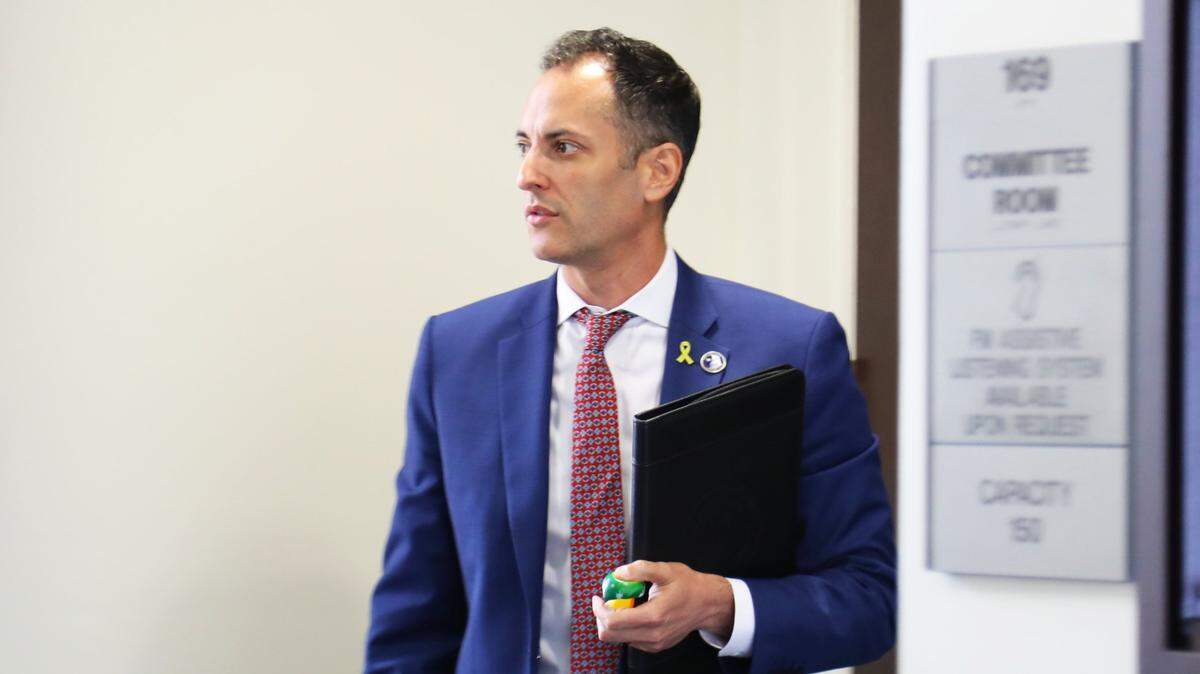
This issue has hit the spotlight again with the looming case of Grossberg, a Louisville Democrat.
In June, two women testified in front of the commission that Grossberg’s behavior towards them constituted sexual harassment. He denies all the charges, as well as reporting by the Herald-Leader that showed Grossberg had been banned for life by a strip club in Louisville for lewd behavior.
The Legislative Ethics Commission found probably cause to proceed, but has not yet ruled on Grossberg’s case, although his lawsuit against the commission continues in Franklin Circuit Court. The commission has asked for the case to be dismissed. The next hearing is July 30.
How does commission deal with sexual harassment?
In the past, Dennis said, the commission has ruled against lawmakers with sexual harassment charges under the more general statute of KRS 6.731, which prohibit a legislator to “secure or create privileges, exemptions, advantages or treatment for himself or others in direct contravention at large, or using influence as a member of General Assembly.
“Whenever we’ve had a complaint that looks like sexual harassment, we’ve used the general prohibitions of general conduct in KRS 6.731.,” Dennis said in a phone interview. “There are general provisions that prohibit a legislator from using their official position for personal gain,” but the statute isn’t specific to sexual harassment.
For example, that was the finding against former House Speaker Jeff Hoover, R-Jamestown, who in 2018 agreed to admit that he violated legislative ethics laws, pay a $1,000 fine and subject himself to a public reprimand after he signed a secret sexual harassment settlement with a woman who worked for the House Republican Caucus.
In their June newsletter, the nine-member commission asks lawmakers to “create a comprehensive ethical prohibition against sexual harassment by legislators and legislative agents against legislative branch employees, legislators or legislative agents,” according to the story by my colleague, Alex Acquisto.
“This would include the following: Specifically define ‘sexual harassment’ as actions that violate either Kentucky or federal statutes, regulations or case law relating to protected classifications Prohibit legislators and legislative agents from engaging in sexual harassment against an employee of the legislative branch, legislator or legislative agent and provide that a violation is ethical misconduct.”
Holloway told me she would be glad to carry the bill again. She thinks it was filed too late in the session to get a hearing, rather than avoiding the issue.
“We will get it filed earlier, and that will give us some more time to reach out and ask for support,” Holloway said. “This wasn’t even on my radar, but it’s kind of interesting sexual harassment is not an official part our ethics code.
“I don’t think anyone will argue that at all.”
Let’s hope she’s right. The General Assembly doesn’t always accept what looks like a perfectly reasonable, overdue idea. But this is an easy one, which will assure the public our elected officials have as much interest in all kinds of ethical behavior, especially the kind that plagues so many workplaces.
Including our state Capitol.
This story was originally published July 29, 2025 at 1:16 PM.