Redlining and resilience: New film shows Lexington’s troubling, uplifting history | Opinion
Amid all the angst and horrific headlines we now live with every day, it’s wonderful to see a small community project blossom into something bigger.
That’s what’s happened with research that two Lexington women started during the pandemic and the Black Lives Matter protests. Rona Roberts and Barbara Sutherland wanted people here to understand some of the historical reasons behind America’s traditions of racial injustice.
So they started researching housing patterns, including racially restricted housing deeds that were attached to so many neighborhoods in Lexington. The “Segregated Lexington” came to some very clear conclusions about our fair city, as it says in the introduction:
“Over many decades, local and federal government, landowners, property developers, Realtors, bankers, landlords, and individual home-sellers intentionally created a segregated community,” the introduction says.
“Government-sanctioned segregated housing benefited White people and harmed Black people. For a few crucial decades, primarily the 1940s through the 1960s, White people with working class and middle-class incomes bought houses made affordable, in part, by government-backed home mortgages. Very few Black people were able to do the same. As the value of their houses appreciated, White owners built wealth and shared it with their families across generations, creating inequalities that persist today.”
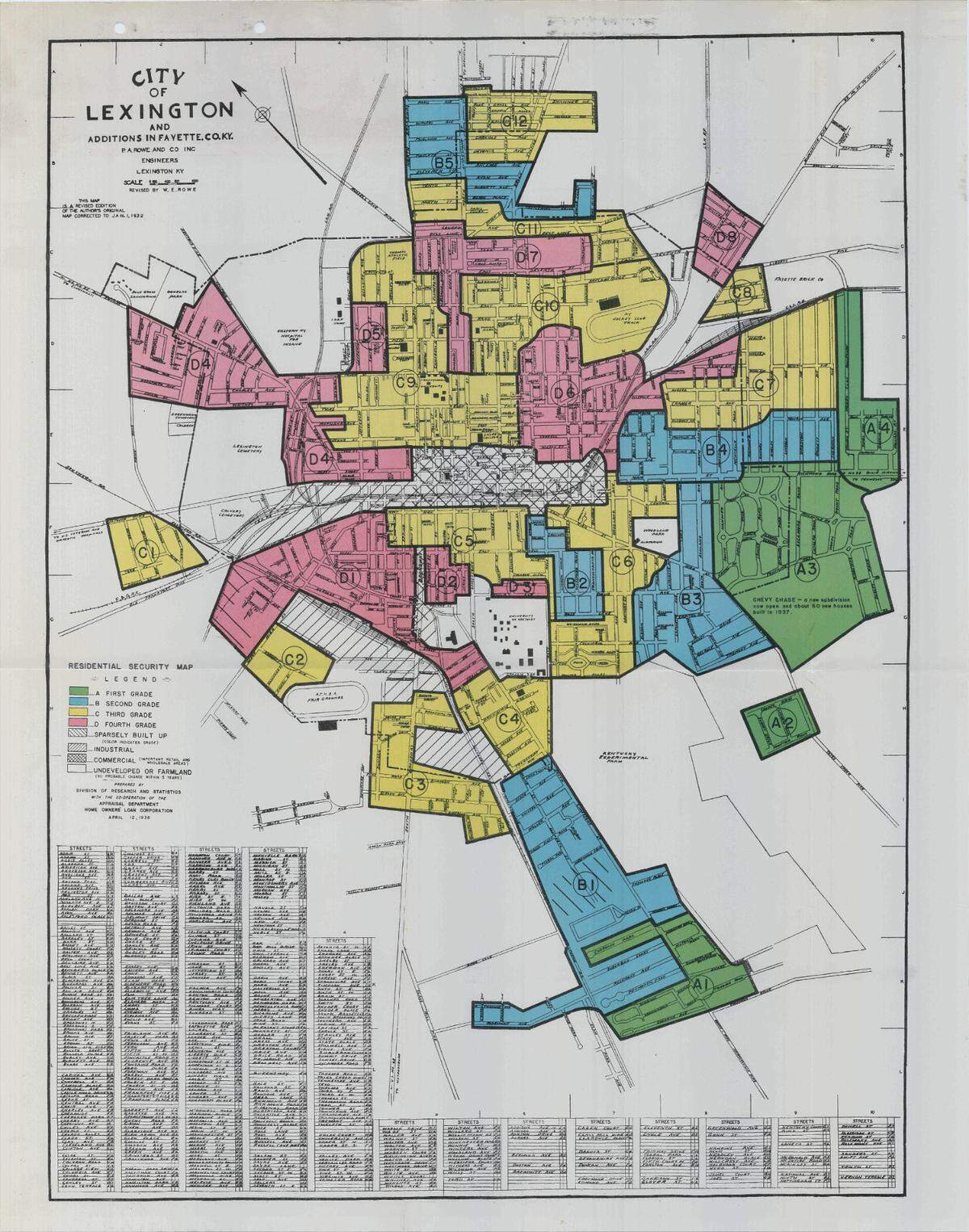
The website looked at restrictive covenants and “redlining,” in which banks divided up the city into zones that showed where they could give house loans. Those behind the red lines were denied.
Roberts and Sutherland started making presentations around town to neighborhoods and groups. The University of Kentucky hosted an evening with author Leah Rothstein about her book “Just Action,” which explores solutions to housing segregation. The library put up an exhibit that traced redlining.
The information was particularly intriguing to a Realtor named Kristen LaRue Bond, whose own journey proved the importance of homeownership. While redlining and other discriminatory practices had been outlawed, she thought the information would be useful in her field, so Realtors could understand how housing patterns were created.
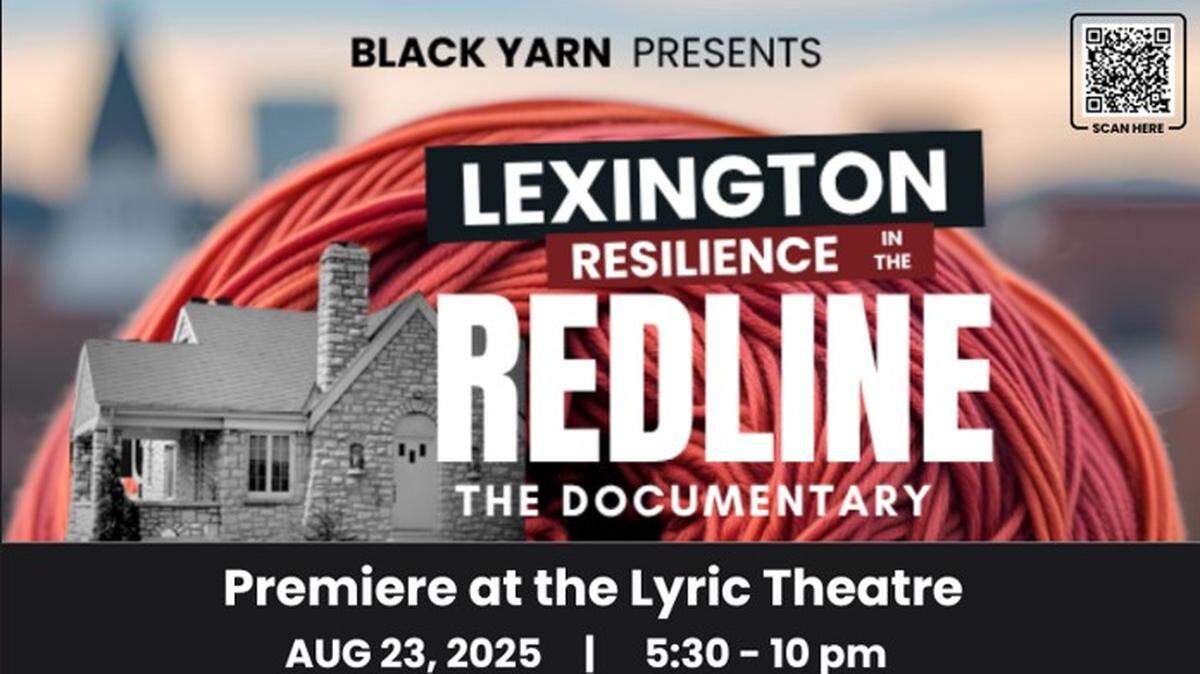
She started talking to Roberts and Sutherland. They started talking about an educational film. They started talking about a nonprofit. They started having meetings. And now, just two years later, a nonprofit called Black Yarn is presenting the documentary film “Lexington: Resilience in the Redline,” which will premiere Aug. 23 at the Lyric Theatre.
“I am so excited,” said Bond, who is the co-founder and president of Black Yarn. “This is a project that’s really is well done —I’m excited to share it with the community to see what conversations it sparks.
“The messaging is timely because of the political environment right now. I hope it can be unifying of how we put it all together, because it really is a unifying story.”
The documentary features interviews with experts and community members about their experiences of redlining and housing segregation, from the Black hamlets in rural Fayette County to segregated schools, and the strength and, yes, resilience, inculcated in those communities, along with the wealth gaps that still exist.
(Full disclosure: I also was interviewed because of my columns on Segregated Lexington and on the city’s civil rights movement that went uncovered by the Herald and the Leader.)
Black Yarn’s scope is much bigger than housing; Bond described it as a wheel with housing at the center, with spokes on health, education, transportation and food access that all need the rigorous exploration.
“We want the film to be a launching pad for further collaboration, research and storytelling,” Bond said.
The Aug. 23 premiere will be a fundraiser for Black Yarn held at the Lyric Theatre, once the center of Lexington’s Black entertainment district. It’s also part of the 250Lex celebrations.
The evening will begin at 5:30 p.m. with a reception featuring much of the research from the film. From 7:15-8 p.m., a panel discussion will introduce the film, which will show from 8-9:30 p.m. Tickets can be bought here.
There will also be a free screening of the film at the Kentucky Theatre on Tuesday Aug. 26 from 7-8:30 p.m. You must register for tickets, which include complimentary popcorn and a free beverage. The event is being underwritten by the Blue Grass Community Foundation, which also sponsors Black Philanthropy Month in August.
“Hosting the community for a free screening of “Lexington: Resilience in the Redline” is a way to bring people together — neighbors, nonprofits, businesses, and changemakers — because we do better when we have opportunities to learn and do good together,” said foundation director Lisa Adkins.
“We’re excited to host this screening during Black Philanthropy Month to share Lexington’s Black stories, celebrate resilience, and inspire reflection and action.”
Bond says she hopes the film will inspire Lexingtonians to learn more about their history and come away with a sese of community.
“Despite what some of our national leaders are doing, we want to show that Lexington is still willing to lean in to our diverse population to make space for researchers and truth tellers,” Bond said.
This is such an important point. Federal and state leaders are trying to rewrite our history, from changing exhibits at the Smithsonian museums to eliminating diversity in higher education. Case in point: UK, which was an early supporter of events surrounding Segregated Lexington and Black Yarn recently declined to sponsor the premiere.
But we can’t stop talking about the true history of our city or our country because it’s the only way we can understand how we got in this mess.
“Resilience in the Redline” is part of that resistance.