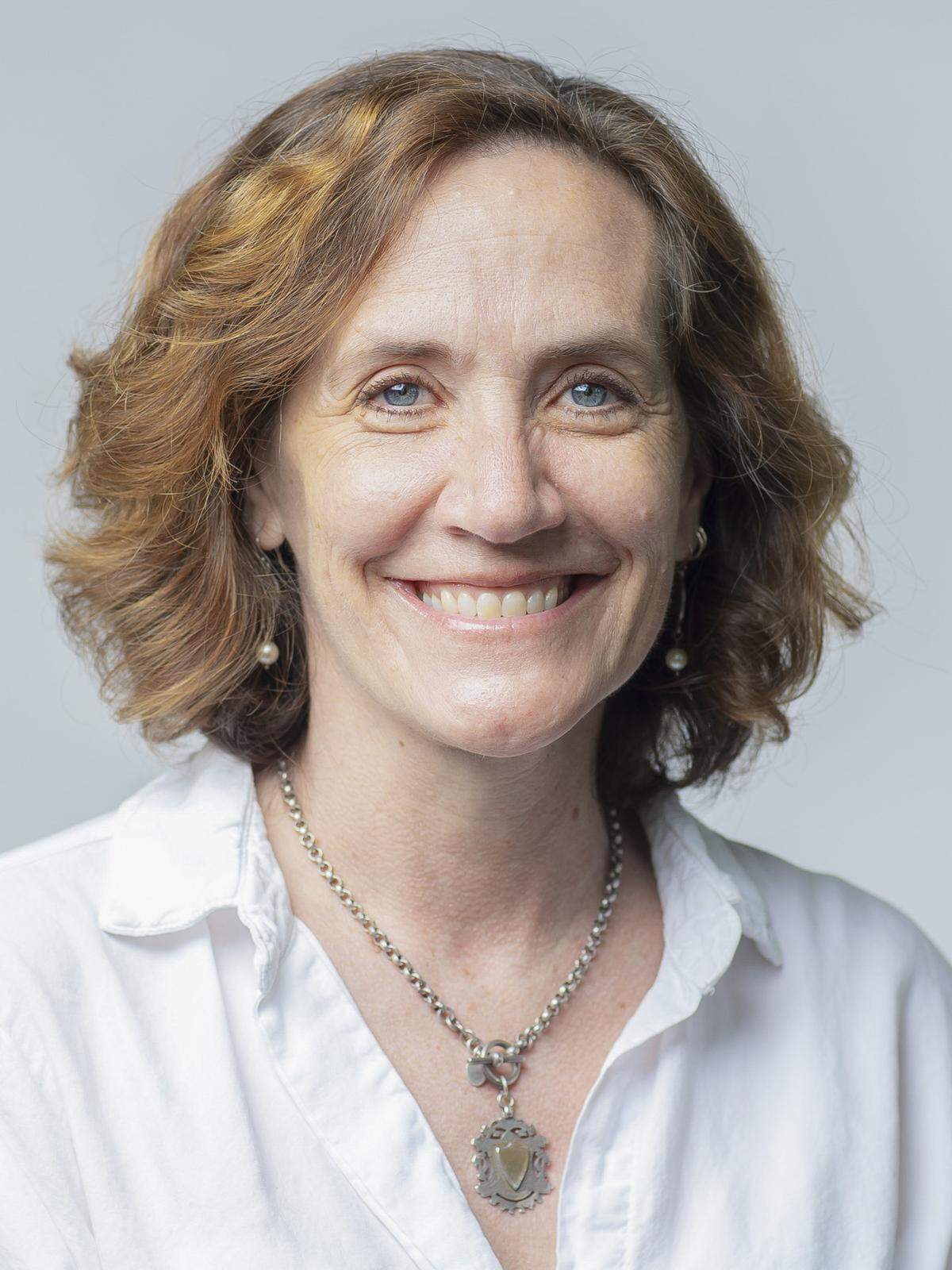
‘Hard to be upbeat.’ Lexington’s most famous Fact-Checker on a post-truth world | Opinion

Glenn Kessler always wanted to be a journalist.
As a child in Cincinnati, he created a mimeographed pamphlet in his neighborhood called the Cincinnati Fact. After he moved to Lexington, he was co-editor of the prize-winning Henry Clay High School yearbook. He left Lexington for college and a long career that makes alumni clubs glow – Newsday, the Washington Post, writing about everything from international diplomacy to presidential politics.
Then in 2011, he started a new gig at the Post — The Fact Checker — which used a rating system of Pinocchios to gauge how truthful politicians were. One Pinocchio was shading the truth; four was a lie. A totally truthful claim earned a “Gepetto.”
With the rise of Fox News and other fractures in the journalistic landscape, the Fact Checker became a valued and well-read part of national politics.
So like many of you, I was shocked to see Kessler, 66, among the names of prestigious writers who recently opted for a buy-out from the Jeff Bezos-owned Post, which has hemorrhaged readers and writers in the past few months.
Kessler agreed to talk to me about just the facts and our increasingly fractured post-truth world, especially in Donald Trump’s second term. (In 2020, Kessler and his team wrote a book titled “Donald Trump and His Assault on Truth: The President’s Falsehoods, Misleading Claims and Flat-Out Lies.”)
Kessler said our current state has been happening over the course of his life.
“When I was growing up, everyone in America sat in around the TV and watched Walter Cronkite or the Huntley-Brinkley Report, so all of America got some ground level understanding of what happened that day,” he said.
“Unlike most countries, the US developed a period of non-partisan papers, like the Cincinnati Enquirer, the Herald-Leader, the Washington Post, and the New York Times, that provided information that everyone read and digested.
“Then things began to break down.”
In the old days, both journalists and readers had time to digest the news. Something would happen, journalists would write about it. Then came the reaction. Then the analysis.
Today, technology has sped up that process to light speed, so that all three stories appear at nearly the same time. It’s hard to take it all in.
Technological changes have happened in concert with the fracturing of news sources, so people can find news that agrees with their views on the world, the concept known as confirmation bias.
“When I talk to students, I say, ‘Please diversify your social media feeds,’” Kessler said. “I learn more when I read things I disagree with, but most people only take in information that they already believe.
“You can set up your social media feed so you only see what right-wingers say or left-wingers say, or you could ignore everything and just read about Taylor Swift.”
But that fracturing has also led to a post-truth landscape, where facts are decided by political parties. For example, Kessler said, Nixon resigned because Republicans said he had to go, based on the seriousness of what everyone understood Watergate to be.
Today, not so much.
For example, “there was an acknowledged truth of what happened immediately after Jan. 6, but over time, Trump has managed to convince half the country that Jan. 6 was very different from what actually happened,” Kessler said.
“We no longer have a common base of understanding. We don’t have any unifying figures — Trump prefers to divide rather than unify.”
Kessler’s exit from the Post started last year when he sat down with Publisher Will Lewis, who asked him: “What should The Post do to appeal more to Fox News viewers?”
You can read the whole, sometimes humorous exchange on Kessler’s new Substack, which he started shortly after taking the buyout.
But Kessler is worried about the future.
“I fear people are less open-minded, they want to be in ideological cul-de-sacs,” he said. “Fragmentation is happening in other countries, but the EU requires social media to get rid of false information. That won’t happen in the US any time soon ... and this could become even worse with AI.”
The journalist and fact-checking communities have to keep to their standards, to print what is true and what is false, Kessler said.
“Over time, people will look back and say they were doing the right thing,” he said. “You have to remain true to your principles.”
But for now, he said, “it’s hard to be upbeat.”
This story was originally published August 25, 2025 at 5:00 AM.