‘We don’t turn anyone away.’ Eastern Kentucky clinic may become health care model
AI-generated summary reviewed by our newsroom.
- Post Clinic provides free medical and dental care to residents across 16 counties.
- Patient volume rose from 765 to 1,640 in 2024–25, straining space and volunteers.
- Clinic combines volunteer staff, grants and donations as a safety‑net health model.
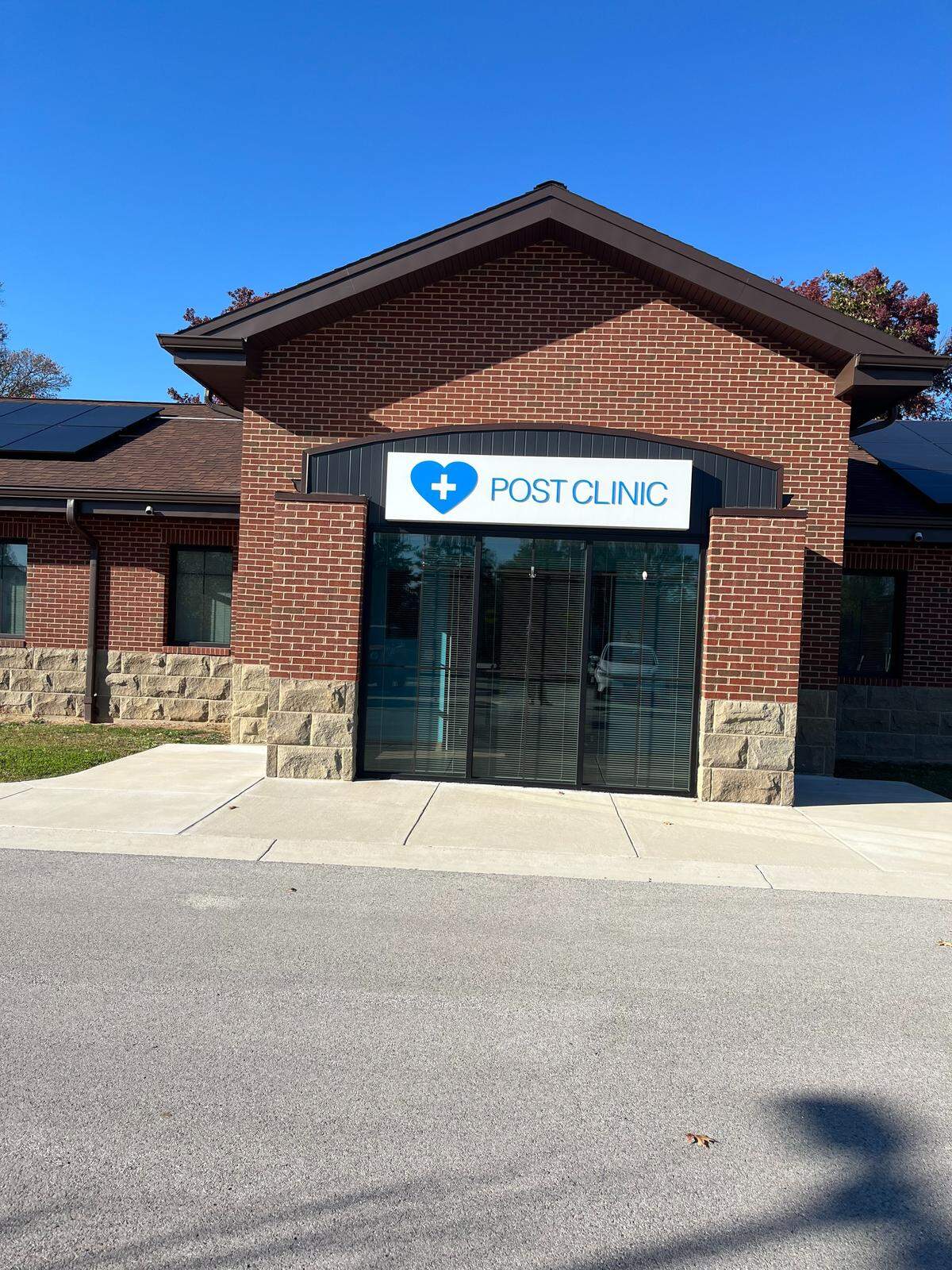
Inside Mount Sterling’s city limits, past the food pantry and vast Victorian piles on Main Street, there’s a quiet street with a brick building with a small sign that says simply: “Post Clinic.”
But inside the nondescript building, medical personnel are hard at work filling cavities, making X-rays and diagnosing such Kentucky ailments as high blood pressure and diabetes.
But money never exchanges hands. Since its founding in 1996, the Post Clinic has lived up to its founders’ desire to help people get medical care for free.
Drs. Ellen and Edward Roberts, both had practices in Mount Sterling, but wanted to do more for patients who couldn’t afford their regular services.
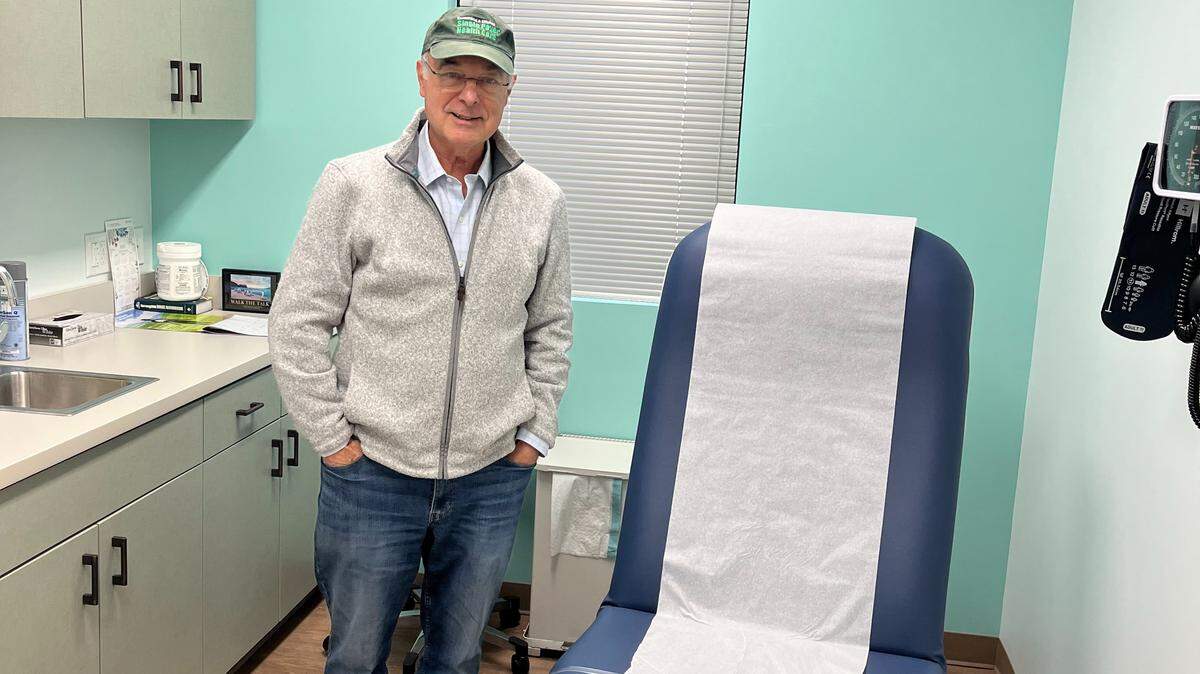
“Medical debt is the greatest driver of bankruptcy in Kentucky,” Edward Roberts said recently as he gave a tour of the clinic wearing a baseball cap emblazoned with “Single Payer Health Care.”
“This place is a hand out of poverty. You may need to wait, but we don’t turn anyone away.”
The clinic started in the old downtown post office, hence its name, but in 2023 it moved to its new facility on Sterling Avenue, featuring ADA-compliant exam rooms for medical and dental exams, along with a small lab and X-ray room.
It was built with donations, and state and federal grants facilitated by a series of politicians, including Gov. Matt Bevin, Gov. Andy Beshear and Congressman Andy Barr.
The Post Clinic is far from being the only free health care clinic in Kentucky, although it’s unusual in offering both medical and dental services. But as U.S. health care delivery continues to fray, as Medicaid cuts loom threatening rural hospitals, it could be an urgently needed model across the state.
For example, in 2023-24, the clinic served 765 patients. That rose to 1,640 in 2024-25, and if the momentum continues, they could see 3,000 patients the year after that. In which case, they would need even more room and more volunteers.
They serve patients from 16 counties, including Fayette, people of all ages and backgrounds, including many Amish, who live in Montgomery and Bath Counties.
“We’re very nervous about what’s coming,” Roberts said.
‘Medicare for all is what we need’
Edward Roberts, 75, grew up in Mount Sterling, where his father was also a doctor, and he brought home a doctor bride from Massachusetts. He seems to know everyone in Mount Sterling and everyone seems to know him.
As Judge Executive Chris Haddix told me, “I’ve known him my whole life.”
Both Ellen and Edward Roberts are retired; Roberts only stopped seeing patients at the clinic this year, but serves on the board. Much of what he does these days involves fundraising for the roughly $225,000 annual budget.
Soft-spoken and laconic, Roberts makes it clear there is an answer to our health care crisis, even if it’s not one Kentucky politicians, especially those who voted for Trump’s Big Beautiful Bill, want to hear.
“I don’t think people are prepared for what’s coming in 2026,” he said. “We spend so much money on health care that we could pay for universal healthcare, and cut costs. Private insurance is getting a 20 percent overhead while Medicare’s overhead is 4 percent.
“Medicare for all is what we need.”
But until that happens, people will be left with the tatters of the Affordable Care Act, Medicaid or nothing at all.
The Post Clinic will take people who have health insurance, because many people have insurance with co-pays they can’t afford. They meet the clinic’s standard of 300 percent of the federal poverty level.
In 2017, the clinic added dentistry, which is often not covered by traditional health care plans. Dr. Charles Tingle, a retired dentist from Morehead joined the practice. The clinic used to raise money to make one set of dentures per month. Dr. Tingle started charging Medicaid for the first time. That allows them to make many more, greatly needed sets, which he’s now creating with 3-D printing.
Tonya Kendrick joined up on the pediatric dentistry side, and soon joined full-time.
“This is what I enjoy because it’s so fulfilling,” Kendrick said. “A lot of these children feel like they don’t matter, and we can make them feel like they do.”
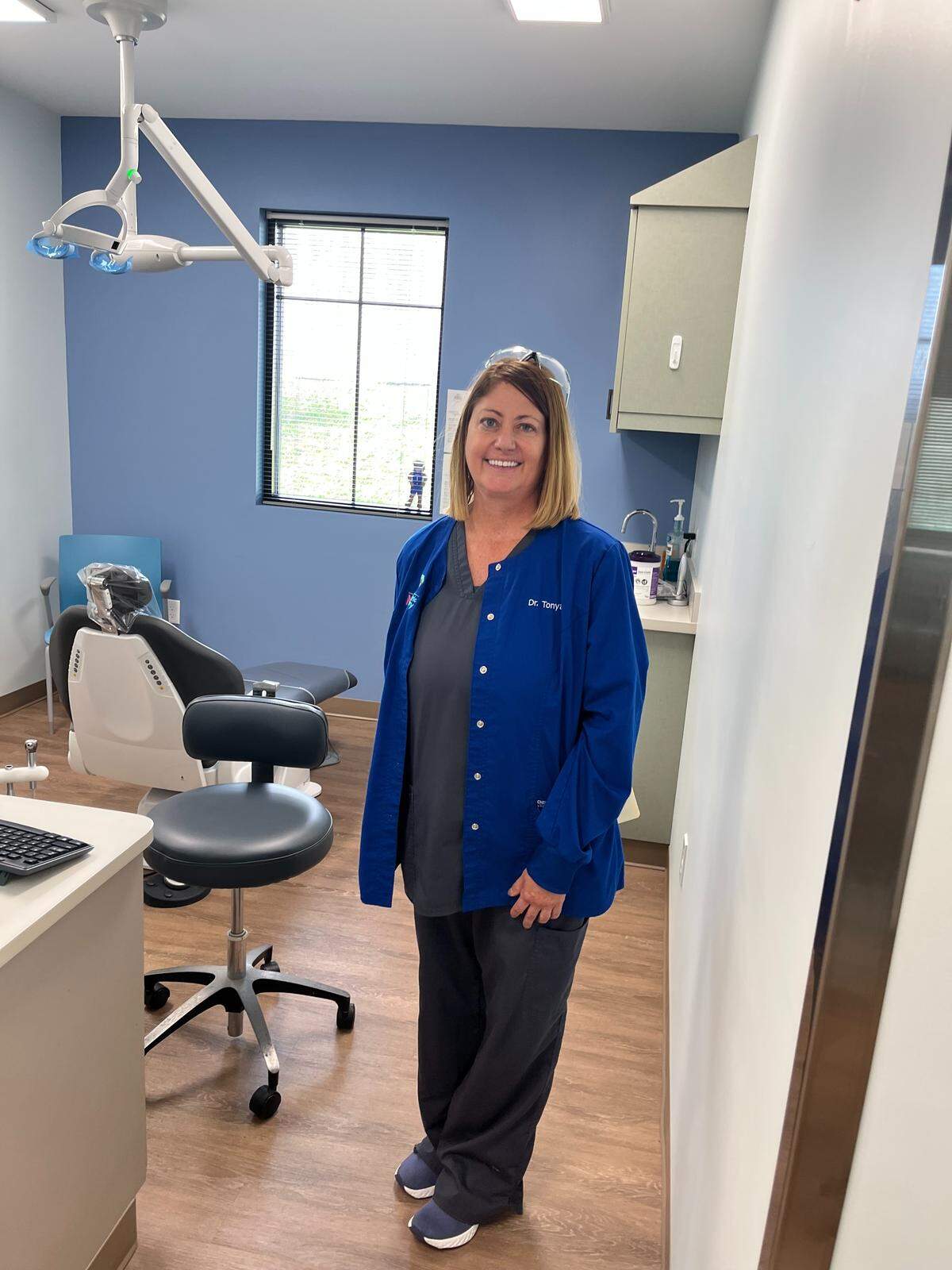
Kendrick is such a believer in the Post Clinic that the board recently voted to make her the CEO, replacing long-time administrator Louise Summers, who retired after 14 years at the helm. Kendrick’s husband, who teaches at UK, helps out as well.
Continuity of care was a problem, Robert said, so the clinic hired a bilingual nurse practitioner, Olga Skinner, who works Monday through Thursday. There are consulting surgeons and volunteer doctors who can recommend further treatment for more serious problems.
The clinic also depends on a host of volunteers, who do everything from checking in patients to organizing the office. Michelle Romans has been working every Monday and Tuesday for the past six years, when her business, Lighthouse Candles, is closed.
“I love it, because if you can help you should,” she said.
What happens when Medicaid cuts kick in?
As one might expect, the clinic is beloved in Mount Sterling, supported financially by both city council and the Montgomery County Fiscal Court.
“We’re close enough to Lexington and bigger cities for the resources, like doctors, but we’re also in the Eastern Kentucky region, where the resources are needed,” said Haddix, the judge executive. “Dr. Roberts is a pioneer in this area — this is a relatively new concept, but once the word gets out, hopefully more could pop up.”
Earlier this year, the UK’s Gaines Center students did an oral history with patients and providers at the Post Clinic.
“I can’t say enough nice things about them,” said Tanya Lintner, a grandmother from Frenchburg. “They’ve been lifesavers actually, anything I need ... they’ve been angels.”
Mayor Al Botts told me he’s proud the clinic is not solely dependent on government funds.
“Government can’t solve every issue,” he said. “To have a clinic like this to take care of the needs of many folks who have nowhere else to turn is something to be celebrated.”
In the end, the Post Clinic is at the center of a debate the Trump administration is bringing to the forefront of society right now, one we’re about to see play out. Should we have fewer safety nets from the government and more safety nets created by charity? Can communities pick up the pieces of providing health care when the safety nets are gone?
The clinic’s creator, Dr. Roberts, clearly thinks the system should be overhauled for a Medicare for all model. But as he said, “it would take citizens demanding it, and they need to demand it.”
Until that happens, however, the Post Clinic will keep serving patients.
“This is bigger and more than I ever thought it would be,” he said. “We’re the safety net of last resort.”
This story was originally published November 11, 2025 at 10:28 AM.