
With half its students from big cities, Ky.’s School for the Arts has a class problem
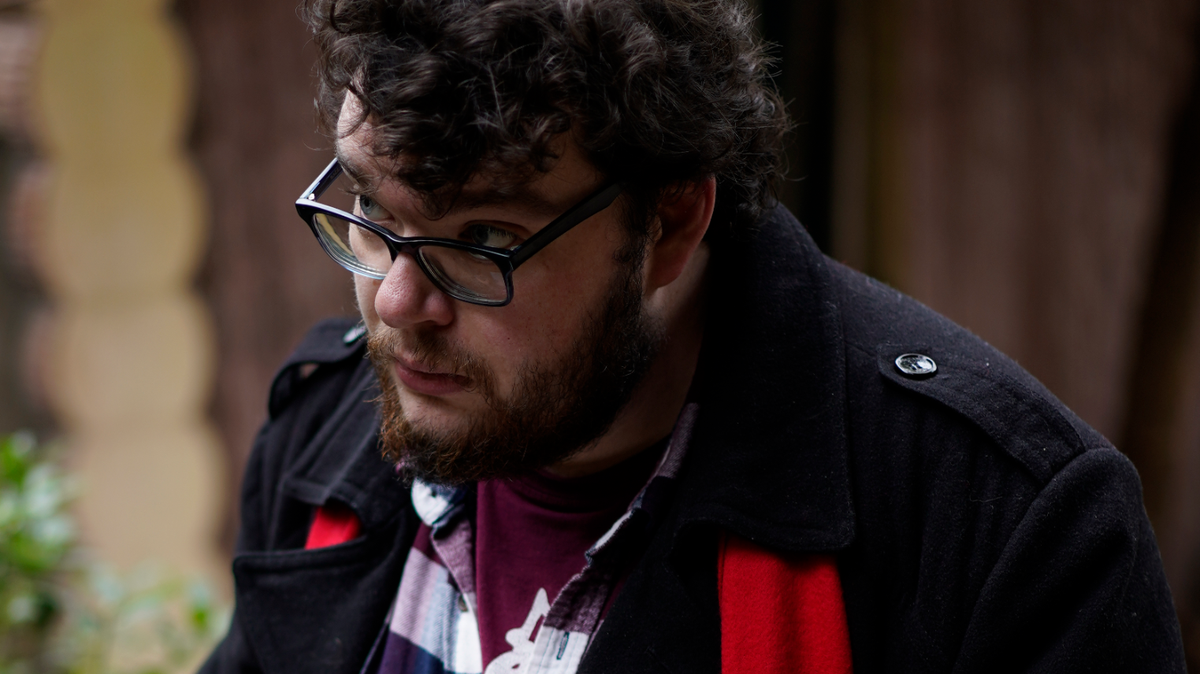
There is no question in my mind that the Kentucky Governor’s School for the Arts, a summer program organized by the Kentucky Center for the Performing Arts, is a boon to the Commonwealth. My personal history with the program and those who make up its staff and alumni bodies is long. I’m an alum from 2012’s creative writing discipline. I worked for them as a staff member from 2015 to 2017. I count a great number of people affiliated with the program as friends. I love GSA.
But it is because I love it that I feel it necessary to explore the program’s troublesome history with outreach and accessibility.
During my time working with GSA, the demographics represented within it were troublesome. The program bills itself as being a summer camp for the next generation of artists and leaders. But the administration of the program is of a mind that these artists and leaders come, with shocking frequency, from Jefferson and Fayette Counties.
Allow me to explain.
The 2020 class, attending the program at the time of writing, is 250 students strong. Of these, 102 students come from Jefferson and Fayette Counties. That’s roughly 41 percent of all students in attendance. The other 118 counties of the Commonwealth comprise the remaining 59 percent. The 2019 class, made up of 254 students, also had 102 from Jefferson and Fayette Counties.
I understand that populations differ and that it is a fact that Jefferson and Fayette are the two largest counties in Kentucky. But simple research shows a dissonance between that fact and the student body. The US Census Bureau estimates the population of Kentucky to be 4,468,402. Jefferson and Fayette Counties, combined, are home to 1,094,297, or 24.5% of the state’s population. At just under a fourth, I cannot help but question why these two counties produce almost half of the student body.
Graduating from GSA gives students access to numerous scholarships inside and outside of the state’s universities, including full tuition options to the University of Kentucky and University of Louisville when accompanied by appropriate ACT scores. I won’t beat around the bush, I could not have attended college without the scholarship I received due to my alumni status, and I am not alone in that regard. This does not even begin to explore the program’s actual intensive education process. In three weeks, students are put through hours-long studio times in their specific disciplines, each led by noteworthy and exceptionally talented faculty. For some students, like myself in 2012, this is the only time they will ever have access to that kind of artistic learning. My school in Wayne County was stunted, at best, when it came to creative courses. Creative writing was an exercise occasionally explored in an English classroom, not a subject unto itself. My ability had to be developed and honed in isolation.
Are students from poorer counties not just as worthy of getting this helping hand?
What’s more, Jefferson County hosts the Youth Performing Art School and Fayette County the School for the Creative and Performing Arts. Both of which contribute substantially to GSA’s current student body and alumni ranks. These schools offer a similar curriculum as the program does, but in the form of a day’s schooling, for entire semesters. I am not saying these students are undeserving of a spot at the program, but there are far more out there without access to this kind of education. I feel these students would benefit more from this intensive course than those who have it year-round.
Numbers don’t lie and the bias toward these two counties is clear. When speaking of the Commonwealth in the classical sense, that is the “common wealth” of the citizenry, this continued overlooking of smaller counties is antithetical to the program’s stated mission and certainly the progression of Kentucky as a hub for art and culture. There is more to us than our two largest cities, quite a lot more. But you have to be open to seeing it and reaching outside of your comfort zone to find it. More Kentuckians deserve a chance to “go forth and make great art.”
David Cole is a writer and media production professional currently employed by the University of Kentucky.