Forget ‘Hillbilly Elegy.’ To see real Appalachia, watch ‘hillbilly’ documentary instead.
Reader, I tried.
Per an editor’s helpful column idea, I clicked on Netflix’s “Hillbilly Elegy” and I started to watch J.D. Vance’s life story, but in the first 10 minutes, with the frogs croaking in the creek and little J.D. Vance getting beat up by the creek before he’s rescued by his kin in a pickup truck, I just could not.
Instead, I switched to Hulu and turned on “hillbilly,” the 2018 documentary from Kentuckian Ashley York, and reader, if you haven’t already seen this, I think this is a much better use of 90 minutes of your life. York, who grew up outside Pikeville and attended the University of Kentucky, brought the film to Eastern Kentucky University in 2018; since then it has won all kinds of documentary film awards, including Best Documentary at the Los Angeles Film Festival.
York and her fellow filmmakers pack so many ideas into a short span: The malignant stereotyping of Appalachian culture, York’s own journey from Meathouse Hollow to Hollywood, and most intriguingly in 2020, Election Night 2016 when a reality show host named Donald Trump became president.
That’s because the filmmaking continued to pivot; at first she had no thought of making herself a subject of or in the film, even though it sprung from her own feelings of stereotype and dismissal.
“I didn’t understand how meaningful it would be to bring my personal story into the film, ” York said in a phone interview from Los Angeles, where she’s locked down with her husband, John Fee, and her 15-month-old baby, Hazel. “I avoided it because it was hard —The shame I felt throughout my life, the way that people respond to that, when people find out where you’re from, people have this need to judge you, I guess.”
That first judgment took place when she was a freshman at UK, being teased by classmates at the Kentucky Kernel about her accent.
“The moment I arrived at UK, I was an outsider, something weird, something less than my fellow Kentuckians,” she said. It was a shock, and it was painful, and yet York soaked in everything UK had to offer, from classes on Appalachian history and Black culture to becoming editor of the Kentucky Kernel. She left Kentucky to get her masters at the University of Southern California, where she teaches today.
Nuance versus stereotype
York started working in documentary film, including on movies about Deep Throat, the famous 1972 porn movie, and one about comedian Tig Notaro. Just like J.D. Vance, she’d made it, and like him, she came back to ideas about her identity and upbringing, but unlike him, she wanted to show the world how rich and complex Appalachia really was. Then she met filmmaker Sally Rubin, who had similar concerns about Appalachia and stereotypes, and they started talking about a possible project. They began at the Appalachian Studies Conference, where writer Silas House was the key note speaker.
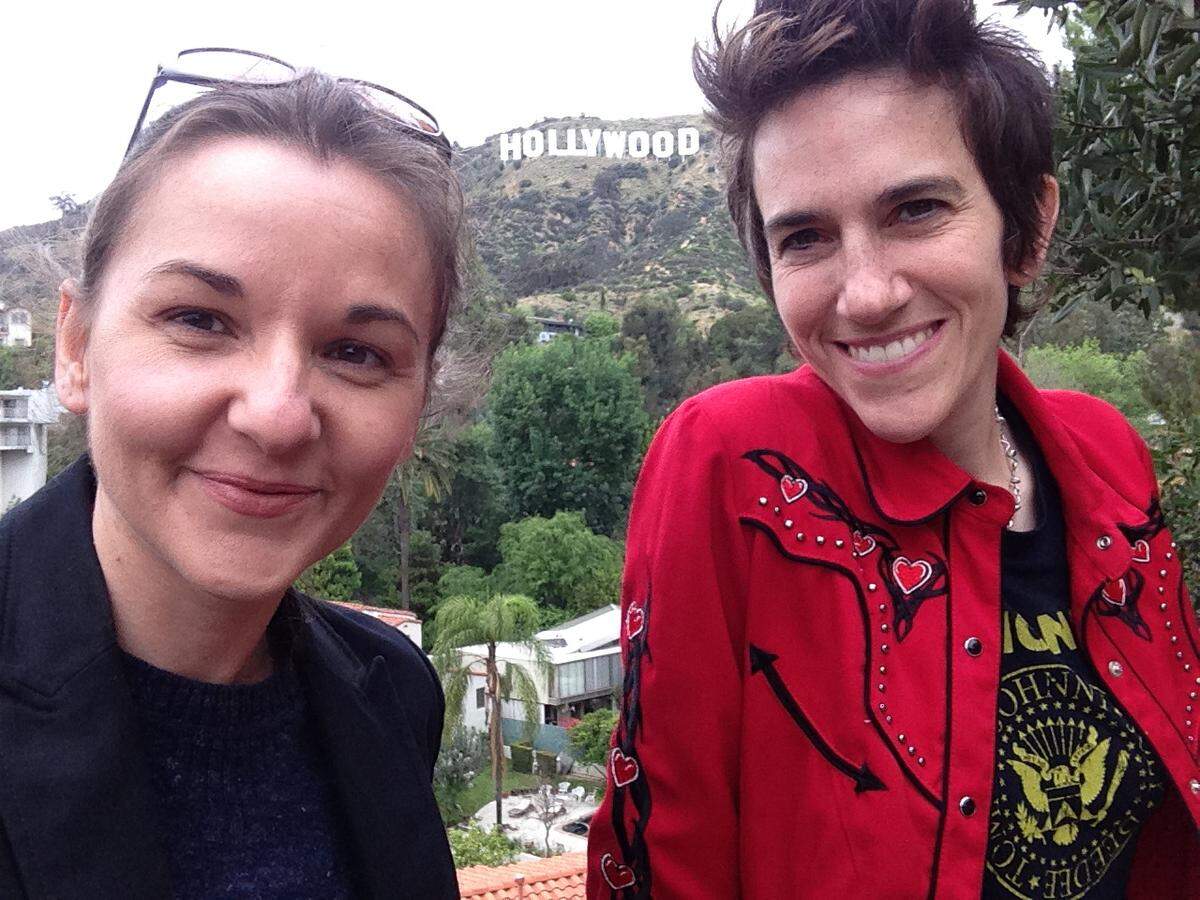
“The moment I met him, I felt a jolt,” York said. “What he’s doing is so radical, this incredible man who is a brilliant writer, who speaks so beautifully and with his accent completely unfiltered— he gave his talk about Appalachia and how there’s not a problem that exists that doesn’t exist everywhere.”
House and his husband Jason Howard became an integral part of the film, along with other scholars and academics dedicated to a rich and complex view of Appalachia, like famed writer and Kentucky native bell hooks, Tony Harkins, author of “Hillbilly: A Cultural History of an American Icon, Frank X. Walker, founder of the Affrilachian Poets group, which showcases the diversity of artists in the region.
“Whereas most media about Appalachia has been told by non-Appalachians, nobody in that film who gets a voice is non Appalachian,” said House, who became an executive producer on the film. “I don’t think that’s ever happened before. In Hillbilly Elegy, even the person telling the story clearly doesn’t understand the Appalachian experience.”
That’s where the film could have started and ended, showing viewers that diversity of thought and description of a region that goes beyond the stereotypes of “Deliverance” and “Buck Wild.” But Rubin and York realized it needed something more, and that’s when York decided to step in front of the camera. And she did so in the run-up to the 2016 election, as Donald Trump was beginning his unlikely voyage to the presidency.
One of the most riveting scenes of the documentary is when York sits down to interview her Granny Shelby and some other family members, and realizes that they are all supporting Trump. As they explain, Trump promised to bring coal back and Hillary Clinton wants to put miners out of business and calls them all deplorables. Granny Shelby, who once went to a Bill Clinton rally, now liked Donald Trump.
You can sense York’s own shock on Election Night, and the next day as she interviewed House and others as they took in the results in stunned disbelief and some tears.
“We had our blinders on,” York said. “I thought Hillary would be president and our movie would end with a big square dance with me and bell and Silas and Sally. I just could not imagine it.”
‘That’s my identity’
Sure enough, Trump was elected. J.D. Vance was elevated to a kind of Trump voter whisperer, someone who could explain the rural vote that suddenly had power behind it. York’s more complex regional vision did not fit the narrative. And folks like York and House are still struggling through the idea that Trump did not bring back coal or do much of anything for rural people and yet still crushed Eastern Kentucky, winning Pike County, for example by 60 percentage points.
All of this is fresh in York’s mind because of the recent release of “Hillbilly Elegy,” by Howard, a filmmaker she greatly respects. She actually liked the movie more than she expected, but highlighted its obvious flaws in an article in Variety.
“I saw the finished film on Netflix the day it premiered, and enjoyed it more than I expected. Howard’s version tells Vance’s story about growing up in a family consumed by his mother’s opioid addiction,” she writes. “The film is less objectionable than the book and Howard is smart to avoid an examination of the greater culture, which became the focal point of much of the memoir’s criticism.”
She wants to do another project, a ten-part series that goes deeper into all the topics she touched on in “hillbilly,” talk more about race, gender, stereotypes, classicism. The film changed her life, of course, made her career, but it also re-introduced her to her own family, let her get to know her Granny Shelby, who also wanted to make something of her life.
“That’s the real magic of Hillbilly,” York said. “I’m from Meathouse Hollow, but I never said that until I made this film, I never identified as an Appalachian. I discovered what it means to be Appalachian, that’s my identity and I’m very proud of that.”
This story was originally published December 11, 2020 at 9:08 AM.