
Our Voices: The healthcare world doesn’t always listen. One mother’s journey to enlightenment.
You sit down in a cold office waiting to hear a knock on the door. You hear a slight tap on the door and the doctor walks in. Finally, you’re able to consult with an expert about your health. But it isn’t always that simple. Although this individual is a trained and knowledgeable professional, he must still be a detective of sorts.
At times explaining pain to a doctor is similar to explaining racism to someone who has never experienced it. Often pain is internal. We may feel pain but we cannot see pain. For African Americans many times we feel we are being targeted simply because of our race, but describing these acts becomes difficult when we’re explaining our experiences to individuals who have never experienced racism.
Racism is embedded into American culture. And unfortunately, the healthcare system is no different. Many African Americans do not trust medical professionals. Historically there have been cases of African Americans that have been used as medical guinea pigs. The Tuskegee Experiments and Henrietta Lacks are two well-known medical experiments that contribute to the distrust the African American community has with the medical industry. The Tuskegee experiments, or as I like to call them the syphilis trials, began more than 75 years ago. But our perception of the medical industry has not altered. The lack of trust may even contribute to the African American death rate. I’ve witnessed far too many conversations, where an African American male dreads the idea of visiting the doctors office. So they often suffer silently until their pain is unbearable and their life is near the end.
Some would call this act meritless, but statistically they may have good reasoning for behind this behavior.
Did you know that in 2019 the Centers for Disease Control reported that Black women were three times more likely to die from pregnancy related issues than white women? This same article also goes on to state that more than half of these deaths were preventable, and to make matters worse these deaths were attributed to missed/delayed diagnosis. Missed or delayed diagnosis. How is that even possible? We’re referring to women who visit their doctors in some cases on a weekly basis. The CDC may refer to this conundrum as a missed diagnosis, but statistically speaking the numbers insist otherwise. The numbers display what African Americans are far too familiar with: Our cries for help go unnoticed.
Even before a Black child is born, his chances of survival are half that of his white counterparts. The CDC attributes these deaths to Sudden Infant Death Syndrome (SIDS). I resonate with infant mortality because I lost a sibling due to SIDS almost 35 years ago. My mother, who is in her 60s, can still describe the moment she lost her son. She has drawn an image in my mind that is so vivid that it can not be erased. Her loss was devastating, but had she never lost a child, I would not be as concerned about SIDS.
That is why, during my pregnancy I vowed to educate myself on any and everything mommy-related. My brain became a sponge and I soaked up every ounce of pregnancy related information. At one point my Ob/Gyn said: “ stop using Google for medical advice.” I can laugh about it now, but at that moment I was terrified that I or my unborn child were statistically at risk of dying. To ease my anxiety I joined the HANDS program.
The HANDS program is a program for new and expectant parents here in Fayette County through the Family Care Center. The program is centered around educating expectant mothers. I was paired with an amazing registered nurse who served as my Family Support Worker, I no longer feared for the well-being of myself nor my unborn child. The HANDS program offered me the essentials to motherhood. They idea of losing my child due to SIDS vanished after my HANDS worker educated me on the back-to-sleep campaign. The campaign focused on reducing SIDS by putting babies to sleep on their backs. Overall the program was exactly what I needed, and when I needed it the most; and that’s reassurance.
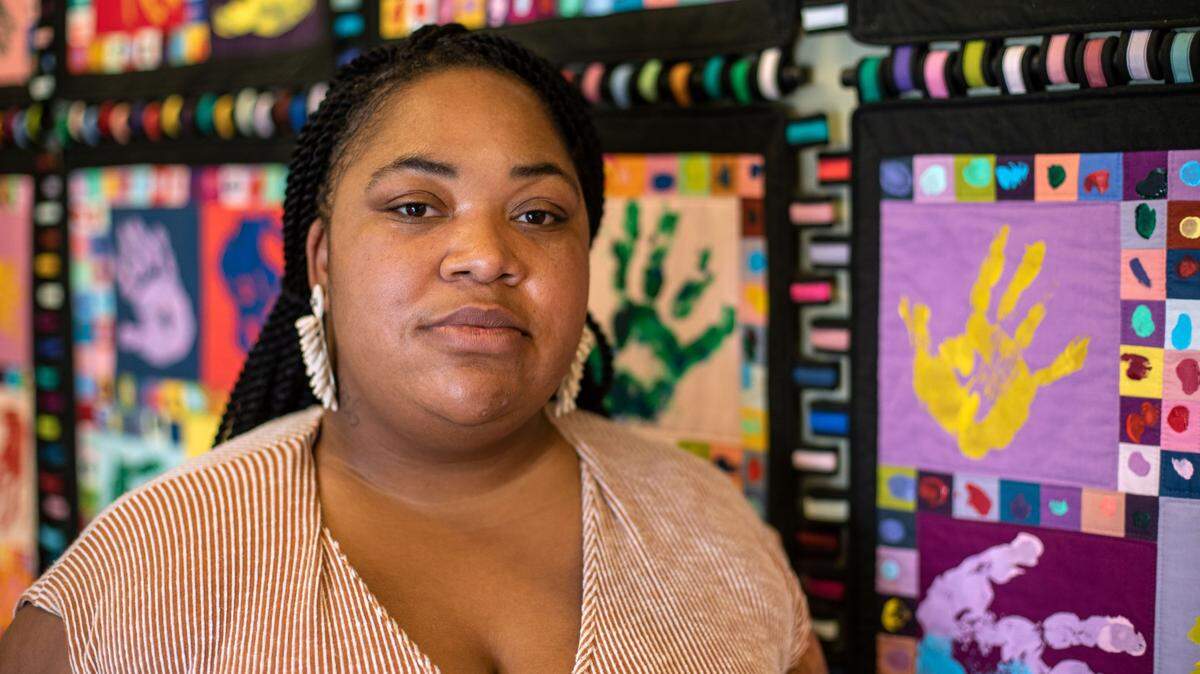
Chantal Hughes is many things. Her attitudes and contributions to society are constantly evolving. She is an advocate for human equality. Chantal enjoys volunteering, thrifting, painting, and most importantly spending time with her two adorable boys.
This story was originally published June 4, 2021 at 9:08 AM.