
Solar grazing is win/win for sheep farmers, the environment, and Fayette Co. | Opinion
AI-generated summary reviewed by our newsroom.
- Solar grazing enables dual land use, combining clean energy and livestock farming.
- Sheep rotational grazing on solar farms improves soil health and pasture quality.
- Agrivoltaic contracts offer ranchers stable income and expanded market access.
Solar energy projects and farming operations have something in common — they each require large, relatively flat tracts of land. At one point, this shared need seemed to put the two in opposition to each other. Any land that would be good for farming would also be good for non-polluting renewable energy infrastructure, but only one of these uses was possible.
In my 20 years raising sheep, I have seen this dynamic change for the better, especially within recent years. It turns out that using the same land for clean energy production and farming is not only possible, but mutually beneficial.
I attend the American Sheep Industry Association Annual Convention every year. It’s always been a great opportunity to discuss everything from best practices for raising sheep to promising new markets for lamb and wool. However, people at the most recent ASI Convention were talking about a new topic: the promise of solar development for sheep farmers and ranchers like me.
Farmers and ranchers discussing energy infrastructure in the past were often worried about how the development of a project like a solar farm would negatively impact farmland. At the last ASI Annual Convention, however, conversations were about how solar was revitalizing farmland, and farming opportunities along with it.
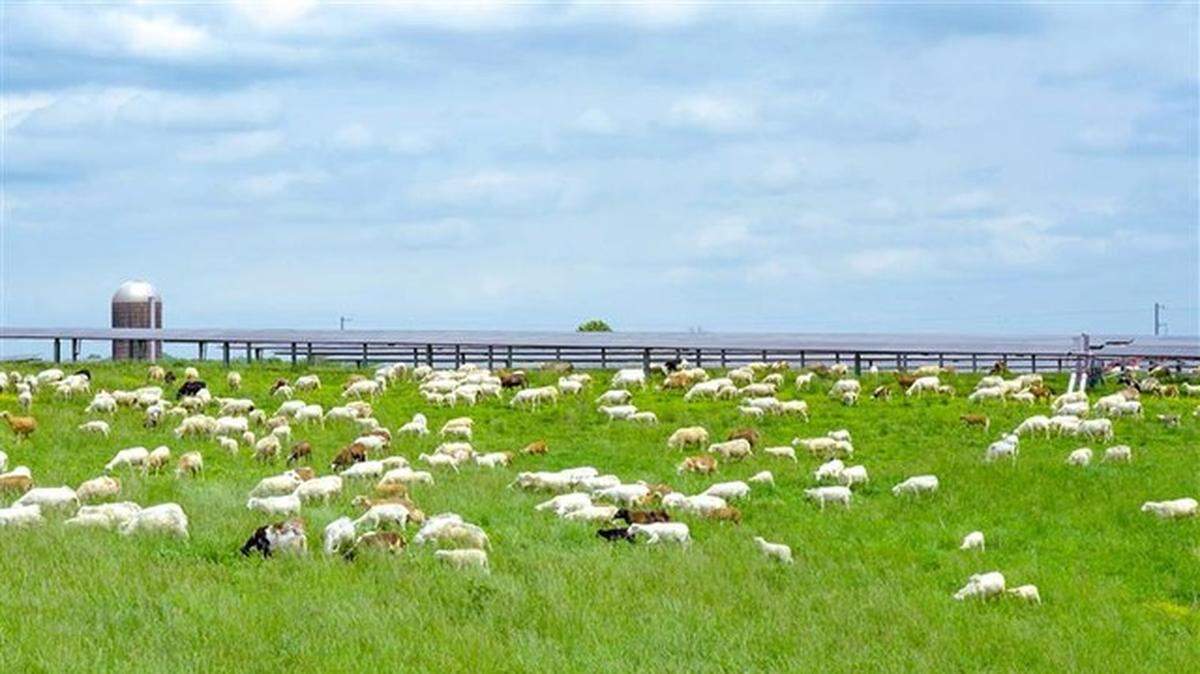
These agrivoltaics projects, which combine agricultural and solar energy-producing operations, are opening up options for Kentucky’s farmers and ranchers. Over the multi-decade lifespan of a project, shepherds with solar grazing contracts can see their flocks flourish and grow. Rotational grazing practices improve the land through regular cycles of foraging and fertilization, followed by rest. After a few years, the soil is in better shape than it would be if the land had remained untouched. One sheep solar grazer reported a 300% increase in soil organic matter after multiple years of sheep rotational grazing at that site.
These solar installations have about a 40-year life. After that, they can be removed and the farm land restored—whereas a housing development is never going back to being farm land.
Today’s sheep ranchers view solar grazing sites as a pathway for us to access more grazing land and get paid to graze it. Solar grazing contracts provide shepherds with a long-term, new, steady source of income and also with the opportunity to increase their lamb production and income with sales to restaurants and grocery stores, like we do at Four Hills Farm. Our farm and the farms we work with have sold lamb to local and regional grocery stores for 16 years (see our lamb at Whole Foods Markets in Kentucky and Ohio).
As Lexington and Fayette County’s Council considers the current Zoning Ordinance Text Amendment, I urge them to take into account the opportunity that a ZOTA allowing for agrivoltaics projects can support local farmers while also providing much needed clean energy to help power our daily lives.
As a former president of the Kentucky Sheep and Wool Producers’ Association, I know there are sheep farmers in Kentucky that would jump on the opportunity to expand their grazing land and be paid a steady income to manage the vegetation on a large solar site. Solar grazing is a win/win for sheep farmers, the environment, and Fayette County residents.
Jim Mansfield began raising Katahdin Hair sheep in 2005. He owns and operates Four Hills Farm in Woodford County. Jim is the KY representative to the American Sheep Industry Association (ASI), and is a certified Solar Grazer.