
New farmland solar proposals exclude agricultural stakeholders from discussion | Opinion
Sound public policy depends on transparency, open dialogue, and the inclusion of diverse viewpoints. The future of Lexington-Fayette County, particularly the future of its Rural Service Area, should be shaped by conversations that include all stakeholders, even when they disagree.
Recent efforts by some council members to once again advance policies that would open thousands of acres of farmland to private, industrial-scale solar development raise concerns precisely because local agricultural workers and stakeholders who would be impacted were excluded. When policies — like those that will be proposed at Tuesday’s General Government and Planning Committee meeting of the Urban County Council at 1pm — that have serious, long-term consequences are developed without transparent discussion, trust in the process erodes, and Lexington community members pay the price.
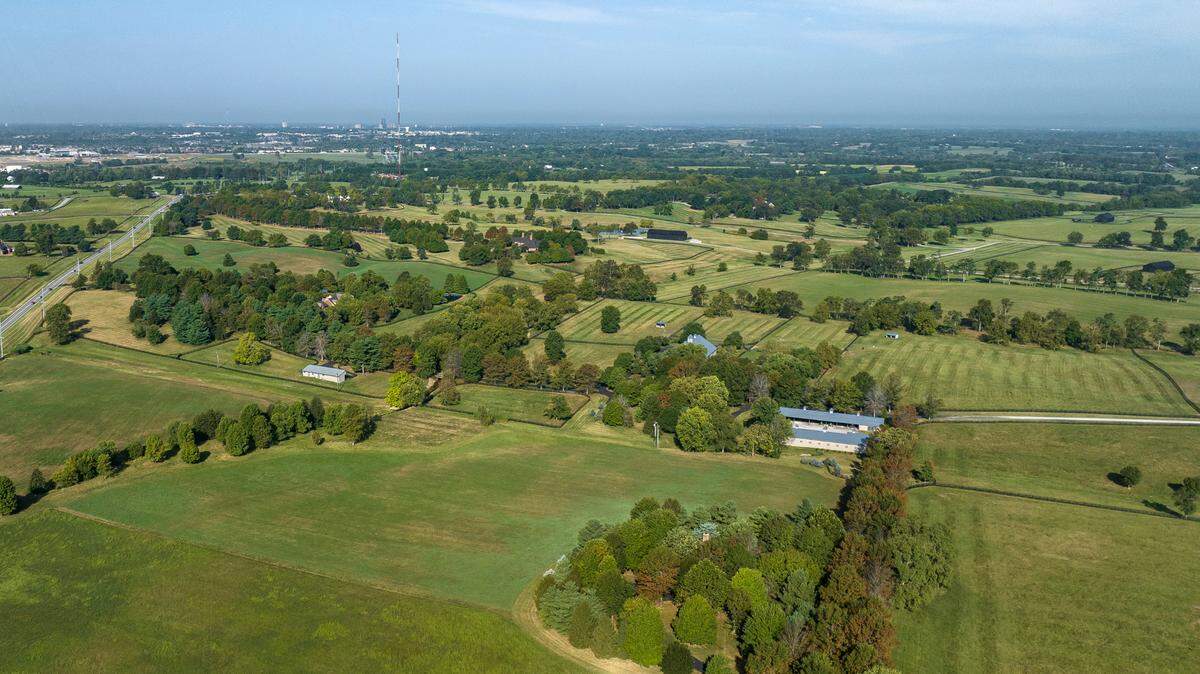
Lexington-Fayette County’s farmland is not an ordinary resource. According to the LFUCG Rural Land Management Plan, 87% of our farmland consists of USDA prime soils or soils of statewide significance; some of the most productive farmland in the country. This land is central to Lexington’s identity, economy, and landscape, supports more than 16,000 jobs across dozens of sectors and has a $2.6 billion economic impact on Fayette County every year. The Bluegrass Region’s significance is also recognized globally; in 2006 the World Monuments Fund listed the Bluegrass among the world’s 100 most endangered cultural landscapes due to the pressures of rapid urbanization. Our productive farmland is finite, and once it is converted to other uses, it is rarely restored to its original agricultural value. As no large-scale solar facility in the US has been decommissioned as of early 2026, we don’t have a single comparable example to learn from.
Because of this, proposals to permit large-scale solar development that stay in place for decades across agricultural land in Fayette County deserve careful scrutiny. While renewable energy is an important goal, large-scale solar development by private companies raises serious questions about community benefits, enforcement, long-term job creation, and its lack of alignment with the community driven and adopted 2045 Comprehensive Plan and the Rural Land Management Plan. Decisions affecting our farmland affect far more than individual property owners; they influence employment, local businesses, our landscape and the broader rural economy.
For those who do support large scale solar, it’s important to note that Lexington is already moving forward with two large-scale solar projects in the RSA. In 2025, East Kentucky Power Cooperative, a public utility, received state approval to construct a 400-acre solar facility along Winchester Road. Just last month, the City advanced an innovative 350-acre solar project on the Haley Pike Landfill, a LFUCG-owned brownfield site. Neither project was subject to local planning and zoning policies.
Both public utilities and cities are charged with utilizing land for the public benefit —which is why they’re exempt from local planning and zoning. While we don’t support a public utility’s use of private, productive farmland without community input, we do support the city using its land, which is not part of the general agricultural economy, for solar development. Across Fayette County, parking lots, brownfields, rooftops, commercial and industrial areas, and other city-owned properties offer extensive opportunities to expand renewable energy while preserving the land that sustains the agricultural economy.
These existing projects raise another important policy question: before opening thousands more acres of farmland to private solar development, shouldn’t the community first evaluate the impacts of the nearly 1,000 acres of large-scale solar already moving forward? Observing how these projects affect land use, infrastructure, water and soil quality, and surrounding communities could provide valuable insight for future decisions.
Equally important is ensuring that local agricultural stakeholders are part of the conversation. Organizations that represent local farmers, state soil experts, land-use groups, and entities with state or federally protected conservation easements possess local expertise that is necessary to help policymakers fully understand environmental and fiscal impacts and mitigation strategies. Yet these voices were specifically excluded from recent closed-door Council workgroup sessions and resulting policy recommendations, which sessions were also closed to the public. Instead, they invited groups like Kentucky Utilities, the Kentucky Resources Council and the Ohio River Valley Institute.
Regardless of where individuals stand on the siting of solar energy development, excluding those with the greatest stake in our farmland undermines public trust and weakens the policymaking process.
Renewable energy and farmland preservation do not have to be opposing goals. Achieving both requires thoughtful planning, transparency, and broad community engagement. Lexington-Fayette County’s farmland is a defining asset, and policies affecting it should reflect the knowledge and perspectives of the people who work it, depend on it, and care about its future. When all of those voices are invited to the table, we are far more likely to reach solutions that balance environmental progress with the protection of one of Lexington-Fayette County’s most valuable and irreplaceable resources. Learn more here about how to get involved.
Brittany Roethemeier is the executive director of Fayette Alliance; Jessie Hancock is the executive director of the Bluegrass Land Conservancy, and Robert James is president of the Fayette County Farm Bureau.