
History shows how rare it is for a legislature to impeach a judge for their rulings | Opinion
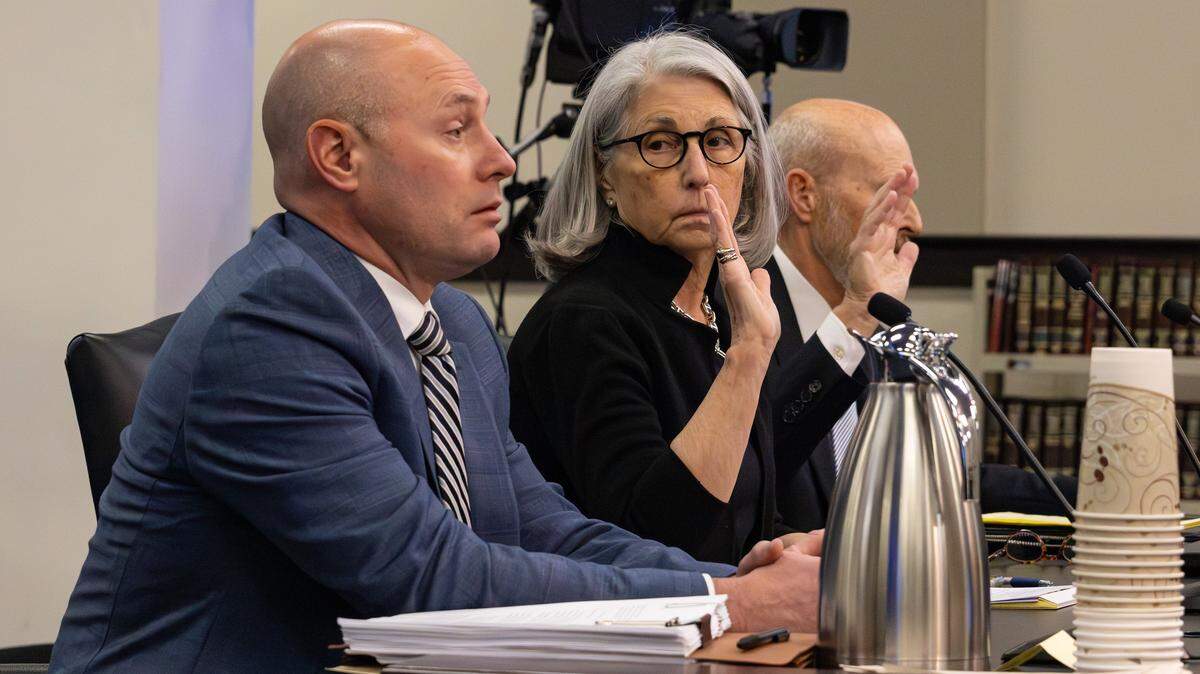
The Kentucky House of Representative’s decision to impeach Judge Julie Goodman based on six of her rulings is an attack on the independent judiciary, which is a pillar of the rule of law. The judiciary is supposed to provide a constitutional check on lawmakers. Democracy suffers when legislatures use impeachment not to oust judges who are corrupt or derelict but whose opinions they dislike.
This is the first judicial impeachment of a Kentucky judge in over 100 years. On those infrequent occasions when it happens, impeachment is typically based on conduct unrelated to cases they hear or on improper outside influences on their decision-making, not on their rulings in specific cases.
There have been only 15 impeachments of federal judges in America’s history, with only eight convictions by the U.S. Senate. (Some of the judges resigned during the proceedings.) All of these impeachments involved the abuse of the office in some way, not disagreements with particular cases. The last impeachment and removal of a federal judge was in 2010, involving bribery and perjury.
The impeachment of state judges is also rare. In fact, there have been only two instances in the past several decades in which state legislatures impeached judges. The Pennsylvania legislature impeached and removed state Supreme Court Justice Rolf Larsen in 1994 based on evidence that he sought input from a friend, an attorney, on whether to hear certain cases. The House had also impeached Larsen for his state court conviction of illegally conspiring to obtain prescription drugs by using the names of his secretaries and a law clerk. Still, the Senate declined to remove him for this infraction, instead convicting only on the charge regarding his correspondence with his friend about pending cases.
In 2000, the New Hampshire House of Representatives impeached Chief Justice David Brock on claims of improper conduct: that he had made a phone call 13 years before the impeachment to a lower court judge to influence a case, allowed recused and disqualified justices to review draft opinions and influence rulings, permitted a fellow Supreme Court justice to select the judges for his own divorce panel, and lied about it all under oath. The state Senate acquitted him on all counts, and he kept his seat.
Neither of these examples involved disagreements with the rulings in specific cases, nor even a failure to follow precedent. They were about extrajudicial influences. They are far afield from the allegations against Goodman, which essentially claim that she is a bad judge. The chair of the House Impeachment Committee said, “This is not a judge who made a mistake; this is something else entirely,” but there is little to support that notion, given that the allegations are about six specific cases.
The Kentucky House of Representatives took an unprecedented step—and one that is unnecessary even if Judge Goodman has been wrong in her decisions. Courts have an appeals process that allows judges to review lower-court decisions and reverse when necessary, which is exactly what happened in some of the cases.
In addition, the state has a Judicial Conduct Commission to handle allegations of misconduct. Its mission is to “protect the public, to encourage judges, commissioners and candidates for judicial office to maintain high standards of conduct, and to promote public confidence in the integrity, independence, competence, and impartiality of the judiciary.” Perhaps Goodman acted improperly, but if so, the correct avenue is to file a complaint with the Commission, which is part of the judiciary. Goodman could then defend herself before the Commission by discussing the cases in question—something she is largely unable to do before the legislature because it would require her to divulge confidential information in pending cases outside of the judiciary, which itself would violate the rules of judicial ethics.
Further, although electing judges has its own problems by introducing politics into judicial decision making, Kentucky judges must face the voters periodically. Goodman’s eight-year term means she will be up for re-election in 2030 should she run again. Although eight years is lengthy, impeachment is not a solution to any underlying concerns about the length of judicial terms.
Impeaching a judge due to her perceived misguided approach or potentially flawed decisions marks a troubling escalation in the attacks on judicial independence. Impeachment should serve as a remedy for serious misconduct, such as bribery or improper influence, not as a partisan tool for removing judges over controversial rulings. Using impeachment to challenge judicial decisions undermines the separation of powers, effectively allowing the legislature to interfere with judicial independence. Following this incident, no judge in our commonwealth can be blamed for feeling apprehensive about state legislators second-guessing their rulings.
Chief Justice John Roberts noted, in response to Trump’s calls to impeach a federal judge last year, that “[f]or more than two centuries, it has been established that impeachment is not an appropriate response to disagreement concerning a judicial decision. The normal appellate review process exists for that purpose.”
Similarly, when discussing the importance of an independent judiciary over 30 years ago, Chief Justice William Rehnquist explained that “judicial acts—their rulings from the bench—would not be a basis for removal from office by impeachment and conviction.” He noted that historically, judges have faced impeachment for “criminal conduct such as tax evasion, perjury, and the like.”
Rehnquist finished his remarks by explaining, “the independence of the federal judiciary is essential to its proper functioning and must be retained.”
The same goes for the state judiciary. Although the vote to impeach Judge Goodman has already caused tremendous damage, hopefully the state Senate will heed Chief Justice Roberts’s and Chief Justice Rehnquist’s admonitions and restore independence to the Kentucky judiciary by refusing to convict.
More broadly, the legal community should denounce impeachment based on disagreements with specific rulings as an improper political weapon. Removing a judge because of their decisions undermines the rule of law, ultimately harming democracy.
Note: a version of this article first appeared in the Washington Monthly. It is reprinted with permission. Access the full article here: https://washingtonmonthly.com/2026/03/26/in-kentucky-judge-impeachment-threatens-judicial-independence/

Joshua A. Douglas is a law professor at the University of Kentucky J. David Rosenberg College of Law. He is the author of the book “The Court v. The Voters: The Troubling Story of How the Supreme Court Has Undermined Voting Rights.” He is also the host of the award-winning Democracy Optimist podcast. Find him at www.joshuaadouglas.com.