What makes Kentucky’s John Calipari so passionate about helping the less fortunate?
Ken Bennett, whose 20-year friendship with John Calipari dates back to their days together in Memphis, describes the Kentucky basketball coach as someone who has “got that motor” … and “such a what-can-I-do-to-make-a-difference” kind of person.
“Working with him, it was like a whirlwind,” Bennett said. “He’ll make you crazy, and you’ll love every minute of it.”
During his time as Memphis coach, it was not surprising for Calipari to call late at night and suggest the two discuss some new idea while walking the golf course that bordered Calipari’s home.
“My wife would say, ‘Can’t he call you at 9 o’clock at night?’” Bennett said. “‘Why does he have to call you at midnight?’”
Charitable causes are one outlet for this zeal that apparently lacks an off switch. Most recently, Calipari spearheaded an effort to help minorities gain access to job experience in athletics administration. Working with the McLendon Foundation, he helped launch the John McLendon Minority Leadership Initiative.
When a biography of John McLendon (“Breaking Through: John B. McLendon, Basketball Legend and Civil Rights Pioneer,” by Milton Katz) was recommended to him, Calipari ordered 60 books that same day and sent them to coaches around the country committed to participating in the MLI cause.
“That sounds like him,” Bennett said.
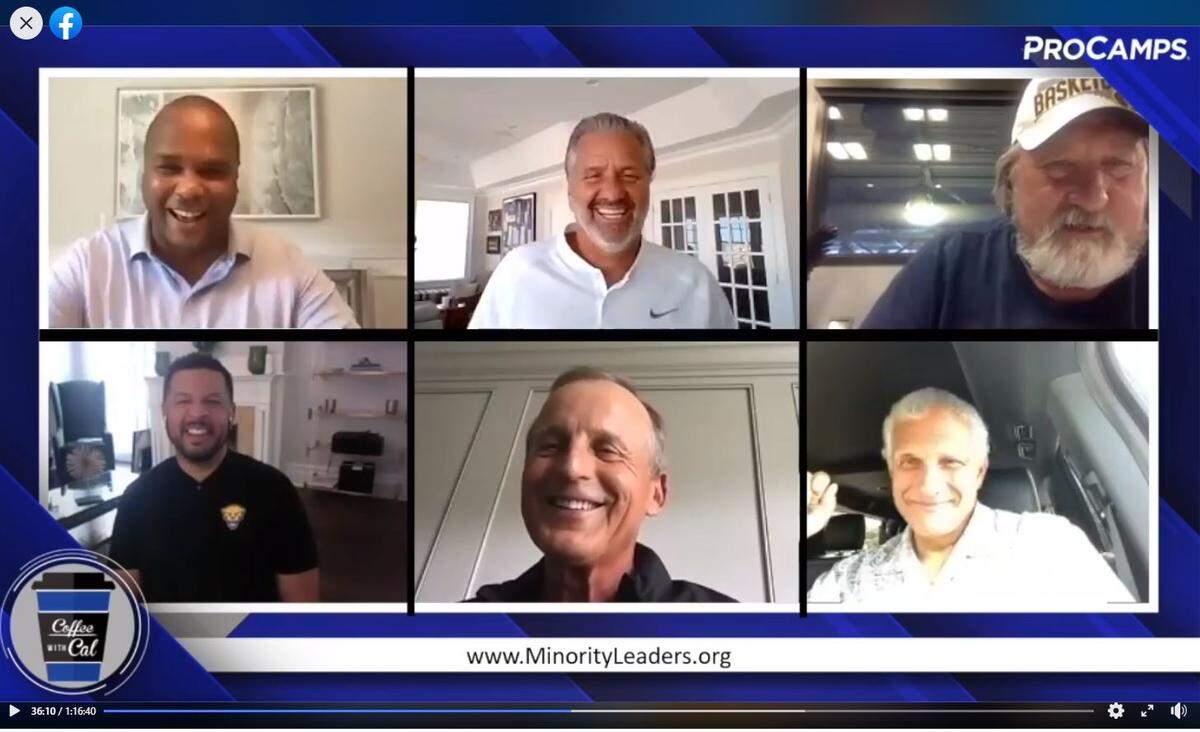
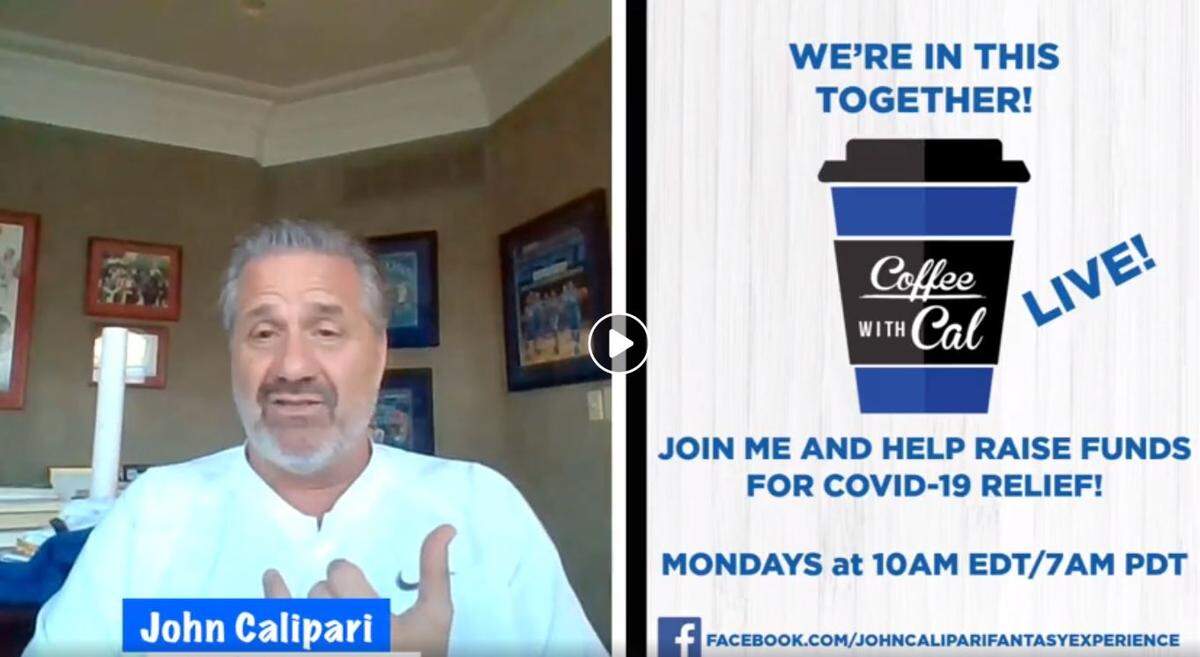
One of those coaches, Bob Huggins, teased Calipari about this enthusiasm during an episode of the “Coffee with Cal” Facebook show this summer.
“You don’t volunteer for Cal’s army,” the West Virginia coach said. “You’re drafted. I’ve been drafted more times than anybody ought to be. But there’s no such thing as I’m going to go join the army. No. No. No. Cal’s going to call you and say, your (butt) is in.”
‘Leveraging people’
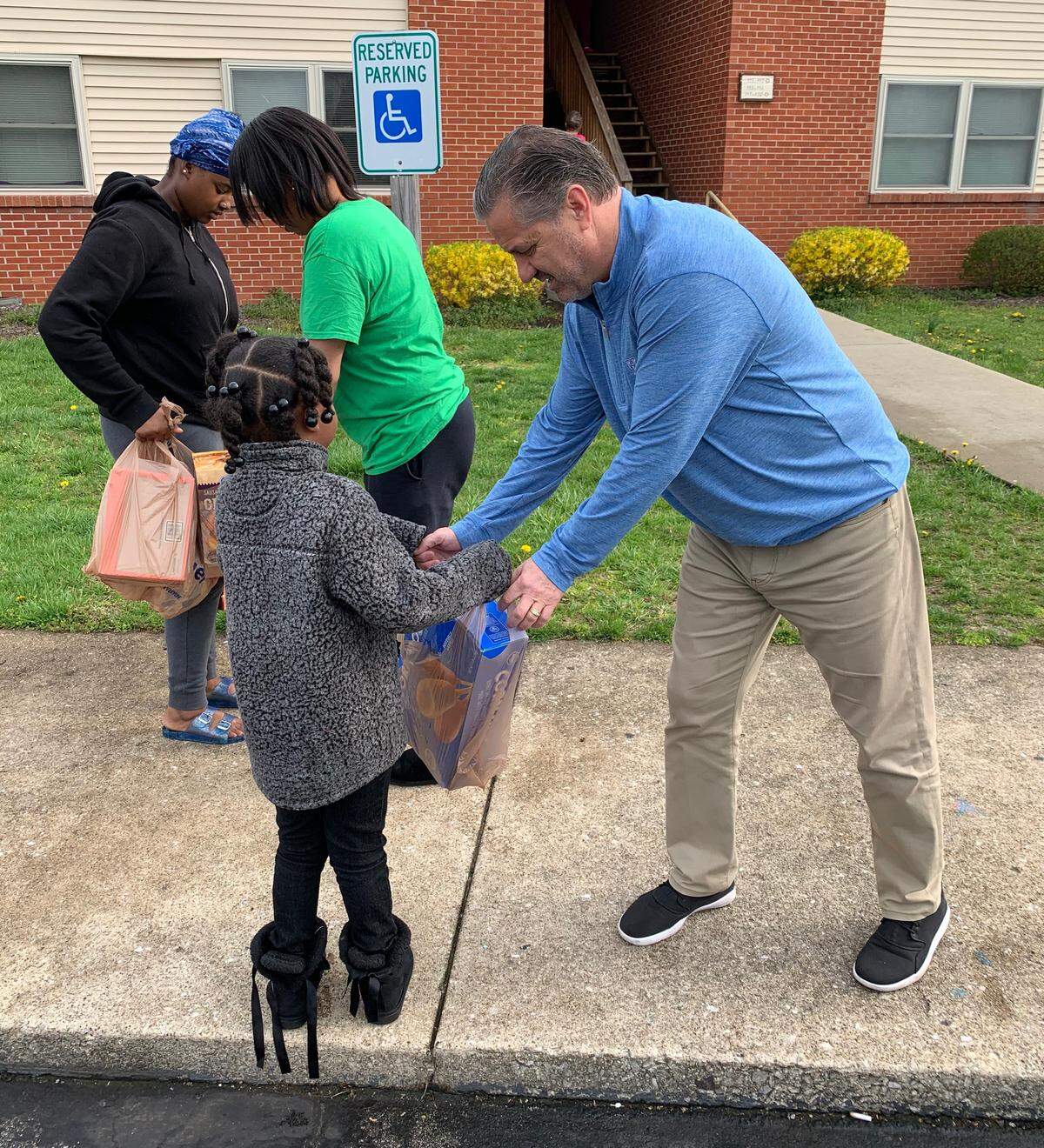
Calipari has deployed multiple armies. The “Coffee with Cal” show supported COVID-19 relief efforts before the focus shifted to the Minority Leadership Initiative. He’s also helped people in need by supplying school supplies and Christmas presents.
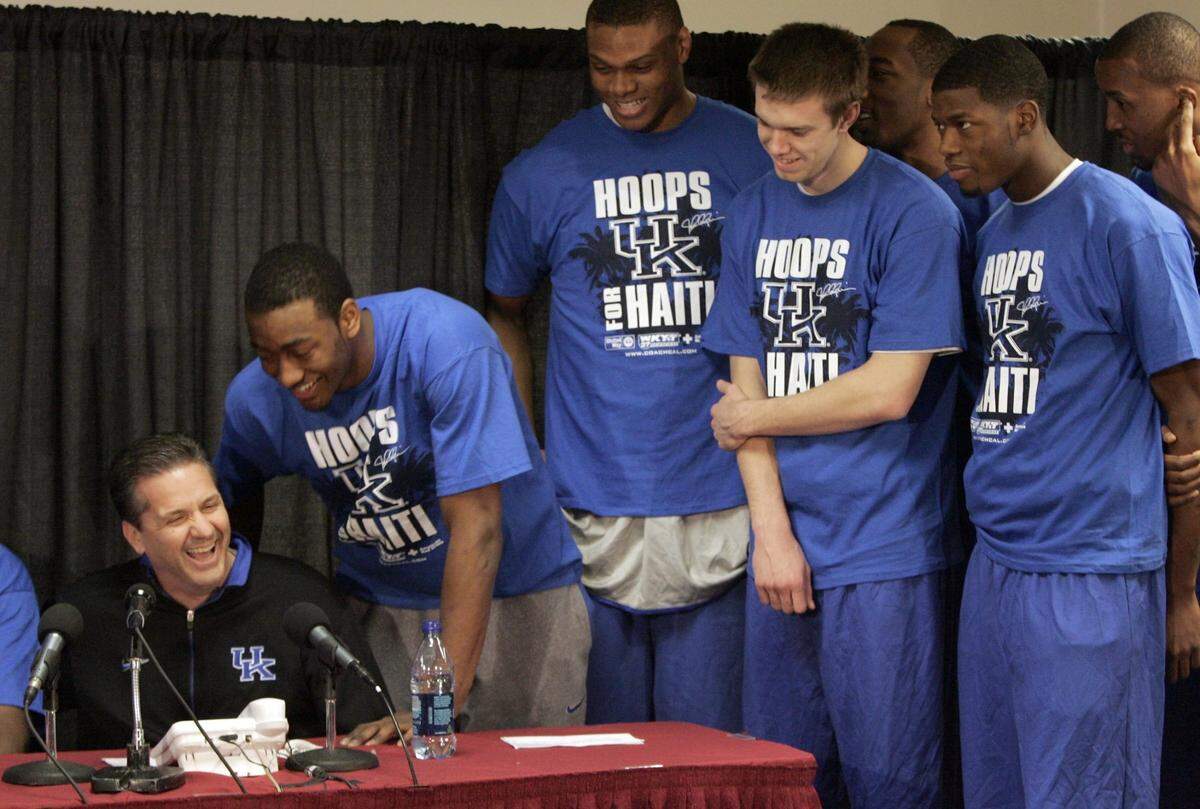
Calipari has been involved in charity work during each stop on his coaching career: UMass, the NBA’s New Jersey Nets, Memphis and now Kentucky.
When Calipari was Memphis coach, he supported Streets Ministries, a Christian-based organization that helps youth in the city.
“It was always funny because people would say, ‘Well, I know you probably don’t need money because Cal’s taking care of you,’” said Bennett, who stepped down as Streets Ministries’ executive director five years ago. He now heads a subsidiary effort of Streets Ministries called Soul for the City.
When Calipari left Memphis for Kentucky in 2009, he pledged $1 million over a four-year period to Streets Ministries.
“But even then, I had to talk to Sandy Bell,” Bennett said of UK Athletics’ then-compliance director. “We had to make sure it was used for non-recruitable kids.”
Not all of Calipari’s charitable work is known publicly. He says he wants it that way.
“Some of what we do is public because I want to get more people involved,” he said. “And there are other things that nobody will ever know about. I would rather do it that way (without the public knowing), but leveraging people often has a bigger effect.”
Pay it forward
Calipari credits his late mother, Donna, for inspiring a philanthropic approach to life.
“My mother taught me to pay it forward,” the UK coach said of the good fortune that can come to people. “That was her mantra, and I’ve never forgotten it.
“If I see someone who needs help, I know I can’t save the world. But if there is something I think we can be involved in and leverage others to be involved, I try to do it.”
When Donna Calipari died in 2010 at age 74, the family asked that in lieu of flowers donations be made to St. Jude’s Children’s Research Hospital.
In explaining his idea of a Minority Leadership Initiative, Calipari has said that his Hall of Fame coaching career was largely the result of the efforts of Black players.
To which, P.G. Peeples, the president and CEO of the Urban League of Lexington-Fayette County said, “He’s one of those guys honest enough to say we need to do more for African Americans because we made our living off them.”
‘Blue-collar people’
Several people who know Calipari said the arc of his life — from humble beginnings to the pinnacle of college basketball — has moved him to try to help the less fortunate.
Calipari grew up in Moon Township, Pa., which is 12 miles northwest of Pittsburgh. Marty Dobrow’s book chronicling how Calipari put UMass on the college basketball map, “Going Bigtime,” said the coach’s father, Vince, worked in steel mills as a teenager. Upon his friends’ advice, he got a job at Pittsburgh International Airport, first fueling planes and later handling baggage.
While working at the airport, Vince Calipari, then 22, met 19-year-old Donna Payne, who was selling flowers in an airport shop. The two married a year later. Neither Vince nor Donna had gone to college. The family did not take vacations.
ESPN analyst Fran Fraschilla first met Calipari when the two shared a room while working a Dean Smith basketball camp as college sophomores in 1978. He subsequently visited the college-age Calipari in Moon Township.
“I’d call it a lower middle class neighborhood,” Fraschilla said. “Hard-working, blue-collar people. …
“When I think of John, I think of a guy not necessarily born with a silver spoon in his mouth. But he’s able to buy the whole cutlery store now.”
The mother’s advice about good fortune — to pay it forward — endures.
Said Memphis-based sportswriter Gary Parrish: “I think he still remembers on some level what it’s like to not be this John Calipari.”
Being a college basketball coach can make a person aware of need, Parrish said. “When your job is primarily tied into often recruiting poor, less fortunate people, if you have any sort of heart at all, you understand they don’t live the way your children live.”
‘His motives are pure’
Joe DeGregorio, who was Calipari’s coach at Clarion College, echoed something the UK coach has said on occasion. As someone aspiring to coach, Calipari did not have the advantage of playing for a high-profile program nor was he a disciple of a big-time coach at least until his first job for Larry Brown at Kansas.
“John had to work for what he gained,” DeGregorio said. “He realizes how fortunate he is to be where he’s at and what he’s accomplished. He has never forgotten people who helped him along the way.
“That was the way he was brought up. There are givers and there are takers.”
Faith also drives the charitable efforts. Don DeWeese, who owns the Gibson’s Donuts shop in Memphis, said Calipari attended Mass before hanging out with the regulars at Gibson’s.
“Anybody who goes to church every day of their life, there’s something good about that person,” DeWeese said.
Fraschilla volunteered that Calipari can benefit from his involvement with charitable efforts. Being associated with a program designed to create career opportunities for minority applicants might be helpful in making a good impression on the recruiting trail.
Incidentally, Calipari majored in marketing.
“He has an incredible sense of public relations,” Fraschilla said. “But that shouldn’t minimize one single bit the amount of charity work he’s always done. In the back of his mind, he knows (the Minority Leadership Initiative) is going to be something that’s positive for him and Kentucky basketball. I don’t think he does it primarily for the public relations.
“He’s trying to put Kentucky basketball and himself in the best possible light. And there’s nothing wrong with that because I think his motives are pure.”
Earlier this year, Craig Robinson spoke with Calipari during the interview process for the job as executive director of the National Association of Basketball Coaches. The UK coach brought up the Minority Leadership Initiative idea.
Robinson did not know Calipari well, but had perceived the UK coach as someone grateful for his good fortune and looking to help others.
“That’s a guy speaking from afar,” Robinson said of his perception of Calipari. “And then I heard his passion behind this Minority Leadership Initiative. I heard the passion in his voice about trying to make a difference for people in our business of sports administration.”
This story was originally published July 31, 2020 at 7:50 AM.