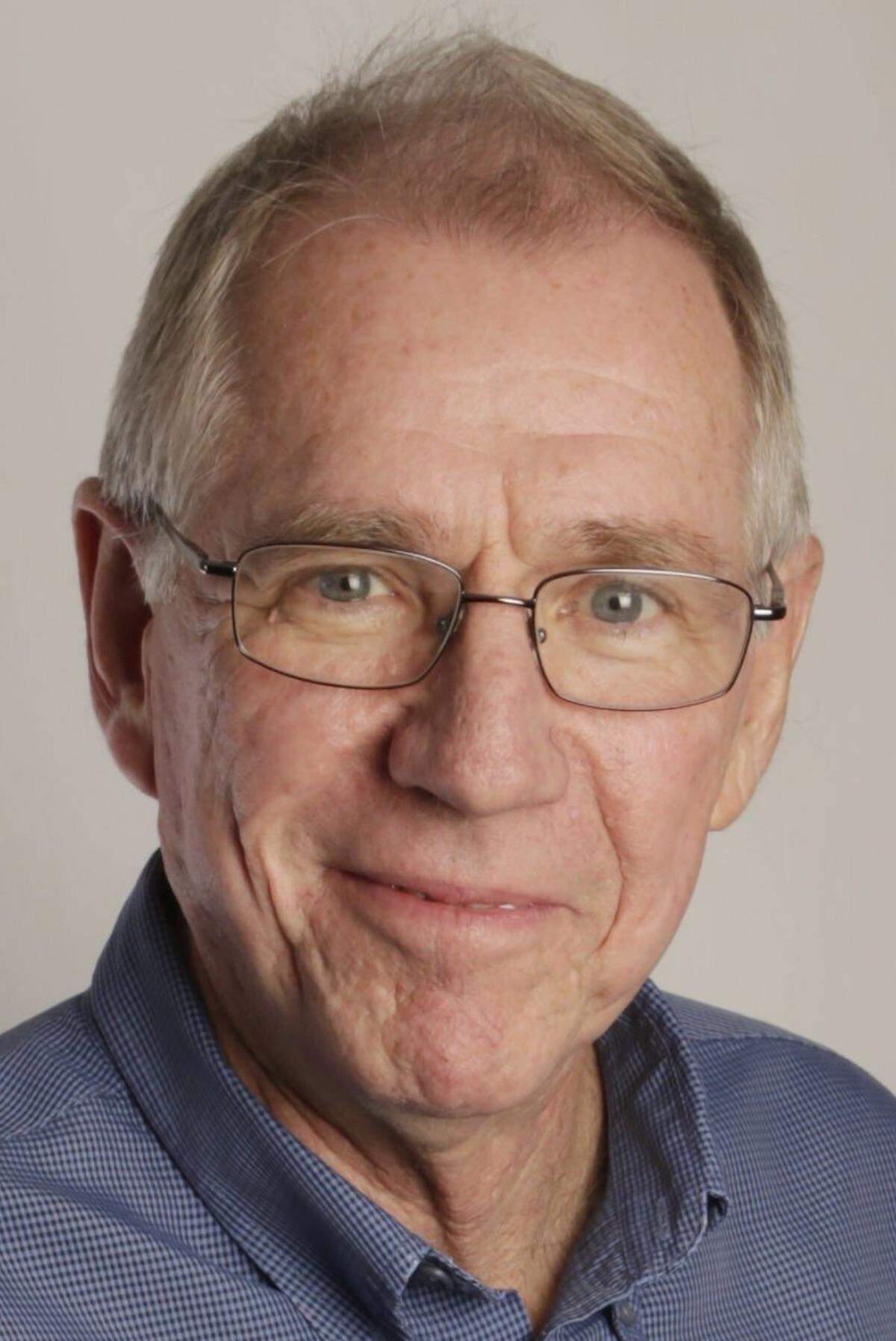
UK’s Keion Brooks is productive on the court and an all-star in a library
When Keion Brooks Jr. was in the fourth grade, something happened that caused the teacher to call the boy’s father. “Telling me I need to come up there and talk to her,” Keion Brooks Sr. recalled recently.
The father’s mind raced.
“You just think, oh shoot, what did he do?” the father said. “Did he act up? He’s never been in trouble. Why does she need to talk to me?”
When the father came to the school and spoke to the teacher, he learned that the class had gone through an exercise to assess reading ability. The more a student correctly answered questions, the longer the exercise lasted, the higher his or her reading level.
“Slowly but surely everybody else finished,” the Kentucky player remembered. “They go off to recess. Next thing I know, I’m the last one in there.”
Now going solo, the future UK player continued with the assessment … and continued … and continued.
“About an hour and a half later, little 10-, 11-year-old me finally realizes, ‘I’m probably getting too many answers right …,’” he said. “I started to get some answers wrong on purpose because I’m tired of taking the test, and I wanted to go have recess (and) be outside with my friends.”
Even with the self-inflicted handicap, the test showed Brooks reading on a 12th-grade level as a fourth-grader.
The family did not shrug off the assessment. “It made a big difference in the way we looked at his education going forward,” the father said, “of really trying to push him to be the best he could be.”
The teacher placed Brooks in a reading program for gifted children. Later, he attended a private middle school, and then a private college prep boarding school (La Lumiere) in La Porte, Ind., which is about 100 miles northwest of the family home in Fort Wayne.
Brooks was an honor roll student in high school and made the Southeastern Conference First-Year Honor Roll as a freshman in 2019-20. This school year he serves on committees set up by the Southeastern Conference, UK and the National Association of Basketball Coaches to help athletes deal with off-court issues such as systemic racism.
When asked recently what books he likes to read, Brooks said he just finished “Rich Dad Poor Dad,” by Robert T. Kiyosaki. Its focus is on the differences in how rich and poor families teach their children about money.
“I kind of have a business mindset,” Brooks said. “So, I thought that was something good for me to pick up and look at.”
His older brother gave him a book titled “10 Things Mentally Strong People Don’t Do.” Author Amy Morin says these things include self pity, avoiding change, worrying about pleasing others and resenting other people’s success.
“Whenever I find myself bored, I’ll pick up a book and just read for a little,” Brooks said. “Just trying to keep my mind healthy and my mind strong.”
Fashion statement
Former UK standout Jamal Murray wore shoes that bore the likeness of Breonna Taylor and George Floyd while playing in the NBA “bubble,” Both were killed by police earlier this year in what many saw as examples of long-standing systemic racism.
During an appearance on The Players’ Tribune show called “Knuckleheads,” Murray explained that he intended to make a fashion statement.
“Everything that happens, everything we see we can’t always say how we want to say it,” he said. “That was my one way to express that.” Murray said he also drew inspiration from the shoes.
“I use these shoes as a symbol to me to keep fighting all around the world,” he said in a story posted by Bleacher Report. “So … they give me a lot of power to keep fighting.”
Early in a media availability during the NBA playoffs, Murray placed the shoes on a stool and walked away.
When he returned, he asked reporters, “How long was that? Two minutes?”
Then referencing Floyd, he added, “One person on those shoes had a knee on their neck for eight minutes. You just got to think about that.”
No. 1
CBS Sports posted a list of what it considered the top 25 college basketball programs of all time. A points system based on such things as national championships, other Final Four appearances and other Elite Eight appearances was used.
Kentucky was No. 1.
“The list of absurd talent to play in the Commonwealth would require a chapter unto itself,” wrote Matt Norlander. “So here’s a dollop: Alex Groza, Ralph Beard, Cliff Hagan, Dan Issel, Jamal Mashburn, Tony Delk, Ron Mercer, Tayshaun Prince, John Wall, DeMarcus Cousins, Anthony Davis and Tyler Ulis.”
After Kentucky, the top seven were 2. North Carolina, 3. Duke, 4. UCLA, 5. Kansas, 6. Louisville and 7. Indiana.
Western Kentucky was No. 21, Arkansas No. 22 and Notre Dame No. 23.
Mr. Nice Guy
Former UK player Nate Sestina prepared for the NBA Draft by working out at the Impact Basketball training center in Las Vegas. You could say his trainer suspected Sestina was dealing from the bottom of the deck, metaphorically speaking.
“I thought he was a little fake at first,” Joe Abunassar said. “He was so nice. I told him, ‘I think you might be full of it.’ He said, ‘Why?’ I said ‘because I’ve never met a guy as nice as you.’
“When he comes in the gym, we’re all happy he came in.”
Though he went undrafted, Sestina could have an NBA future, Abunassar said.
“In the NBA today, if you can shoot the ball at Nate’s size, you can play,” the trainer said.
Sestina plans to be in the Brooklyn Nets’ preseason camp as a free agent.
Knight school
Joe Abunassar, who founded the Las Vegas-based Impact Basketball training facility in 2006, grew up in the Detroit area. His introduction to college basketball gets your attention.
“I was a manager for Coach (Bob) Knight at Indiana, so I started on the wrong side of the Kentucky tracks,” he said playfully. “I went to Indiana with the sole purpose of being a manager for Coach Knight because I wanted to coach in college.”
Abunassar was at IU from 1989 to 1993. After graduating, he joined the staff at Wyoming, where former IU player Joby Wright had been hired as coach.
“My plan worked,” Abunassar said.
Mock drafts
Arguably, no one has a more diverse coaching résumé than Eric Musselman. He has been a head coach in the NBA (Golden State and Sacramento), the minor leagues (CBA, USBL, D-League) and college (Nevada and now Arkansas). He’s also coached in China, the Dominican Republic and Venezuela.
So, when asked where former Razorbacks Isaiah Joe and Mason Jones would be picked in this year’s NBA Draft, Musselman’s view of the various mock drafts commanded attention.
“As far as where they’re going to go, nobody knows,” he said. “There’s one thing I can tell you for sure. I’ve been in draft rooms where a GM has promised 13 different players that they’re going to draft them prior to the draft. And they only had one draft pick. That means 12 guys were told something that never happened.
“So, mocks are really good in the lottery. Mock drafts are pretty good in the first round. Mock drafts in the second round are meaningless.”
Joe was taken with the 49th pick by the Philadelphia 76ers. Jones went undrafted and signed as a free agent with the Houston Rockets.
Suggestion box
Watching Kentucky’s Pro Day prompted a thought: With so many new players each season, it would be helpful to add the players’ names on their shirts (front and/or back?) to help viewers identify who they’re watching in this de facto introductory telecast.
Happy birthday
To Tom Payne. He turned 70 on Thursday. … To Arkansas Coach Eric Musselman. He turned 56 on Thursday. … To Louie Dampier. He turned 76 on Friday. … To former Indiana guard and later UCLA coach Steve Alford. He turns 56 on Monday. … To Lexington businessman and sports marketing pioneer Jim Host. He turns 83 on Monday. . . . To Hall of Famer Oscar Robertson. He turns 82 on Tuesday. … To Steve Lochmueller. He turns 68 on Wednesday. … To Reid Travis. He turns 25 on Wednesday. … To former UK associate coach Kenny Payne. He turns 54 on Wednesday.