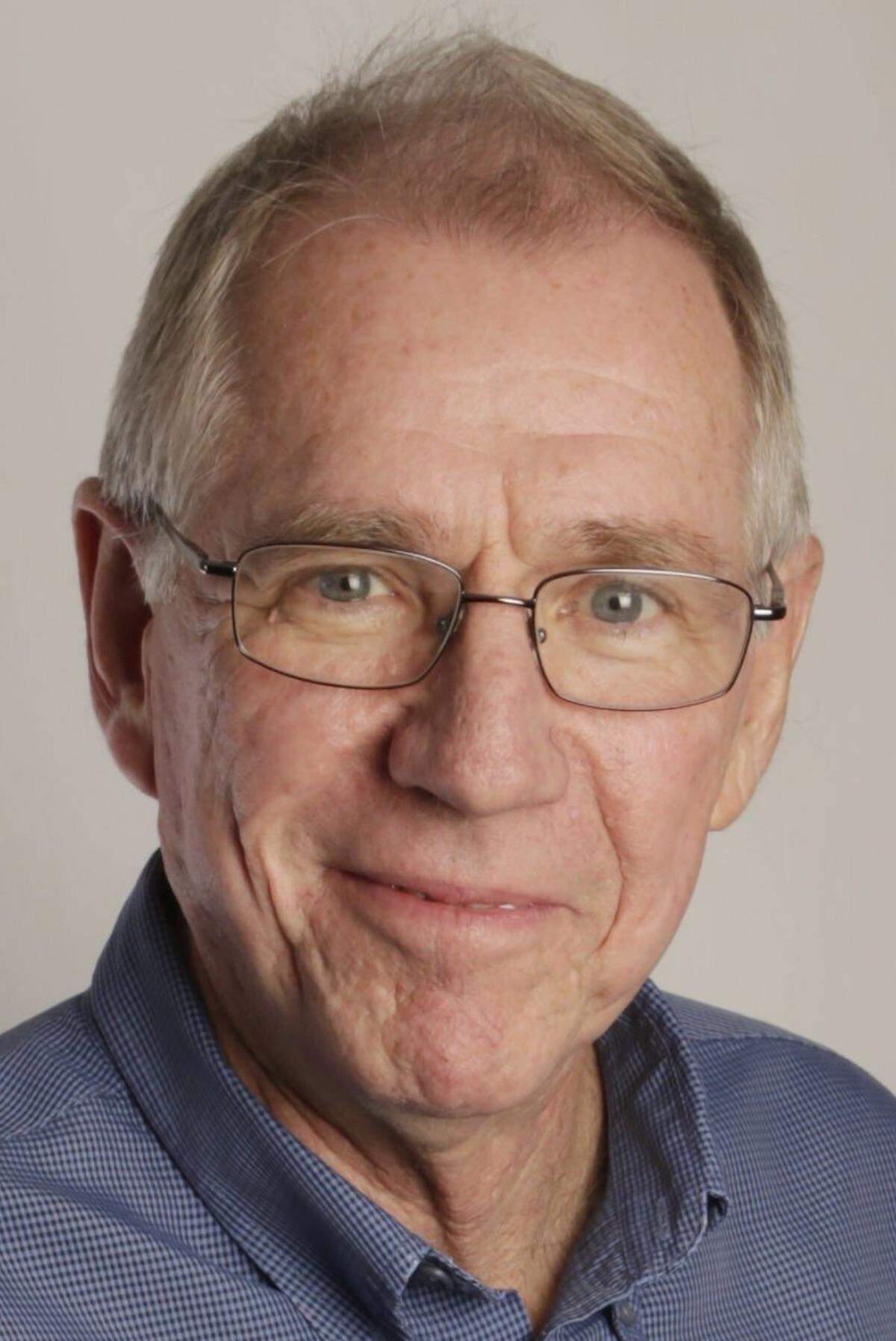
Newest Wildcat described as ‘fantastic player, even better human being’

In Kellan Grady, Kentucky has added a player who brings the desire to have an impact off the court as well as on.
During his four seasons playing for Davidson, Grady scored more than 2,000 points. He also founded an on-campus organization aimed at fighting social injustice.
Stacy Gallin, founding director of the Maimonides Institute for Medicine, Ethics and the Holocaust, gave high marks to Grady the player and person.
“You’re getting a fantastic basketball player,” she said Tuesday. “But you are getting an even better human being.”
In June of last year, Grady helped found CARE, an acronym for College Athletes for Respect and Equality.
His intention was “to raise awareness about racial injustice and to promote and create change in equality . . . ,” he said in a story posted by NBC Sports last year. “Our first call to action is community outreach with elementary schools. And the first step is to get with athletes and get them involved and on board.”
In explaining the focus on elementary schools, Grady pointed out the influence athletes can have on children.
“I remember how much I looked up to college players at a younger age . . . ,” he said. “College athletes have a platform. People pay attention to us, and a lot of us are minorities.”
On a teleconference Wednesday, Grady said he hoped to start at CARE program at UK.
“Social justice and racial equality are really imperative issues . . . ,” he said. “I haven’t really narrowed down the nuts and bolts of what’s next in terms of how I’m going to utilize CARE at Kentucky. It’s a larger platform which I think benefits (the effort to improve society).”
On National Voter Registration Day last September, Grady tweeted, “I encourage all college students and athletes to register. We should all be grateful that we are part of a democracy where our voices can be heard. So let’s participate!”
Social activism runs in Grady’s family.
His grandmother, Sophia Theresa Williams, led a Women’s March in South Africa in 1956 when she was 18.
His grandfather, Henry Benny Nato De Bruyn, was a member of the African National Congress, a political group co-founded by Nelson Mandela. This led to Grady’s grandfather being exiled to Zambia for seven years.
His mother, Danielle Grady, has been politically active.
“Social justice has always been a part of my core with what my mom and her parents did to fight for Black equality and against apartheid,” Grady said in the NBC Sports story.
Grady’s activist spirit was heightened in the summer of 2018 when the Davidson basketball team toured Auschwitz, the Nazi concentration and extermination camp in occupied Poland during World War II.
A survivor of Auschwitz, Eva Mozes Kor, led the team through the camp. Kor was part of Nazi doctor Josef Mengele’s infamous experimentation with twins, said Gallin, who added that Kor died one year to the day after last meeting with the Davidson team.
“We got a very, very intimate historical perspective and emotional perspective on what occurred during the Holocaust,” Davidson Coach Bob McKillop said when asked Tuesday about the visit to Auschwitz. “And how it was such a heinous crime against humanity.”
.jpg "DavidsonAuschwitz27 (1).jpg")
During the tour of Auschwitz, Gallin noticed something she thought was significant.
“He hates when I tell this story,” Gallin said of Grady. “I’ll tell you anyway because I think it’s important.”
Gallin saw Grady stop at a tzedakah box, which is where charitable donations can be made.
“He was taking out his own money and he was putting it in that charity box,” Gallin said. “And I was blown away by that because I just thought, what kid even notices that that’s there, let alone takes their own money and uses it for that?”
Grady and Gallin have stayed in touch. The CARE program is one of her organization’s initiatives.
On a more personal level, Gallin recalled Grady helping one of her sons deal with athletic disappointment. The boy — maybe 7 or 8 years old, she said — made the last out in a youth baseball championship game.
“I looked at my son and I didn’t know what to do to console him,” Gallin said. “I texted Kellan. I said, ‘Kellan, what do I do?’”
Grady replied by saying he would call the boy.
“And he did,” Gallin said. “Like, who does that? And the answer to who does that is Kellan does that.
“He always does that. My kids walk around and talk about him. ‘I know Kellan Grady.’ He’s exceptional.”
When he was 8 years old, Grady visited the site in Pretoria, South Africa, where his grandmother led the protest march in 1956. He has said he was too young to appreciate his grandmother’s action.
The trip to Auschwitz was moving to see “what happens when hatred and discrimination are allowed to reign free,” Grady wrote in an article for Visible Magazine this month. “It was one of those ‘if I was somewhere else at some other time’ moments that made me start to question what my life outside of basketball would be like.”
Grady, who is on target to graduate with a degree in sociology this spring, also wrote of the killings of Breonna Taylor, George Floyd and Ahmaud Arbery as motivational.
“I had to decide who I wanted to be: a college basketball player or a warrior for the cause,” he wrote. “I chose both . . .
“As I watched a country in tumult, I realized that as a college basketball player, I had a unique opportunity to use my platform to put my frustrations and sentiments to good use.”
This story was originally published March 31, 2021 at 10:57 AM.