Two of UK’s greatest rebounders call Tshiebwe’s production ‘unbelievable,’ ‘phenomenal’
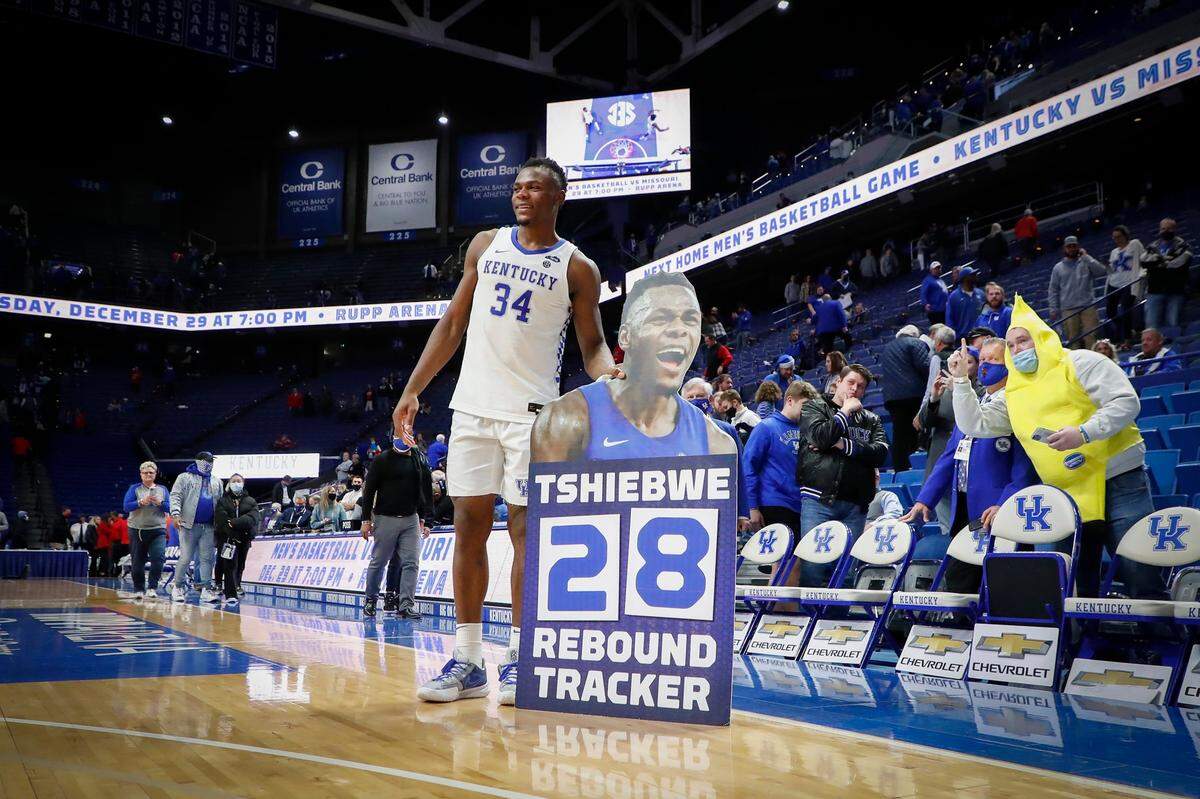
Among those astounded by Oscar Tshiebwe’s rebounding this season are two of the best rebounders in Kentucky basketball’s storied history.
“Obviously, it’s phenomenal,” said Dan Issel, UK’s career leader with 1,078 rebounds.
“Unbelievable,” said Kenny Walker, who is sixth on that career list with 942 rebounds.
How bountiful is Tshiebwe’s haul of rebounds so far? His 13 at Vanderbilt on Tuesday lowered his average this season from 15.2 to 15.1. He still leads all Division I players in average of rebounds and offensive rebounds (5.3 per game).
“It’s crazy to say aloud, but I expect him to get 15 to 20 rebounds” in a game, teammate Kellan Grady said Monday.
When asked why he’s such a proficient rebounder, Tshiebwe cited his first sporting love: soccer.
“I was a goalie,” he said. That meant, “I’ve got to catch everything. You’ve got to fly for everything. . . . I think that really helped me, too, when it came to basketball. Every time somebody shoots the ball, my mind is like I’m a goalie. I don’t want anybody to score.”
Issel and Walker attributed Tshiebwe’s rebounding prowess to several factors.
Offensive rebounding is about effort while defensive rebounding is about positioning and boxing out, Issel said.
Said Walker: “He’s doing it with a combination of size, strength, great positioning, great nose for the ball.”
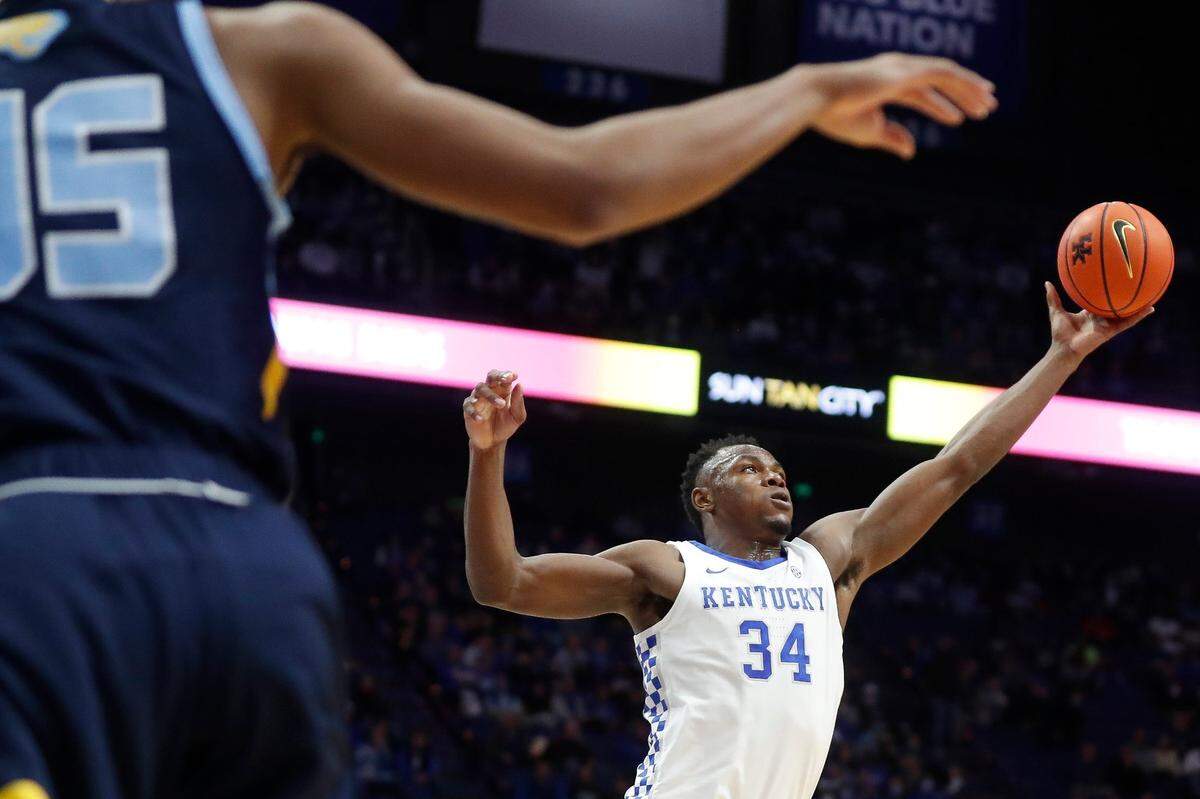
Walker suggested that Tshiebwe is a combination of two players who rank among the NBA’s top 25 in career rebounding: Charles Oakley in bulk and Dennis Rodman in zeal.
ESPN analyst Jay Bilas, who worked the telecast of Kentucky’s victory at Vanderbilt, added another attribute.
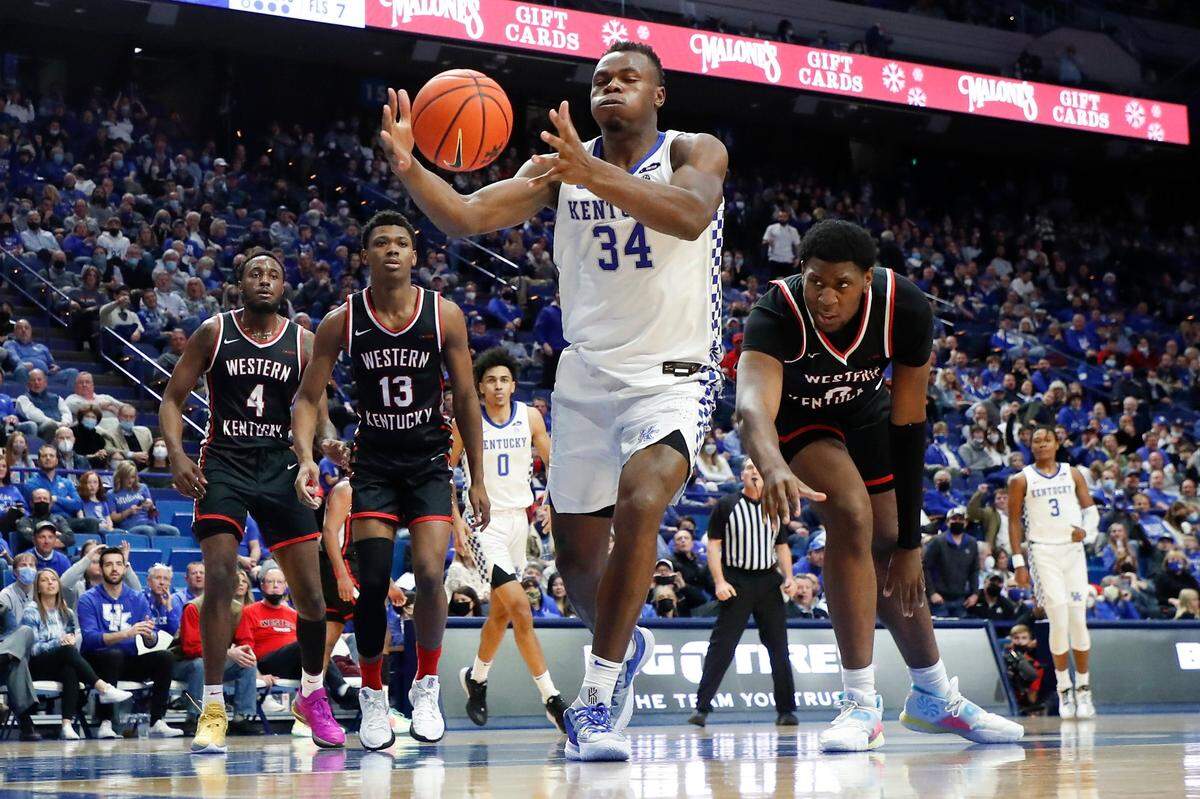
“The thing that’s probably under-appreciated about Oscar is how smart of a positional rebounder he is,” Bilas said. “You combine that with his physical gifts, his effort level. The smart is what sets him apart because you don’t rebound at that level by just trying hard. That’s not enough.”
One example of smart rebounding cited was a player going to the opposite side when a shot is taken. Say, if the shot is taken from the left wing, the rebounder should go to the right side of the basket.
Walker said his high school coach, plus the two UK coaches he played for, Joe B. Hall and Eddie Sutton, plus Rick Pitino in the NBA, all gave that advice/instruction.
“Maybe 70 to 80 percent of balls are going to bounce to the weak side,” Walker said. “I’ve seen him position himself that way. He has an uncanny ability to know the trajectory of the ball and where it’s going to bounce.”
Tshiebwe credited his former college coach, Bob Huggins of West Virginia, for giving him this rebounding tip and then punishing players who balked.
“If you don’t go opposite, you’re going to run in practice . . . ,” Tshiebwe said. “You’ve got to stop watching the ball.”
When asked why he was such a good rebounder, Issel quipped, “I played with teammates that missed too many shots.”
More seriously, Issel and Walker acknowledged the different perspectives on missed shots: Not good for the shooter, but good for the rebounder.
Walker said he tried to encourage his teammates by suggesting they keep shooting.
“You want them to make the shot, but you’re always going to assume they’re going to miss,” he said. “You don’t take anything for granted.”
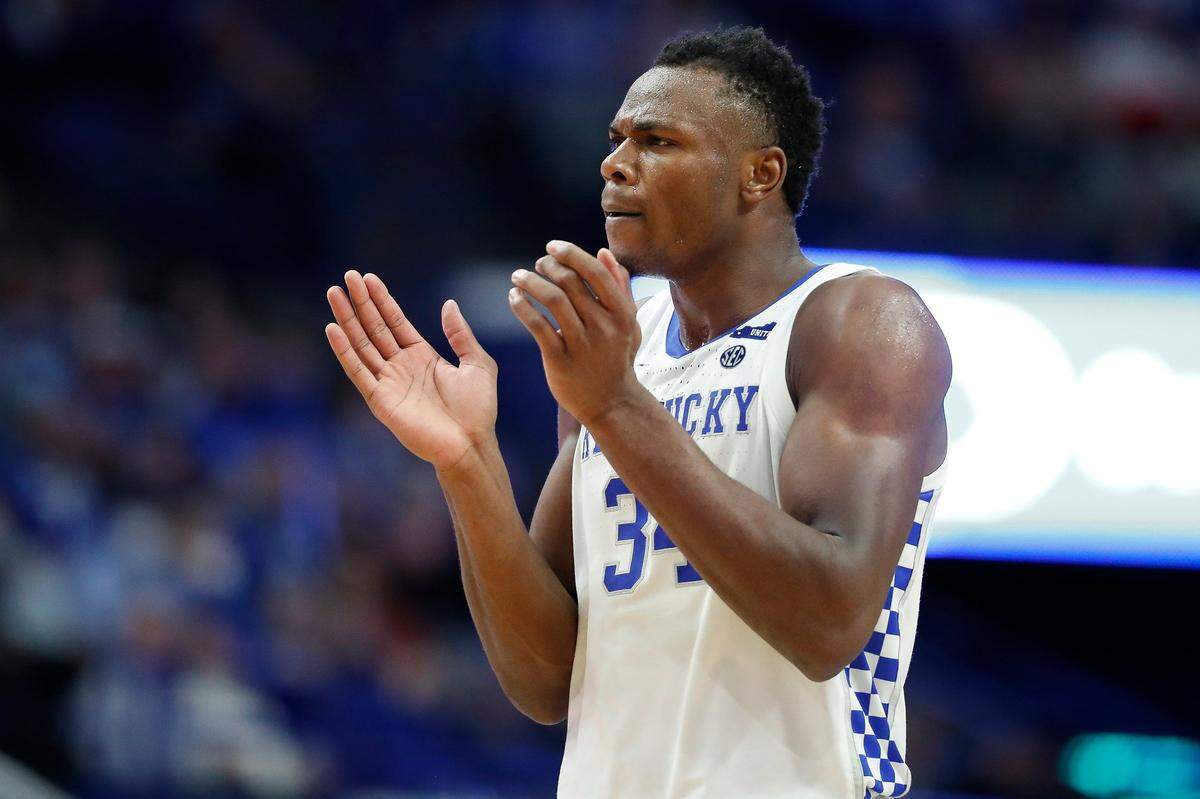
Tshiebwe seems to take pride in rebounding, which Issel said was “very unusual” for a player.
“We all read the papers,” he said with a chuckle. “It’s the guy who scores the most points that gets his name in the headline. . . .
“He has an innate ability that I’ve seen in just a few players. He has the ability to know where the ball is going to be, and he gets there.”
One of his former UK teammates, Mike Casey, had that ability, Issel said. He also said that applied to Hall of Famer Larry Bird.
Of course, opposing teams notice Tshiebwe’s rebounding talent. As the season evolves, opponents figure to go to greater extremes to limit his impact.
“I’ve noticed on several occasions the guy that was guarding him, when the ball went up, he didn’t even turn around and look for the rebound,” Issel said. “He just stood right in front and face-guarded Oscar to keep him away.
“As the water gets deeper, he’s going to face those challenges.”
In a matter-of-fact tone devoid of braggadocio, Tshiebwe said opponents do not have a viable option other than double- or triple-teaming to try to limit his rebounding.
“One person cannot block me out,” he said.
Tshiebwe’s teammates and coaches are believers.
“Oscar is one of the most unique players in the country,” Davion Mintz said. “I don’t think anyone provides what he does to their team.”
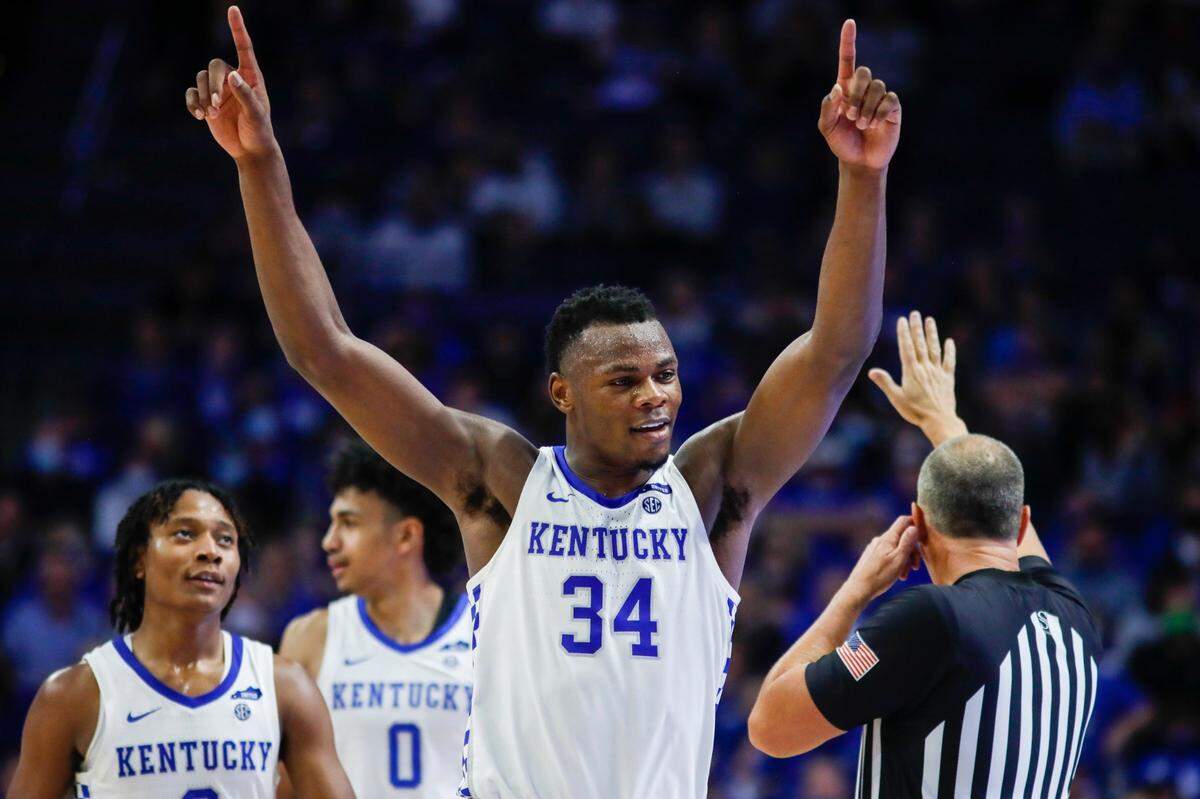
Both teams in the game are impacted, Mintz said. Tshiebwe emboldens Kentucky and “deflates the other team’s confidence,” the guard said.
Assistant coach Ron “Chin” Coleman echoed that sentiment.
“There’s not one player in the country that impacts a team more than he does . . . ,” he said. “He tips the scales for us in terms of possessions. It’s hard to simulate that on any other team. He’s an enigma who I’m sure gives other teams nightmares.”
Issel and Walker are fans.
Issel joked about Tshiebwe breaking his career rebound record in one season.
Walker referenced UK’s single-season record for rebound average: 17.7 per game by Bob Burrow in 1954-55.
“He deserves that record,” Walker said. “And that would separate him from all the other great rebounders who’ve played here.”
Next game
No. 22 Tennessee at No. 18 Kentucky
When: 1 p.m. Saturday
TV: ESPN
Radio: WLAP-AM 630, WBUL-FM 98.1
Records: Kentucky 13-3 (3-1 SEC), Tennessee 11-4 (2-2)
Series: Kentucky leads 157-75.
Last meeting: Kentucky won 70-55 on Feb. 20, 2021, at Knoxville, Tenn.
This story was originally published January 13, 2022 at 12:30 PM.