For years, Kentucky has been snakebit with its point guards. It’s happening again
AI-generated summary reviewed by our newsroom.
- Kentucky point guard injuries recur, undermining depth and season outlook.
- Coach Mark Pope retains confidence, but backups must fill the playmaker gap.
- Historical point guard instability at Kentucky dates to Calipari era and persists.
READ MORE
Preview: Kentucky basketball vs. Michigan State
Click below to read more of the Herald-Leader and Kentucky.com’s preview coverage ahead of Tuesday’s Kentucky-Michigan State game at Madison Square Garden in New York.
Expand All
With Jaland Lowe out, can Kentucky basketball’s big men help with ballhandling?
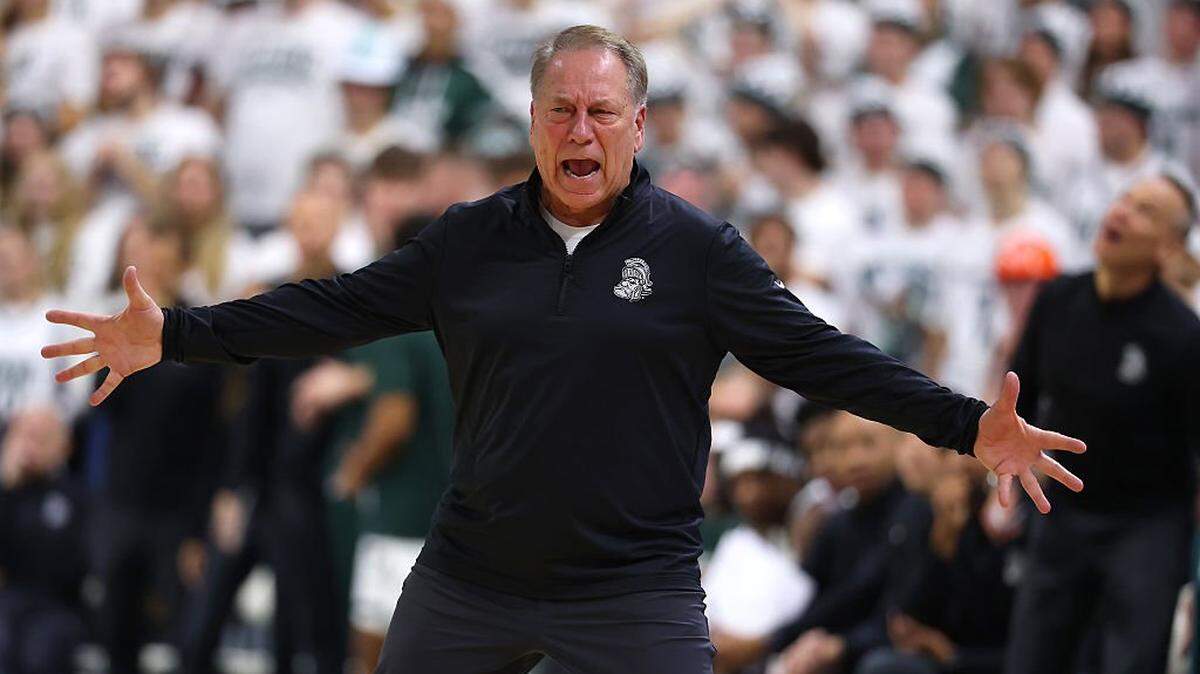
How No. 12 Kentucky matches up vs. No. 17 Michigan State — with a game prediction

For years, Kentucky has been snakebit with its point guards. It’s happening again
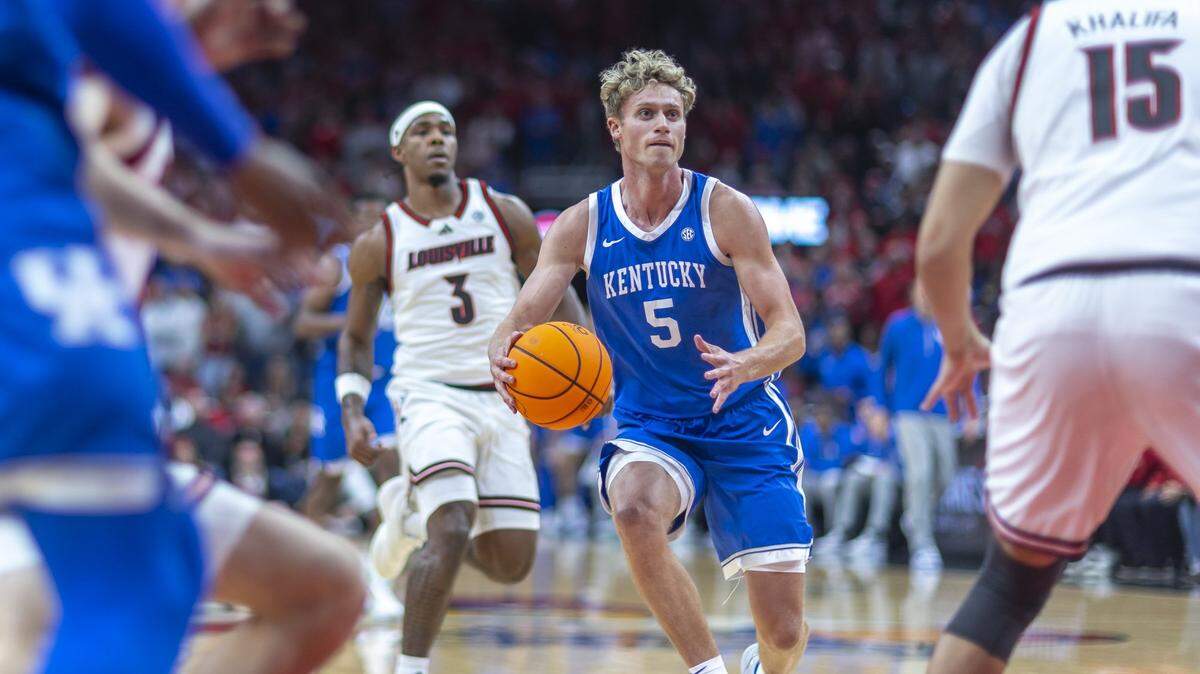
Kentucky drops in the new Top 25 rankings after rivalry loss to Louisville
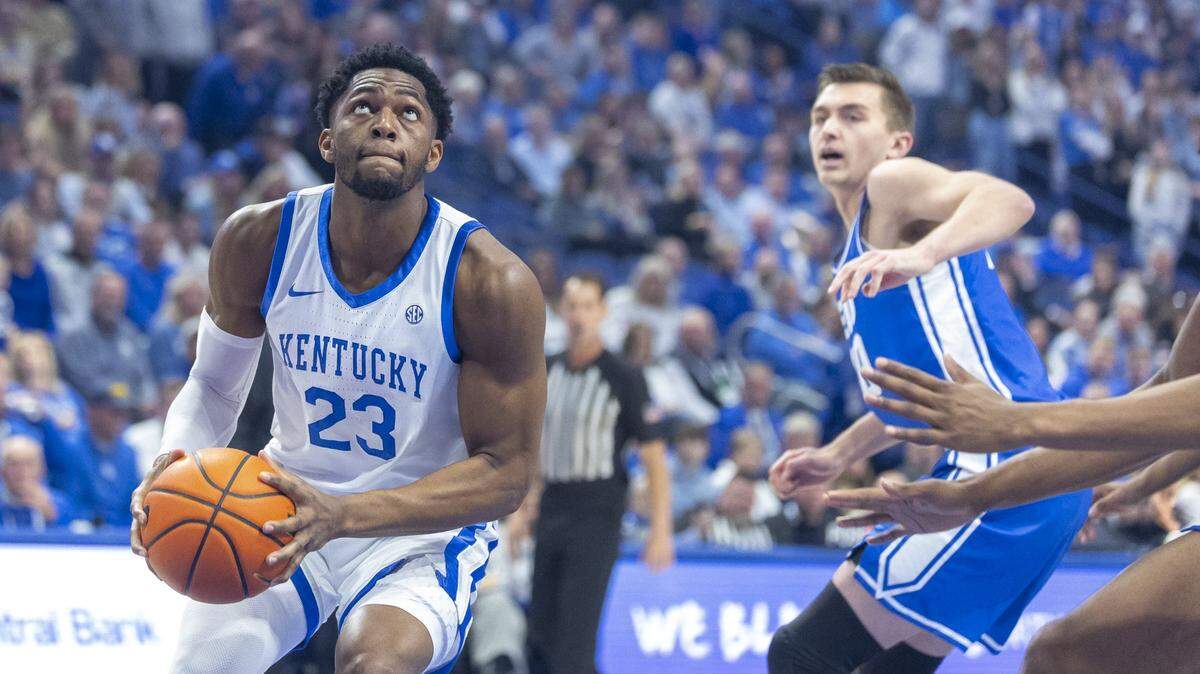
Where to watch, how to follow the Kentucky men’s basketball game vs. Michigan St.
Optimism had been oozing out of the Joe Craft Center all offseason, and then came Oct. 17.
That’s the night Jaland Lowe — brought in to be the starting point guard on Mark Pope’s second Kentucky basketball team — fell to the Memorial Coliseum floor in agony, clutching his right shoulder.
And then all that optimism turned into an old familiar feeling: “Here we go again.”
The UK fan base can be forgiven for fearing the worst at that moment. Lowe left the floor during the Blue-White Game holding his right shoulder, the same injury that knocked Pope’s first Kentucky point guard, Lamont Butler, out of action toward the end of last season and hobbled him into March Madness.
Lowe is a lefty, however, so that was one positive. Another came a few days later, when Pope said his current point guard’s injury didn’t carry the same level of pain as the one that haunted Butler at the end of last season.
The outlook was, all things considered, fairly rosy.
Lowe returned to practice not long after the injury, the UK staff eased him back into contact drills, and — after sitting out both exhibitions and the regular-season opener — he came off the bench against Valparaiso and Louisville, playing 30 minutes in the latter game.
And then came Nov. 13.
That’s the afternoon Lowe reinjured his right shoulder toward the end of Kentucky’s practice. Teammates talked the next night of their point guard screaming in agony for head athletic trainer Brandon Wells.
Word quickly spread outside the Craft Center. “Here we go again,” was the feeling once more.
As of Monday morning, there’s been no definitive update on Lowe’s status. His father told the Herald-Leader on Friday that the initial MRI revealed nothing more substantial than what Lowe suffered back in October, and Marland Lowe said those who reported (or feared) that his son would be out for the season had “jumped the gun” in that assessment.
That could still end up being the case. Or Lowe could return to lead these Cats. Either way, this is a situation that has gotten far too familiar for those who follow the Wildcats.
Another season, another unfortunate situation at the point guard position.
Kentucky’s point guard history
The earliest days of the John Calipari era were built on the foundation of phenomenal point guard play.
Calipari coached Derrick Rose and Tyreke Evans during his final two seasons at Memphis, and he brought that brand of basketball with him to Lexington.
First came John Wall, as bright a young star as Kentucky had ever seen. With the help of teammates nearly as talented, Wall instantly returned the Wildcats to the elite tier of college basketball.
Brandon Knight came next. He led UK to its first Final Four in 13 years. Then it was Marquis Teague, not a superstar by any means, but a playmaker who did enough with the surrounding talent to guide the Wildcats to the only national championship of the Calipari era.
The 2012-13 season was messy at that position — Calipari was expecting Teague to return for a sophomore season (he didn’t) and Ryan Harrow didn’t pan out — but then came Andrew Harrison, who was sometimes maligned by segments of the UK fan base but ultimately led the Cats to back-to-back Final Four appearances.
Tyler Ulis was the backup point guard on that second Final Four squad and a first-team All-American and Bob Cousy Award winner the following season. De’Aaron Fox, a bona fide star, followed him.
Then things got a little hairy.
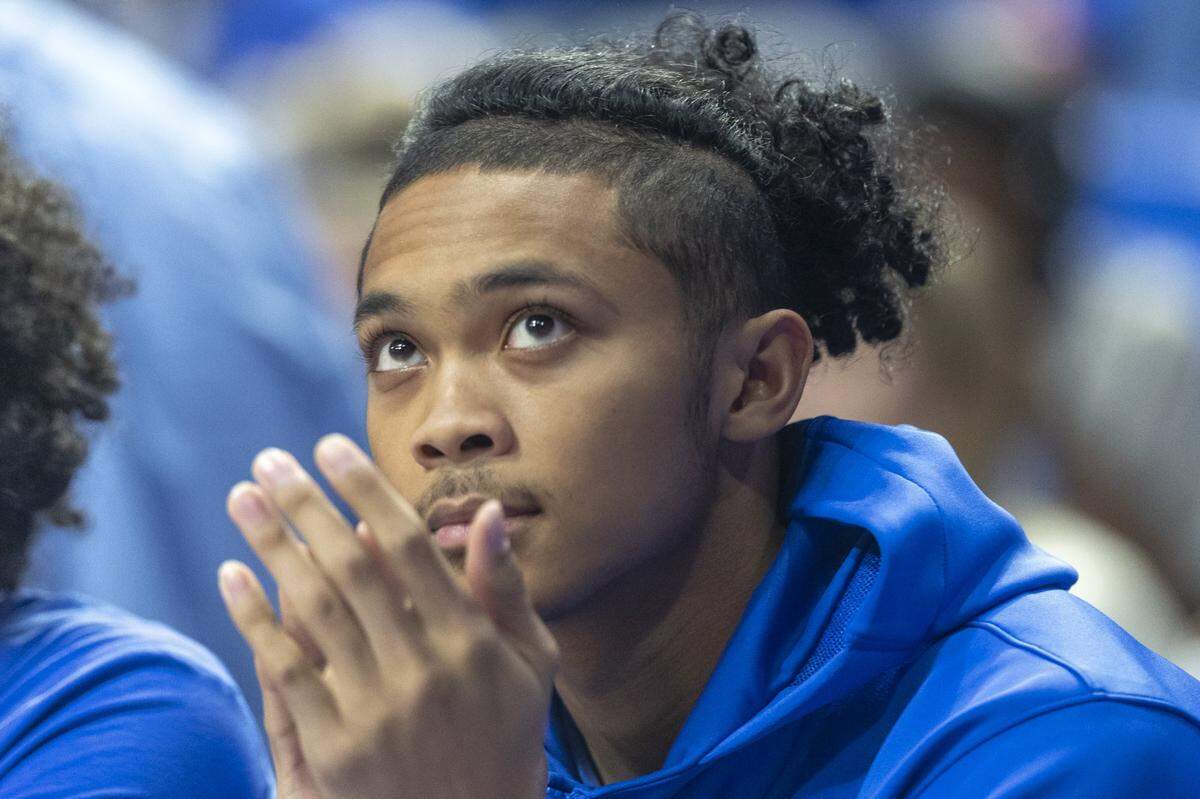
Shai Gilgeous-Alexander was on the 2017-18 roster, but Calipari started the season with Quade Green as PG1 instead. Gilgeous-Alexander is the reigning NBA MVP. Green most recently played for a Bosnian pro team. Calipari made the starting lineup switch midway through that season, but Green’s ill-advised airball in the final seconds of the Wildcats’ Sweet 16 loss still lingers in fans’ memory.
Ashton Hagans supplanted Immanuel Quickley as the go-to point guard the following season, but Hagans’ seven-turnover game in an Elite Eight loss to Auburn is difficult to forget. And some fans seem to have forgotten that — as intriguing as UK’s three-headed backcourt of Quickley, Hagans and Tyrese Maxey was the next season — Hagans was left behind in Lexington for personal reasons in what ended up being the final game that UK team played.
The 2020 NCAA Tournament was canceled due to the COVID-19 pandemic, another bit of bad luck for the Cats.
The 2020-21 roster was just plain bad. Or badly constructed, at least. Devin Askew, at 18 years old, was UK’s starting point guard. That team finished with a 9-16 record.
Then Calipari decided to go with experience and plucked Sahvir Wheeler out of the transfer portal. His style of play never really caught on with UK fans. Wheeler was in charge for Kentucky’s first-round upset at the hands of 15-seeded Saint Peter’s in year one — perhaps the beginning of the end for Calipari’s tenure — and then he didn’t even play at the end of his second year, sitting out with a series of injuries while teasing fans and media about a potential return.
In five college seasons Wheeler played with the likes of No. 1 NBA draft pick Anthony Edwards and national player of the year Oscar Tshiebwe, yet he never played in an NCAA Tournament win. His only March Madness appearance was that Saint Peter’s loss.
In the first year of Wheeler’s UK stint, fellow point guard TyTy Washington played the end of the season with an injury. In the second year, fellow point guard Cason Wallace did the same.
The final season of the Calipari era wasn’t hampered too badly by injuries at the position, but the Kentucky coach’s stubbornness with his point guards proved to be the final straw for many fans. As D.J. Wagner — a ranked-No. 1-in-his-class point guard for most of his childhood — struggled, Calipari stuck with him, even though Reed Sheppard and Rob Dillingham were thriving in reserve roles.
Those two ended up being top-10 NBA picks. Wagner is still in school — and still with Calipari — at Arkansas, where his struggle to live up to that five-star potential continues.
Point guard problems in the Pope era
Even the angst of the final few seasons of the Calipari era can’t match the mess that Mark Pope has had to deal with at point guard.
A big question before last season was how the new UK coach would be able to effectively juggle two of his biggest portal acquisitions — established point guards Lamont Butler and Kerr Kriisa — in one backcourt. That didn’t prove to be an issue by the end of the season.
First, Butler injured his ankle in the team’s eighth game. While he was sidelined, Kriisa took over as the starter. In his first game in that role, Kriisa suffered a season-ending foot injury. Butler returned to the court, but he hurt his shoulder a month later, and that ailment dogged him for the rest of the season.
Jaxson Robinson — a 6-foot-6 wing — was Pope’s No. 3 option at point guard. That role negated some of his off-ball talent. The ripple effect of the position switch was rendered moot when Robinson suffered a season-ending wrist injury in February.
Pope wanted to build a more natural group of playmakers going into his second year, but that plan hit a bit of a snag when he selected Lowe — a player with two seasons of eligibility remaining — out of the portal. Highly touted point guard recruit Acaden Lewis — not keen on the seeming likelihood that he’d be a two-year backup — surprisingly decommitted from Kentucky. He’s now a freshman at Villanova.
UK still did well in its backcourt construction, with Florida transfer Denzel Aberdeen, returning sophomore Collin Chandler and incoming freshman Jasper Johnson all capable — to varying degrees — of filling in at the 1, but Lowe was so clearly the guy that Pope and UK’s players talked openly about him being the team’s starting point guard before summer practice had even wrapped up.
Now, he’s on the shelf.
Even if Lowe does return to the court this season, those who follow the Wildcats will be wincing every time that right shoulder endures contact. And, as long as Lowe is sidelined, Aberdeen — the clear choice to slide into the PG1 role — will be under the watchful eye of UK fans waiting for something else to go wrong.
At this point, who could blame them?
It’s also worth noting that Pope couldn’t have possibly seen this coming. This wasn’t a case of a coach in need of a point guard taking a chance on damaged goods. Butler had played in 104 consecutive games before suffering that first injury last season. Kriisa had played in every game he was eligible for in the two seasons before coming to Kentucky, and Robinson missed just one game due to injury during his two seasons with Pope at BYU.
As far Lowe, he played in 64 of a possible 65 games in two years at Pitt, missing one with a concussion.
The snakebit nature of this whole deal led to a question for Pope on Friday night. Any chance he looks to add another playmaker at the semester break to bolster this team’s backcourt?
“I’m really confident in the group we have,” he said, appearing to reject that idea. “I like the group we have a lot. I think we just have so much growing to do.”
The players he has appear capable of growing enough to get the Wildcats to their ultimate goal. But it’s still not the kind of thing a coach wants to be talking about in the middle of November.
This story was originally published November 17, 2025 at 6:00 AM.