How NCAA’s age-based eligibility rules impact Kenny Brooks, UK women’s basketball
For the first time in Kenny Brooks’ Kentucky tenure, every player on his roster has a path to return for another season after this one.
That doesn’t mean they will. In fact, it’s safe to assume that they won’t.
“The ever-changing landscape of college athletics, you just have to be ready to adapt,” Brooks said Tuesday at an offseason news conference at Memorial Coliseum.
A decade ago, Brooks said, roster construction was far simpler.
“It used to be, 10 years ago, somebody would call and they’d say, ‘Well, what do you need for the ‘27 class?’ And I could tell you we needed two players, we needed three players, this and that,” Brooks said. “Now, when they call, they say, ‘What do you need for the ‘27 class?’ I say, ‘I’ll let you know in ‘27. We might need 15. I don’t know.’”
Entering his 25th season as a head coach in the 2026-27 campaign, Brooks has watched the modern women’s basketball marketplace make one distinction ever sharper: Eligibility is one thing, opportunity is another.
Brooks’ seismic move from Virginia Tech to Kentucky in 2024 certainly played a factor in player attrition, but UK veteran Clara Strack — who ranked No. 95 in the class of 2023 — is the only recruited freshman to remain under his tutelage until her senior year.
All others, including ex-Cats Tanah Becker (now at George Washington), Lexi Blue (Northwestern), Kaelyn Carroll (Washington), Clara Silva (TCU) and Elsa Vadfors (ETSU), have sought opportunities elsewhere.
This year, Brooks and his staff welcome the highest-profile recruiting class of his career — a five-star triumvirate of Maddyn Greenway, Emily McDonald and Savvy Swords — and, when asked why touted freshmen keep transferring out of his program and how to keep the new ones, Brooks didn’t pretend there is a tried-and-true method for retention.
“If I knew what the reason was, or (how) to be able to stop it or whatever, I probably wouldn’t have to coach,” Brooks said. “I could make a lot of money doing something else, being a consultant. But it’s just the time.”
On June 23, the NCAA announced that Division I would adopt an overhaul of eligibility rules, moving to an age-based model which will allow DI athletes up to five years of eligibility should they enroll no later than the academic year after their 19th birthday.
This new model is meant to replace sport-specific rules such as redshirt guidelines and eligibility-extension waivers with a single, more streamlined standard for traditional student-athletes.
Though it won’t fully apply to incoming freshmen until the high school recruiting classes of 2027, it still affects how programs and student-athletes think.
The NCAA’s transition rules allow current players and the high school recruiting class of 2026 to use either the previous eligibility model (four seasons of competition), or the new age-based plan, whichever is more beneficial to the athlete.
Brooks sees the shift as simultaneously player-friendly and somewhat destabilizing for a coaching staff.
“It’s an opportunity for young people to extend their careers, to play,” Brooks said. “It’s going to be an adjustment for everybody. The freedom of movement, that’s probably going to have an impact on it as well, but it is what it is, and you have to learn to adjust to it.
“And you look at our roster this year, and everyone has the option to come back. And sometimes, you look at it like you’re an NBA team. You don’t know if you’ll be able to bring them all back. That’s just the reality of what we’re dealing with, but you have to live for today and take care of today, and then see what happens tomorrow.”
Options for players — and pressure on rosters
Strack called the change a long-anticipated shift.
“Like Coach Brooks said, everything’s changing,” Strack said. “So obviously, that’s something that I think people saw coming, but yeah, now that it’s finally passed, I think it’s obviously a huge change. It’s kind of crazy, but it definitely gives people options, and I think that’s a good thing to have that option.”
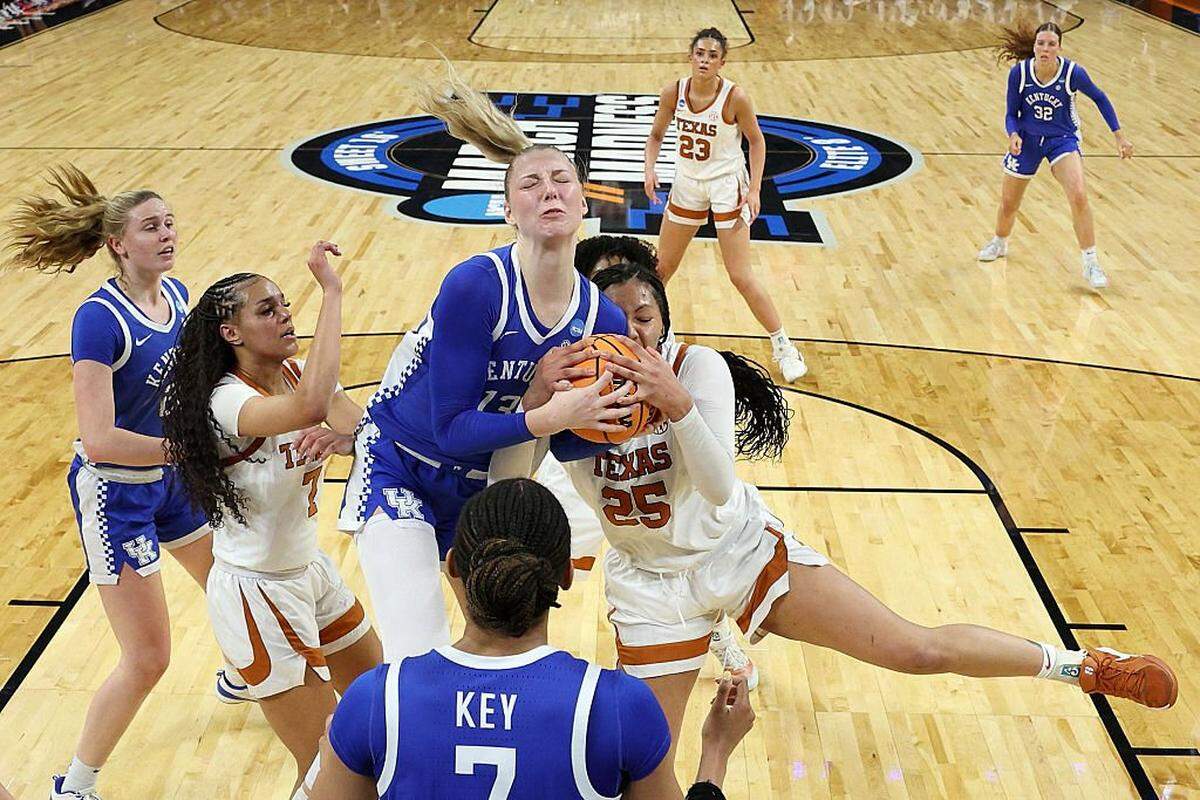
“That option” can work in several directions; an extra year could help a veteran finish a degree, recover from injury, raise their ceiling or compete for a larger role.
But it could also deepen the logjam for younger players and make roster math even more complicated. As programs work to stay competitive, coaches may opt to retain a veteran who — thanks to the rule shift — now has an additional year of eligibility rather than onboard a freshman who has no collegiate experience.
Brooks doesn’t view transfers out as betrayal so much as a predictable response to a systemic issue in which movement may appear easier than the age-old ‘waiting your turn.’
“Until there are rule changes, and when everyone has the opportunity to (have) freedom of movement, they’re going to exercise it,” Brooks said. “And you can’t stop them from doing so.”
Brooks pointed to two recent examples in Silva, who departed for Fort Worth, Texas, after her freshman season in 2024-25, and Blue, who left for the Big Ten earlier this spring after her sophomore campaign.
Silva, Brooks said, “had a really good year at TCU,” but Kentucky’s depth chart didn’t afford her a shot to increase her production.
“She’s playing behind Clara Strack,” Brooks said. “So she wanted an opportunity to play.”
Blue, the former No. 40 overall prospect in the class of 2024 who — like Portugal native Silva — flipped her commitment from Virginia Tech to follow Brooks to UK, never seemed to find a natural fit within his system.
“Love Lexi,” Brooks said. “And she just wanted an opportunity to play.”
Those players wanted to play more, not necessarily remain in college longer.
Kentucky’s senior leaders — and returning starters — Strack and guard Asia Boone, are focused on the upcoming season, even as their own eligibility expands.
Boone said she isn’t preoccupied with the newly approved five-year option and her take spoke to the new reality for players : Certainty is no longer so certain.
“Yeah, this is my last year, my senior year,” Boone said. “Could be my next (to last) because I’ve got that option, but I’m not worried about it. I’m honestly just focused on this next year, my senior year, with the girls that I am playing with now. And this is such a special group that I really want to take into account.”
Brooks said he’s discussed the rule change without turning it into a constant conversation of the “will they, won’t they” of player timelines.
“With (Boone and Strack), we’ve talked about it a little bit, just to explain it to them what’s actually happening,” Brooks said. “But we haven’t talked about their individual situations.”
Even for the team’s superstar, Strack, the fifth-year option has warranted a conversation, despite her collegiate credenitals and pro potential. Bleacher Report projected her 12th in its “way-too-early” 2027 WNBA mock draft.
“Clara has an opportunity to be one of the highest (WNBA) draft picks for next year,” Brooks said. “And she and I have sat down and talked. We said, ‘Hey, look, let’s just go out and have a great year this year and see where the chips lay. And, you know, you do have an opportunity, you have the option if you do want to come back. But you also have the option to turn pro, and let’s just worry about it when it happens.’”
Barring unforeseen circumstances, you should expect Strack to hear her name called in New York next April. But, due in part to the new legislation, Boone’s thinking has evolved, too.
“Asia, in her situation, if you had asked her last year, she had no aspirations to go play pro,” Brooks said. “Now she’s talking about being a professional, you know, what she has to do so she could possibly take that fifth year and do it.”
The combination of loyalty to a place and openness to opportunity is exactly why Kentucky can be simultaneously stable at the top — an unchanging staff of respected assistant coaches Rad Autukaite, Ciara Gregory and Josh Petersen and associate head coach Lindsey Hicks — and embrace fluidity on the roster.
What it means for Brooks (and fans)
However, Brooks said his sympathy usually goes out to those who want continuity most.
“The people I feel sorry for are the fans,” Brooks said. “Because fans, especially our sport, they watch these kids come in as freshmen and they watch them matriculate into seniors. And I’ve had a front-row seat with Clara Strack, and I promise you, she’s a lot different as a senior than she was as a freshman. I got to watch her do that, I get to see it. And fans deserve that.”
The age-based model approved by the NCAA is meant to simplify — fewer individual cases, fewer waivers, a more straightforward rulebook. But the day-to-day experience at a program like Kentucky may be less simple; more players with legitimate cases to return, more players with legitimate reasons to leave and more seasons in which coaches essentially re-recruit their own rosters.
Regardless of the noise outside, Brooks said that Kentucky will keep trying to build something that lasts.
As the eligibility math expands, the tougher equation — keeping underclassmen long enough for fans to watch a freshman with potential develop into a talented senior on Memorial Coliseum’s home court — is one Brooks is working to solve in real time.
“All you can do is go out there and be the best that you can possibly be as a team,” Brooks said. “We’ve had two successful years, especially for our first two years here, and so, if someone decides they want to go somewhere else, you hug them and you say, ‘Thank you for your contributions. Good luck. I’ll root for you, except for if you play for Kentucky.’ And then we move on, and we find players who really want to be here.”