Playoff expansion, new SEC teams present ‘hope’ and challenges for UK football
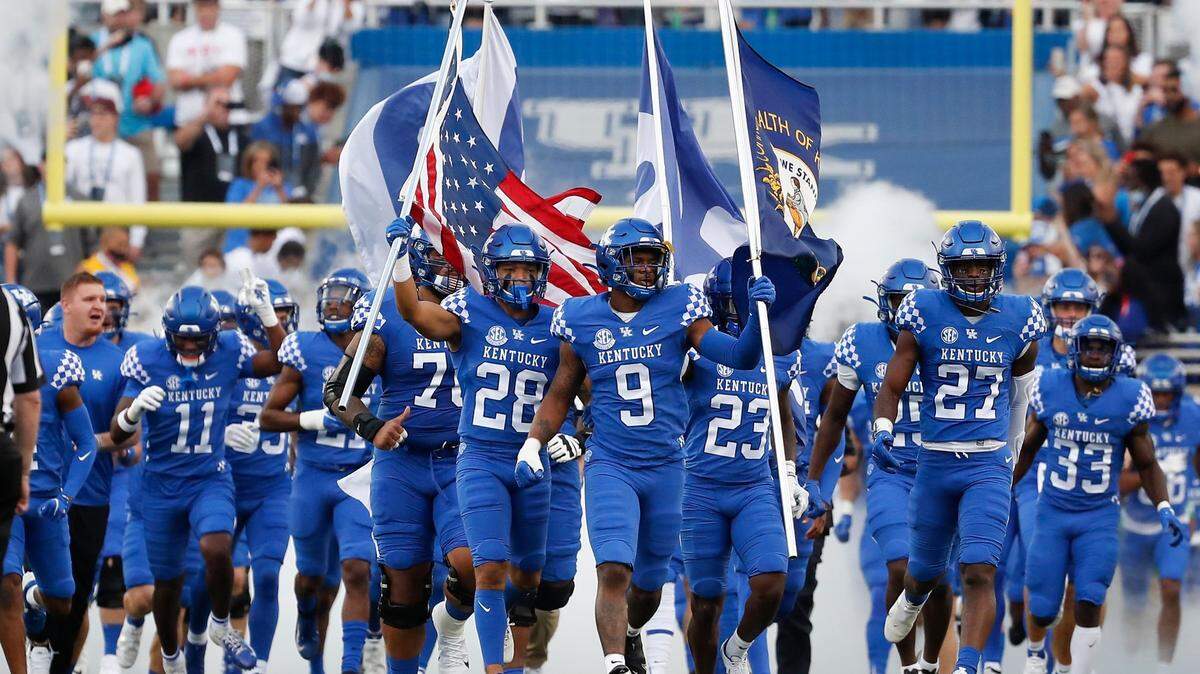
Early expansion of the College Football Playoff, at the moment, does not seem as inevitable as it did in the midst of the most recent season.
There’s a belief that when the current contract for the postseason ends in 2026, expansion to an eight- or 12-team playoff will occur. College and conference administrators over the last year met frequently to attempt an earlier revision — say, 2024 — but their efforts were stunted by a number of disagreements (including but not limited to: season length, automatic berths and the Rose Bowl’s insistence to be played at a specific time every year). Those qualms will be easier to overcome in 2026, when changes made to the format won’t need to be unanimous among the conferences.
University of Kentucky Director of Athletics Mitch Barnhart is on the College Football Playoff selection committee, not the one tasked with governing the operation and future of the postseason, but he’s in favor of expansion beyond the four-team format that currently exists. He points to his own school, which has produced two 10-win football teams over the last four seasons, as the kind of program that could benefit from expansion.
“We would certainly be in a good tussle with some of those teams,” Barnhart said. “We’d like to have a crack at that.”
For Barnhart, competition boils down to a single word: Hope.
“When your teams and your fans and your staff and department, when they lose hope, that’s when it gets to be a struggle,” he said. “Hope is a really important word. I think that if there are more teams that have access, that keeps hope alive for more people.”
The former chair of the NCAA Division I men’s basketball committee chuckles as he recalls the call for the NCAA Tournament to expand to 64 teams, which occurred in 1985 while he was in the administration at SMU. Since 2011 that field has been at 68, but in recent years there have been calls for even further expansion — some advocate for it to go to 96.
That tournament — which is operated by the NCAA, unlike the CFP — grants automatic berths for all of its 32 participating conferences. All four CFP participants are selected by a committee based on their record, strength of schedule and other relevant data points. Until the most recent edition, a team from outside the autonomy or “Power Five” had not been invited. Programs like Cincinnati matter as much to the “compelling story of college football” as the Alabamas and Clemsons of the world, Barnhart said. Expansion, whatever it might look like, would improve the chances of teams like that getting invited, and subsequently getting more air time on ESPN and increasing their program’s stature.
Conference expansion
The addition of Oklahoma and Texas to the Southeastern Conference in, most likely, the 2025-26 school year is likely to heighten the desire for CFP expansion. It could also prompt the addition of a ninth conference game to UK’s football schedule.
Kentucky is one of four SEC schools that annually plays a season-ending game against an in-state rival from the Atlantic Coast Conference (in UK’s case, Louisville). The UK-U of L football game is contracted through the 2030 season, but that game (and others like it) could be in jeopardy if the SEC adds a ninth conference game once its newcomers are in the fold.
“We’re gonna watch that really closely, but eight has worked well for our league,” Barnhart said. “It’s not like our league has been unsuccessful. We’ve obviously been a large factor in the College Football Playoff. We have been successful in bowl games. I know there’s a lot of conversation in the room about it, and we’re going to have to get to a spot where we make some decisions. We’ve got this thing hanging out there as we go forward, in terms of future scheduling, so we’ve got to work on that.”
For many SEC schools, adding a ninth conference game would simply mean booting a Sun Belt or FCS squad from its schedule. It would be more difficult to create a balanced schedule if UK were to continue playing Louisville — and South Carolina against Clemson, and Florida against Florida State, and Georgia against Georgia Tech — unless the league, in addition to adding a ninth conference game, also mandated that each team schedule a game against another “Power Five” school every year.
Such a mandate might also alleviate another potential concern that arises with the addition of a ninth conference game: every other year, half the league would have five conference home games while the other half would have just four. If scheduled strategically, the other “Power Five” game could take the place of an SEC game on the “lesser” home schedule every other season.
“We’d have to figure out how we manage all that and be able to continue to at least have seven home games,” Barnhart said of adding a ninth conference game. “We’ve been fortunate to where, about every second or third year, we’ve ended up with eight. Like this fall, we’re at eight. That’s helpful to us, it gives us a little bit of a bump in terms of assisting our department.”