Life coach: Lexington Christian Academy’s Doug Charles isn’t perfect. And that’s the point.
READ MORE
Lexington Christian Academy’s football head coach isn’t perfect. That’s the point
Football is both ministry and sanctuary for 61-year-old Pikeville native who uses his platform to help his players and others on and off the field.
Expand All
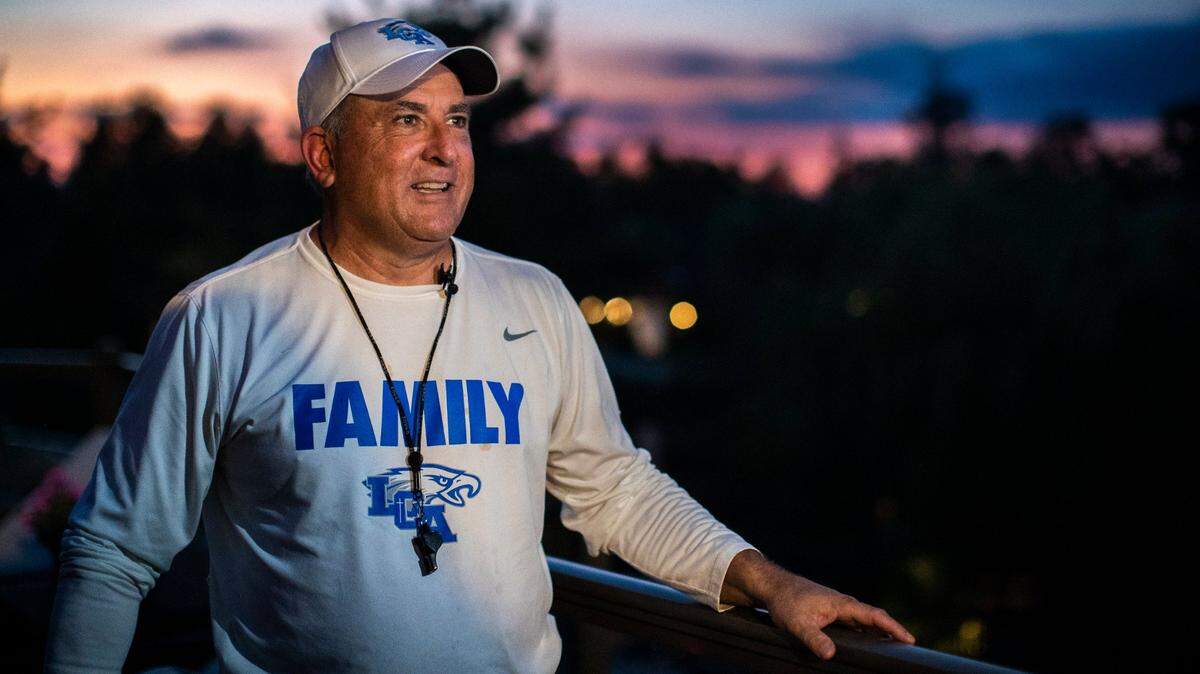
Life coach: Lexington Christian Academy’s Doug Charles isn’t perfect. And that’s the point.

Home team: Mitzie Charles talks about a busy life built with LCA Coach Doug Charles
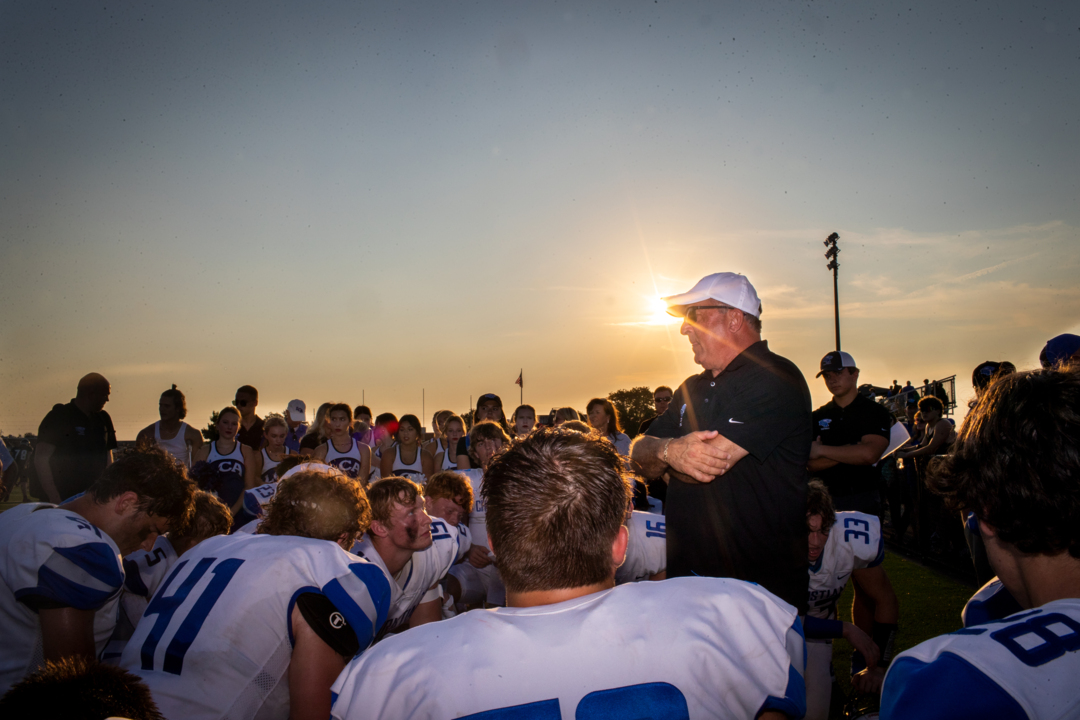
‘Football is a microcosm of life.’ Why coaching is Doug Charles’ calling.
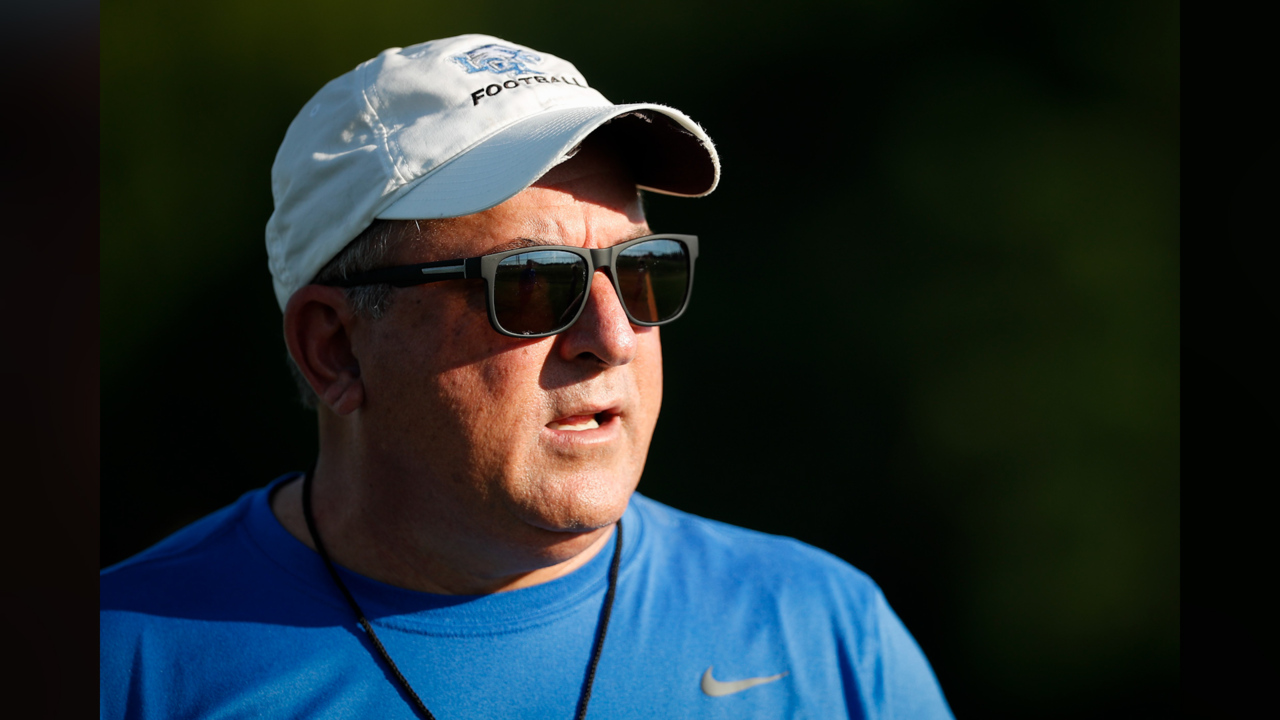
Slideshow: LCA football’s Doug Charles a role model through good times and bad
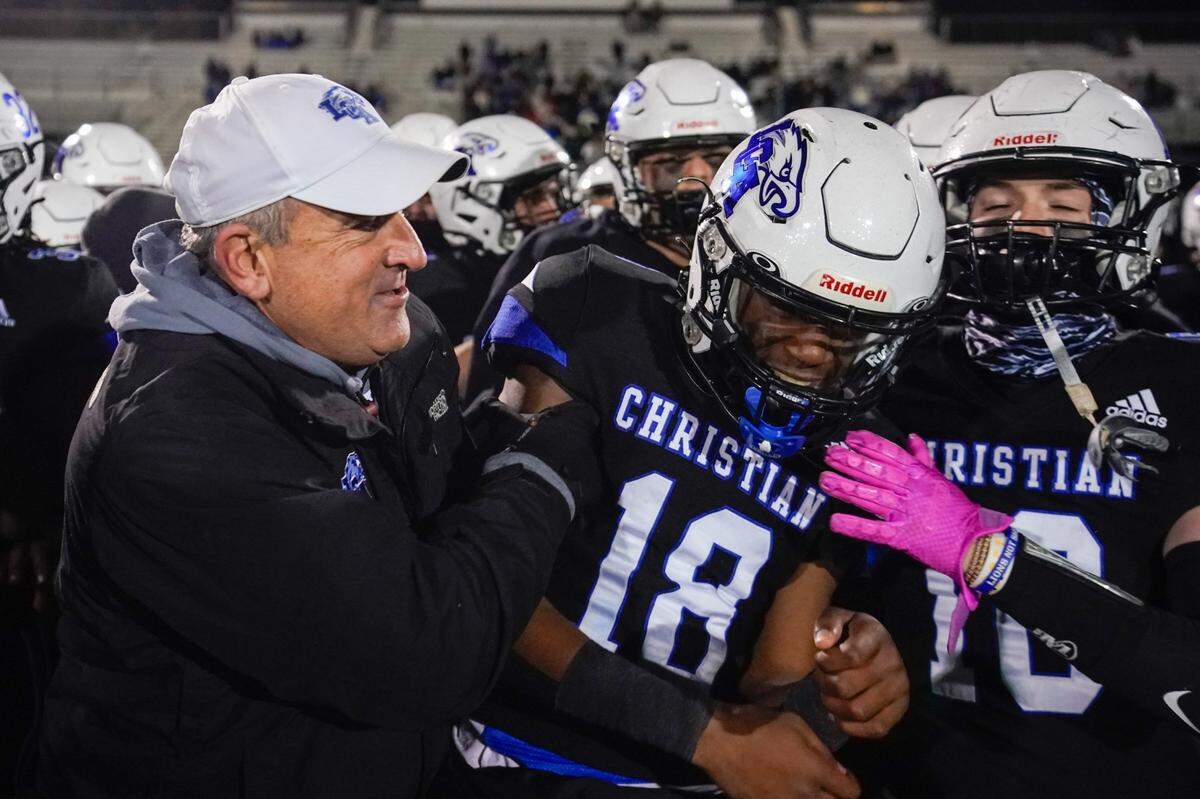
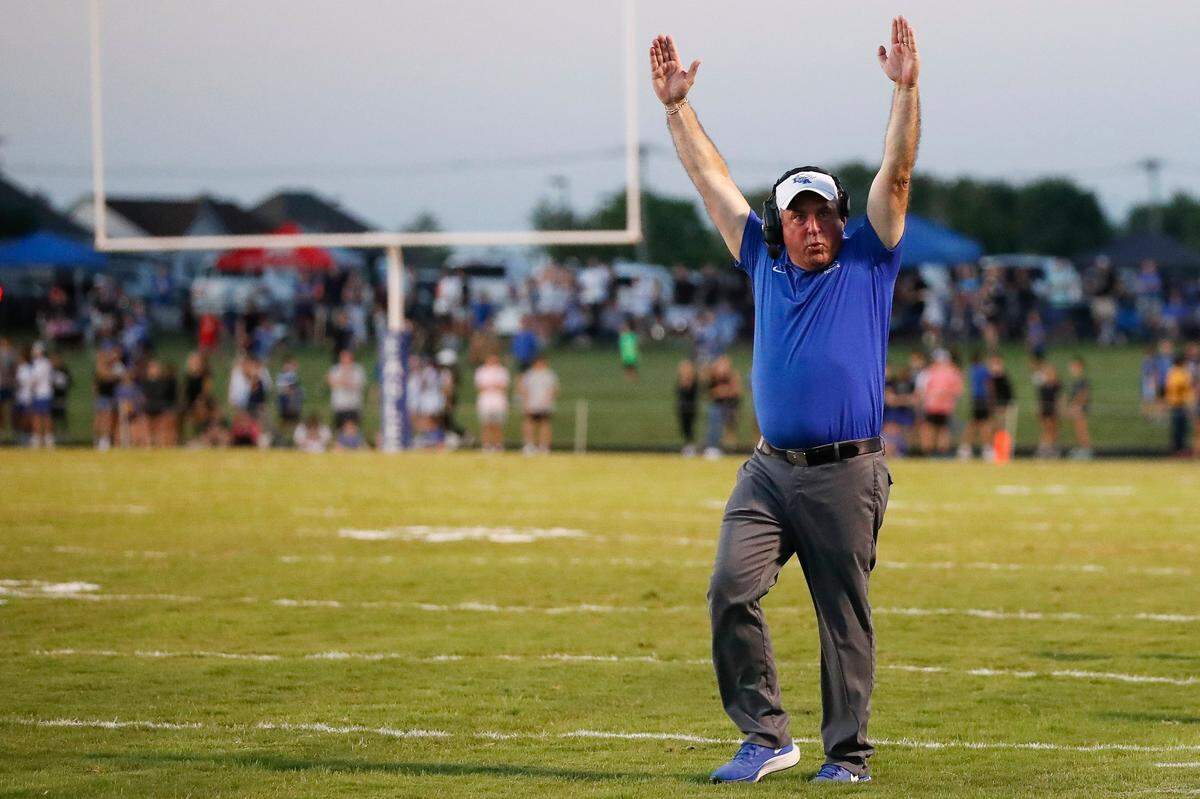
For the second year in a row, Lexington Christian Academy head coach Doug Charles faced a locker room full of tears at the end of a dimly lit Kroger Field tunnel last December.
His Eagles, perhaps the best LCA team in more than a decade, overcame two fumbles and a 20-0 second-quarter deficit to take the lead deep into their Class 2A state championship rematch with Beechwood. But LCA could not answer the Tigers’ go-ahead field goal for a 23-21 margin with 1:50 left in the game.
Beechwood got the best of LCA the year before, too — blocking an extra point in overtime for a 24-23 win on the same field.
As Charles left last December’s postgame press conference to meet with his players, LCA Athletic Director Terry Johnson stepped alongside him.
“He put his arm around me and says, ‘Are you OK?’” Charles recalled. “I said, ‘Terry, I’m fine. I said, ‘I’m just trying to gather myself to get the right words to say to my guys because this is a tough moment for them.’”
Charles knows tough moments. He’s had more than his share. The “benefits” of being old, he jokes.
“I’ve had failures and losses. I’ve buried two children, and I’ve been through life,” Charles said. “Life is fraught with highs and lows. … I’ve had some really high highs and some really low lows … I’m just gonna tell you this. The good Lord is still on the throne and the sun’s coming up tomorrow.”
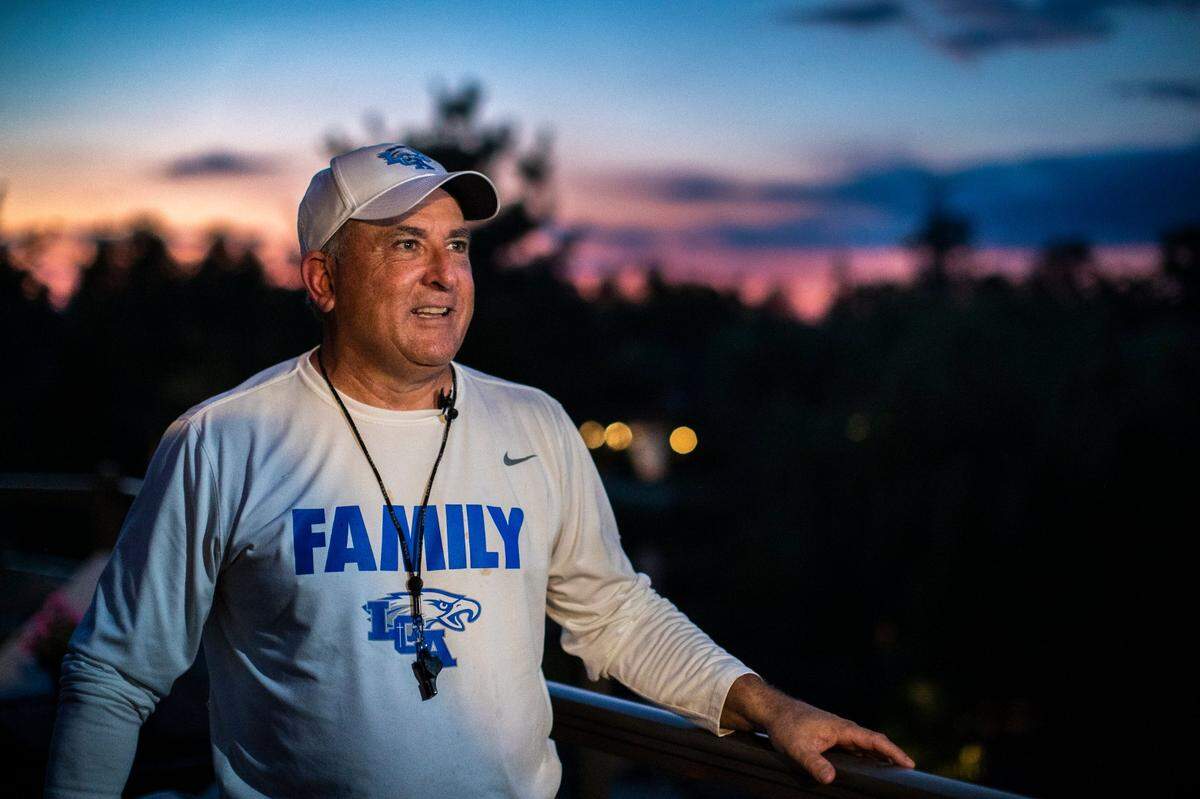
The 61-year-old Pikeville native likes to say he’s lived four lives. This latest incarnation might be his best yet.
A father, stepfather and grandfather of a clan that includes two young adopted children and another in the wings over the last few years with his fourth wife, Mitzie, Charles remains constantly on the go. Family and football somehow also share time with his business ventures as a successful real estate developer.
And Charles’ seemingly boundless optimism and care for his players runs so deep that he kept secret a diagnosis he’d received earlier that fall.
Charles had prostate cancer. He finally told the team a few weeks after the title game and just a short time before his surgery.
There were more tears that day.
But the season had to be about them, not him.
He’s the coach.
Growing up fast
Before Charles was old enough to drive, he wound up married with a baby on the way as a freshman at Pikeville High School.
“Imagine being a freshman in high school and thinking about the humiliation … think about all the shame you brought to your family and all this stuff,” Charles said.
It was 1976. Back then, you got married. You made the most of it.
But the baby born to Charles and Twilia Ray Charles in May died three days later.
“It was unexpected. Even though she was premature, we thought she would be OK,” Charles said.
Jessica Rai Charles was buried in Pikeville’s Johnson Memorial Cemetery less than a month after the young couple exchanged vows.
They remained married and resumed high school living in a 12-by-40-foot mobile home purchased together by their parents.
As a senior, Charles led the state in scoring as the Panthers’ running back despite missing two games with a hip pointer. Twilia was homecoming queen. Pikeville went 12-1 that season with the loss coming in the Class 2A region finals to Somerset.
“I was skinny as a rail, but I could always really run fast, and I had really good coaches,” said Charles, who played for Pikeville’s all-time coaching wins leader, Hillard Howard.
Charles had a few offers to continue playing football in college. But being married and starting his own family took priority. He went to work instead.
“By the time I was 21 years old, we had three kids, all 15 months apart,” Charles said.
First came James Douglas, then Jordan and then Hollie. The family outgrew the mobile home.
After a stint selling cars at his father’s dealership, Charles took a job as a collections agent for Citizens Bank, knocking on doors from 11 a.m. to 9 p.m.
It was not fun, but Charles had a knack for it. Soon, he was made a vice president at the bank. And that led to an opportunity to help other banks with their collection efforts. He began moonlighting with his own repossession business.
“It wasn’t two months before I was making more money at night than I was during the day,” Charles said. “I’d get off work at the bank, go help my wife get the kids bathed and have dinner with them, leave about 8, 8:30 and get home at one or two o’clock in the morning.”
The repossession venture continues today in five Kentucky cities and is run by some of his family.
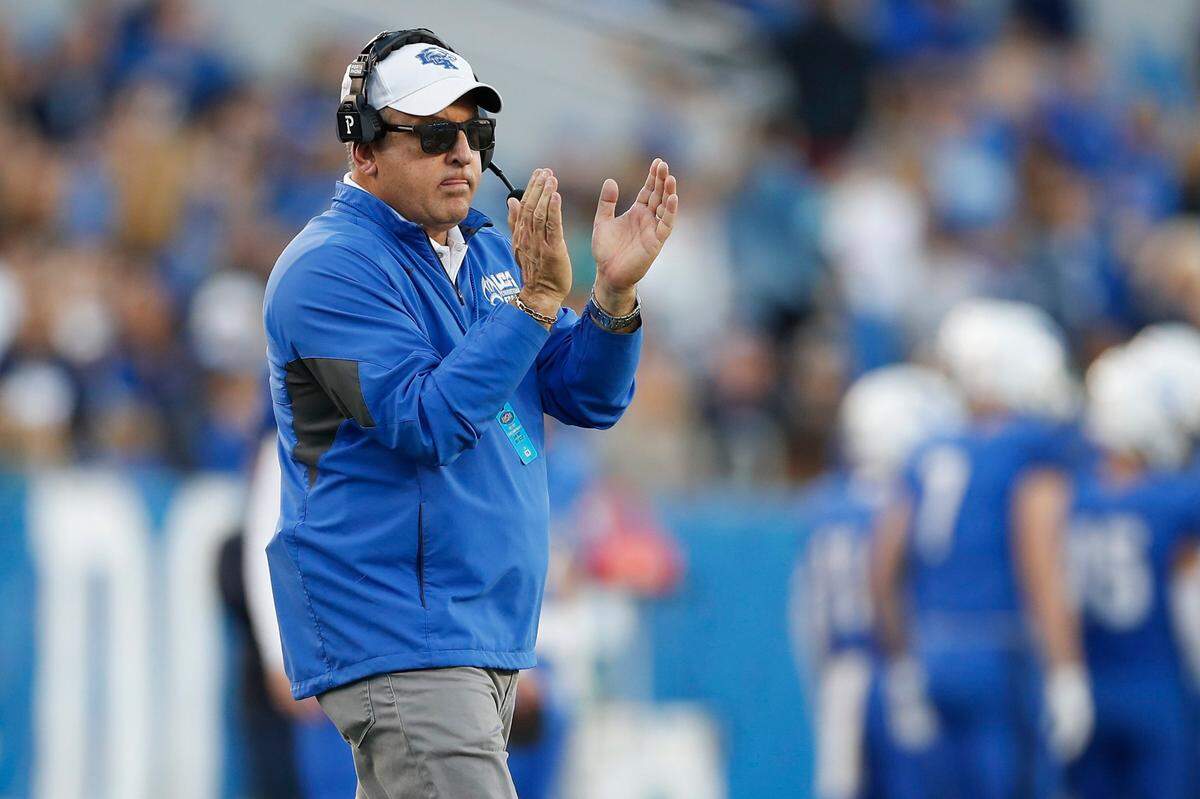
Never far from football
Even with a young family and two jobs, Charles kept his hand in football. He volunteered for the local youth leagues, the middle school and the high school.
“The reason I stayed in football was because it was the closest thing I could get to ‘Friday night lights,’” Charles said. “It was a void. You talk about a guy that loved it. I started coaching the Packers in Pikeville. It’s the team I played for when I was a little boy, and I knew how much that meant to me.”
As a young man, Charles coached some of the kids who would go on to win three straight state titles for Coach Howard at Pikeville. Current Pikeville Coach Chris McNamee was on the first of those championship teams in 1987. He remembers Charles being around the youth program.
“When I was in what we call ‘little league’ here … at the end of the season, you’d have an all-star team and he was one of my all-star team coaches,” McNamee said. “I just remember him being a nice guy.”
The winding road to Lexington
Charles’ business savvy grew. He became vice president of an oil company which had dozens of convenience stores in Eastern Kentucky. Charles said they pioneered the idea of including major fast food restaurants in them.
But along the way, his first marriage to Twilia ended in divorce after 15 years. Twilia later remarried, and she and Charles remain not just friends, but family. “She’s like a sister,” Charles said.
A second marriage followed along with another daughter, Lauren. But the union lasted only eight months.
Failing to convince his bosses to let him buy into the oil company, Charles took the contacts he gained in the industry and moved to Lexington with his third wife and business partner, Sandy Hobson Charles. They had two children, Savannah and Paxton.
At the height of their success, they owned and operated 35 restaurants in three states with more than 1,100 employees.
Maybe the most notable of their creations still standing is GattiTown on Nicholasville Road, although Charles no longer owns it.
‘I had dudes that could play’
In Lexington, Charles still wanted to feed his football craving and reached out to the city parks department to volunteer.
“I went over there at Idle Hour and I started coaching 7- and 8-year-olds,” Charles said. I didn’t know a soul, but it just worked and we just started having fun.”
As the kids got older, Charles would move up divisions with them until they aged out and he’d cycle back down to the youngest again.
And his teams won. City championships turned into Thanksgiving Day trips to play in national bowl games in places like Chattanooga or Daytona Beach.
“I coached two or three teams and had 13 Thanksgivings in a row where we’re scheduling different (days to have) Thanksgivings, because I’ve got a bunch of kids in Daytona Beach, Fla., or Chattanooga, Tenn., the Choo Choo Bowl or wherever,” Charles said.
Charles recalls those stories as fondly as any of his accomplishments.
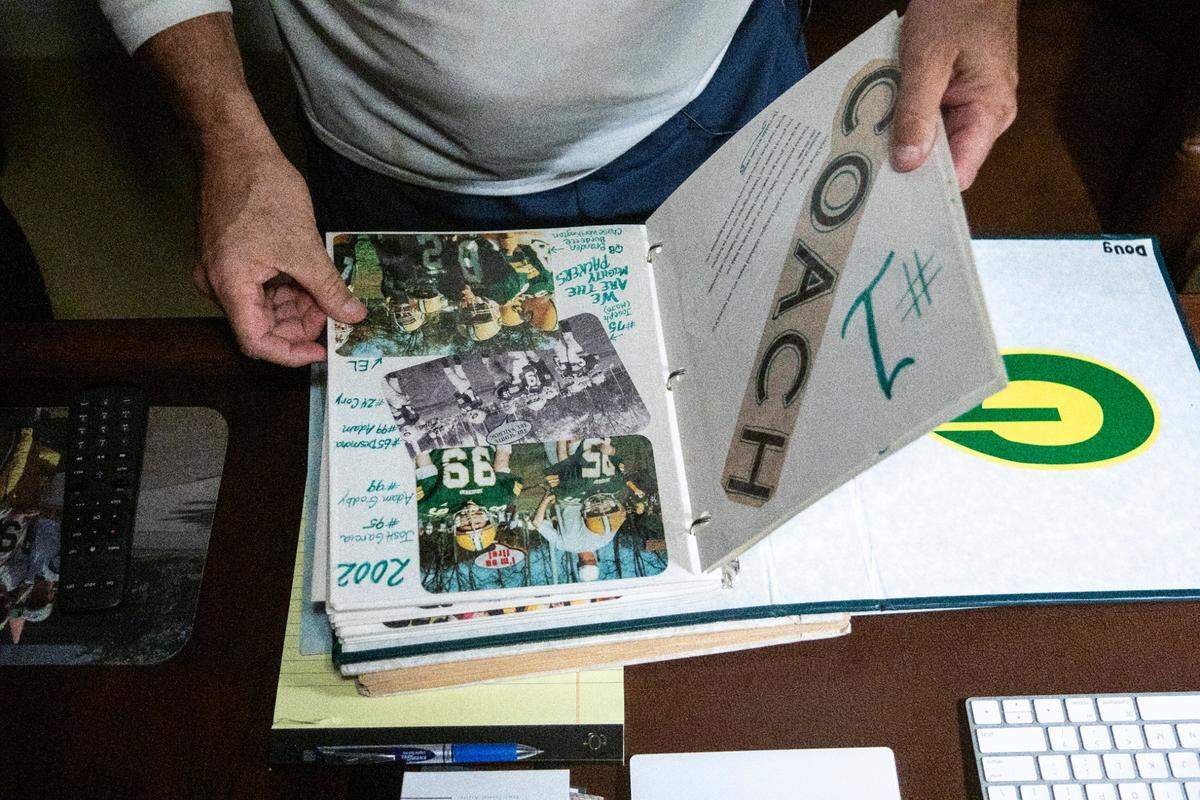
In 2002, his 9-10-year-old Idle Hour Packers won their division in the National Youth Football Championship in Daytona Beach, Fla., over a team from Nashville.
“I had dudes that could play,” Charles bragged.
Troubled times hit hard
Toward the end of the 1990s, parts of Charles’ life began unraveling.
Charles’ idea to put mall-like food courts into small towns didn’t catch on, and other restaurants began to falter.
“I had to get out of the restaurant business, because if somebody had told me you could make a million dollars in the restaurant business by starting with $2 million, I wouldn’t have done that,” Charles joked.
Shortly after the birth of their second child together, Charles’ third wife left.
He became a divorced dad again, this time to a 2-year-old and an eight-month-old.
It was also during this time, Charles’ oldest son, James Douglas “Jim Doug” Charles, struggled with addiction. The oxycontin epidemic had swept the nation and especially Eastern Kentucky and it hit home for Charles.
“We went through that for six years, battled it with rehabs, the whole nine, trying to rescue him out,” Charles said. “I thought I had him to the shore several times, but …”
Charles stopped. In a later interview, Charles said Jim Doug had been a pallbearer for three of his best friends’ funerals. Maybe that would get through.
“I mean, they buried 50-some kids in 18 months down there when all that happened,” Charles said.
In January 2005, at the age of 24, Jim Doug Charles died of a drug overdose. There were 700 people at the funeral, Charles said.
A revelation of faith
“At my darkest day, after I’d lost my son and had a business failure, and there was a divorce … thank God I didn’t turn to drugs or alcohol,” Charles said. “Thank God I just went back to my roots and got deeper in my faith and started looking to help other people.”
On a mission trip to Haiti during those years, Charles learned a lesson that both spoke to how he approached life and solidified his sense of purpose in it.
As he volunteered at a clinic there, Charles felt overwhelmed by the abject poverty and misery the Haitian people endure.
“You spend there all day, and you just get completely emotionally and physically drained,” he said.
He asked one of his missionary friends, John Hanson, how he coped. Hanson told him a version of ‘’The Starfish Story,” a tale adapted from another work that offers inspiration to many.
It goes something like this: Two boys walking along the shore suddenly see thousands of starfish stranded on the beach. One of them instinctively begins throwing some back into the water so they might survive.
“And his buddy said, ‘Joe, what are you doing, man?’ He said, ‘Can’t you see, man, there’s thousands of these things? It don’t matter,’” Charles recounts from the tale in his own words. “And Joe reached down and picked up one, looked at it and he showed it to his buddy. And he tossed it back in the water and said, ‘Well, it mattered to that one.’”
Two picks in the football draft
After his third separation and divorce, Charles had sworn off women for good.
He lasted eight months.
Mitzie Johnson was a divorced mother of two whose youngest son, Weston, played for the Idle Hour Packers.
She laughs at her initial impressions of Charles now, but at the time she didn’t appreciate her son’s coach grabbing him by the helmet to tell him his mother needed to get him a haircut.
There’s still disagreement about whether the flowing locks obscured the boy’s vision.
The next fall, a newly single Charles remembered the long-haired boy and his single mom. Charles jokes that he got two picks in his youth league draft that season. Weston and Mitzie Johnson returned to Charles’ Idle Hour Packers.
By the end-of-season banquet that fall, the two were dating. But both hesitated to get married again. Their courtship lasted 13 years.
Charles finally proposed on the Idle Hour Park football field where they met. They were married in 2012.
Refilling the nest
Mitzie Charles came from a large family with 11 siblings. She ran her own daycare business and knew she wanted to care for more children one day, thinking foster parenting would be the best route. After her marriage to Charles, however, those plans took a different turn.
“We got a phone call one day from my wife’s brother and he said, ‘Hey, there’s a little boy. He’s 15 months old. And he’s running around a trailer park. His dad’s in jail and his mom’s on drugs. And the state’s gonna take him.’” Charles said. “‘The grandparents don’t want him to get lost in the system, but they’re not able to take care of him. Could we bring him over to you all just for a few days till we can figure out what’s going to happen?’”
Cody stayed with the family for a while but his custody wasn’t settled. Doug and Mitzie talked about it the day before the last hearing.
Mitzie’s children were grown. Charles’ youngest children were a senior and junior in high school. The soon-to-be empty-nest couple were both middle aged.
How would the older children and the teen-agers react? What would it mean for spending time with them and the grandchildren? What would people think? And could they raise another child into their 60s? The concerns and doubts mounted.
The older children, Paxton and Savannah, overheard the conversation.
“They came into my office with tears in their eyes and they said, ‘Daddy, … is there a chance we could lose Cody?’” Charles’ voice cracked as he recounted that evening. “‘They said, ‘We love that little boy.’”
Charles remembers the tale: “Well, it made a difference to that one.”
The boy Charles sometimes refers to as “Starfish One” has been with them ever since.
Three years later, another call came. The same mother was expecting again. The new would-be father died of a drug overdose. Six months pregnant with another boy she couldn’t support, the mother was in jail on a probation violation. “She calls us two weeks out and says, ‘Do you want to keep those boys together?’”
The Charleses adopt Kayden, “Starfish Two.”
Most recently, the Charleses took in another boy at 6 weeks old. They’ve since gained full custody of Charlie (Starfish 3) who is now 2. Kayden is 6 and Cody is 10.
“They’ve been such a blessing to us,” Charles said. “And it’s kept us young.”

Football and faith collide
Shortly after Charles’ son Paxton cycled out of the parks and rec football program, Charles decided to quit youth coaching. He had a retirement banquet and sold his gear.
He lasted four months.
A lunch meeting with Lexington Christian Academy board member John Stucky came with an extraordinary offer.
“He said, ‘We’ve heard a lot about you coaching kids and different things and we’d love you to consider coming over here,’” Charles said. “‘We’ll give you full autonomy of our youth program.’ … Two hours later, I’m back into coaching.”
Finally, in 2009 after decades coaching youth teams, Charles found something where family, faith and football intertwined completely. Even as varsity head coach today, Charles continues to oversee all levels of LCA’s youth football program.
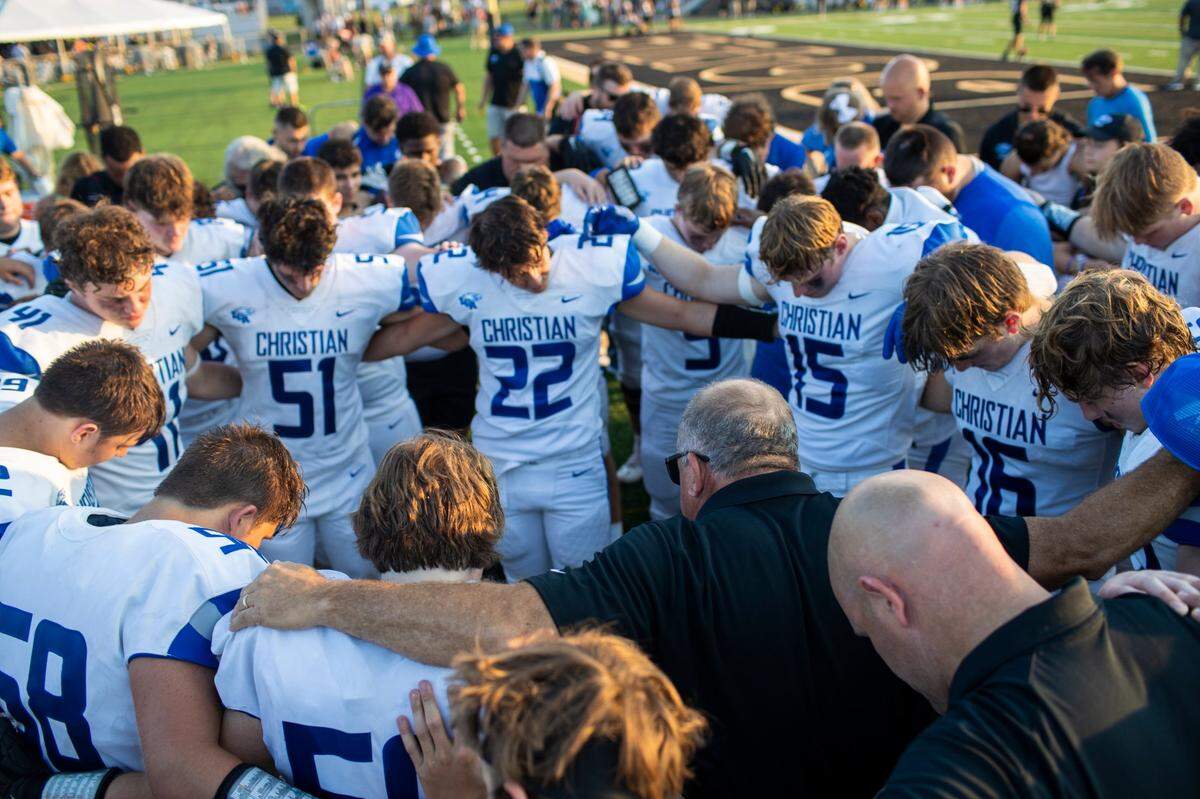
“Football has always been a ministry to me,” Charles said. “In some organizations, you’re not allowed to openly profess your faith, but you can do it in the way you live your life and … the way you care.”
Early on at LCA, just like his parks football days, Charles would coach a team and then shepherd them through the system as they aged up.
A who’s who of high school standouts came up through the LCA ranks during those years, including eventual Frederick Douglass standouts Walker Parks, now at Clemson, and Jager Burton, who was named co-Mr. Football in 2020 and is now at Kentucky.
Soon, Charles had a state championship eighth-grade team composed of players who would become the heart of LCA’s varsity these last two years, players like Xavier Brown, now at Virginia, Mason Moore, now at Miami (Ohio) and Anthony Johns, now at Eastern Kentucky.
Stepping into the spotlight
When his eighth-grade champions moved up, Charles got his first official varsity title, “quarterbacks coach.”
Charles doesn’t take credit for being a “quarterbacks coach,” but he did become a kind of CEO of the team, helping handle fundraising and parent issues for LCA’s head coach at the time, a very young Ethan Atchley.
When Atchley resigned to take on a bigger-school challenge at Bullitt East in 2019, there was only one man LCA Athletic Director Terry Johnson wanted for the job even though Charles had never coached a high school game in his life.
“There was a great football operation, but it wasn’t quite yet the family that you strive for,” Johnson said. “And Doug’s business acumen and how he runs his businesses, and how he really motivates and enables people that work under him to really grow — I thought that was what we needed at the time.”
LCA introduced Charles as the new head football coach in front of family, friends and staff during a basketball game that winter. It was a dream job for someone whose coaching resume didn’t extend much beyond the Idle Hour Packers.
The next day, an anxious and giddy Charles entered a locker room that was in OK shape, but maybe not as clean as he would have liked. He scrubbed and organized it from corner to corner.
But as he examined his handiwork, doubt surfaced.
“It just hit me, man. I just started breaking out crying. I said, ‘God, I can’t do this without you. I’ve got no shot,’” Charles said.
He began to pray.
“And I’m telling you, just as clear as I’m talking to you right now, (God) said, ‘Son, don’t worry. … I trust you to teach people to be the hands and feet of me. And I’m going to send you people, kids from places you can never imagine, because I trust you,’” Charles recalled.
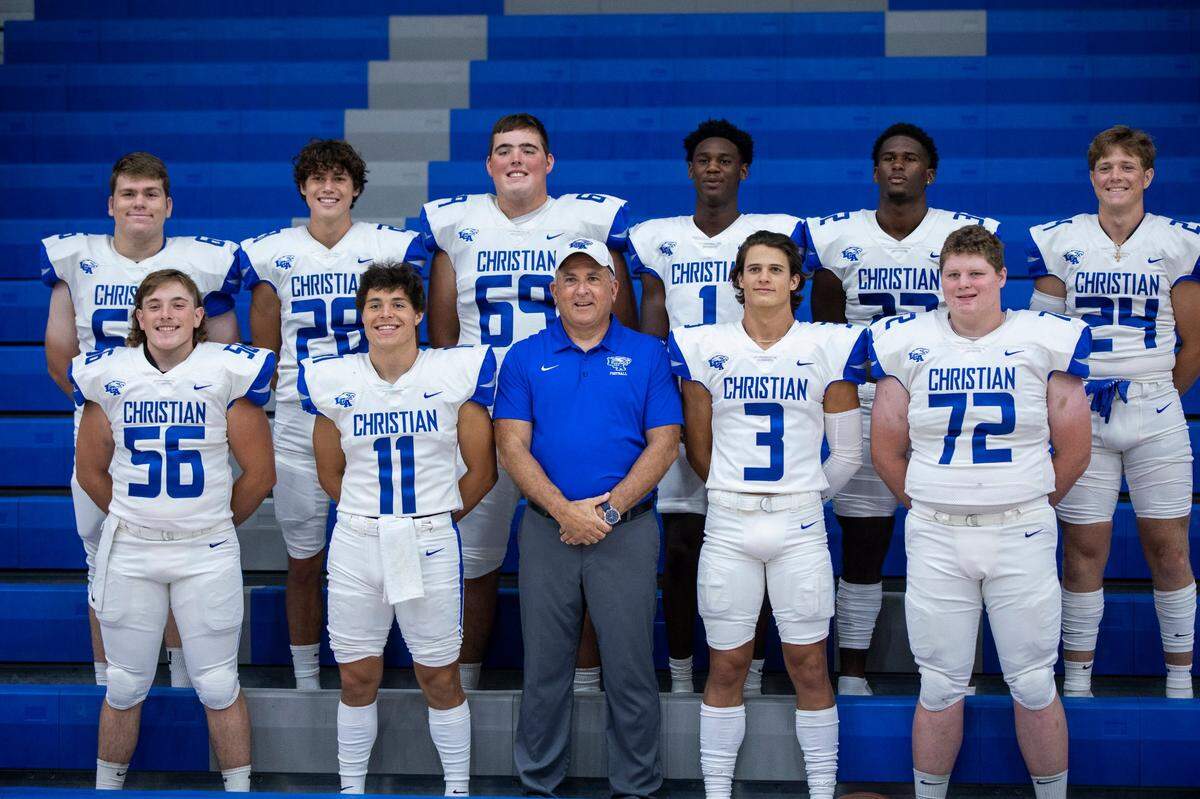
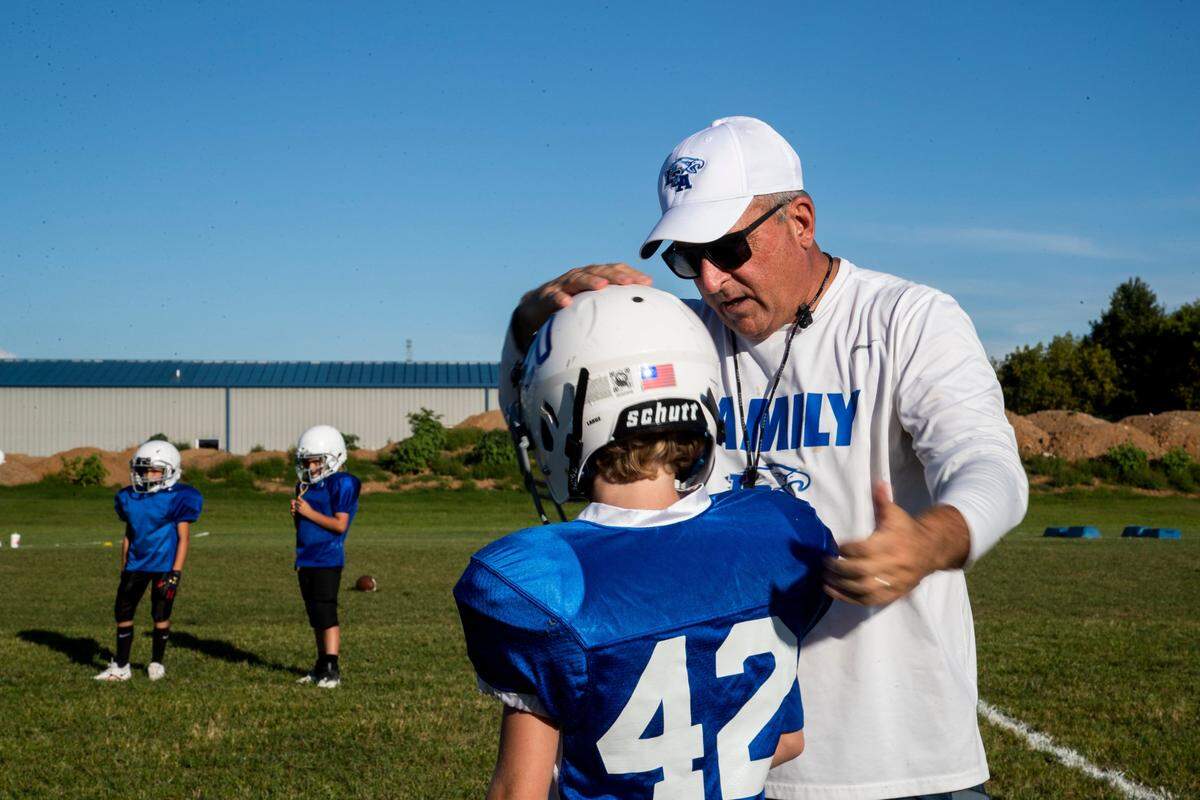
Under Charles, LCA has gone 34-6 with two state finals appearances. With an expert staff including the exceptional offensive mind of Oakley Watkins and the defensive prowess of former Kentucky and NFL linebacker Marty Moore, the Class 2A Eagles’ only losses have come to four eventual state champions, Class 5A powerhouse Frederick Douglass and Class 6A Madison Central.
The call you can always make
With all that’s happened in Charles’ own life, he feels there’s no problem any of his players could face that’s outside of his comfort zone.
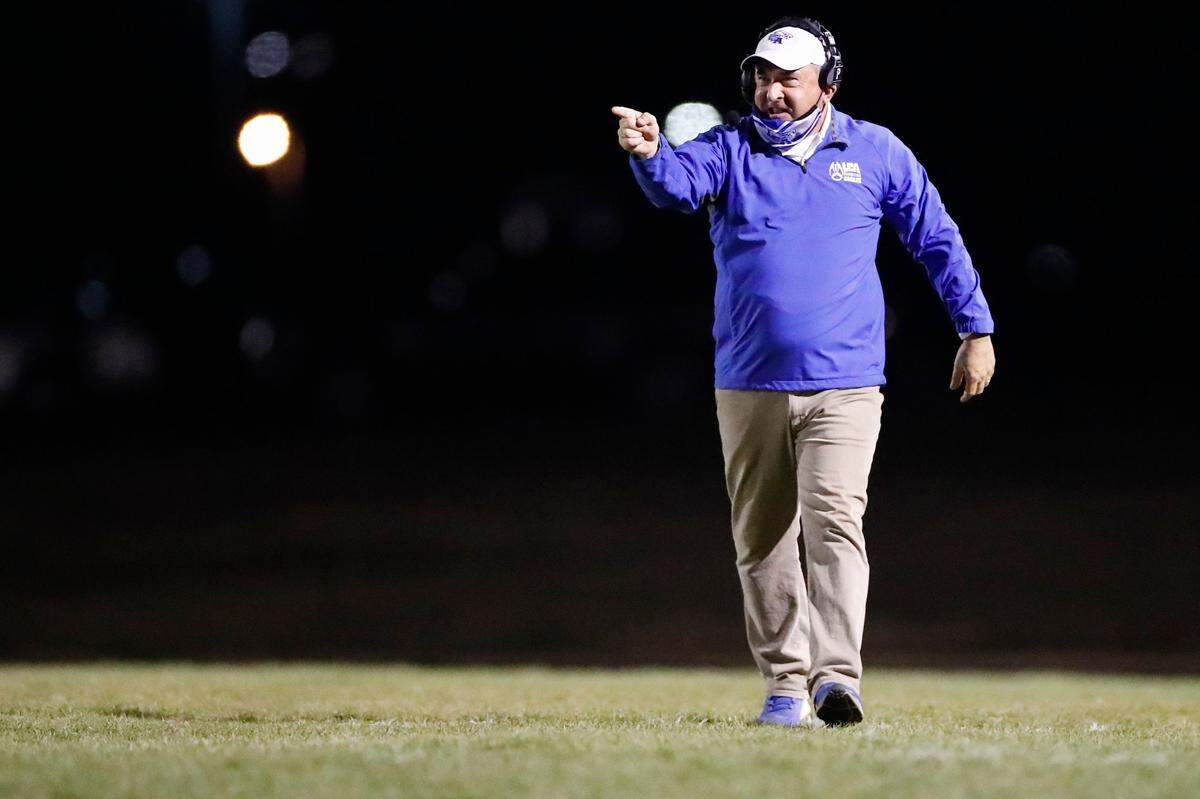
“I tell my guys ‘I’m not judgmental, OK?’” Charles said. “I say, ‘I’m shockproof. Try me.’”
Charles relates to his players through his own personal struggles and his gentle, soft-spoken manner.
“The one thing that I think I learned from all that experience is that I don’t blame others when things happen. I don’t point fingers,” Charles said. “And generally it’s because of decisions I’ve made and how things have turned out. It’s just part of the ministry. I always believe that God has a way of shining a light on darkness at some point in time.”
It’s not a foolproof strategy. But it is a strategy. Charles offers counsel. He does not make decisions for them.
“You go back and say when kids take the wrong road: ‘How’d that happen?’ Even my own son. ‘How’d that happen?’” Charles said. “His younger brother that’s 15 months apart never caused me a minute’s trouble in his life.”
Charles has resolved that his players will know at least one thing: he cares — not just about how they play but who they are.
“He just knows how to touch your heart when he talks. It feels like you can say anything you want to him and he will never get mad at you,” said senior Drew Nieves. “He’ll tell you how to get up. He’ll tell you how to get out of stuff. He’s just always there for you. He’s always there for the team.”
That goes for former players too.
“He has told the kids ‘I’m the 2 a.m. phone call you can make, whether you’re 20 years out of the program or a year out of the program or whatever.’” LCA’s Johnson said. “And that’s, I think, probably the biggest attribute he has: He keeps it real.”
Charles’ oldest daughter, Hollie Charles, remembers the youth football players her dad coached always being part of their lives.
“There’s almost never been a holiday that we haven’t had extra kids (at the table),” Hollie Charles said, noting that he’s become a father-figure for many. “He’s walked kids out on senior nights and graduations.”
Hollie Charles admits there were times sharing their dad with seemingly everyone was difficult, but as she’s grown older, she fully appreciates the impact he’s had on people’s lives.
“I’ll have people stop me and say, ‘Your dad came to me in the middle of the night when my dad died. He was my first phone call,’” Hollie Charles said. “There was another kid who came up to me in the mall parking lot in Lexington and said, ‘I was getting ready to take my own life, but then I called your dad, and he came to me. I just want you to know how awesome your dad is.’”
Such stories might seem exaggerated, but the emotion in Hollie Charles’ voice rings true.
“We had our dad and he has meant so much to us in so many different ways,” Hollie Charles said. “But all that time away from us, there’s a reason. It’s bigger than us.”
Charles helps his players learn from his example, too.
“He really tries to make sure that they understand things outside of playing football,” said Moore, LCA’s defensive coordinator. “It’s more about life and helping others and being a servant leader. He’s definitely a servant leader to these kids and to the community.”
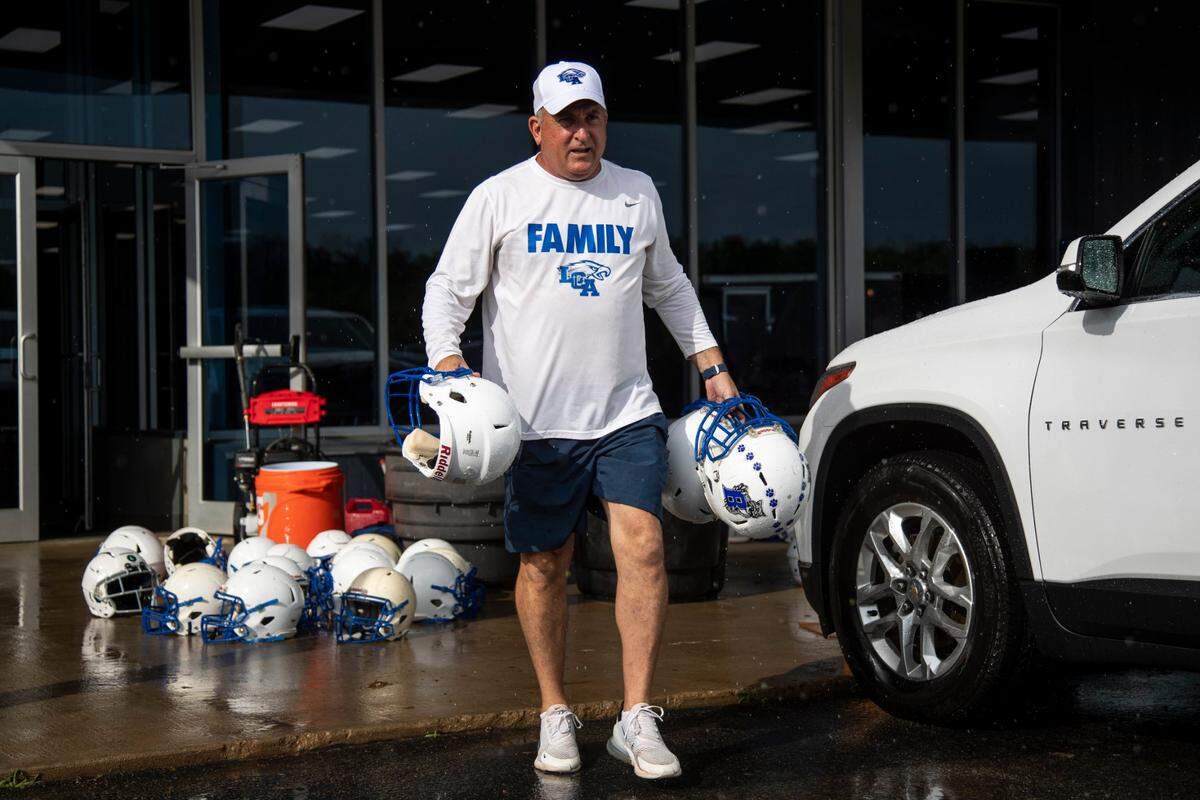
That’s why when the flooding hit parts of Eastern Kentucky a few weeks ago, Charles and many of his players went to Breathitt County to help out however they could. Breathitt’s football field and locker room sit a stone’s throw from the north fork of the Kentucky River and the oxbow Panbowl Lake. Almost everything the team owned was covered in mud.
What the LCA team couldn’t clean on site, they loaded up in a trailer and brought back to Lexington.
A cancer diagnosis
Charles noticed something off about his health during the dog days of last August’s practices.
“I started having just some pressure, just urine flow wasn’t normal and I just didn’t feel right,” he said.
When his prostate didn’t respond to treatment, Charles scheduled a biopsy.
While his staff and players were taking their midseason bye week vacations, Charles was in a Pikeville hospital getting checked out by a urologist friend of his son Jordan.
“He called me the following Tuesday and said, ‘I wish I had better news for you, but you had cancer in 11 out of the 12 biopsies and it’s pretty aggressive.’”
Charles kept the news from everyone at LCA but Watkins, his associate head coach, and Johnson, his athletic director.
The morning of LCA’s Senior Night home game against Somerset, Charles underwent six hours of scans at a Lexington hospital to see if the cancer had spread anywhere else. He wouldn’t find out the results until Monday.
That night, he never let on that anything was amiss.
“We were in a playoff run! We were dialed in, brother,” Charles said. “There were 16 seniors and it was an emotional night, anyways, just because I’ve been with those guys, a lot of them, since they were in fourth or fifth grade. …
“I was just focused on them. I guess it was kind of a blessing in disguise, because with all the stuff going on … it really just kept me busy.”
The new scans were negative. Charles scheduled prostate removal surgery for February. The procedure by Lexington Dr. Thomas Slabaugh removed his prostate and his lymph nodes. His months of recovery are ongoing.
“I feel great, but things still don’t work right,” Charles admitted, describing himself as fully fit but not completely back to normal. “But it was a pretty easy decision to have the surgery. Just the thought of having cancer deep in my body … I’ve heard some other stories that didn’t quite go this well.”
More than winning
Wins at LCA come with a rough and rowdy rendition of the popular Christian hymn “Victory in Jesus” sung by the players near the center of the field. For LCA’s Christian faithful, it’s a rousing moment and a fitting celebration.
How best to deal with disappointment, though? When his players give everything they have to win and come up short, what then?
That’s what Charles faced at Kroger Field last December.
“It’s easy to talk about what a great team we are when the media puts a microphone in your face,” Charles said. “But what do you do after a tough loss on a big stage when a majority of people felt like you should win the game? How do you celebrate then? Do you not sing ‘Victory in Jesus?’ Do you let the enemy steal your joy? …
“If I let that loss define us — me as a person, me as a coach, our program and our kids — if that loss is what defines us, then I have done a horrendous job as head coach of this program. Terrible.”
One day, Charles’ players will face bigger problems than the loss of a high school football game. Those stakes pale in comparison to the loss of a daughter or a son or a love from your life.
But there’s a lesson in every loss no matter how small. And Charles knows what he must do as coach. His faith tells him there is a plan in all of it — the joy and the sorrow.
The key is to persevere. Keep trying. Keep loving. Keep helping.
He’s living proof of that.
“God’s honored every bit of it, man … ,” Charles said. “I think that he’s been grooming me for this my whole life.”

This story was originally published September 1, 2022 at 10:13 AM.