Should horse racing change the Triple Crown schedule? Top trainers weigh in
This week’s announcement that 2025 Kentucky Derby winner Sovereignty won’t be running in the Preakness Stakes — the second leg of horse racing’s Triple Crown — on May 17 in Baltimore sparked fresh conversations about the scheduling format in place for horse racing’s preeminent showcase.
The current Triple Crown format is as follows:
The Kentucky Derby takes place on the first Saturday in May at Churchill Downs in Louisville. This year’s was run on May 3. The Preakness Stakes — which this year is celebrating its 150th running — follows two weeks later. This year’s Preakness will be contested May 17 at Pimlico Race Course in Baltimore.
Then, the Belmont Stakes comes after a three-week break. This year’s will be run on June 7 at Saratoga Race Course in Saratoga Springs, New York. (Belmont Park in Elmont, New York, is the usual home for the race, but that venue is out of action for a second straight year due to ongoing renovations.)
It has become clear that this congested schedule isn’t doing horse racing any favors when it comes to keeping the Triple Crown alive.
Since Justify won the Triple Crown in 2018 by sweeping the Kentucky Derby, Preakness Stakes and Belmont Stakes, four of the seven horses to win the Derby haven’t run in the Preakness.
This includes Country House (who won the 2019 Kentucky Derby following a postrace disqualification), Mandaloun (who was awarded the 2021 Kentucky Derby after winner Medina Spirit failed a post-Derby drug test), Rich Strike (2022) and Sovereignty.
The Derby winner did compete in the Preakness in each of the last two years. Mage ran third in the Preakness in 2023 and Mystik Dan finished second in the Preakness last year.
But this year, the idea of a Triple Crown is already off the table. Bill Mott — the well-regarded 71-year-old trainer of Sovereignty — is instead pointing the horse toward this year’s adjusted version of the Belmont Stakes, which will be run at a shortened distance of 1 1/4 miles at Saratoga instead of the traditional 1 1/2 miles at Belmont Park.
Horse racing went 37 years between Triple Crown winners Affirmed (1978) and American Pharoah (2015). While Justify (2018) provided another Triple Crown winner in short order, the hot topic in the sport is, once again, the condensed nature of the three Triple Crown events, especially in the sport’s modern context.
With more than a week to go until the Preakness Stakes, the question of the moment is whether or not there should be more rest time for horses between each Triple Crown event.
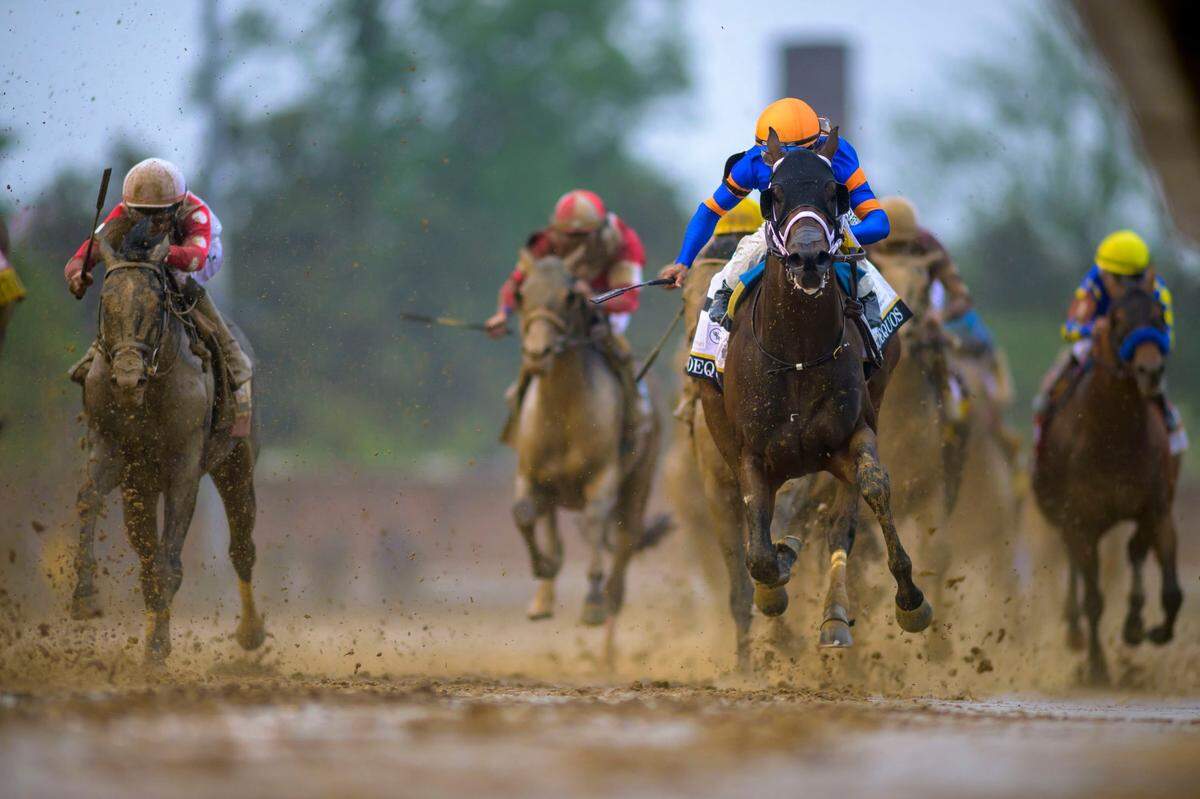
Should horse racing change the dates for the Triple Crown events?
As you might have guessed, the answer to that question is nuanced.
Steve Asmussen — the first trainer with 10,000 career wins in North America, although none in the Kentucky Derby — won’t be sending either of his two Derby runners from this year (10th-place Tiztastic and 14th-place Publisher) to the Preakness Stakes. Instead, Asmussen plans to saddle Clever Again — last seen in late March winning the Hot Springs Stakes at Oaklawn Park by four lengths — at Pimlico on May 17.
When asked about the Triple Crown schedule on Thursday afternoon, Asmussen pointed to the individual, case-by-case nature of horses and their respective situations.
To illustrate this, Asmussen used the example of Curlin, one of his horses who ran third in the 2007 Kentucky Derby before bouncing back to win that year’s Preakness Stakes. (Curlin finished second in the 2007 Belmont Stakes.) He also cited Midnight Bourbon, another Asmussen trainee who was fifth in the 2021 Kentucky Derby and second in that year’s Preakness.
“The opportunity to run them back in two weeks, they were capable of moving forward, and basically that Derby ended up being a training exercise for them,” Asmussen said of Curlin and Midnight Bourbon. “That is not something to where they overextended themselves. So I think that every horse is an individual. Every year is different. It’s just very unique circumstances.”
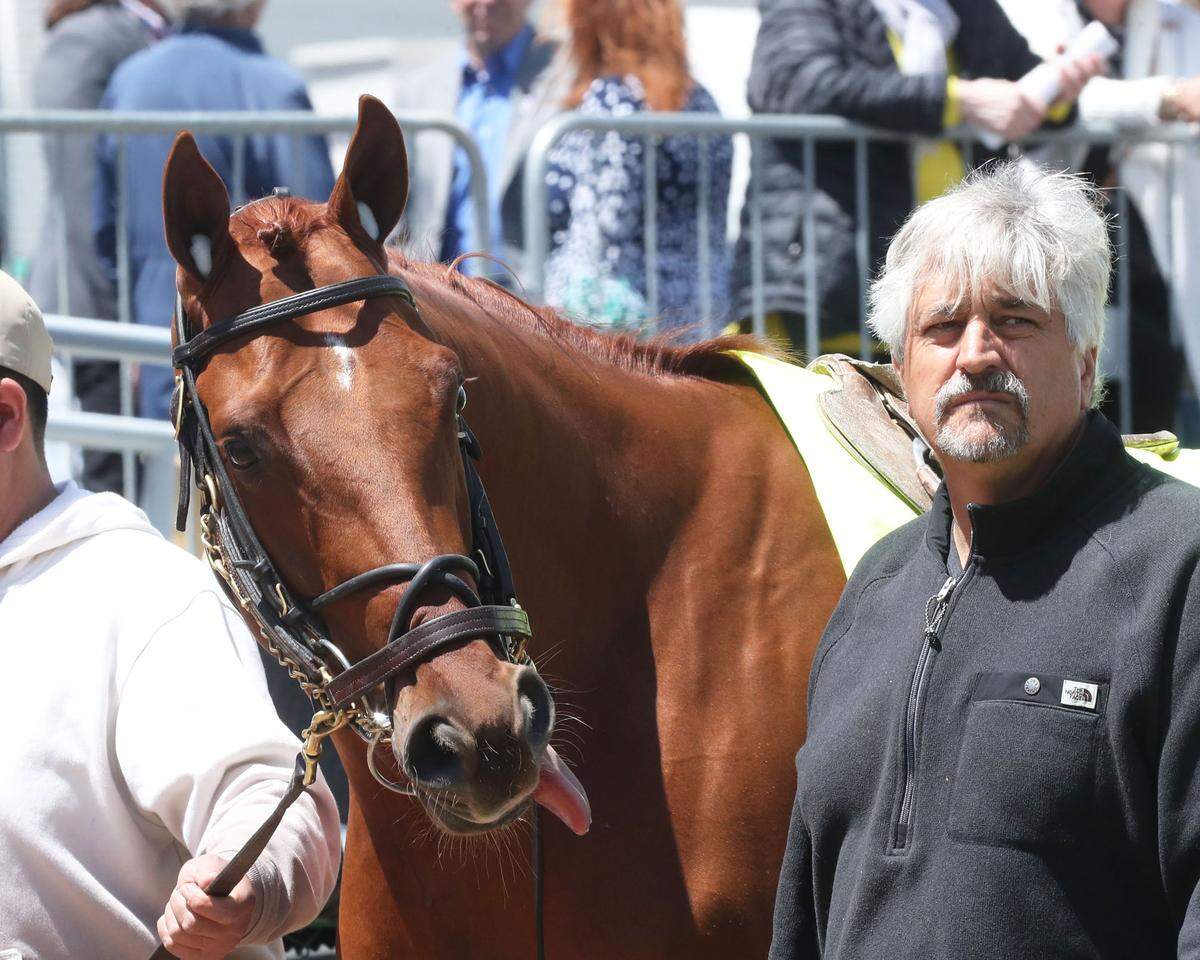
Brendan Walsh — who shared the leading trainers title with Brad Cox at this year’s Keeneland Spring Meet — also gave a nuanced answer when the scheduling question was posed to him.
“I think it’s a difficult question. … It’s a very tough thing to do, to run three times in five weeks at the highest standard, varying distances,” said Walsh, whose lone Derby runner this year, East Avenue (eighth), also won’t be in the Preakness.
“The horses have hard races and the way things are right now with the breed and a bunch of other things, it’s become a lot more difficult. … Maybe the breed isn’t as tough as they were back in the day.”
In next week’s Preakness, Walsh is expected to have Gosger, who won the Grade 3 Stonestreet Lexington Stakes at Keeneland on April 12.
D. Wayne Lukas gives thoughts on Triple Crown schedule
Perhaps no one’s voice carries more weight when discussing the Triple Crown schedule than that of legendary trainer D. Wayne Lukas.
The 89-year-old Hall of Famer has four Kentucky Derby wins, seven Preakness Stakes victories and four triumphs in the Belmont Stakes. The most recent of these Triple Crown race wins came last year, when Lukas conditioned 2024 Preakness winner Seize the Grey. This made Lukas the oldest trainer to win a Triple Crown race.
Unlike Asmussen and Walsh, Lukas is running back his Kentucky Derby horse. American Promise — who ran 16th in the Derby after being bumped while exiting the starting gate — is expected to be part of the Preakness Stakes field on May 17.
“He’s got good tactical speed, and I think he’s going to like the Pimlico track,” Lukas said of American Promise, who has two wins from 10 career starts. “I think he’s going to like the shorter race than the Derby, also.”
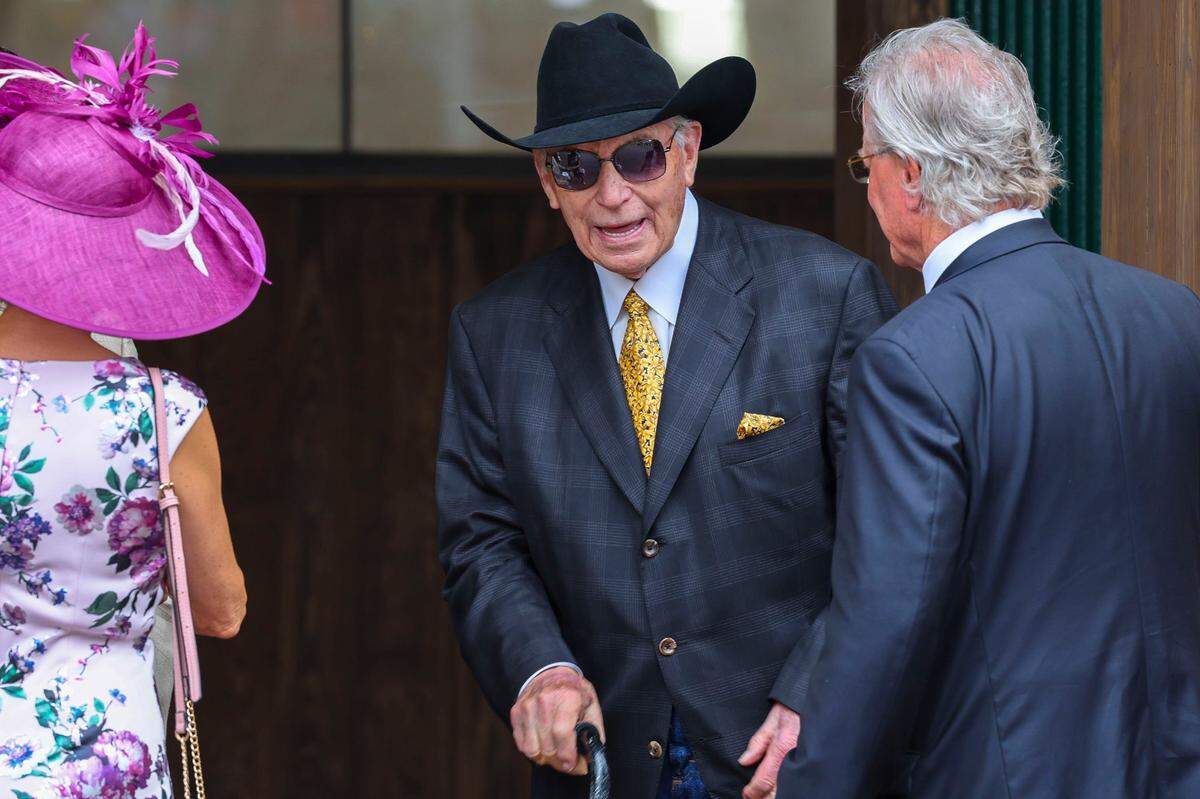
In the hypothetical situation of the Triple Crown adjusting its schedule and allowing more time between each of its three legs, another natural question would arise: Would winning the Triple Crown under those parameters devalue the accomplishment, in comparison to the 13 horses who have already won the Triple Crown with the traditional schedule?
“I think the answer has more than one side to it,” Asmussen said. “I love how hard it is to do, which makes it so special. And then would it be making it easier? Does it dilute it? That’s a great question, and I think that it’ll continue to be debated.”
“It is the Triple Crown, and that’s how it’s been done in the past. Will it take the limelight off or the steam off? It probably would, if they spaced the races out further,” Walsh said. “I think times have changed, and things change in various sports, and I can understand people’s perspective on that, too. It’s just a question of whether we’re ever going to do it or not.”
Something that would be required in order to space out the Triple Crown events would be collaboration between the race tracks in question.
As a series steeped in history, there are distinct dates attached to each of the Kentucky Derby, Preakness Stakes and Belmont Stakes. Additionally, the Haskell Stakes — another top Grade 1 race for 3-year-olds — is traditionally held in late July or early August at Monmouth Park in New Jersey.
“I’ve been pushing for a change in that tradition for 20 years, but then Bob Baffert drops up and wins (the Triple Crown) twice, so that silenced everybody, pretty much,” Lukas said. “I thought that we could run the first Saturday in May (for the Kentucky Derby) and then run the Preakness on Memorial Day weekend and make it a holiday weekend when everybody’s off work and so forth. And then run the Belmont on the Fourth of July. But in order to get that done, you’ve got to have three race tracks agree, and that’s really difficult. … To get everybody to come to the table and hold hands might be a little bit difficult.”
Lukas noted that the tradition of the Triple Crown has already been altered. In 2020, the order of the Triple Crown events was changed due to the COVID-19 pandemic, with the Belmont Stakes being run first.
For 2024 and 2025, the Belmont Stakes shifted from its traditional 1 1/2-mile distance at Belmont Park to a 1 1/4-mile race at Saratoga Race Course, while Belmont Park undergoes renovations. For at least 2026, the Preakness is expected to be run at Laurel Park while Pimlico is rebuilt.
Walsh — who acknowledged that most trainers would like their horses to have a four-to-six week break between races — said that more time between Triple Crown events would be favorable for trainers.
“I think you would get better lineups in the individual races,” Walsh said. “That is without a doubt.”
To this point, take a look at the last three years of the Triple Crown in 2022, 2023 and 2024. Of the combined 58 horses that ran in the Kentucky Derby over those three years, only seven moved on to race in the Preakness. That’s only 12%.
“If you wanted to keep the fields together and see more of a pattern of horses moving forward (from the Derby to the Preakness), it almost has to be spaced out,” Lukas said. “If they don’t space it out, it’s going to be very, very difficult, unless you just get an exceptional horse like Justify to come along and get everybody involved.”