The SEC is the best football conference, but it shouldn’t rule all the others
AI-generated summary reviewed by our newsroom.
- The SEC argues for more CFP automatic bids, citing its tough regular season.
- Critics argue SEC dominance narrative excludes smaller conferences from access.
- SEC's nonconference losses weaken argument for guaranteed playoff positioning.
There’s little doubt in my mind that from top to bottom the SEC is the best football conference in the nation.
I’m just not sure incessantly making that claim is in the best interest of the league.
I speak of the SEC’s recent spring meetings in Destin, Florida, which happened to dovetail with talk about changes to the College Football Playoff format.
After a dalliance with a 12-team format, the CFP appears ready to expand to a 16-team field in 2026. The makeup of the 16 teams is up for debate. The SEC and Big Ten have proposed that each league receive as many as four automatic qualifiers.
That plan would all but shut out Group of Five schools and consolidate the sport’s power base to the two leagues that right now have the most clout.
To make its case, the SEC reportedly provided a seven-page document to media covering the spring meetings demonstrating the “regular season gauntlet” conference teams face in league play.
“No other conference has a regular season as grueling as the SEC’s,” the conference claims.
To be sure, the SEC regularly produces the most players selected in the NFL draft. To me, that’s the ultimate judge of the strength of a league — the quality of its players.
Then again, the last two CFP champions came from the Big Ten. Michigan won the title in 2023 when the Wolverines defeated Washington in the title game. Ohio State won the title last season when the Buckeyes topped Notre Dame in the final.
That’s right, an SEC team hasn’t made the championship game since Georgia won back-to-back titles in 2021 and 2022. In the 2023 season, Michigan defeated Alabama in a semifinal game. Last season, Ohio State beat SEC newbie Texas in the semifinals. Georgia lost to Notre Dame in the quarterfinals.
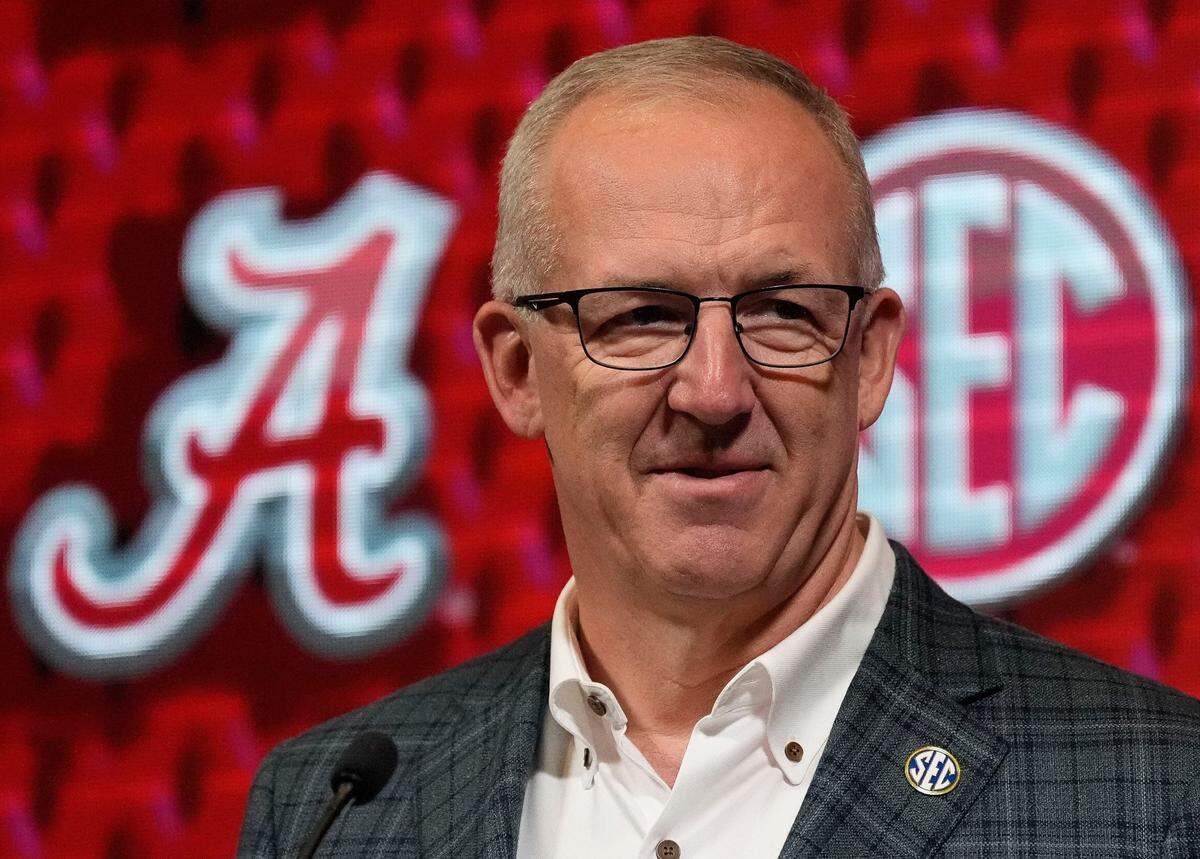
All this invites questions about what is actually good for the game as a whole — the SEC and Big Ten orchestrating the postseason to their liking, or a more inclusive model that doesn’t squeeze out the less powerful?
It also paints the SEC as the bad guy, something commissioner Greg Sankey took issue with in Destin.
“I don’t lecture others about the good of the game and coordinating press releases about the good of the game, OK,” Sankey said. “You can issue your press statement, but I’m actually looking for ideas to move us forward.”
That salvo was aimed squarely at Big 12 commissioner Brett Yormark and ACC commissioner Jim Phillips, who issued statements in favor of a straight-seeding model for 2025. That would replace the current format that gives first-round byes to the highest-ranked conference champions, of which the Big 12 and ACC each had a spot last season.
“Today’s decision was done in the best interest of the sport,” the ACC’s Phillips said.
“It was the best thing for college football,” the Big 12’s Yormark said.
Meanwhile, the SEC and Big Ten appear to believe that what is best for college football is actually what is best for them. Instead of earning CFP bids, the leagues apparently think they should receive those bids in advance for being, well, the SEC and the Big Ten.
“There’s no outcry, saying it’s unfair when the SEC gets 13 of 16 teams in basketball tournament by using RPI,” Georgia coach Kirby Smart said. “I have a hard time thinking Ole Miss, South Carolina and Alabama were not part of the best teams in the country.”
That’s the same Ole Miss that lost to a four-win Kentucky team; an Alabama team that lost to Vanderbilt and a South Carolina team that was 5-3 in league play.
SEC basketball earned its NCAA bids by playing strong nonconference schedules and dominating the ACC/SEC Challenge 14-2.
Meanwhile, SEC football nonconference results: Arkansas lost to Oklahoma State. Auburn lost to California. Texas A&M lost to Notre Dame. Florida lost to Miami. Vanderbilt lost to Georgia State. LSU lost to USC. Mississippi State lost to Toledo. Kentucky lost to Louisville. Georgia needed multiple overtimes to beat Georgia Tech.
I don’t disagree that SEC teams play a “gauntlet” in conference. Continuing to hit everyone over the head with that claim isn’t the best way to go about achieving its goal, however.