‘I didn’t want to see Superman in that bed.’ Ex-Cat Quentin McCord’s sad, final years.
In Quentin McCord’s final days, his older sister worked to give his ex-Kentucky Wildcats teammates a chance to speak to him.
This was after his family had moved the former UK football standout into hospice care this summer.
It had been at least two years since the men who once shared football fields with McCord had heard him speak. After suffering a severe seizure, McCord no longer had the ability to talk.
With her brother’s end drawing near, Tronsa Taylor initiated video chats designed to allow her brother’s ex-teammates to say goodbye.
“I told them, ‘Don’t be afraid to see him. No matter what his appearance, he’s still Quentin McCord,’” Taylor said. “My thing was, ‘If you have any last words that you want to say to him, now is your time.”
On Aug. 13, McCord died. He was only 42.
For the author of one of the ultimate Cinderella success stories in UK football history, it was an unbearably cruel ending.
‘He was my Superman’
Had one looked in on Tronsa Taylor’s household in LaGrange, Ga., in the autumn of 1995, one could have observed an improbable story at its beginning:
Under one roof, Taylor was raising two future Kentucky Wildcats wide receivers.
McCord, then a high school senior, had come to live with his older sister and her family.
In an outcome that had stunned the pigskin-mad town of LaGrange, McCord had gone from not even playing football as a freshman to becoming a high school star for the Grangers.
“I was a new coach, and he came to me, said he wanted to play football that spring,” said Steve Pardue, the former LaGrange High School head man and ex-UK assistant coach. “He probably weighed 100 pounds and he was about 5-foot-4. And he couldn’t run. I was not real excited.”
Yet the guy who “couldn’t run” morphed into a burner, lowering his 40-yard dash time from 4.9 seconds to 4.4 in what Pardue said was a six-week span.
By the fall of 1995, McCord had made himself into a shining star for LaGrange football.
No one was more captivated than his 8-year-old nephew. DeMoreo Ford — Taylor’s son and the second future UK wide receiver in her household — hero-worshiped his uncle.
“Just watching the way he moved, the way he carried himself, he was my role model,” Ford said. “He came and read to our (grade school) class. People asked for his autograph in high school. He was my ‘Superman.’”
Big plays for Kentucky
With McCord’s time at LaGrange ending, Pardue fretted college recruiters were overlooking his late-developing star. Troy and Chattanooga were the schools most-ardently wooing McCord.
A Hopkinsville native, Pardue received a tip that then-Kentucky assistant coach Joker Phillips would be attending the Georgia high school football playoff semifinals in Atlanta.
Pardue used that opportunity to pitch McCord to Phillips.
“I didn’t know Joker at the time,” Pardue said. “But I told him about Quentin. (Phillips) said ‘send me a film.’ I sent him a film. As soon as (Phillips) gets it, he calls me back. He goes ‘Wow.’”
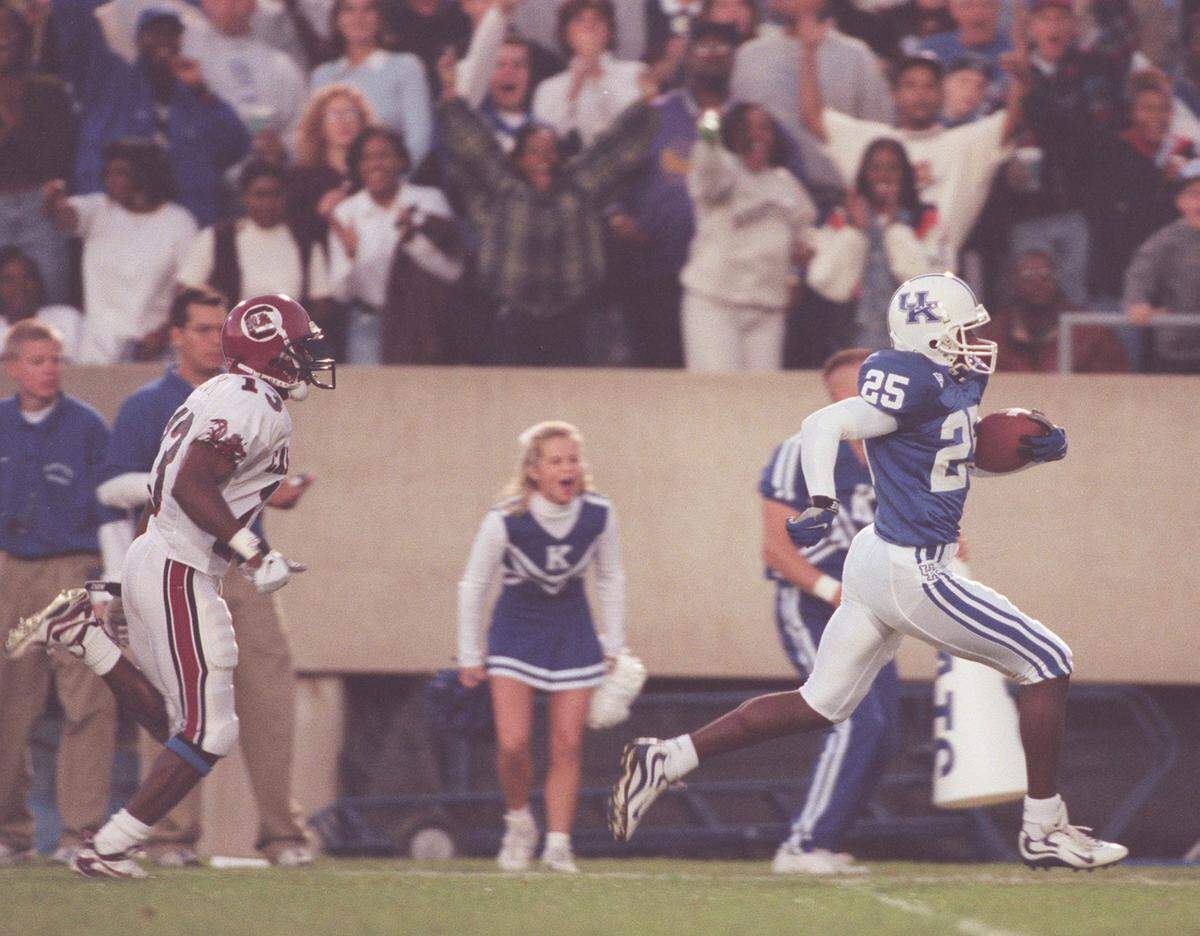
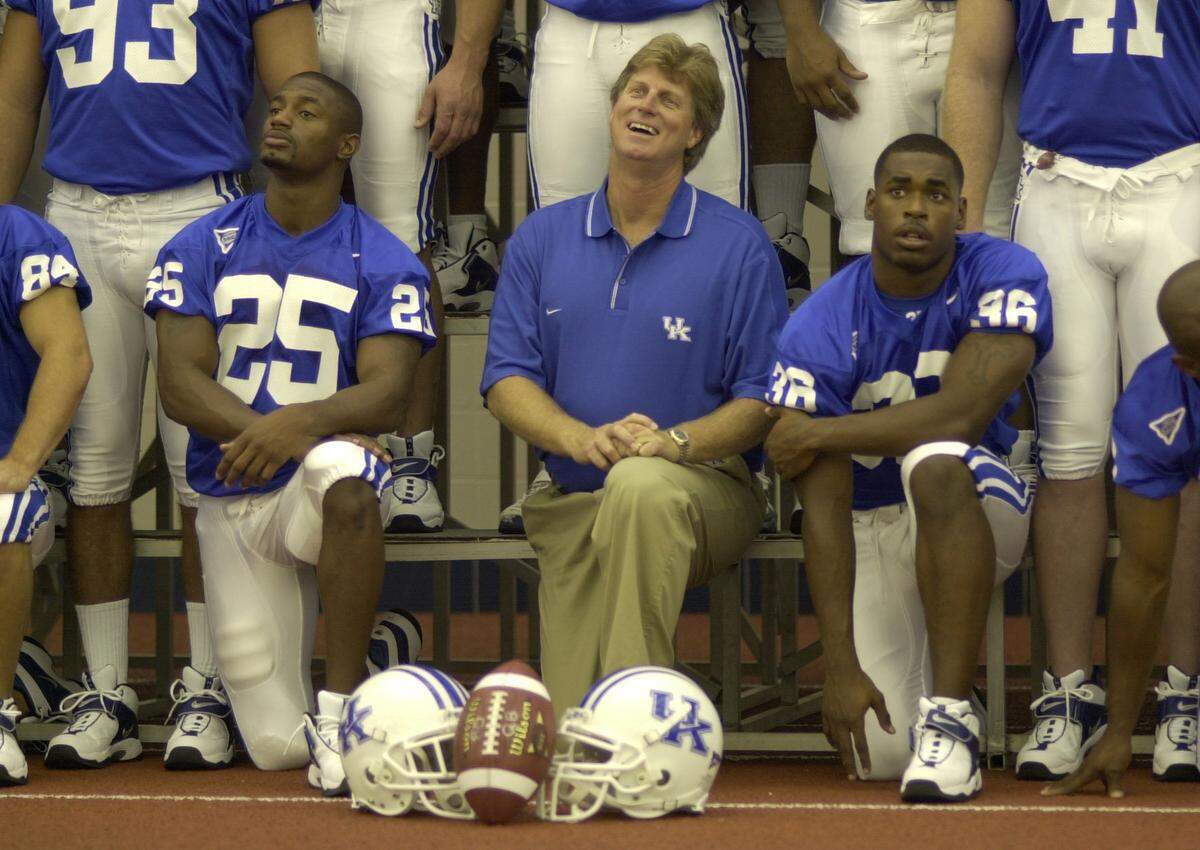
Over his four college seasons (1996, 1998-2000), McCord, listed at 5-10, 160 pounds when he arrived at UK, became one of the most dynamic playmakers Kentucky has ever had.
He scored an 80-yard touchdown on an end-around against South Carolina in 1998. He had an 80-yard TD catch against Vanderbilt in 1999. Versus Georgia in 2000, he caught a 75-yard TD.
His signature moment in a Kentucky uniform, however, came in 1998 at LSU.
In the final minute of a tied game, McCord took an end-around for 38 yards. It set up a game-winning Seth Hanson field goal as time expired that gave UK a 39-36 upset of the No. 21 Tigers.
The LaGrange Pipeline
Kentucky’s successful recruitment of McCord had a unique and enduring impact on the Wildcats’ football program.
Largely due to the relationship that developed between Pardue and Phillips, at least nine other players from McCord’s high school would follow him to Kentucky via “The LaGrange Pipeline.”
In 2005, McCord’s hero-worshiping nephew was one of them.
“When (McCord) left Kentucky to go to the NFL, I had been going to UK games for five, six years,” Ford said. “Where else was I going to go?”
Only one year later, Ford left his own imprint on UK football lore.
He caught a 70-yard touchdown pass from Andre Woodson that ignited Kentucky’s 28-20 upset of Clemson in the 2006 Music City Bowl.
A seizure and COVID
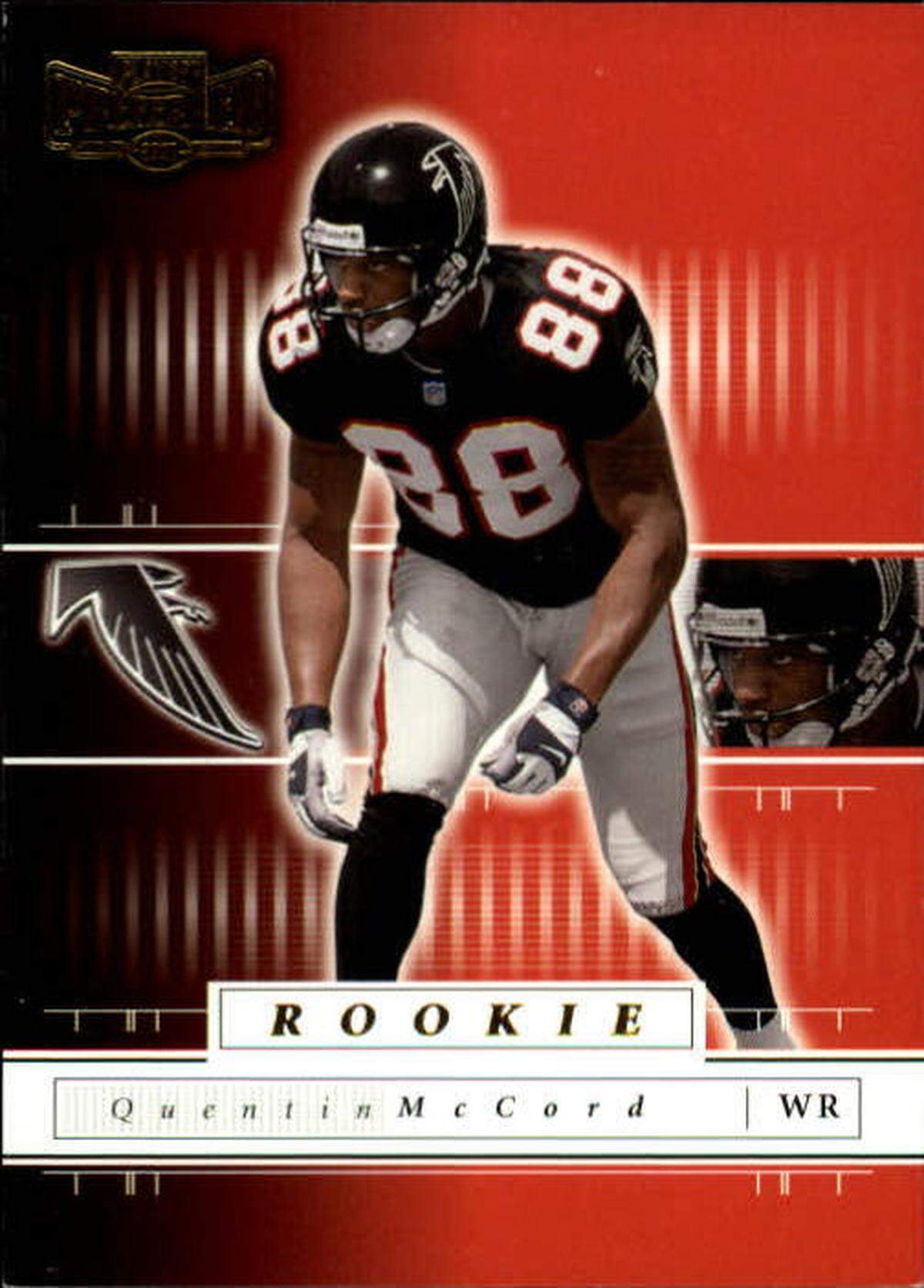
After his Kentucky career ended, McCord was selected by his home-state Atlanta Falcons in the seventh round of the 2001 NFL Draft.
For three seasons, he played NFL football only 70.4 miles from his hometown.
When McCord’s stint with the Falcons ended after three seasons and 23 total NFL receptions, he went on to play in the Canadian Football League in 2006 and 2007.
After pro football was over, he returned to UK to finish his degree. His plan was to work with kids and coach football at some level.
Over time, being in Lexington became a painful reminder of the past football glory McCord no longer enjoyed, Ford said.
A divorced father of three, McCord moved home to LaGrange. There, Ford said he fell into a profound depression.
His family believes that condition may have been linked to Chronic Traumatic Encephalopathy. Football players have proven susceptible to the progressive degenerative disease of the brain that afflicts people with a history of repetitive head trauma.
“I know he was depressed. We talked about it all the time,” Ford said. “When you’ve had concussions, you get headaches, mood swings, a lot of things that you deal with.”
McCord began to experience seizures.
It was two years ago, Ford said, that McCord had a grand mal seizure, a form of seizure which involves a loss of consciousness and violent muscle contractions.
From that point forward, Quentin McCord never spoke again. He was confined to a bed.
For the nephew who had grown up idolizing him, that reality was excruciating. “I didn’t want to see Superman in that bed,” Ford said.
Yet McCord’s will had not left him.
“His body tried to heal,” Ford said. “He started opening his eyes. He still couldn’t talk, but he woke up. He had gotten to where, he couldn’t get up, he was just sitting, but he would stretch. And that’s where he was right up until COVID(-19) hit.”
Earlier this year, Taylor said her brother contracted the coronavirus in a nursing home. However, at the time McCord’s family moved him to hospice care, she said he tested negative for the virus.
Taylor said there is no way to know how much COVID-19 contributed to McCord’s decline. Whatever the reason, his body began to reject nutrition this summer.
That was McCord’s situation when Taylor began offering his former teammates a chance to say goodbye via video link.
When Quentin McCord heard the voices of ex-football teammates, either from high school or college, his sister said tears would oft roll down his cheeks.
“I know he heard,” Taylor said. “I know he was listening. (I hope it) let his heart know ‘I am loved, even though I got depressed and I didn’t feel like the world loved me (any) more.’ I just hope he knew how loved he was.”
This story was originally published September 13, 2020 at 6:07 AM.