North Carolina is the best coaching job in college hoops? Not so fast, my friend.
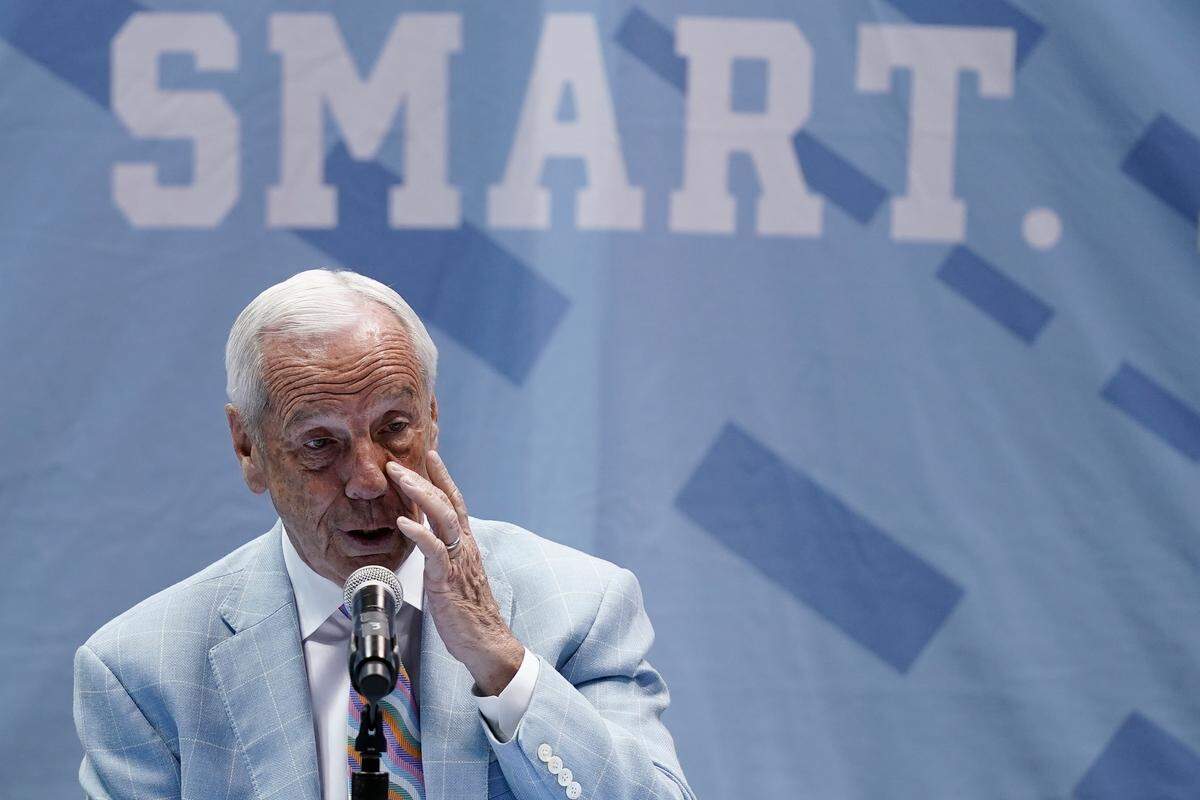
In the aftermath of the retirement of Roy Williams as North Carolina men’s basketball coach, an old debate has been reinvigorated.
I’ve been surprised by how many times I’ve read UNC referred to as the best men’s hoops coaching job in the country.
Of course, how one frames “best coaching job” is central to arriving at a conclusion. I define it as the position that gives a coach the best chance to win an NCAA championship.
By that standard, there are three coaching jobs that have proven superior to all others.
UCLA with 11 NCAA championships has won more national titles than any other program. It is not one of the three best coaching jobs, however, because 10 of those championships were won by one coach.
For all coaches not named John Wooden, UCLA has not proven an especially hospitable platform from which to win it all.
Duke with five NCAA championships since 1991 has been the most successful program in modern times.
It cannot yet be considered one of the three best coaching jobs, though, because no coach not named Mike Krzyzewski has ever won an NCAA title there.
There are only three programs in men’s NCAA college hoops history where at least three different coaches have won national championships: Kansas, Kentucky and North Carolina.
Those are the three best coaching jobs in men’s college hoops.
Which is the best?
In a historical sense, Kansas is the sun around which the college hoops solar system orbits.
James Naismith, who invented the game of basketball, coached at Kansas.
Adolph Rupp, the hard-charging coach who transformed Kentucky into a college hoops titan, played at Kansas.
Dean Smith, the innovative coach who put North Carolina on the cutting edge of college basketball, played at Kansas.
Under current Jayhawks head man Bill Self, KU has been the most consistent of the elite programs.
Self’s 18 seasons on the KU bench have yielded nine years of 30 wins or more and only two 10-loss seasons.
Yet where Kansas is light for an all-time college hoops blue blood is in the most important stat of all: While three different coaches — Phog Allen in 1952; Larry Brown in 1988; and Self in 2008 — have won NCAA championships at KU, the Jayhawks have only won three overall titles.
With North Carolina’s Williams winning NCAA crowns in 2005, 2009 and 2017 to go with those earned by Smith (1982, 1993) and Frank McGuire (1957), the Tar Heels program now stands third all-time in national championships with six.
The prestige of the UNC coaching job has long been boosted by ancillary factors.
You may recall that Michael Jordan played for the Tar Heels (1981-84).
Jordan went on to become the Babe Ruth of the second half of the 20th century. Through Nike’s Jordan Brand, MJ’s cultural cachet endures.
Alas, North Carolina needs the legacy of Jordan kept front and center because the program has not produced much star power over the past decades-plus.
Since Tar Heels alumni Antwan Jamison and Rasheed Wallace appeared in the 2007-08 NBA All-Star Game, not a single North Carolina alumnus has reaped that honor since.
Over the same time frame, former Kentucky players have filled 27 NBA All-Star Game slots, ex-Duke players 13 and Kansas alums eight.
(There are many, many UK fans who would trade those NBA All-Star Game appearances by ex-Cats for the kind of veteran college rosters that UNC’s Williams coached to the 2016 NCAA finals and the 2017 national championship. But that’s a different discussion).
For decades, the prestige of the North Carolina coaching job was also boosted by the perception that “The Carolina Way” was ethically superior to the win-at-all-costs ethos alleged to prevail at other traditional hoops powers.
That view of North Carolina died a brutal death when a decades-long, academic scandal that included UNC basketball players was revealed.
From 1993 through 2011, “sham courses” offered in the University of North Carolina Department of African and Afro-American Studies were taken by some 3,100 UNC students, a disproportionate number of whom (48 percent) were athletes.
According to the Raleigh News & Observer, UNC men’s basketball players accounted for 54 enrollments in sham courses under Smith (1993-97), 17 under Bill Guthridge (1997-2000), 42 under Matt Doherty (2000-03), and 117 under Williams (2003-11).
In the aftermath, coaching at North Carolina looks no more righteous than doing so at any other hoops power.
Kentucky’s argument as the best coaching job in men’s college basketball comes down to one particular set of numbers.
It’s not the most all-time college basketball wins, though UK (at least for one more offseason) tops that list: 1. Kentucky 2,327; 2. Kansas 2,323; 3. North Carolina 2,293; 4. Duke 2,214.
Nor is it all-time NCAA Tournament wins, though UK leads that category, too: 1. Kentucky 129; 2. North Carolina 126; 3. Duke 114; 4. Kansas 108.
UK’s prime claim to being the best coaching job in men’s college basketball is this:
Kentucky’s eight NCAA championships have been won by five different coaches — Rupp (1948, 1949, 1951, 1958); Joe B. Hall (1978); Rick Pitino (1996); Tubby Smith (1998); and John Calipari (2012).
At both Kansas and North Carolina, the NCAA championship-winning tally is three coaches each.
By definition, shouldn’t the perceived “best coaching job” be the one that has allowed the highest number of different coaches to claim the sport’s ultimate championship?