Adrian Smith: The UK basketball player to whom Adolph Rupp apologized
The name “Adrian Smith” lives in Kentucky men’s basketball lore as a starting guard on “The Fiddlin’ Five,” UK’s 1958 NCAA championship team.
Yet it was what Smith — who died April 28 at age 89 — did after leaving the University of Kentucky that defined his basketball legacy.
In 1959, Smith earned a Pan-American Games gold medal playing for the United States men’s basketball team.
The following year, Smith was a key player for the heralded 1960 U.S. Olympics men’s hoops squad that won the gold medal in Rome, Italy.
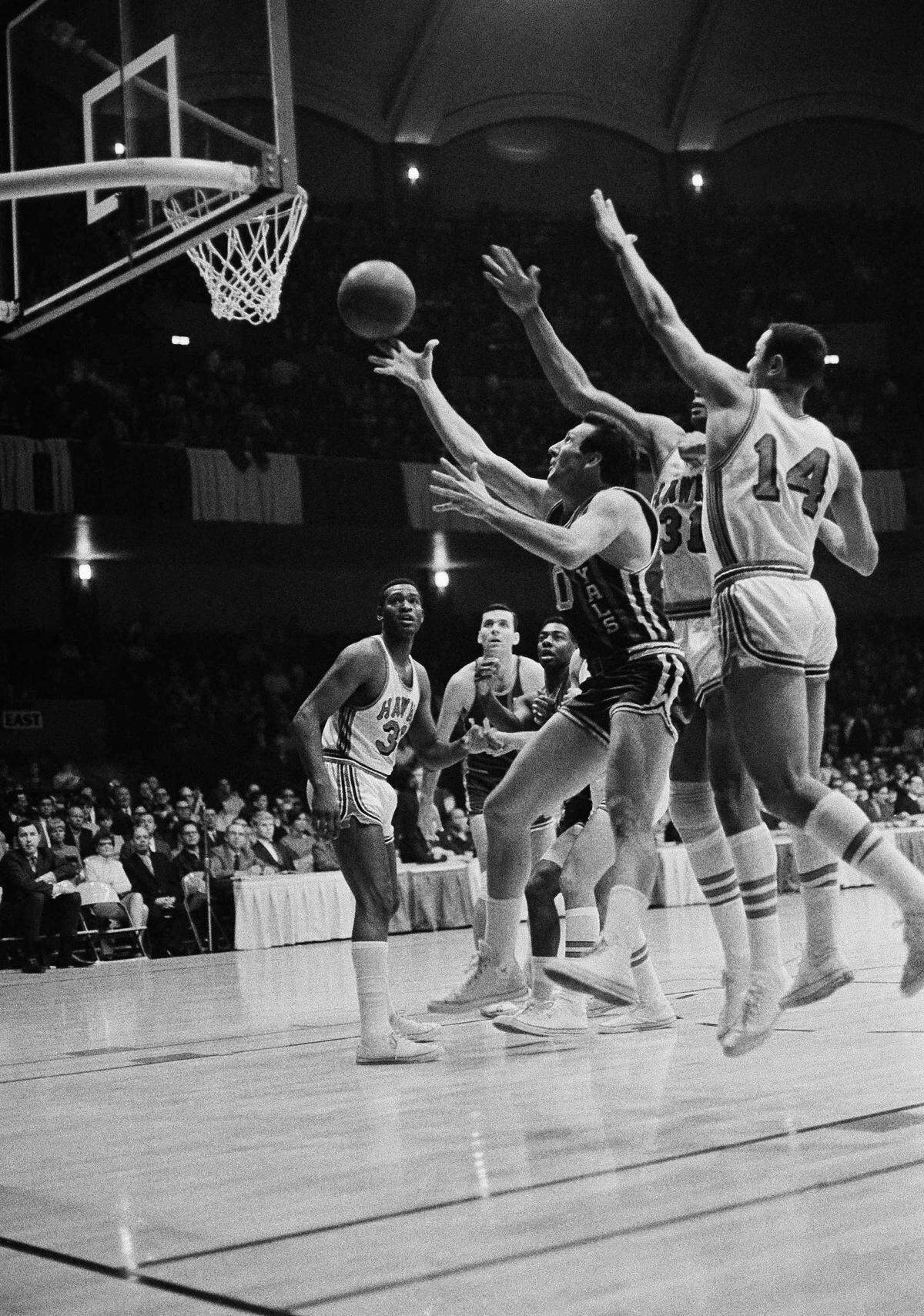
Six years after that, Smith, a guard for the old Cincinnati Royals franchise (now the Sacramento Kings) earned MVP honors in the 1966 NBA All-Star Game.
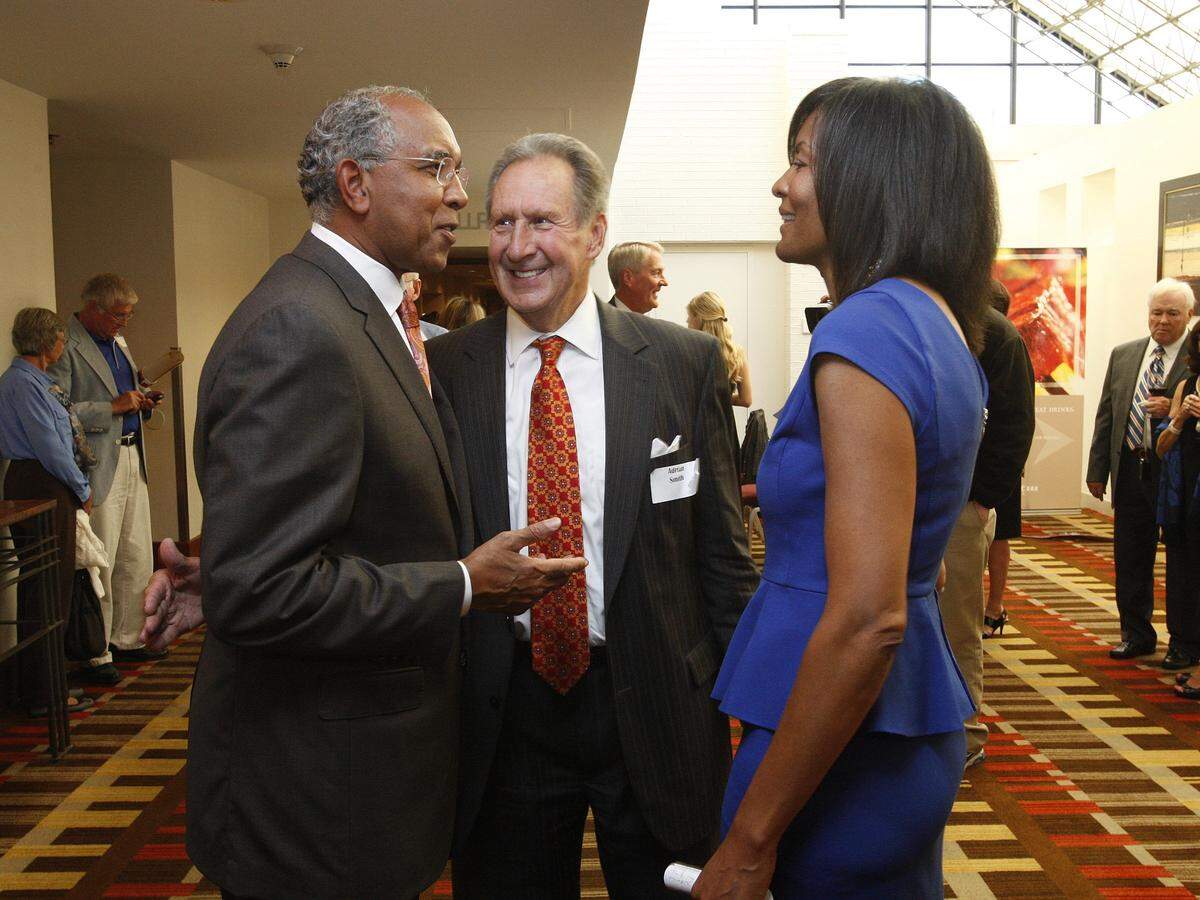
In 2010, Smith gained inclusion in the Naismith Memorial Basketball Hall of Fame when the 1960 Olympic team was inducted en masse.
Yet one of Smith’s most meaningful basketball experiences came when his UK coach — the often-imperious Adolph Rupp — offered him an apology of sorts for how the guard had been utilized with the Cats.
A recommendation to Rupp
Adrian Smith grew up in rural Graves County in Western Kentucky, the fifth of six children of Oury and Ruth Smith. The family was poor, so Smith learned to play basketball using a “ball” that his mom made from rolling up his dad’s socks.
At Farmington High School, Smith developed into an undersized, 5-foot-10, 135-pound star. Yet the only college that offered Smith a basketball scholarship was nearby Murray State.
Smith did not immediately accept the Racers’ scholarship, waiting to see if other offers would be forthcoming. When none were, he called Murray State to accept — only to be told his scholarship offer had been pulled.
Subsequently, a rival high school coach recommended Smith to a Mississippi junior college.
By his sophomore year at Northeast Mississippi, Smith had grown to 6-1, 170 pounds, and was lighting up the Mississippi junior college circuit as a scorer. Southeastern Conference schools such as Mississippi State and Ole Miss offered scholarships.
However, Northeast Mississippi head coach Bonner Arnold had his heart set on his star playing for Kentucky — which was then the beacon burning bright to southern college basketball enthusiasts.
Arnold called UK and asked to speak to Rupp.
The attempt failed, but not dissuaded, Arnold took another crack at getting Rupp on the phone. This time he succeeded and convinced the Kentucky coach to send a scout to see Smith.
Once that happened, UK soon offered Smith a scholarship.
In Lexington, Smith barely played early in his junior year. Once conference play began during the 1956-57 season, Kentucky’s star guard, Vernon Hatton, had an appendectomy.
For seven games, Smith got to fill in. He averaged 16.3 points in those contests and earned Rupp’s trust.
The next season, on what became Rupp’s fourth and final NCAA championship team, Smith started and averaged 12.4 points in what was largely a supporting role. Led by home-state stars Hatton (Lexington) and Johnny Cox (Hazard), “The Fiddlin’ Five” beat Seattle and Elgin Baylor in the 1958 NCAA championship game.
In Kentucky’s four 1958 NCAA tourney wins, Smith averaged just under 14 points.
NBA All-Star Game MVP
A 15th-round pick in the 1958 NBA Draft by Cincinnati, Smith left UK with a business degree but no firm career plan.
Ultimately, he joined the Army. During this peace-time period, the military sent Smith from Fort Knox to San Francisco so he could play on the Army’s All-Star basketball team.
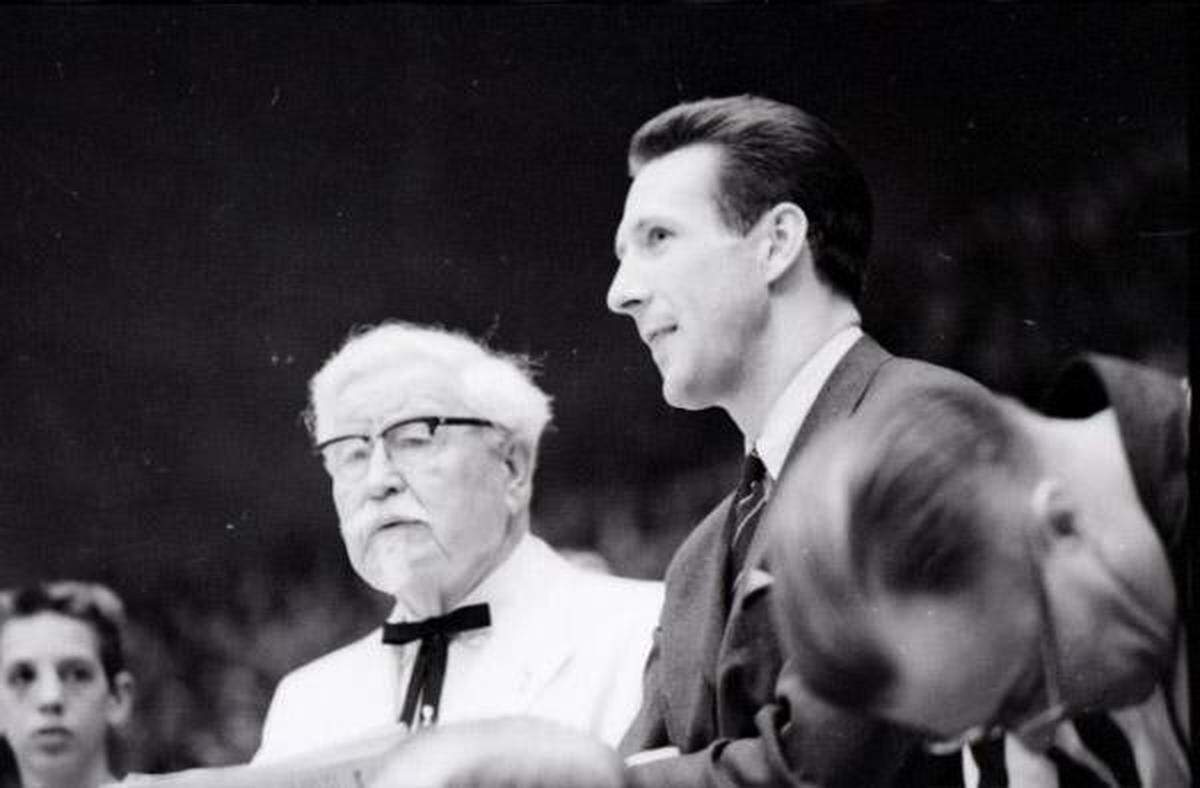
From that launching point, Smith made the gold medal-winning 1959 U.S. Pan American team. That experience almost certainly helped him in making the 1960 Olympic squad.
Before professional players began representing the U.S. in international play, that 1960 team — led by Oscar Robertson, Jerry West and Jerry Lucas — was considered the best American Olympic team ever.
The Americans won their eight Olympic games by an average of 42.4 points. Five U.S. players averaged in double figures in the Olympics. Robertson and Lucas averaged 17 each, West 13.8 and Terry Dischinger 11.8.
The fifth-leading scorer was Adrian Smith at 10.9.
“That was just a great, great team,” Smith said in 2010. “If we had taken that team into the NBA, I think we would have won a few championships.”
Smith’s success with the Olympic team opened eyes in the NBA. Cincinnati eventually brought Smith onto a roster that already included his old Olympic teammates Robertson and Lucas.
In the 10 years Smith played in the NBA, his best season came in 1965-66, when he averaged 18.4 points for Cincinnati. Selected to the NBA All-Star Game, Smith scored 24 points, grabbed eight rebounds, doled out three assists — and was chosen MVP.
A blue Ford Galaxie convertible was awarded to the 1966 All-Star MVP. Smith, who worked as a banker in the Cincinnati area after basketball, kept the car for the duration of his life.
In 2010, Smith and his 1960 Olympic teammates were inducted, as a team, into the Basketball Hall of Fame.
“I’ve been blessed beyond my wildest dreams,” Smith said at that time.
Amid his achievements, Smith once told me that one of the more meaningful things that happened to him came following his NBA success, when Rupp acknowledged that UK had not fully known what it had in the skinny guard from Western Kentucky.
“(Rupp) just said ‘We undervalued you,’” Adrian Smith said. “I appreciated him saying that.”
This story was originally published May 6, 2026 at 5:00 AM.