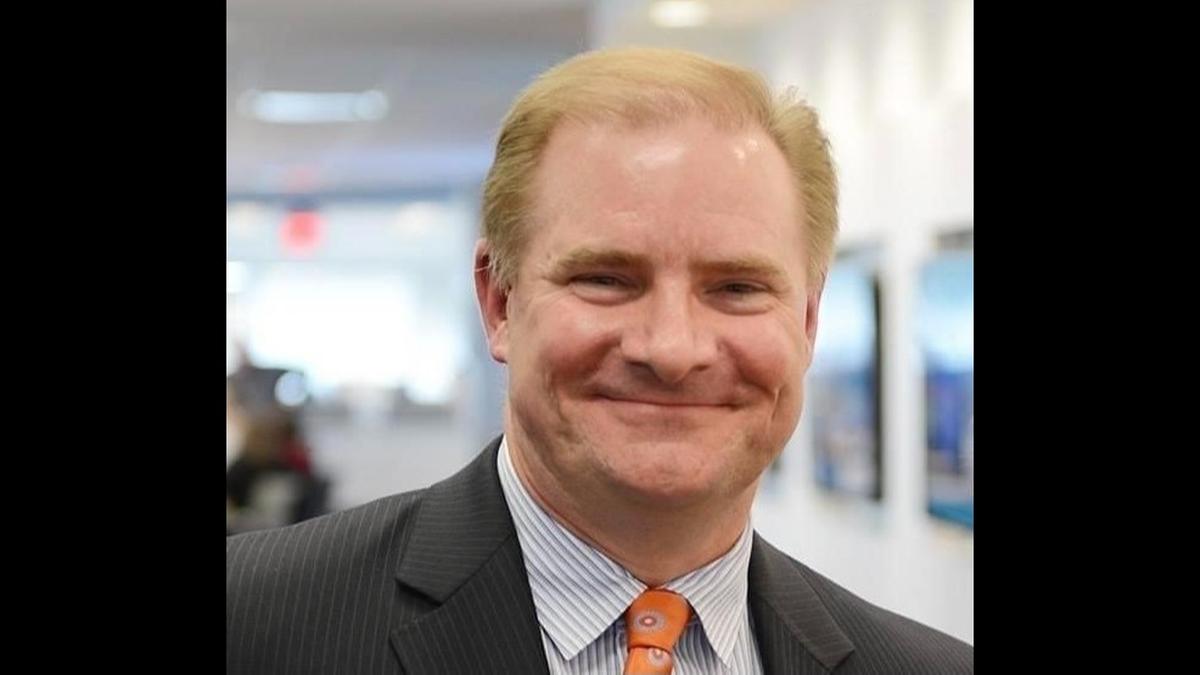
C.M. Newton’s work on race relations, basketball and UK sports ‘continues to this day’
Editor’s Note: As Lexington celebrates the 250th anniversary of its founding, the Herald-Leader and kentucky.com each day throughout 2025 will share interesting facts about our hometown. Compiled by Liz Carey, all are notable moments in the city’s history - some funny, some sad, others heartbreaking or celebratory, and some just downright strange.
Feb. 2, 1930: Charles Martin “CM” Newton — Transylvania basketball coach and UK athletics director — is born.
More than just a college basketball player, CM Newton was an integral part of Kentucky basketball and athletics. Born in Rockwood, Tennessee, Newton played college basketball and college baseball at the University of Kentucky.
Newton played on Coach Adolph Rupp’s NCAA championship team in 1950-1951 with Cliff Hagan, though he only averaged 1.2 points per game. As a pitcher on the baseball team, he helped the Wildcats reach the NCAA Tournament, and after college signed a minor league baseball contract with the New York Yankees farm system.
After the birth of his two daughters, Newton gave up on his professional sports dream and became a coach, serving as the head coach of Transylvania University’s basketball program from 1956 to 1968, and recruiting the team’s first Black player.
In 1968, University of Alabama football coach and athletics director Paul “Bear” Bryant was looking for a basketball coach and called Rupp. He recommended Newton, and Bryant hired him.
Newton led the Crimson Tide to a 211-123 record and helped the school become the only SEC team besides UK to win three straight conference titles. He also would lead the school to two NCAA tournaments and four NIT appearances.
Like he did with Transy, Newton recruited Alabama’s first Black basketball player, Wendell Hudson, and started five Black players during a time of racial tension across the country.
“We knew Coach Newton (signed us) because he wanted to win. He wasn’t trying to be a trailblazer,” center Leon Douglas said at the time. “You have to respect a man for putting five Black starters on the court when others said it was a no-no.”
Newton left Alabama in 1980 to become the assistant commissioner for the SEC. One year later, he was asked to be the coach of Vanderbilt University and led the program to a 129-115 record over eight seasons and berths in the NCAA Tournament two years in a row — 1988 and 1989.
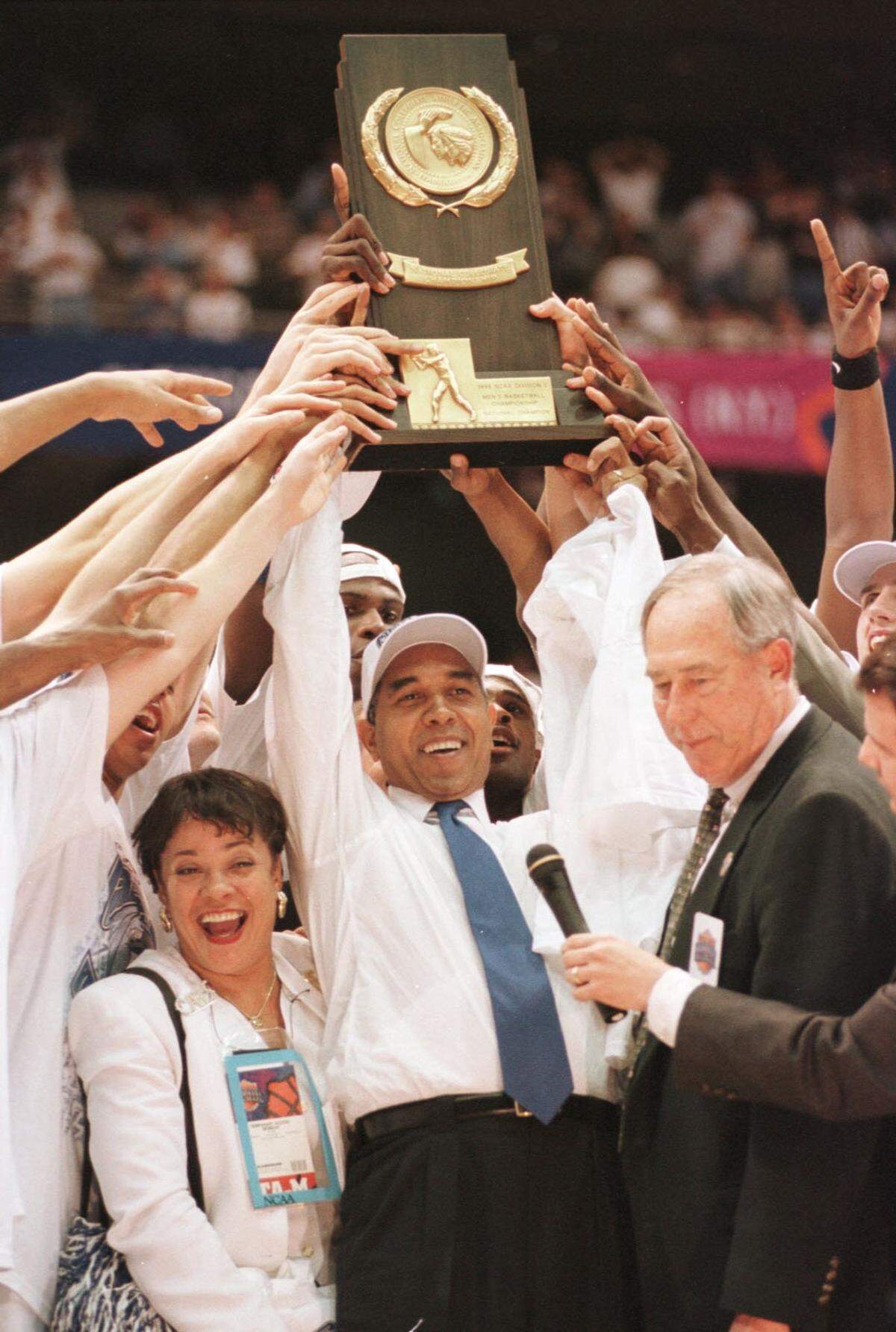
It was in 1989 that UK asked Newton to replace his former teammate, Cliff Hagan, as athletics director after the school was placed on NCAA probation. Newton said yes, and his first move was to hire Rick Pitino.
After three years of probation, the team bounced back with the “Unforgettables,” Sean Woods, Deron Feldhaus, Richie Farmer and John Pelphrey. During the 1992 NCAA East Regional game, the team played Duke. Fans usually curse under their breath (or aloud) when they remember the game.
With 2.1 seconds remaining in overtime, Grant Hill threw a pass the length of the court to Christian Laettner. He caught the ball, dribbled once and hit a last second-jumper as the clock ran down. Final score: Duke 104, UK 103.
Sports Illustrated has called it the greatest college basketball of all time and USA TODAY ranked it the greatest NCAA Tournament game of all time.
Newtown also hired the school’s first Black women’s basketball coach, Bernadette Locke-Mattox, and later hired Orlando “Tubby” Smith, UK’s first Black men’s basketball coach.
“Integrating the program was the thing,” Newton said in a 1999 biography. “It had importance not only at Alabama, but also around the (SEC.) We took in-state talent and won nationally. That opened the door for a lot of African-American youngsters.”
In 2000, the university officially named its football playing field at Commonwealth Stadium the C.M. Newton Field. When it the stadium was renamed to Kroger Field in 2017, the field itself was renamed “C.M. Newton Grounds.”
Upon Newton’s death in 2018 at 88, then-UK athletics director Mitch Barnhart said Newton was “a giant” at UK, in the SEC and throughout the sport.
“His coaching accomplishments and honors at Transylvania, Alabama and Vanderbilt speak for themselves,” he said. “His contributions to the sport of basketball continue to this day.”
This story was originally published February 3, 2025 at 4:00 AM.