
Looking to get spooked? These are Lexington’s most haunted locations
Editor’s Note: As Lexington celebrates the 250th anniversary of its founding, the Herald-Leader and kentucky.com each day throughout 2025 will share interesting facts about our hometown. Compiled by Liz Carey, all are notable moments in the city’s history — some funny, some sad, others heartbreaking or celebratory, and some just downright strange.
The Halloween season brings plenty of frights, but at some places in Lexington, the scares last all year long.
Several locations in Lexington — including historic homes and hotels — are rumored to be haunted, and many have been investigated by ghost hunters.
From unexplained noises to apparitions, here are some of the spots reportedly haunted by ghosts in Lexington.
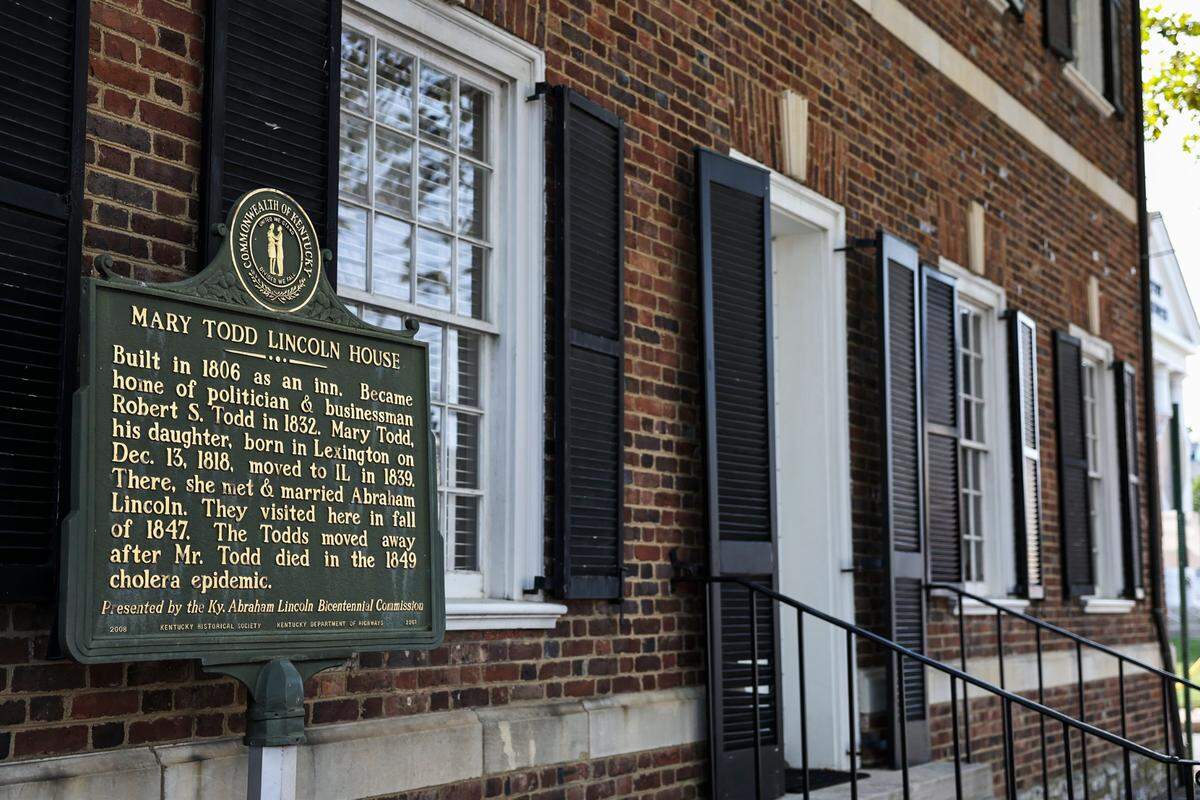
The Mary Todd Lincoln House
The home of Mary Todd Lincoln is said to be haunted by the first lady herself. Although she lived an affluent life, it was also filled with sorrow and tragedy.
Her son, Edward, died of tuberculosis a month before his fourth birthday in 1850, and her son, Willie, died of typhoid fever on Feb. 20, 1862 while the family lived in the White House. In her grief, she began holding seances in the White House to communicate with them.
According to the White House Historical Association, she told her half-sister, “Willie lives. He comes to me every night and stands at the foot of the bed ... He does not always come alone. Little Eddie is sometimes with him.”
In 1872, several years after the assassination of President Abraham Lincoln and the death of their son Tad, Mary Todd Lincoln hired spiritualist photographer William Mumler to take her picture. In it, a faint image of Abraham Lincoln’s ghost appears behind her, though Mumler was later proved to be a fraud.
According to U.S. Ghost Haunts, the “wispy figure of an old woman” is seen at the Mary Todd Lincoln house — could it be her ghost returned to her childhood home?
Old Morrison Building at Transylvania University
The Old Morrison building may now be a chapel and administration building at Transylvania University, but is also where an enraged professor put a curse on the school.
In the early 1800s, Transylvania University was growing in prominence. Professor Constantine Samuel Rafinesque-Schmaltz came to Transylvania in 1819 to teach botany, Italian and French. But in 1826, Transylvania President Horace Holley fired him.
Officially, he was fired for acting unprofessionally and missing classes. According to campus gossip, however, Rafinesque was having an affair with Holley’s wife. When Holley notified Rafinesque of his dismissal, the professor allegedly stood in the doorway of Old Morrison and uttered the words, “Damn thee and thy school as I place a curse upon you!”
Rafinesque moved to Philadelphia where he later died of stomach cancer around 1840, and was buried in a pauper’s mass grave.
In Lexington, his curse seemed to be having its effect. Holley resigned a year after firing Rafinesque and later died of yellow fever. Two years later, the campus was destroyed by fire, and the school was moved across the street.
In 1924, students at Transylvania rallied to have Rafinesque’s remains returned to campus to end the curse. Rafinesque’s body was supposedly brought back and buried under Old Morrison with the words “Honor to Whom Honor is Overdue” inscribed on his crypt.
But it may not be him buried beneath there. Tests have suggested they are the remains of Mary Ann Passamore, a woman who was buried with Rafinesque.
Old Morrison was renovated in the mid-1960s, but a fire in January 1969 destroyed most of the building. According to the National Register of Historic Places, the exterior walls of the hall were left standing — as was one other area: Rafinesque’s tomb.
Daniel Barefoot in his “Haunted Halls of Ivy” notes that Rafinesque’s crypt was completely untouched by fire, and firefighters reported seeing the figure of a man standing in the doorway as the fire burned.
The Loudoun House
The Loudoun House was built in 1852 and once served as a private residence, and is now the home of the Lexington Art League. The Gothic Revival mansion is said to be haunted by two Victorian women: one who haunts the Western section of the house and another who often appears in what was once the dining room.
The house is also said to be haunted by a black cat.
Visitors have reported that an upstairs room fills with the scent of an antique floral perfume, while others have reported hearing disembodied voices and ballroom music.
No one knows for sure who the two women are. Some investigators said they believe one to be Julia Hunt, a resident of the home who was forced to sell it, and the other to be a servant who is waiting to serve guests.
The January House
Located on Second Street, the house built by Thomas January was once an Episcopal seminary, according to historian Jonathan Coleman, before being bought in the mid-1800s by Tobias Gibson.
Gibson was a wealthy plantation owner in Louisiana who summered in Lexington and had a daughter named Sarah. But when it came time for her wedding, the groom stood her up. Sarah ran to the second floor of the home and flung herself off the balcony.
Her ghost is said to have remained at the house and appears to visitors in mirrors in the home.
The house was eventually sold to Kimbrell Underwood, who began to have conversations with Sarah and convinced her to have her portrait painted. Underwood painted a picture of him on one side of the mirror and her on the other, which still hangs in the house.
Hopemont
The former home of John Wesley Hunt, a slave trader in Lexington, sits on the corner of N. Mill Street and West Second Street. Visitors have said a room on the second floor is haunted by Hunt, who died during the cholera epidemic of 1849. He appears, they report, to be going about his business that was cut short by his sudden death.
The house is also said to be haunted by the family’s nanny, Bouviette James. Visitors say she often appears to sick children to sing to them and stroke their hair.
A night nurse reported to have fallen asleep taking care of a later generation of the family awakened to the sound of humming and an apparition sitting near the boy. That night, after the boy died, the nurse told the family she saw something over the boy’s bed wearing red shoes — something James had done after the death of Hunt’s grandson.
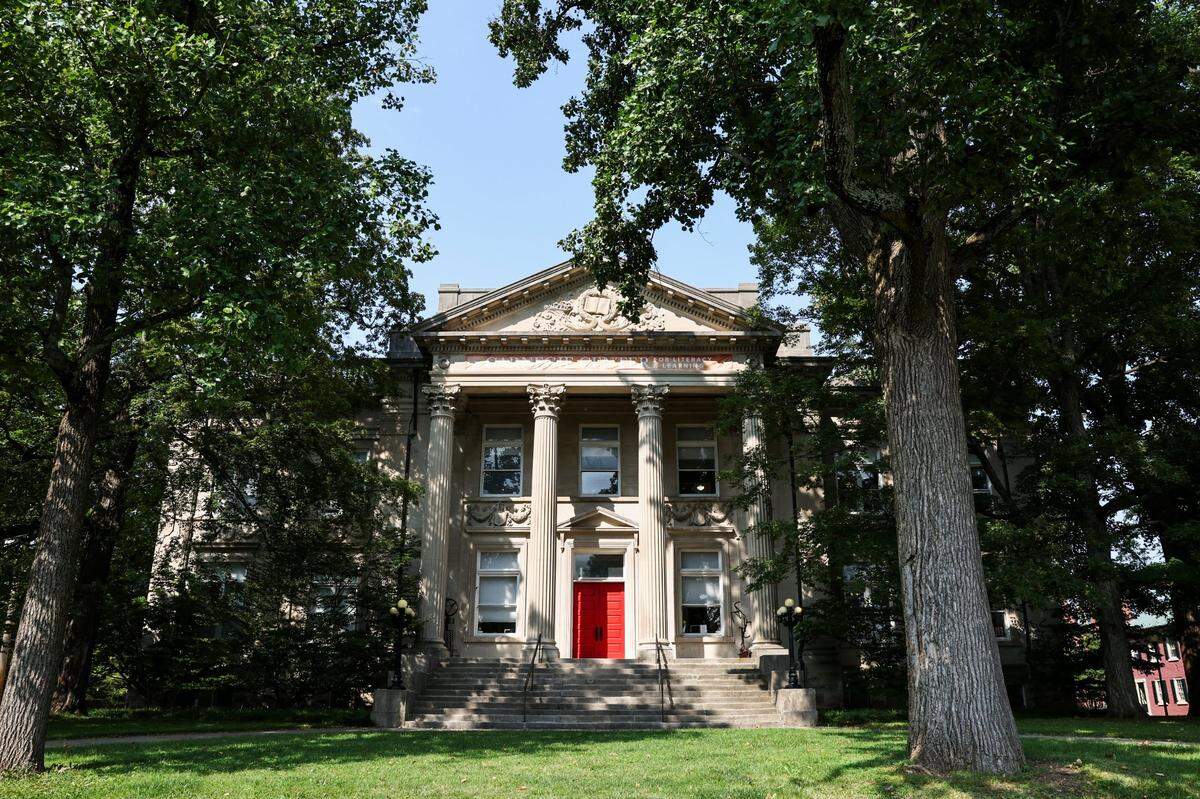
The Carnegie Center for Literacy and Learning
For years, the Carnegie Center for Literacy and Learning has been a hot spot for paranormal activity, according to Marley Knockers Paranormal.
The building is said to be haunted by Dr. Waller Bullock, a founding member of the Lexington Clinic and owner of the Bodley-Bullock House.
Bullock was known for going to the Carnegie Center for his after-dinner whiskey. His wife, Minnie, did not allow drinking in her house so her husband went to the library to read his newspaper while imbibing. Marley Knockers investigators said guests on some of their ghost walks have captured pictures of Bullock.
At an event last year, ghost hunters captured an image of a shadow figure on the main floor staircase and the shadow of a man downstairs.
Have a question or story idea related to Lexington’s 250-year history? Let us know at 250LexKy@gmail.com.
This story was originally published October 27, 2025 at 5:00 AM.