Fayette County plan that guides growth over next 5 years meets pushback over boundary
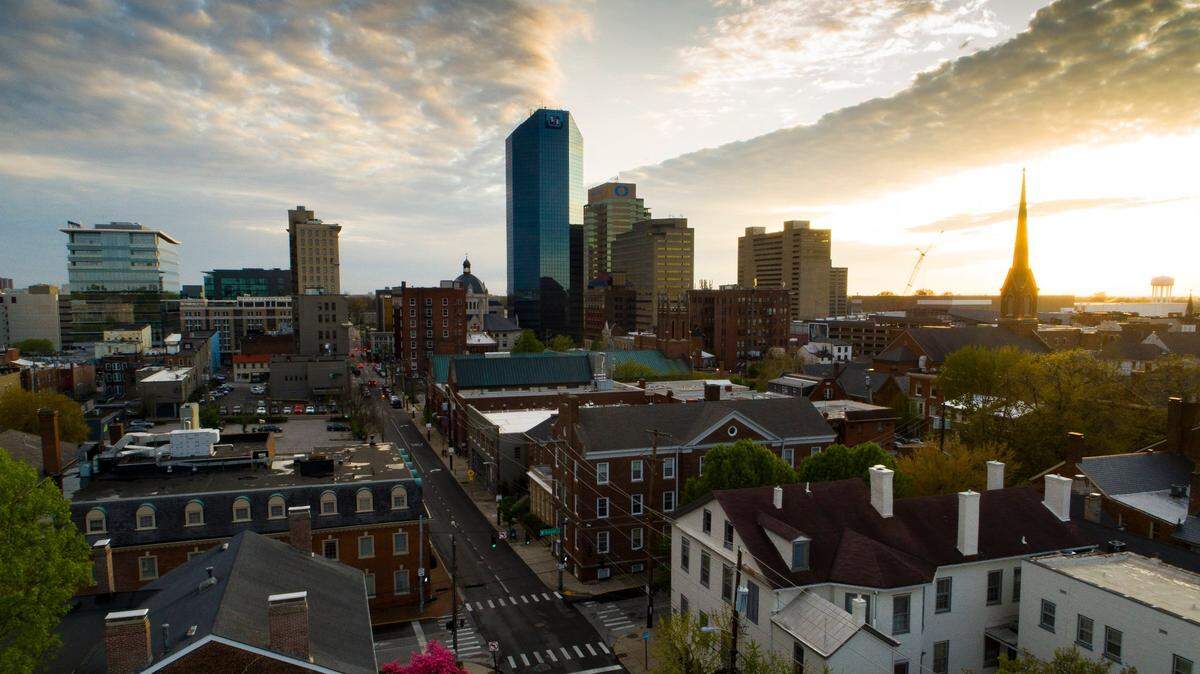
A plan to guide growth in Fayette County over the next five years has been met with some pushback from those in the development community for failing to include plans for when and how the city’s growth boundary will be expanded.
The city’s comprehensive plan, which helps guide growth and decides what types of development can go where, is done every five years.
The Urban County Planning Commission discussed the goals and objectives of the new comprehensive plan during a Thursday meeting. During that meeting, several in the development community urged the planning commission to add a deadline to the proposed goals for the completion of a study to determine how and where the growth boundary should be expanded.
Meanwhile, those in the agricultural and horse industry urged the Planning Commission to beef up language that would keep the city’s current growth boundary.
The city has not opened its growth boundary since 1996, when more than 5,400 acres were added. Roughly half of those acres have still not been developed. The urban service boundary was first introduced in Lexington in 1958.
The Planning Commission will meet again Feb. 23 to finalize the goals and objectives of the comprehensive plan.
As part of the 2018 Comprehensive Plan, a goal was adopted that would remove the fight over whether to expand the urban service boundary or growth boundary from discussions about the comprehensive plan.
It was agreed in the 2018 plan that the city would develop a matrix that would look at when there was a need for more land for certain uses such as industrial, housing, commercial and retail space. Another part of the plan also set a July 1, 2020, deadline for a plan that would look at what areas could be developed and what areas would be protected in the future.
The sustainability growth matrix, developed by a task force, was approved in late 2022.
The report on where development could occur and what areas would be protected, called the Goal 4 report, was released in late 2022.
The city failed to start the Goal 4 report before the July 1, 2020, deadline.
In total, the Goal 4 report recommended 97,309 acres to be preserved for agricultural uses. It identified 27,491 acres as not protected. That’s roughly three-fourths of the current rural land area that that would remain protected and 25% that would be available for development in future years.
The largest area the group determined could be available for development is approximately 13,000 acres along the Winchester Road corridor. Another area in the Athens Boonesboro Road area has 5,528 acres.
Under the proposed plan, discussions about if and when the boundary would be open could not begin until 2026.
The Goal 4 recommendations met resistance from many in the rural community about the areas slated for development in the future. Some said the city used the wrong information to determine where sewers are located or will be located in the future, a key factor in determining what areas could be opened for development.
Others said the Goal 4 work group, made up of council members, those in the development and agricultural communities, did not seek enough public input.
What the plan says about growth plans
The sustainable growth matrix, which determines when there is not enough land for certain uses, and the Goal 4 report, has not been formally adopted by the commission for use under the proposed 2045 Comprehensive Plan.
Instead, the 2045 Comprehensive Plan says the city should continue “building on the work of the Sustainable Growth Task Force and the Goal 4 Work group to complete an Urban Service Area growth management plan, which creates a new process for determining long-term land use decisions involving the Urban Service Boundary and Rural Activity Centers.”
“It’s not a specific endorsement of either one of those plans but acknowledgment those conversations had merit,” said Chris Woodall, manager of long-term planning for city. “We will continue with more research.”
The city is currently studying what areas will and can have sewers in the future. That study will be completed in the fall.
Todd Johnson of the Building Industry Association of Central Kentucky, a building trade group, said two different committees, the one that helped oversee the sustainable growth matrix, and the Goal 4 Work Group, spent months collecting data and coming to a consensus on the studies that were recommended in the 2018 Comprehensive Plan.
“It is unacceptable that we have not completed the work of Goal 4,” Johnson said. Johnson asked the Planning Commission to set a deadline for a future growth plan by the end of December.
Carla Blanton, of Lexington for Everyone, a group that has pushed for the expansion of the urban service boundary, also encouraged the commission to ensure the work of the Goal 4 group continues and that there is a firm deadline for a growth plan.
“We need a process now to plan for common sense growth,” Blanton said. “It should set a specific deadline.”
Meanwhile, those in the preservation community, particularly in the agricultural community, encouraged the commission to keep the current language and add language that would make clear that if and when a growth plan is finalized that the urban service boundary will remain.
In addition to a new sewer study the city is also updating the sustainable growth matrix, which will show available vacant land. Those studies are necessary before the city moves forward on a plan on where and when the urban service boundary should be expanded, said Brittany Roethemeier, executive director of the Fayette Alliance, which advocates on behalf of rural interests.
“Critical updates have not yet been completed,” Roethemeier said. There also needs to be more public input on the Goal 4 report. “We also don’t have a plan on how we are going to pay for it,” she said, referring to any future expansion.
Don Todd, a land use lawyer, urged the commission not to expand the growth boundary.
“To date only 50 percent of it is in use,” Todd said of the 5,400 acres added to the boundary in 1996. None of the new development in the expansion area was dedicated to affordable housing, he added.
More than two dozen people spoke during Thursday’s commission meeting on the proposed goals and objectives.
What’s new in the goals and objectives
Many of the goals and objectives in the 2045 Comprehensive Plan are similar to goals and objectives adopted in the 2018 plan, said Woodall, the manager of long-term planning for the city.
The city has renamed the comprehensive plan the 2045 plan to emphasize it’s a 20-year plan. It is typically named after the year it is passed. Under state law, the city has to pass a comprehensive plan every five years.
The 2018 Comprehensive Plan emphasized redevelopment of major corridors with an emphasis on diversity of housing, including affordable housing. The 2045 includes similar goals.
The city also had robust public engagement with On the Table, a public dialogue about planning and quality of life, through CivicLex, a nonprofit. In addition, Commerce Lexington had its own listening sessions with the business community.
Some of the changes in the 2045 plan were driven by public comment, Woodall said.
Two major themes were identified through public comment: the environment and equity.
The 2045 draft Comprehensive Plan emphasizes green infrastructure, inclusion and diversity.
For example here’s a new goal to “Ensure equitable development and rectify Lexington’s segregation by race and socioeconomic status caused by historic planning practices and policies.”
Another new goal also emphasizes reducing the city’s carbon foot print and greenhouse gases including: “Develop incentives and update regulations for green building, sustainable development, and transit-oriented development with civic agencies leading by example.”
Several people on Thursday asked the commission to consider specific goals related to the environment such as being carbon neutral by a certain date.
The goals and objectives are cited by developers and lawyers when they are arguing for a zone change for a new development.
What’s next?
If the Planning Commission approves the goals and objectives on Feb. 23, the goals and objectives will go to the Lexington-Fayette Urban County Council, which has 90 days to approve or alter the goals and recommendations. If the council alters the goals and objectives, it will go back to the Planning Commission for further review.
Once the goals and objectives are approved, the commission will then move into the policy and implementation phase of the comprehensive plan. That’s turning those goals and objectives into practice.
The city will have another public comment period this summer before the comprehensive plan is adopted, Woodall said.
The entire plan will then go back to the council for final approval.