‘Gentrification in plain sight.’ Can Lexington do more to protect Black neighborhoods?
.JPG "ORIGINAL CAPTION FOR 1955 HERALD-LEADER PHOTO: Minority Housing Project Begun. Joseph N. Fister, Jr., breaks ground to mark the beginning of St. Martin’s Village, a subdivision to be located on his property fronting on Price Road. Watching, left to right, are J.J. Tuttle, supervisor of building and partner in the corporation; Tom Robinson, consultant for the Department of Public Works; C.M. Seeberger, president of the corporation; Don Saylor, City-County Planning and Zoning Commissioner and G.W. Gard, city engineer. The subdivision will be a minority group project. Photo published April 10, 1955. Herald-Leader")
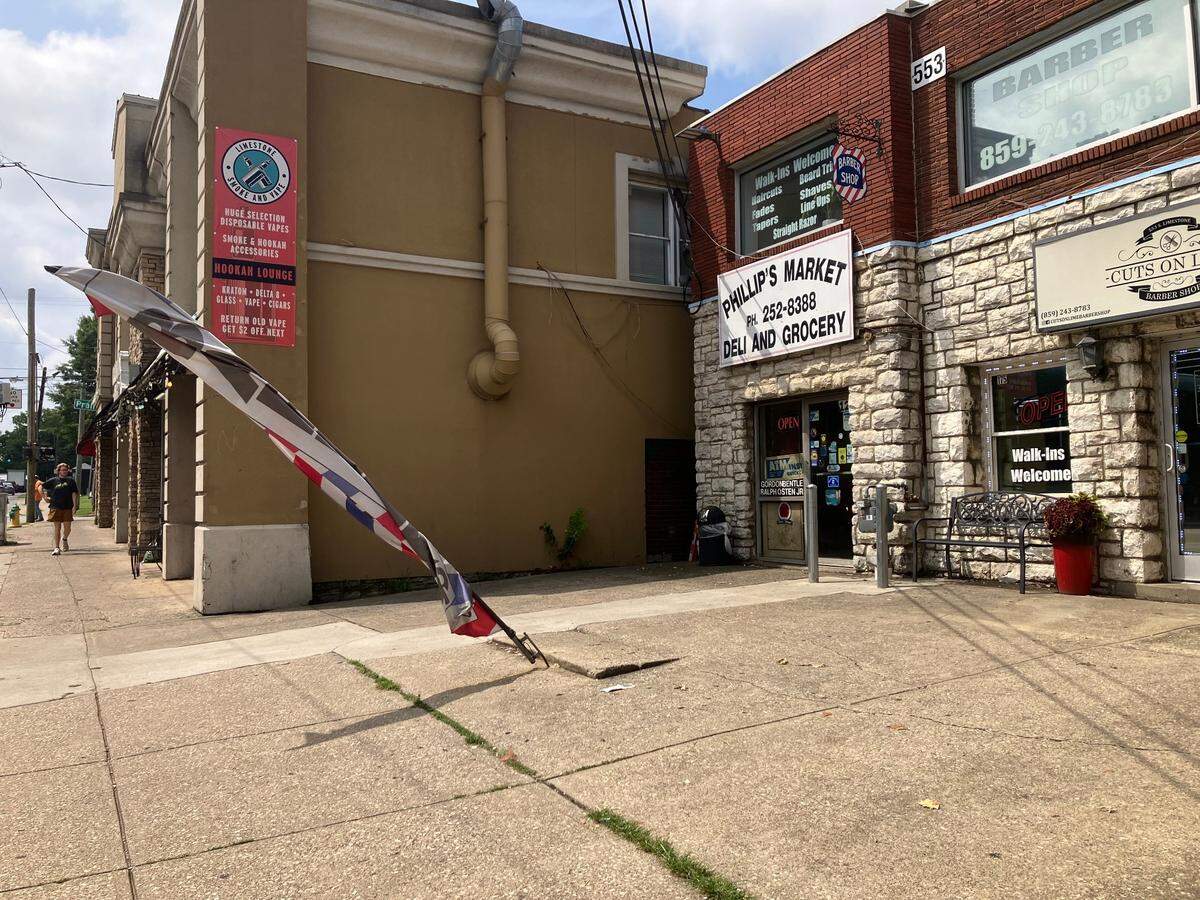
Tucked near the railroad tracks off South Limestone, the Pralltown area of Lexington is believed to be one of the city’s first Black neighborhoods.
Started in 1865 and named after John Prall, who sold land to freed Black slaves, it included Prall Street, Colfax and Montmullen.
It was home to Lou Johnson, a Lexington baseball standout who played for the Los Angeles Dodgers in the 1960s. Blues legend Tee Dee Young also has roots here.
But it’s pretty much gone, said Betty Boyd, president of the Pralltown Neighborhood Association.
“There’s not much of it left,” she said in a recent interview.
In the 1970s, 80s and 90s, Pralltown became prime real estate for developers who wanted land for private student housing as nearby University of Kentucky continued to grow. Many of the homes in the area were purchased, flipped or razed for student housing, Boyd said.
Now Subtext, a St. Louis-based student housing developer, is proposing a seven-story, 800-bed student housing high-rise on the corner of South Limestone, Montmullin and Prall streets. A hearing on the zone change for that development is set for September.
And Pralltown is not the only historic Black neighborhood in Lexington facing changes. On the city’s north side, off Georgetown Street, St. Martin’s Village faces a similar battle.
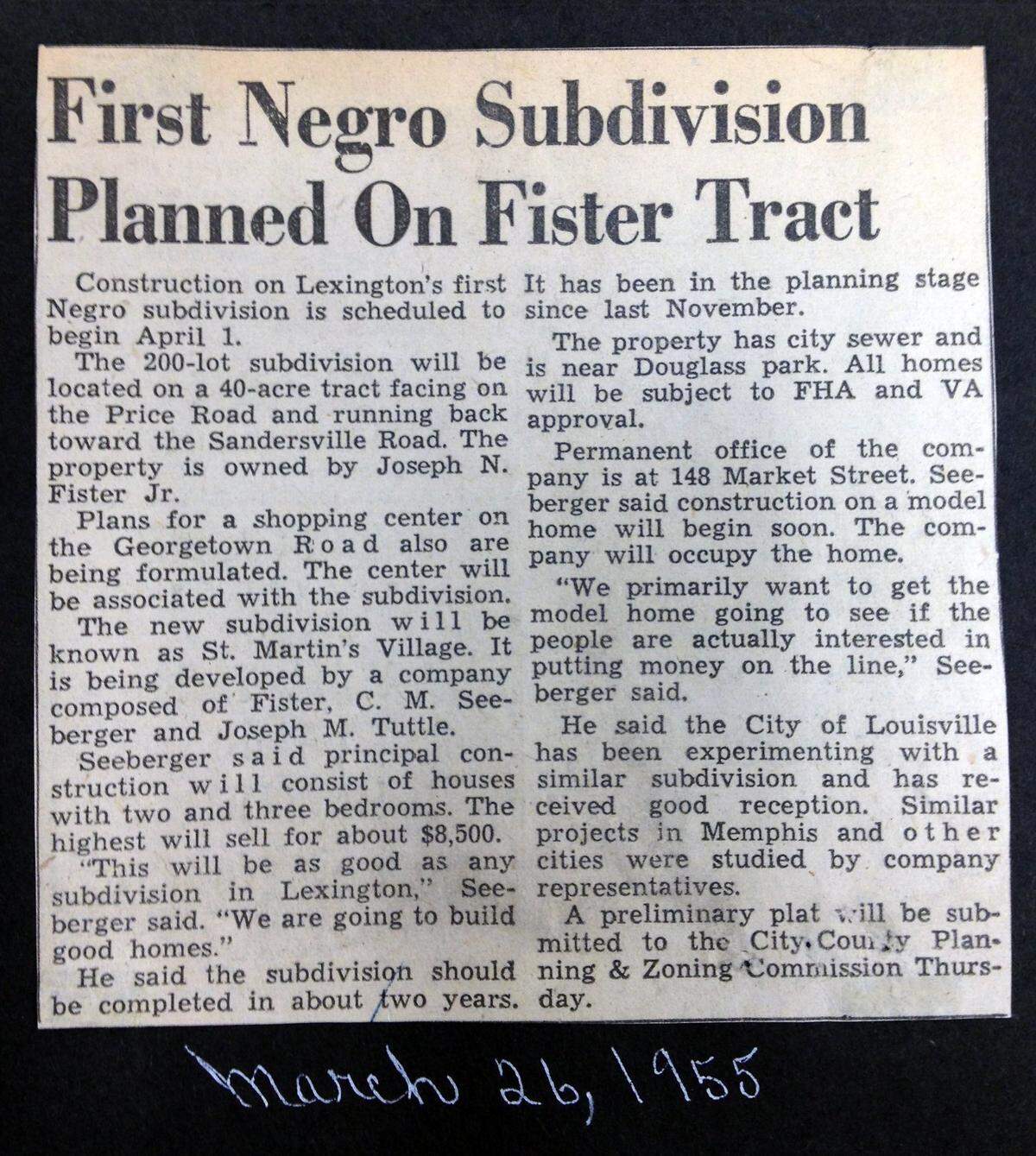
The neighborhood, established in 1955 and one of the few places Black people could own and build homes back then, is gearing up for a fight over the expansion of the nearby Suburban Pointe mobile home park on Price Street.
A zone change hearing for that proposal, which would allow for 52 additional mobile homes at 421 Price Road, is set for Thursday.
“It’s gentrification in plain sight,” said Bruce Simpson, a lawyer for both Pralltown and St. Martin’s Village.
The city’s comprehensive plan, which guides development and determines what types of developments can be built in which locations, encourages the types of development proposed in the historic Black neighborhoods.
The Subtext student housing apartment will increase density along the city’s major corridors, and the Price Road property is an underused piece of land that could be turned into much-needed affordable housing, said Nick Nicholson, a lawyer who represents both Subtext and the owners of the Suburban Pointe mobile home park.
And the mobile home park is a predominately minority neighborhood, Nicholson said.
Still, critics say the Pralltown developments are an example of the city failing to protect culturally significant, minority neighborhoods. They argue the Subtext development is the latest blow to a nearly extinct Pralltown, and they fear St. Martin’s Village will be next.
Multiple task forces have looked at the need to address preserving historic minority neighborhoods and halt the displacement of Black and minority residents — including Mayor Linda Gorton’s 2020 Commission on Racial Justice and Equity — yet the city has still not developed policies that do just that, Simpson said.
“This gentrification is extinguishing important cultural neighborhoods for the sake of myopic planning principals in which higher density trumps everything,” Simpson said.
What can the city do to protect Black neighborhoods?
Other cities also have struggled to implement policies to protect minority neighborhoods. Historically, Black and minority neighborhoods were in areas where white people didn’t want to live.
For example, Pralltown is next to a noisy railroad track. It was also once prone to flooding.
But as development has increased and living close to downtown has become more important to home buyers, those predominately Black and minority neighborhoods are now prime real estate — and, some argue, easy prey for real estate investors.
Stopping encroachment on Black neighborhoods is also legally thorny. Property owners have the right to sell their land and homes to developers. That’s what’s happened in Pralltown.
“Given the strong property rights in our state, the city is limited in its ability to prevent many neighborhood developments that otherwise meet legal requirements,” said Gorton.
The city is trying various initiatives to make it easier for Black and minority residents to remain in their homes, she said.
“We continue to make significant investments in public and historic facilities in both the east end and the west end of downtown that protect and preserve the surrounding neighborhoods. To protect individual homeowners, we have a relatively new program in code enforcement that provides repair assistance to residents who can’t afford to make improvements to their homes,” Gorton said.
The city acknowledges that too many Black residents and neighborhoods have been treated unfairly in the past, she said.
“African-American neighborhoods are an important part of our past, our present, and our future. They have been unfairly targeted in the past, and we are living with a history of discriminatory practices. We are interested in finding new solutions that offer new protections to the extent allowed by law,” Gorton said.
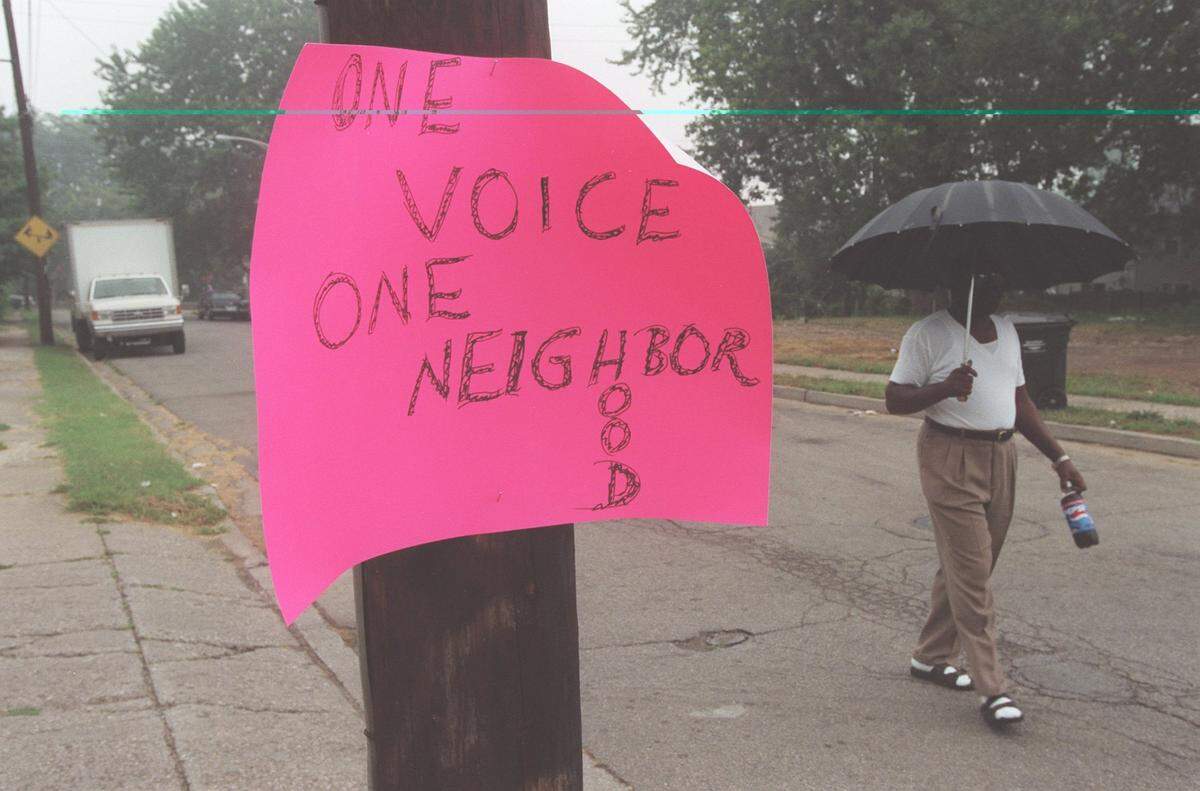
Other cities have sought solutions.
In Louisville, for example, council members have proposed an ordinance that would require an assessment to determine if a new development would increase the cost of living — including rents and mortgages — in historically Black neighborhoods. If that assessment shows an increase, the developer would receive no public resources, such as land or grants, for the project.
The ordinance is still in a council committee and has not yet passed, according to Louisville council records.
Preserving Lexington’s first Black suburb
Ann Greene and her husband were living in Winchester more than 60 years ago when they started to look for a place to build a home. They purchased land in Winchester, but despite having good-paying jobs, they were denied a home loan.
Greene, now a retired nurse, heard about St. Martin’s Village in Lexington.
The area marked one of the few places where Black people could buy land and build homes in Fayette County. Deed restrictions, which kept many Black people from owning property in other parts of Lexington, and redlining, a practice where banks would not lend to properties in predominately minority neighborhoods, severely restricted where Black people could purchase homes.
When the Greenes expressed interest in St. Martin’s Village, the banks were much more receptive.
Now, the couple has lived in St. Martin’s Village for more than 60 years, Greene said.
Michelle Davis, president of St. Martin’s Village Neighborhood Association, had a similar story. She said her parents purchased their home in 1957.
“This was the only neighborhood that Blacks could purchase a house,” Davis said. “It’s known as the first Black subdivision. There was no other place people could go because they weren’t allowed to buy houses anyplace else.”
Davis said her neighborhood is worried about losing everything that makes St. Martin’s unique. She’s also worried that city leaders don’t understand why it’s important.
“They didn’t protect Pralltown,” Davis said.
Simpson, the lawyer who represents Pralltown and St. Martin’s Village, agreed.
“In St. Martin’s Village, it’s about radically changing the character of one of Lexington’s first African-American subdivisions, a subdivision that only existed because it was on the north end of Lexington,” he said.
Expansion of Suburban Pointe mobile home park
Fayette MHC LP, the owners of the Suburban Pointe mobile home park, have proposed a zone change for approximately 16 acres off of Price Road. The property at 421 Price Road is between the current mobile home park and St. Martin’s Village.
The zone change would allow for up to 52 mobile homes, some of which could be up to four bedrooms. If the zone change is approved, the total number of lots in the mobile home park would be 601.
According to property records, Suburban Pointe was developed in the 1960s — around the same time the second portion of St. Martin’s Village was developed.
Now, Suburban Pointe’s owners are proposing such new amenities as a dog park, community green space and a sports court. The main entrance would be off Price Road, Nicholson said.
But the city’s subdivision regulations require connectivity between developments. That means the proposed expansion area will have to connect to multiple dead-end streets in St. Martin’s Village — Tibbs Lane, Dominican Drive and St. Martin’s Lane.
It’s the traffic that could be coming through St. Martin’s Village that has most residents’ worried, Davis said.
“We have a lot of seniors. We have a lot of children. We don’t want any more traffic coming into our neighborhood,” Davis said. A recent meeting to discuss the mobile home’s expansion plans had more than 150 people in attendance, Davis said.
Greene said the increased traffic is her and many of her neighbors’ biggest concerns.
“I’m 91. My husband is 95,” Greene said. “We don’t need any more traffic in this area.”
Nicholson said the mobile home park will have entrances on Price Road. They would not have proposed connecting to St. Martin’s streets if the city’s regulations did not require it, he said.
Increased connectivity helps decrease traffic on collector roads. It’s also a public safety issue. Police, fire and ambulance crews need multiple entrances in and out of an area, city officials have long said.
Davis said neighbors’ other concerns are about property values.
“Property values are rising,” Davis said. “Will our property values go up? Will they go down? We don’t know.”
The zone change is scheduled before the Urban County Planning Commission at 1:30 p.m. Thursday.
This story was originally published August 20, 2024 at 7:48 PM.